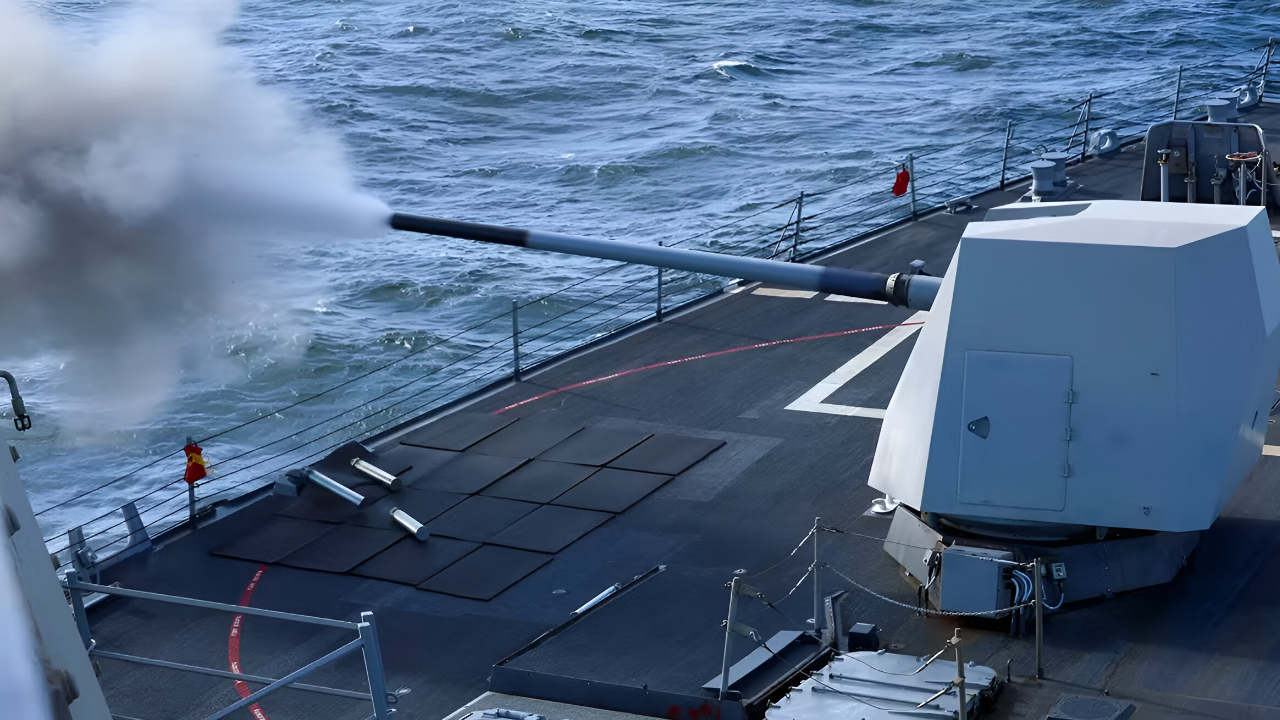
On September 23, 2025, the USS Bainbridge (DDG-96) successfully fired its Mk 45 5-inch gun during live-fire gunnery training in the Baltic Sea, as part of NATO’s NEPTUNE STRIKE 25-3 enhanced vigilance activity.
The exercise involved targeting practice in a controlled environment and included collaboration with Finland’s FNS Tornio, Germany’s FGS Hamburg, and Sweden’s HSwMS Helsingborg. This training focused on combined targeting procedures, deconfliction protocols, and real-time information sharing in congested maritime environments.
Neptune Strike 25-3 Exercise Overview

NEPTUNE STRIKE 25-3, set for September 22-26, 2025, will involve over 10,000 personnel from 13 allied nations across the Mediterranean, Adriatic, North, and Baltic Seas.
The exercise will focus on maritime strike integration, deterrence operations, and freedom of navigation, with objectives that include validating the command structure and improving operational control.
Advanced Naval Gun Technology
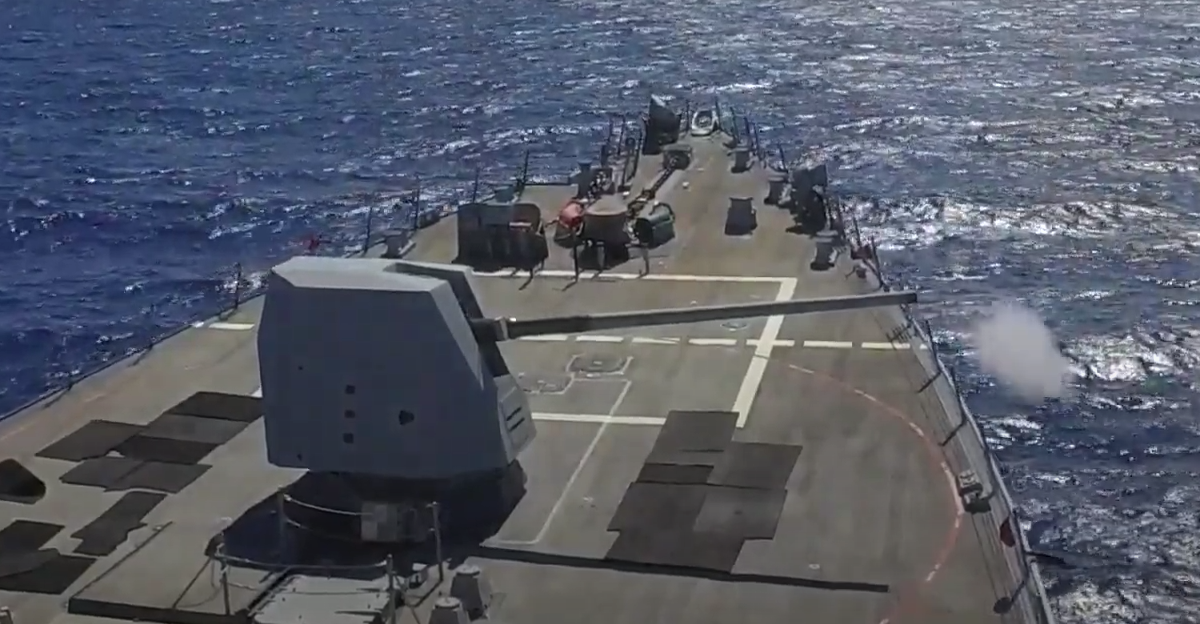
The Mk 45 Mod 4 5-inch/62 caliber lightweight gun on destroyers features advanced naval artillery technology with a standard range of 13 nautical miles, extendable to over 20 nautical miles with advanced munitions.
It utilizes sophisticated fire control systems to effectively engage surface, air, and shore targets with precision-guided or area-effect rounds, integrated with combat management systems.
Multinational Fleet Composition

The coordinated exercise highlighted the diverse naval capabilities of the participating nations. Finland’s Hamina-class missile boats demonstrated their fast attack capabilities with Gabriel anti-ship missiles, while Germany’s Sachsen-class frigates showcased their advanced air defense capabilities with SM-2 missiles.
Sweden’s Visby-class corvettes emphasized stealth technology with reduced radar signatures. A significant challenge was integrating communication protocols and coordinating tactical data links among different national systems.
Strategic Baltic Sea Geography

The Baltic Sea’s strategic importance has grown since Russia’s 2022 invasion of Ukraine. Surrounded by eight countries, including NATO members like Estonia, Latvia, and Poland, it features key maritime chokepoints such as the Danish Straits and the Gulf of Finland.
The dense commercial traffic and restricted areas offer an ideal environment for NATO to test its air defense, anti-submarine warfare, and coastal strike capabilities.
USS Gerald R. Ford Integration

The USS Bainbridge is part of Carrier Strike Group 12, with the USS Gerald R. Ford (CVN-78) serving as the NATO exercise flagship.
This deployment demonstrates NATO’s capacity to integrate advanced U.S. naval capabilities into multinational forces for extended missions, featuring coordinated air wing operations and validated logistics support among coalition partners.
Russian Monitoring and Geopolitical Response

Western military analysts report that Russian forces have been monitoring NATO vessels, with a particular focus on the USS Bainbridge. This destroyer features 96 vertical launch system cells capable of carrying missiles, including Tomahawk cruise missiles with ranges over 1,500 kilometers.
The timing and location of the live-fire exercise in the Baltic Sea effectively signal NATO’s resolve, as the destroyer could engage targets across much of the European theater with its advanced systems.
Vertical Launch System Capabilities
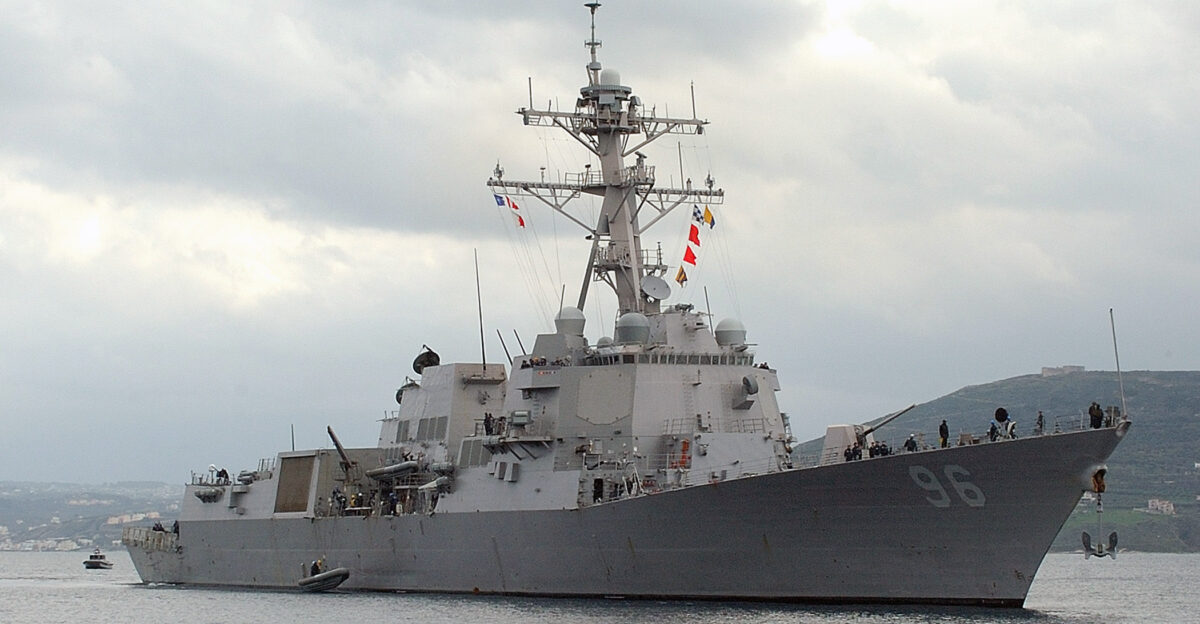
The USS Bainbridge features a Mk 41 Vertical Launch System with 96 missile cells that can launch various missiles, including Tomahawk Land Attack Missiles, SM-2/SM-6 air defense missiles, Evolved SeaSparrow Missiles (ESSM), and VL-ASROC.
Integrated with the Aegis Combat System, it allows for rapid engagement and effective management of multiple threats across air, surface, and subsurface domains.
Ukraine Naval Innovation Integration
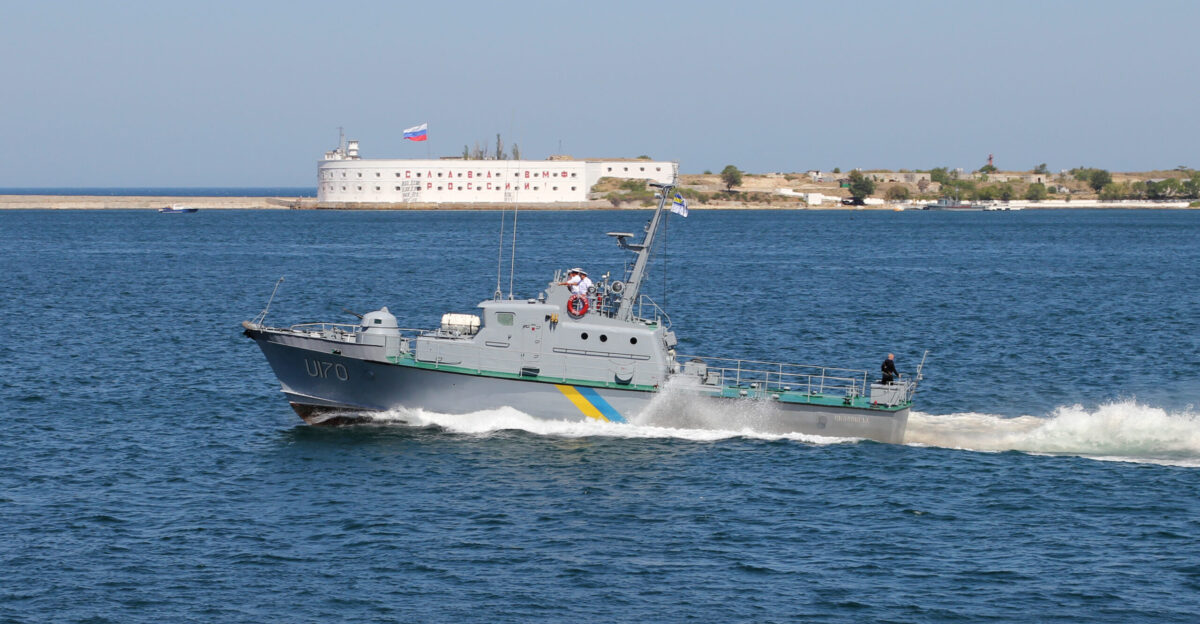
NATO forces are leveraging lessons from Ukraine’s successful drone and missile operations against Russian naval forces through the “Black Sea Battle Lab” initiative.
Insights gained from these campaigns are informing tactical developments in NATO’s maritime operations, including drone swarm tactics, anti-ship missile strategies, and techniques for mitigating small boat threats.
Air Defense Integration Testing
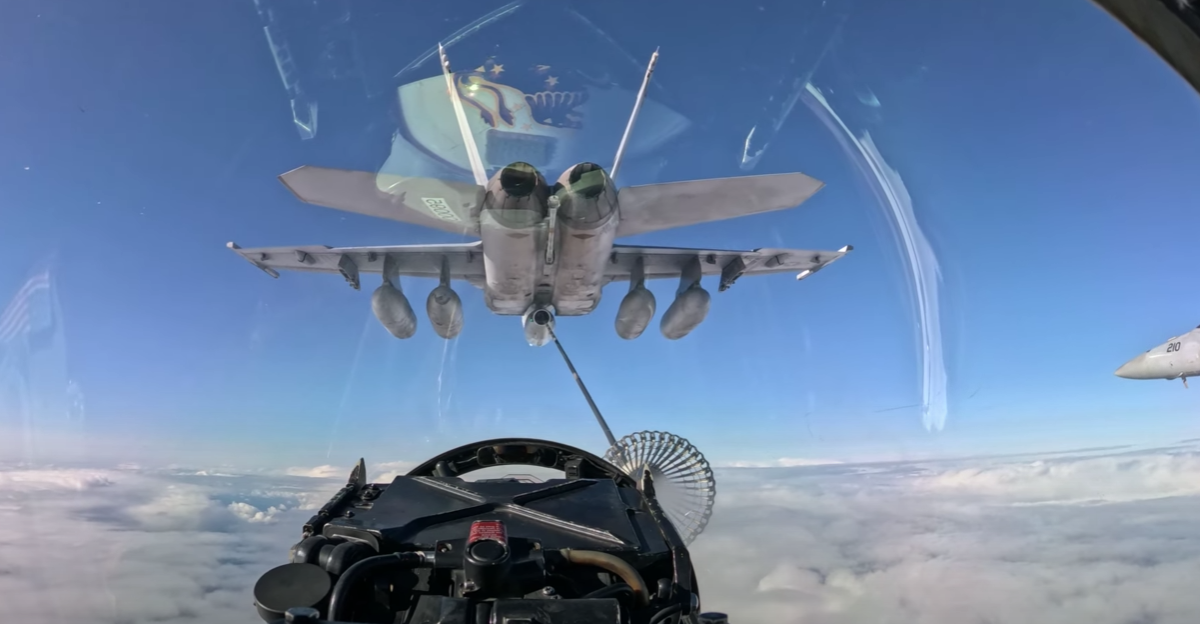
The exercise showcased coordinated air defense procedures within the multinational fleet, emphasizing Standard Missile engagement protocols and electronic warfare integration.
Integrated Air and Missile Defense (IAMD) capabilities were showcased through layered defense scenarios, where ships provided overlapping coverage zones and shared threat tracking information via tactical data links.
Anti-Submarine Warfare Operations
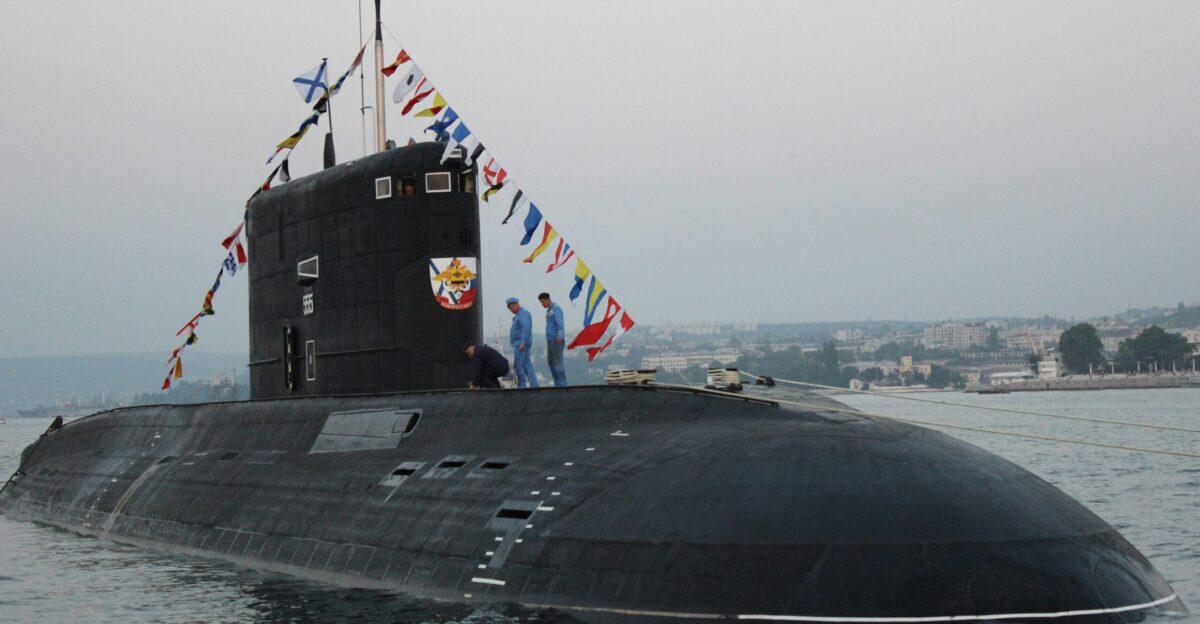
Baltic Sea operations focused on anti-submarine warfare coordination with Nordic partners, addressing the unique acoustic challenges of the confined waterway and the submarine threat environment.
Training included the coordinated integration of sonar systems, underwater domain awareness, and helicopter-based ASW aircraft coordination with ship-based sensors to create comprehensive subsurface monitoring capabilities.
Exercise Evolution and Tactical Development
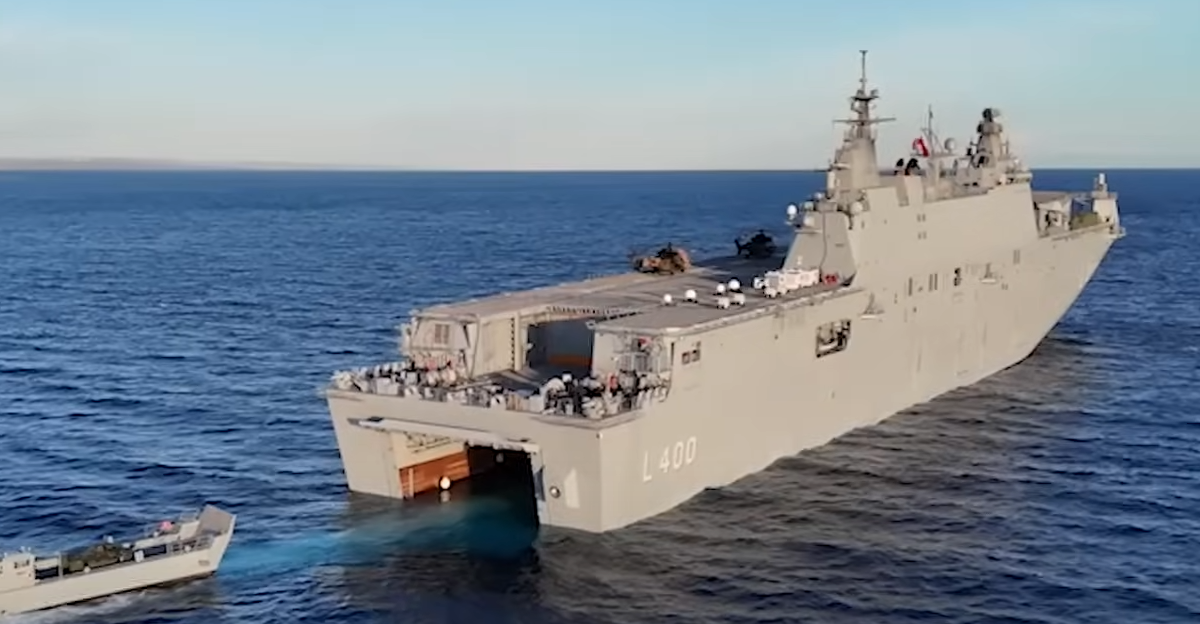
NEPTUNE STRIKE 25-3 represents the third iteration of 2025, following previous exercises conducted in July and August that demonstrated the effectiveness of the continuous training cycle.
The progressive exercise series maintains operational tempo while preventing skill degradation, with each iteration building on lessons learned to refine multinational coordination procedures and tactical integration improvements.
Naval Fire Support Modernization
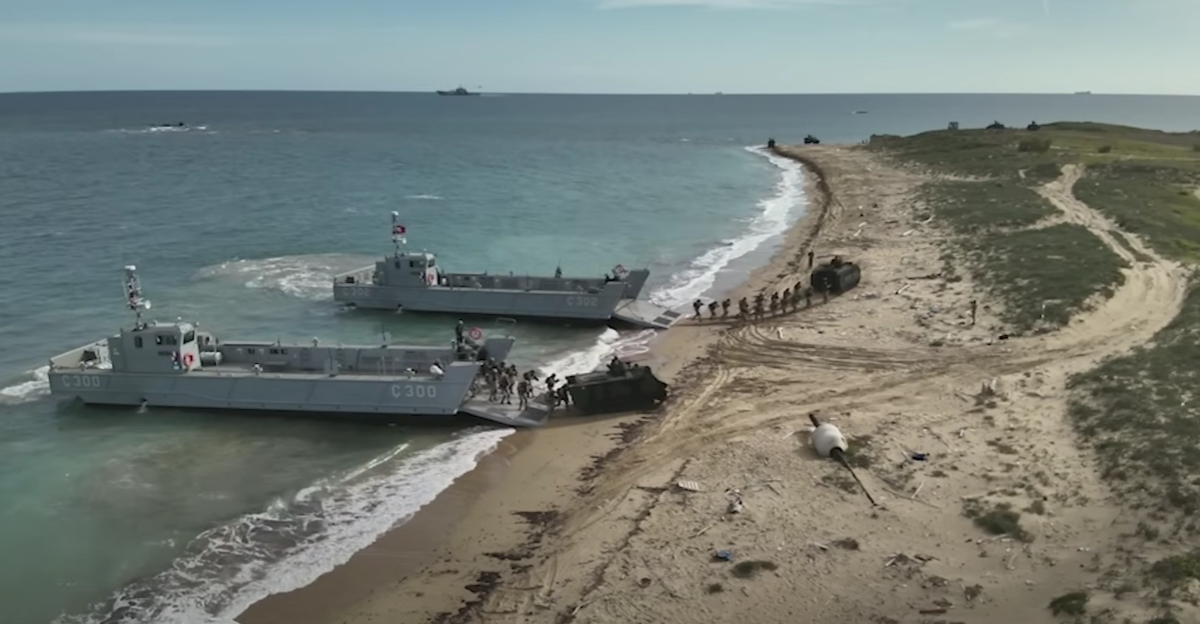
The exercise showcased enhanced naval gunfire support capabilities for coastal operations, including precision shore bombardment coordination with land-based artillery and air support systems.
Training scenarios emphasized precision strike against coastal targets while implementing civilian casualty mitigation procedures and urban warfare support protocols, demonstrating the continued relevance of naval guns in contested littoral environments.
Intelligence and Surveillance Integration

Maritime domain awareness systems were extensively tested during the exercise, validating satellite communication networks and data fusion capabilities across participating nations.
Real-time threat assessment protocols and target identification procedures were refined through the coordination of electronic intelligence gathering, ensuring comprehensive situational awareness across the distributed fleet formations.
NATO Collective Defense Validation

The USS Bainbridge’s live-fire demonstration reinforces NATO’s message of credible deterrence and alliance solidarity.
The successful integration of American destroyers with Nordic and European naval forces demonstrates the alliance’s evolution toward more flexible, rapid-response capabilities, preparing NATO for potential maritime conflicts while maintaining deterrent credibility through visible strength demonstrations.