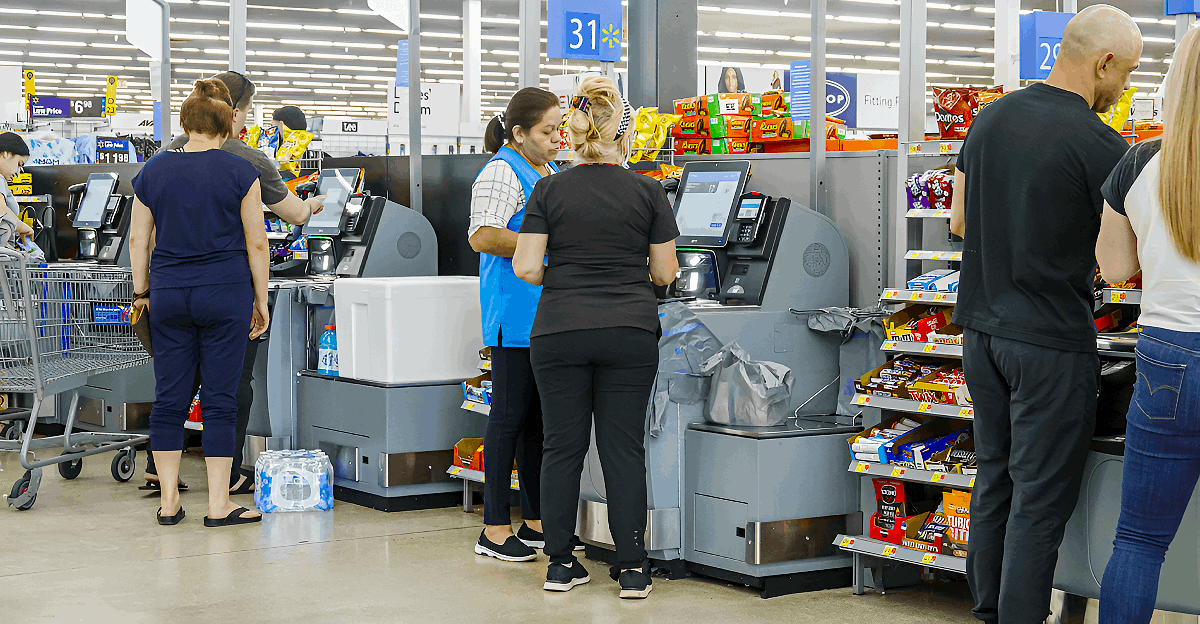
The National Retail Federation’s 2024 Impact Report reveals a 93% increase in shoplifting incidents since 2019, with retailers averaging 177 thefts daily.
Self-checkout systems are particularly vulnerable, experiencing shrink rates of 3.5%, compared to just 0.21% at staffed registers, making them 16 times more susceptible to theft.
Violence
Recent data indicate a notable rise in retail violence between 2022 and 2023. Incidents involving threats or acts of violence surged by 42%, while weapon-related incidents increased by 39% during this timeframe.
According to a report from the National Retail Federation, a substantial 73% of retailers have observed that shoplifters are exhibiting greater aggression and violence in the past year.
Market
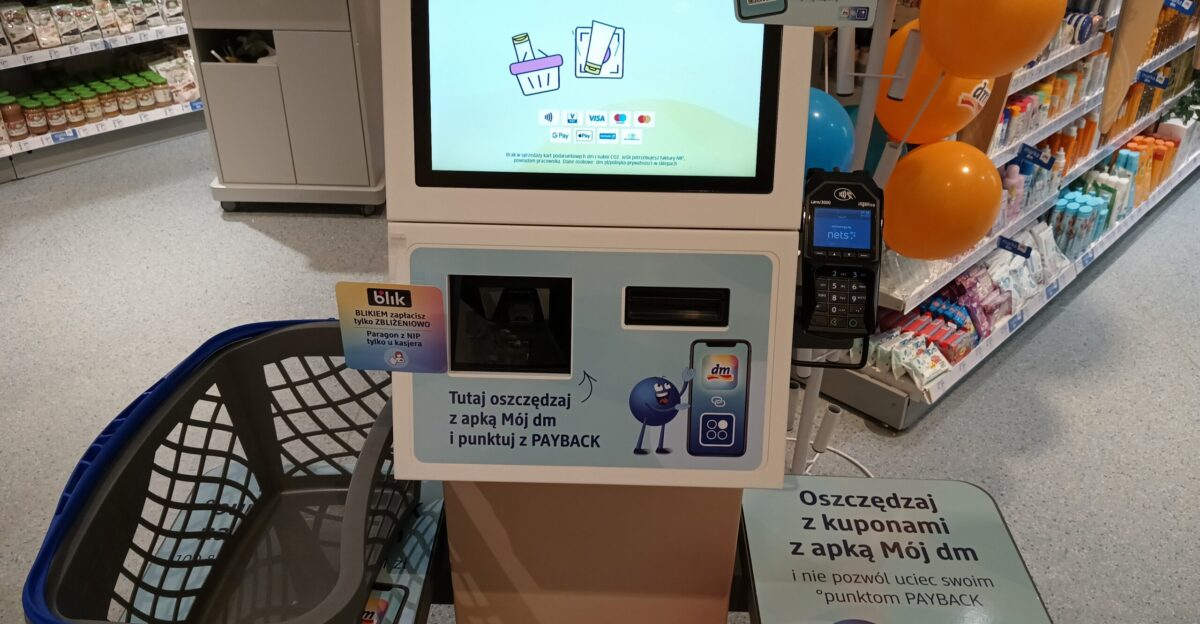
The global self-checkout systems market was valued at $4.9 billion in 2024 and is forecasted to grow to $10.49 billion by 2030. Major suppliers include NCR Corporation, Diebold Nixdorf, and Toshiba.
This technology is designed to reduce labor costs and enhance customer convenience during peak shopping times.
Behavior
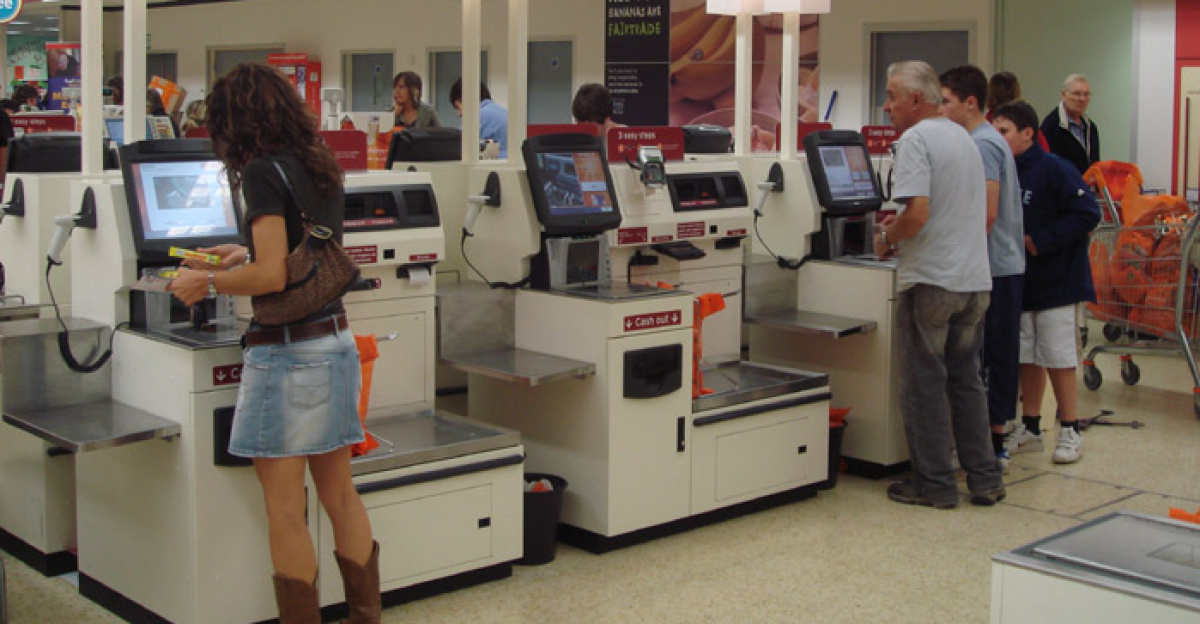
A UK study found that 37% of shoppers admit to stealing from self-checkout stations, often using tactics like the “banana trick”—scanning expensive items as cheap bananas—and barcode switching.
Theft occurs in about 1 in 20 self-checkout transactions, compared to 1 in 320 at traditional cashier lanes.
Eliminating Self-Checkout
In April 2024, Walmart’s Shrewsbury, Missouri supercenter removed all self-checkout kiosks, switching to cashier-operated lanes.
This led to a 64% drop in police calls, from 509 to 183, and theft-related arrests decreased by 54.6%, falling from 108 to 49 during the January to May period.
Response
Police Chief Lisa Vargas called the Shrewsbury results “a huge change” and stated, “We really appreciate Walmart taking initiative and removing those self-checkers.”
Store employees reported improved customer interactions and reduced stress from theft-related confrontations. Customer wait times increased initially but stabilized as staffing adjusted.
Industry

Target has set a 10-item limit at self-checkout stations in nearly 2,000 stores due to rising theft. Kroger has added ceiling cameras and weight sensors to its automated checkouts for security.
Meanwhile, Wegmans has completely removed self-checkout at its Rochester flagship store, citing unsustainable losses.
Dollar General

In 2024, Dollar General removed self-checkout from 12,000 of its 20,000 stores, transitioning 9,000 locations to assisted checkout with employee scanning.
CEO Todd Vasos cited shrinkage as the company’s biggest challenge. The remaining stores that still offer self-checkout now have a limit of five items per transaction.
Economics
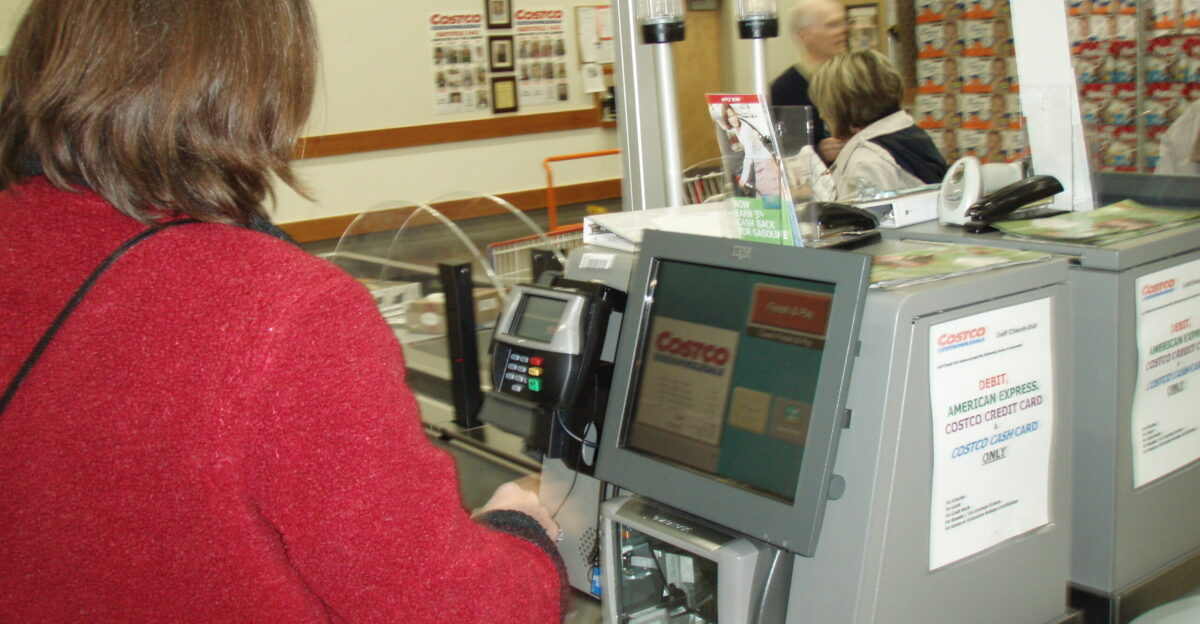
Industry analysis shows that self-checkout theft costs U.S. retailers about $10 billion annually. According to a Grabango study, retailers with self-checkouts experience shrinkage rates 16 times higher than those with traditional cashier lanes.
However, each self-checkout station could save approximately $50,000 a year in labor costs if theft is minimized.
Strategy
Walmart is testing a new policy that limits self-checkout access to Walmart+ members, who pay $98 annually, and delivery drivers.
This approach seeks to determine if subscription models can reduce theft and increase revenue. The company operates approximately 4,700 stores in the U.S. with various checkout configurations.
Technology
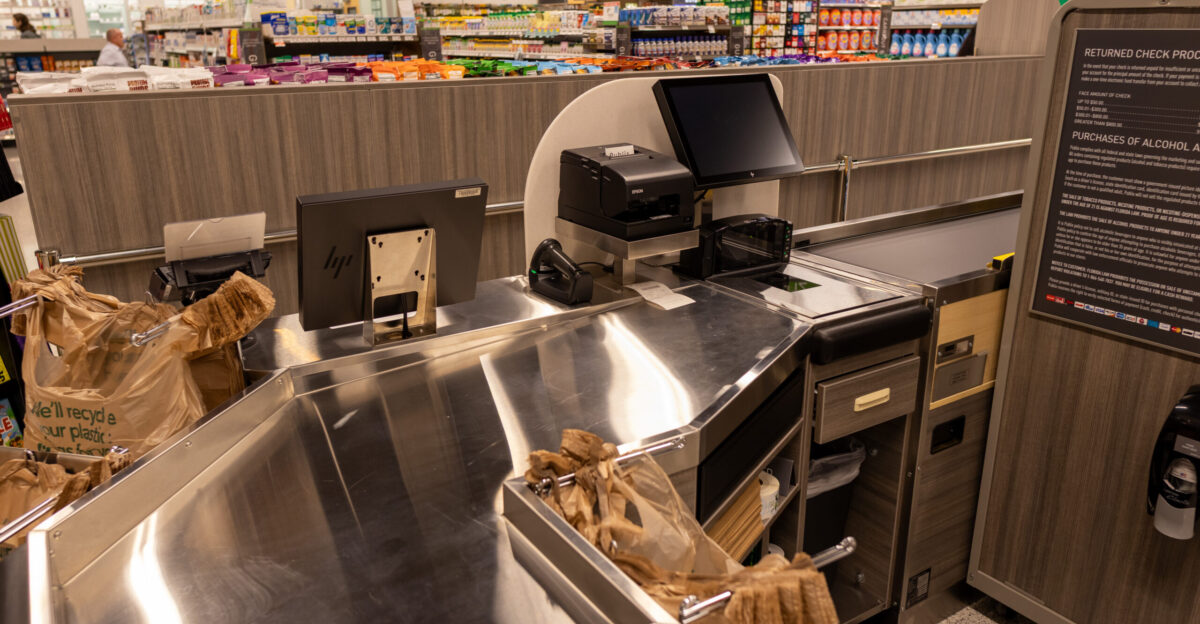
Retailers invest heavily in anti-theft technology, including computer vision systems, AI monitoring, and advanced weight sensors. NCR Corporation and other suppliers develop detection systems that can identify suspicious scanning patterns and alert store personnel.
Despite technological advances, automated theft detection accuracy remains inconsistent across retail environments.
Staffing
A Walmart spokesperson confirmed the company is “temporarily testing different checkout staffing options” based on customer feedback and local business needs.
The retailer has hired thousands of additional associates in recent years, though specific numbers for checkout-related positions remain undisclosed. Labor costs increase when stores convert to staffed lanes.
Geography
Walmart has removed self-checkout from stores in Missouri, New Mexico, Ohio, and California.
The company closed self-checkout at three Albuquerque locations in October 2023, followed by the removal of self-checkout in Cleveland and other cities throughout 2024. Decisions are based on local theft rates, customer feedback, and business performance.
Research
The National Retail Federation’s Loss Prevention Research Council conducts ongoing studies on retail theft patterns.
Research suggests that self-checkout theft is correlated with store location, customer demographics, and local economic conditions.
Innovation
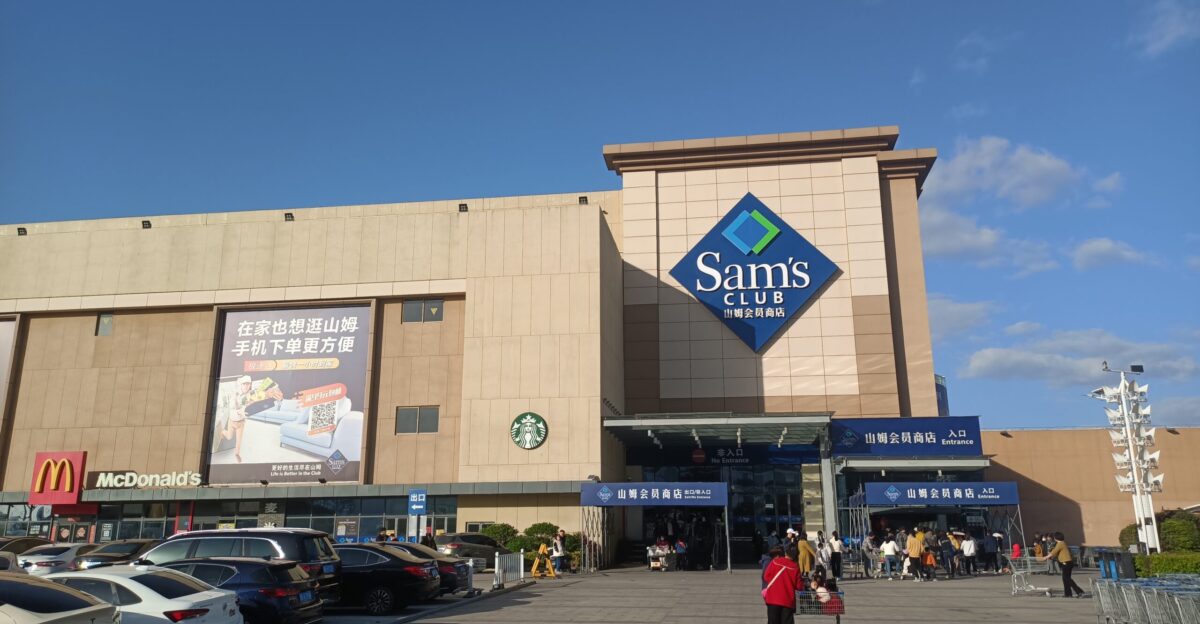
Sam’s Club has deployed “Scan & Go” technology, allowing members to scan items with their smartphones and skip traditional checkout lines entirely. Kroger tests biometric payment systems requiring fingerprint verification.
Early pilot programs have shown promising results for reducing theft, although implementation costs remain significant for widespread deployment.
Legislation

The Combating Organized Retail Crime Act of 2025, introduced by Senators Chuck Grassley and Catherine Cortez Masto, would establish a federal coordination center targeting organized theft rings.
The bipartisan bill aims to improve cooperation between retailers, law enforcement, and federal agencies in combating retail crime networks.
International
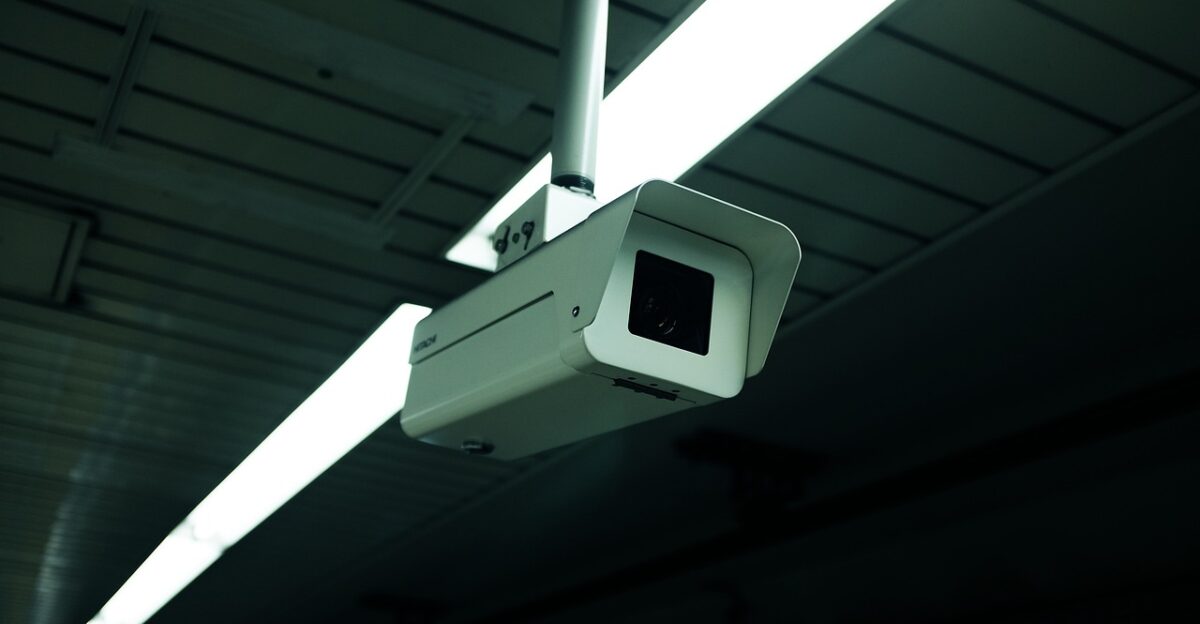
British retailers report extensive theft problems, with the Association of Convenience Stores documenting millions of incidents annually. UK stores invest heavily in security measures, including extensive CCTV coverage and increased staffing.
European retailers face similar challenges but operate under stricter data protection regulations that affect their surveillance capabilities.
Legal

Walmart paid $4.4 million in 2022 to settle a lawsuit alleging racial profiling in its store security practices. The case highlighted concerns about discriminatory monitoring at checkout stations.
Privacy advocates continue to challenge facial recognition technology in retail settings, with several states considering legislation that restricts the collection of biometric data.
Demographics
LendingTree research found that 31% of Generation Z shoppers and 21% of millennials admit to self-checkout theft, compared to significantly lower rates among older demographics.
Common justifications include beliefs that “corporations can afford it” and that “self-checkout eliminates jobs.” Theft rates correlate with customer loyalty and local economic conditions.
Future
The National Retail Federation stopped publishing its annual shrink report in 2024 after more than 30 years, citing concerns about data quality and methodology.
Industry experts debate whether self-checkout technology can be sufficiently secured or if human oversight remains essential. Walmart’s Shrewsbury experiment provides concrete data for retailers considering similar changes.