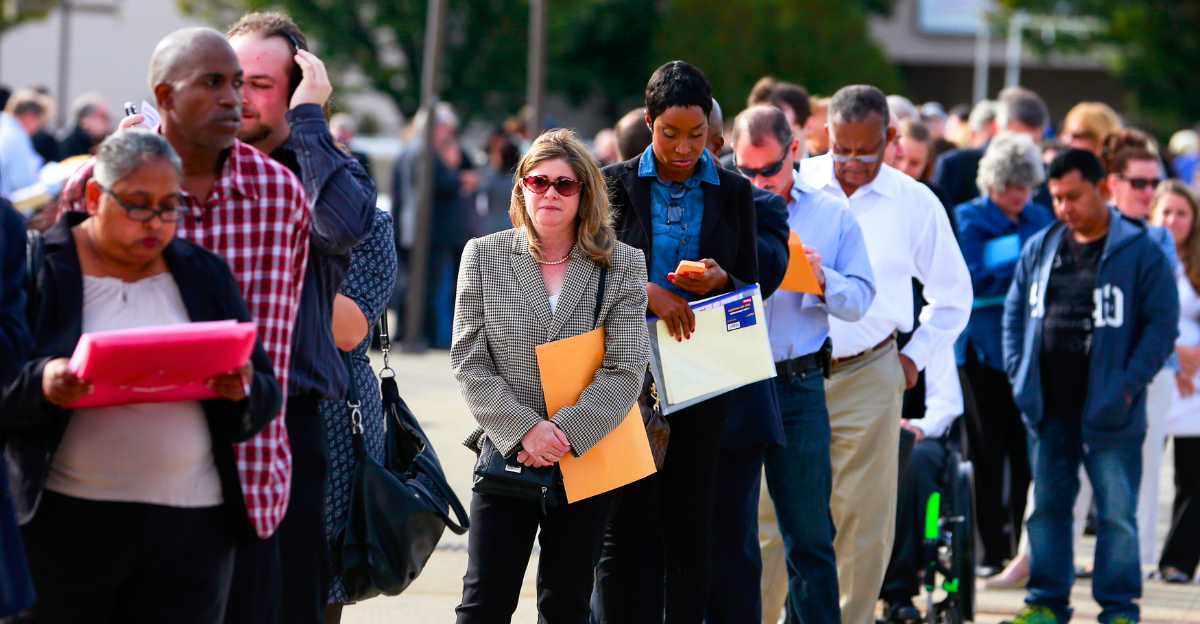
Economists sounded the alarm in early August 2025 as new payroll data showed broad weakness. Mark Zandi, chief economist at Moody’s Analytics, noted that in July, over half of all U.S. economic sectors were cutting jobs – a threshold not crossed since early in the Covid recovery.
This unprecedented breadth of layoffs raised fear of a coming downturn. Fortune reported that such “widespread contraction” in employment across industries has historically preceded recessions.
The labor market’s recent sputter caught many by surprise and signaled that the expansion may be ending.
Stall Speed

July’s jobs report painted a dismal picture: the U.S. economy added just 73,000 jobs, far below expectations. Even more alarming, the BLS revised May and June down by a combined 258,000 jobs, wiping out most earlier gains.
Over the last three months, the average monthly job gain was only about 35,000 – the slowest sustained pace since 2020. In other words,
hiring nearly ground to a halt. Analysts say the economy has hit “stall speed,” meaning growth is limping along.
Labor economist Diane Swonk called the revisions “stunning”, underscoring how unexpectedly weak the report was.
Historical Context

The U.S. employment data come from the BLS Current Employment Statistics (CES), a comprehensive survey covering roughly 400 industries.
This detailed sector-by-sector accounting has long signaled turns in the business cycle.
For decades, economists have noted that when an unusually large share of industries cut jobs in the same month, a recession often follows.
(By contrast, slowdowns confined to a few areas rarely presage a broad downturn.) Today’s data fit that pattern: more than half of the 400 industries reported headcounts shrinking.
With employers across sectors retrenching, many analysts see history on the verge of repeating itself.
Mounting Pressures

Several pressures converged in July to choke off hiring. U.S. manufacturing remained in contraction: the ISM manufacturing index fell to 48.0, marking five straight months below the 50 boom-bust threshold.
Output weakened, and factories continued shedding jobs. On the construction front, spending on single-family housing plunged as mortgage rates and tariffs stifled activity.
Consumer spending also cooled: domestic demand grew at its slowest pace in over 2½ years in Q2.
Key engines of growth (factories, housing and retail) all ran out of steam this summer, leaving the economy running on fumes.
Crossing the Red Line
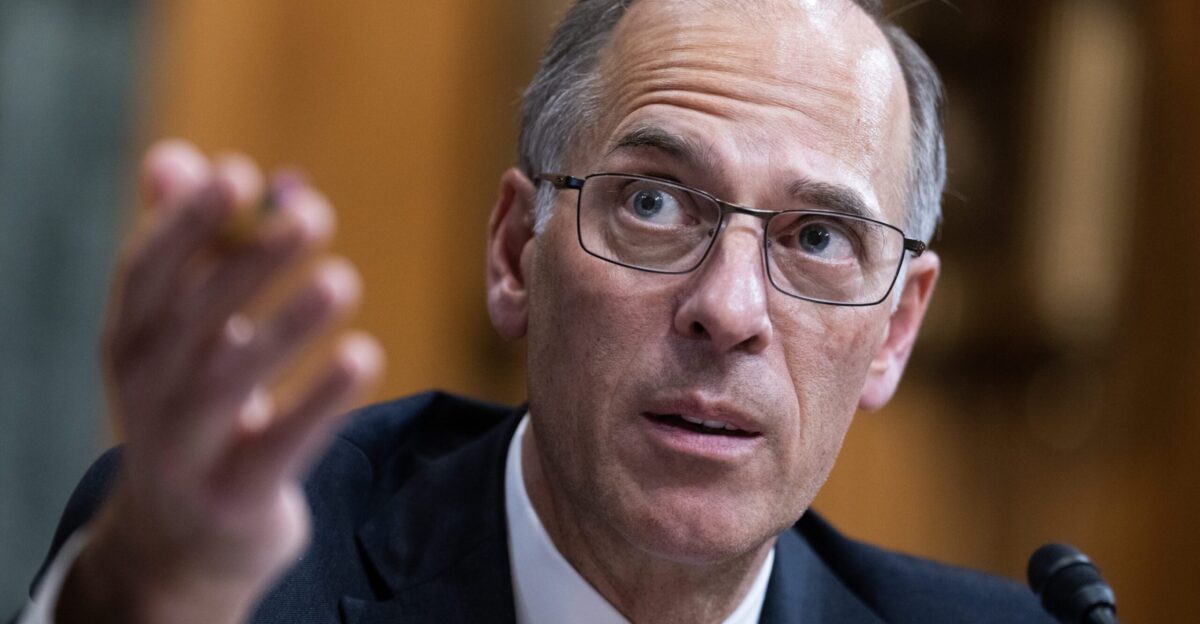
The ugly truth emerged: Moody’s Mark Zandi calculated that 53% of the ~400 industries tracked were cutting jobs in July. This breach of the “half industries” threshold (only healthcare was expanding) is a rare event.
Zandi noted it’s the most widespread sectoral downturn since early 2020, meaning even sectors that normally hire (like manufacturing and retail) are pulling back.
Meanwhile, stories from the factory floor began surfacing. “I never saw it coming,” said an Ohio auto parts worker whose plant just laid off dozens of teammates. “One week we were busy, the next week they said my job was gone.”
For that worker and many others, this is more than a number on a chart – it’s a personal crisis.
Regional Impact
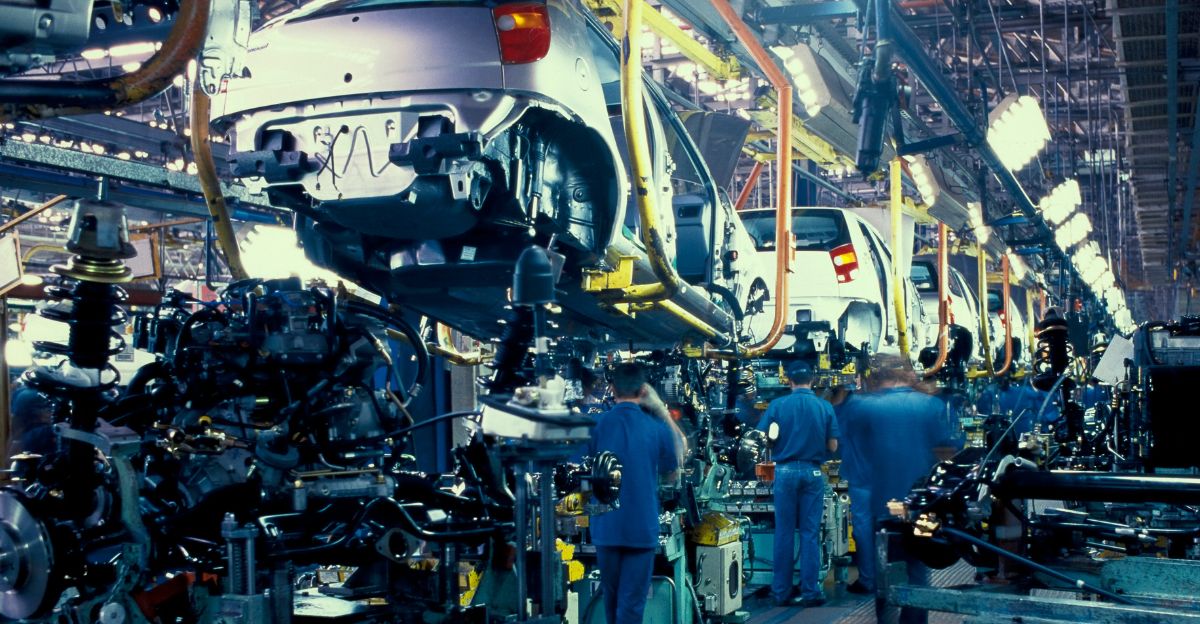
Geographically, manufacturing states felt it first. Goods-producing industries lost 13,000 jobs in July, nearly all in factories and construction. In particular, U.S. factories cut 11,000 jobs as auto and machinery plants slowed (Trump’s earlier promise of a manufacturing revival went unmet).
Construction payrolls remained soft amid building slowdowns.
Transportation jobs also stagnated; the unemployment rate in transit and warehousing ticked up noticeably.
In the service economy, only healthcare and education stood out as growth areas. Otherwise, retail and hospitality barely expanded.
Human Cost

BLS data showed wider pain. Unemployment ticked up to 4.2% in July – still low by historical standards, but rising after a prolonged drought of layoffs. The weakness hit some groups harder than others.
Unemployment among recent college grads edged higher (now ~2.7%), as entry-level hires evaporated. For Black workers, the rate climbed to about 7.2%, the highest since 2021 (many older workers who weathered past busts).
In this climate, experts sounded a human alarm. “The labor market is stalling out right now,” KPMG’s Diane Swonk told CNN.
She warned that without a quick turnaround, even more families could feel the pinch.
Banking Giants Sound Alarm

Major Wall Street banks took notice. JPMorgan economists reported that private hiring averaged only ~52,000 per month over the past quarter, with all sectors except health and education essentially flatlining.
In a research note, JPMorgan warned bluntly: a slump of this magnitude in labor demand is a classic recession warning signal. Investors have absorbed the message.
One JPM analyst wrote that the Fed may need to pivot because of these signs of “cooling” labor demand.
Meanwhile, Morgan Stanley and Goldman analysts echoed the warning: until we see consistent strength in new job creation, the odds of an economic downturn keep rising.
Macro Pressures

Beyond business cycles, policy moves amplified the slowdown. Stricter immigration enforcement has drastically shrunk the labor supply; Forbes notes the foreign-born workforce fell by roughly 1.2 million since early 2025.
Likewise, overall labor force participation slipped to about 62.2% (a nearly three-year low).
Job openings and workers are both down. Some Fed officials point out this unusual mix – weak hiring and a smaller labor pool – complicates policy.
Companies find fewer hires available, but they also aren’t firing as much; this can mask true slack in the economy.
Cracks in the ‘Safe’ Sectors

A closer look revealed that sectors once thought immune are now feeling the pain. Tech layoffs exploded: 2025’s first seven months saw about 89,000 tech jobs cut, up 36% year-over-yearchallengergray.com.
Retail has also backtracked sharply, with roughly 80,500 cuts so far in 2025 – a nearly 250% jump from last year, as inflation and tariffs hurt sales.
One laid-off software developer in Silicon Valley lamented, “I was building servers and now AI is doing some of my job – I never expected to be out the door.”
A California store manager similarly shared: “Inflation has kept shoppers away, and last month they told half of us to go.”
Fed’s Dilemma
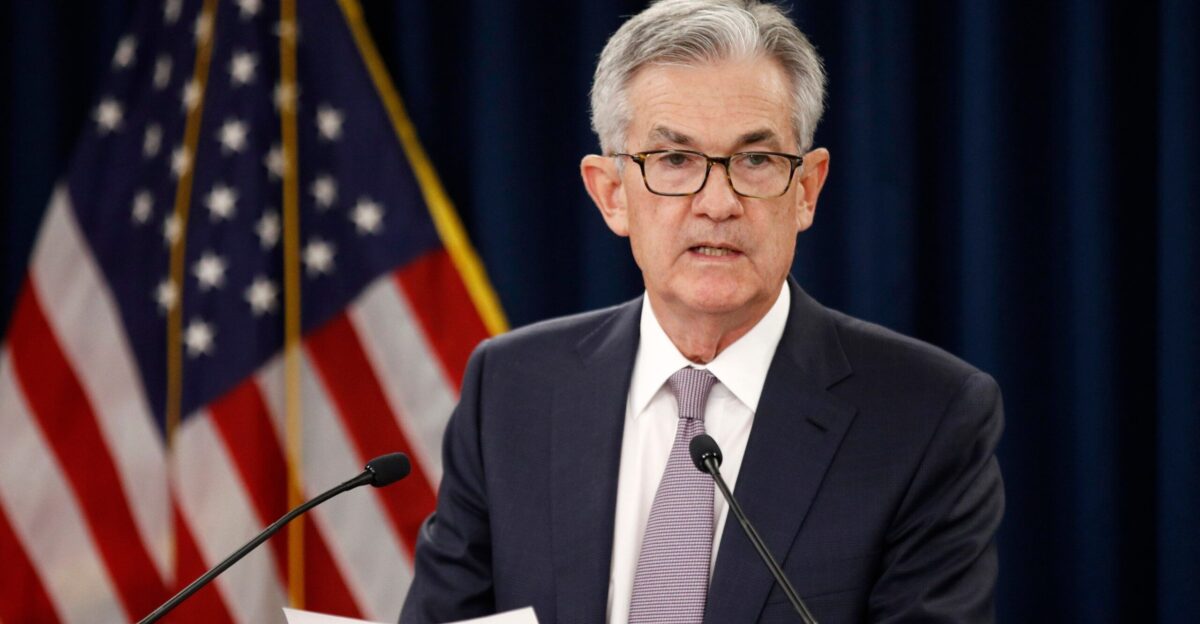
With these mixed signals, Fed Chair Jerome Powell faces a bind. Two Fed officials (Christopher Waller and Michelle Bowman) broke ranks in July to vote for rate cuts in an effort to stimulate growth.
Yet inflation remains stubborn: core PCE is running around 2.8%, above the Fed’s 2% goal.
Powell emphasizes the labor market’s strength (unemployment still ~4.2%) and notes that only when employment falters sustainably would he move rates. The Fed thus risks a stagflation-like scenario: weak growth alongside still-elevated inflation.
In such an environment, the Fed’s usual tools have limited power – lowering rates could fuel inflation further, while holding steady worsens the downturn.
Market Response
Markets quickly re-adjusted. Fed funds futures now price in an extremely high chance of a quarter-point cut at the September meeting – about 88–90% in early August, up sharply from under 50% before July’s report.
JPMorgan itself officially moved its forecast, predicting the first Fed cut would come in September instead of December.
Stock indexes, which had been trading near all-time highs, briefly dipped after the report but have since rebounded on hopes of easing.
In trading rooms, the common refrain was that the Fed’s next move must address this sudden labor slowdown.
Healthcare Holdout

Amid the gloom, healthcare remains a lone bright spot. The entire 73,300 July job gain came from healthcare and social assistance.
Within that, ambulatory care services (outpatient clinics, medical offices) hired ~34,000 new workers, and hospitals added another 16,000. Nursing homes and other care facilities also contributed.
This surge, driven by an aging population and persistent chronic-care needs, temporarily masks the economy’s broader troubles.
Yet analysts caution that healthcare’s growth is a “built-in tailwind” – one insurer CEO remarked that “with more seniors needing care, demand is almost guaranteed.” In other words, strong demographics keep healthcare hiring intact even as nearly everything else slows.
Expert Skepticism

Not everyone agrees on the causes. For example, UBS economists highlight the unusually short workweek as a worrying sign: in July, the average hourly workweek was only about 34.3 hours – lower than pre-pandemic norms.
They argue this indicates weak labor demand (employees are working less), not just a supply crunch. This view contrasts with Bank of America’s claim that tight immigration policies are solely driving labor shortages.
Even Fed officials have weighed in: Governor Michelle Bowman said the July report “confirmed some of the signs of fragility” in the labor market.
A growing chorus of analysts says the slump is more demand-driven than previously assumed, suggesting policy must focus on reigniting hiring rather than just boosting supply.
Future Implications
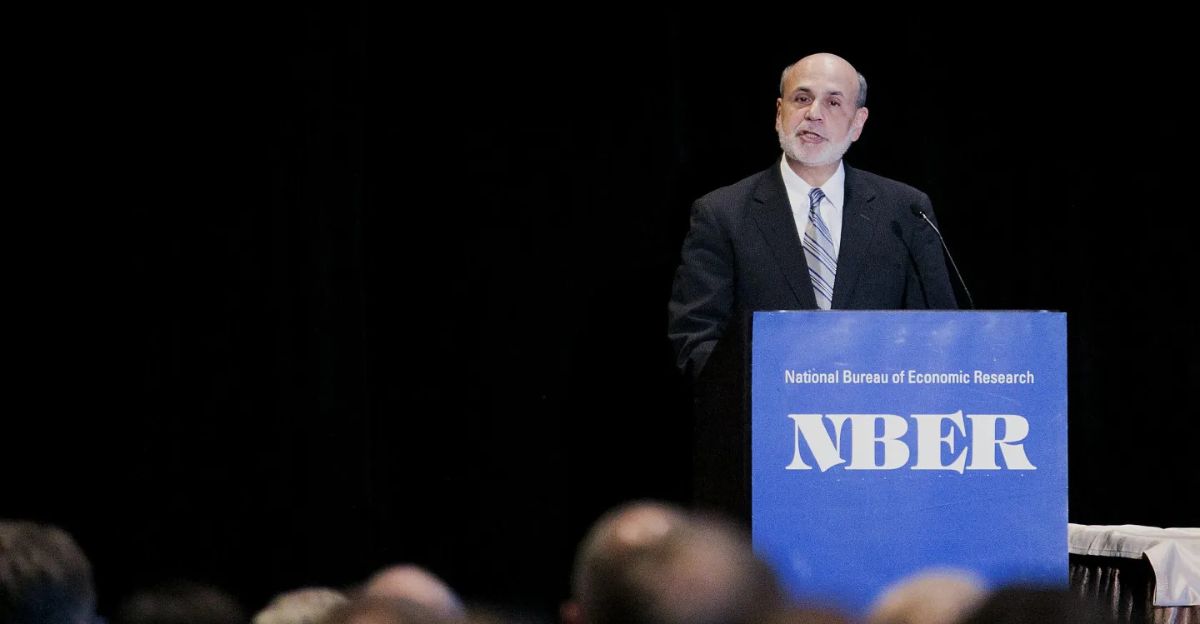
Economists remind us of the formal definition of a recession. The NBER (the U.S. recession referee) defines it as “significant declines in economic activity…across the economy, lasting more than a few months”.
By that metric, employment is the most important gauge – once payrolls fall for two months running, a recession is already underway. Indeed, Mark Zandi notes that consecutive monthly declines would likely prompt an NBER call.
If July’s slide were repeated in August, it would be a clear recession signal.
Forecasters warn that without a swift turnaround, we may soon tick that box – forcing a technical recession call even if other data remain mixed. In other words, continued job losses would push today’s worries into tomorrow’s official downturn.
Political Ramifications

The feeble job numbers have already played into politics. President Trump famously claimed the data were “rigged” and abruptly fired the BLS commissioner responsible for the report.
This move stoked controversy and raised questions about statistical integrity.
Meanwhile, the administration’s policies are under scrutiny. Many economists now ask: have Mr. Trump’s tariffs on steel, aluminum and autos and his tight immigration stance contributed to this fallout? Tariffs may have backfired – manufacturers cite higher input costs and uncertainty in hiring.
And some Republicans worry that more deportations could remove too many workers, clashing with job goals.
International Spillover

America’s slowdown is spilling across borders. In July, Canada’s economy lost 40,800 jobs – a massive swing from June’s gain.
Canadian officials and analysts pointed directly to U.S. tariffs on steel, aluminum and autos as a prime cause. Industries from steel fabrication to car parts have retrenched.
Manufacturing jobs in Canada are down nearly 10,000 year-on-year, according to Statistics Canada, as cross-border supply chains tighten.
Even though Canada’s economy is on a different cycle, the sudden U.S. policy shock has forced it to give back months of hiring.
Legal Challenges

The shrinking foreign-born labor force has implications beyond economics. Some sectors already worried about worker shortages – construction, health care, agriculture – may turn to the courts.
For instance, an industry trade group could sue the government, arguing that its strict deportation policies unlawfully impair critical labor markets.
Research suggests that removing over a million immigrants would eliminate millions of jobs in key industries. If farm fields go unharvested or hospitals can’t find staff, businesses may claim such outcomes contravene public policy.
Lawsuits could seek temporary exemptions or challenge enforcement on economic necessity grounds.
Generational Impact

The weakest cohorts are the youngest. Automation and AI are disproportionately whittling down entry-level roles. Goldman Sachs recently warned that Gen Z tech workers (20–30-year-olds) face rising unemployment as routine coding jobs vanish.
In fact, July’s data showed professional & business services lost tens of thousands of positions, reflecting companies automating junior tasks.
A recent computer science grad noted grimly, “One day I was writing code, the next month an AI tool did part of my job.”
Across Main Street, small service businesses have frozen hiring; many no longer take on summer interns.
Broader Reflection
Taken together, the current picture is unprecedented. A broad swath of industries is simultaneously cutting jobs, aggressive deportation policies shrinking the labor pool, and rapid AI-driven automation is colliding.
Some Wall Street strategists now argue that AI’s impact on hiring is “more of a stock market story than an economic story” – meaning it hasn’t yet delivered enough productivity gains to offset other hits.
Even so, investors point out that beliefs in temporary factors (temporary trade costs, temporary tech shifts) have kept markets buoyant.
Ultimately, policymakers face a test: the usual playbook (rate cuts or fiscal stimulus alone) may not suffice.