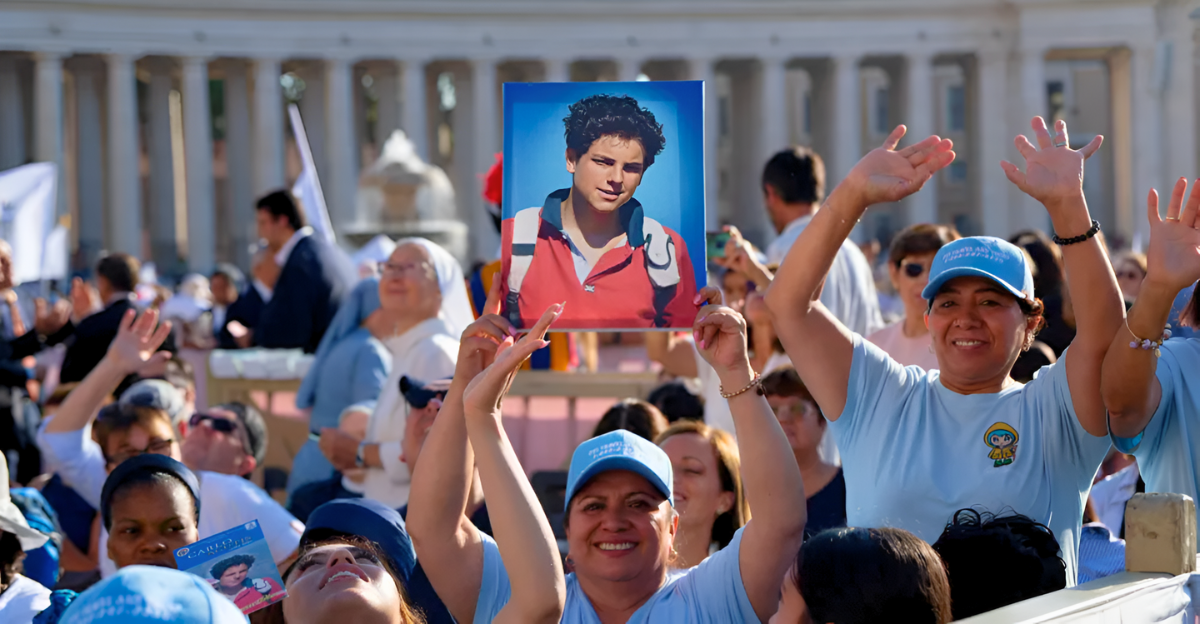
On September 7, 2025, St. Peter’s Square became the backdrop for a historic first. Pope Leo XIV canonized Carlo Acutis, declaring him the Catholic Church’s first millennial saint. According to Vatican officials, the open-air Mass drew nearly 80,000 pilgrims, with a noticeably young crowd waving banners and wearing T-shirts printed with his image.
News agencies like Reuters noted the unusual mix of smartphones and rosaries lifted into the air as the pope announced his sainthood, highlighting how Carlo’s story connects an ancient tradition with the digital generation.
A Saint of the Digital Age
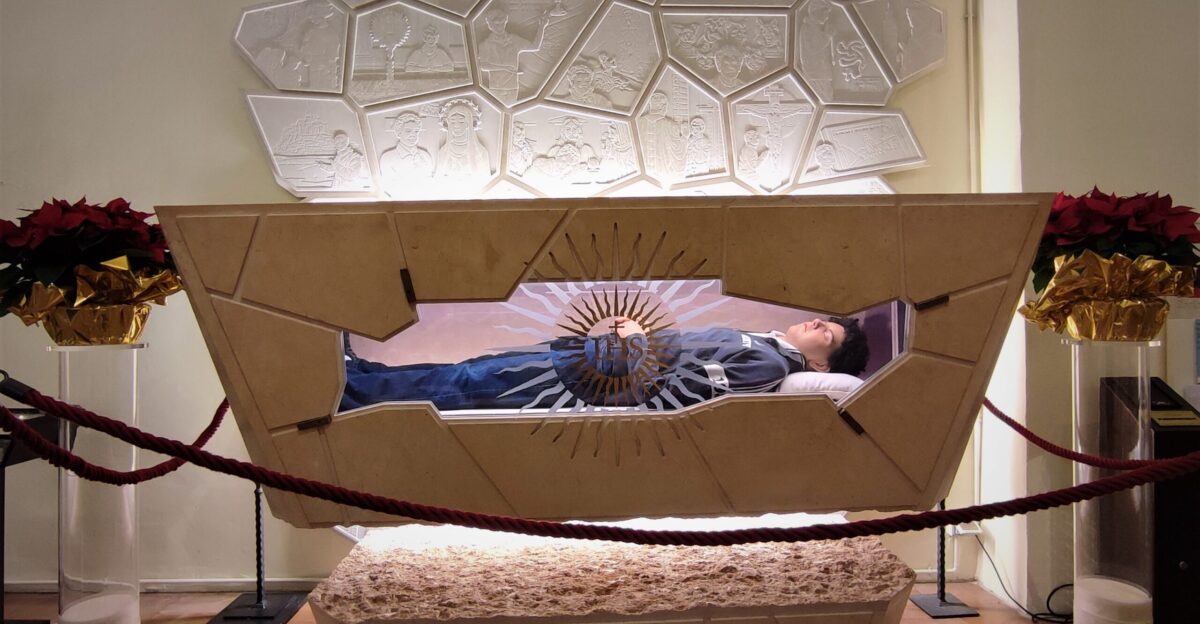
Carlo Acutis stands apart in Church history because of how he lived, not just how he died. Born in 1991, he grew up surrounded by technology and found ways to channel it toward faith. Nicknamed “God’s Influencer” by Catholic media, Acutis created online resources that reached millions.
Unlike past saints known for monasteries or missions, Carlo’s path unfolded through web pages, coding projects, and a voice that resonated with peers who spend more time online than in pews, as NPR observed in its coverage of the canonization.
The Life of Carlo Acutis

Carlo was born in London to Italian parents and later raised in Milan. Though his family was not particularly religious, his personal devotion grew quickly. By the time he was a teenager, he had been attending Mass daily and volunteering for marginalized people.
According to his mother, Antonia Salzano, in interviews with Vatican News, her son displayed an unusual maturity for his age, balancing hobbies like video games with an intense desire to help people experiencing poverty. Friends often recalled his generosity, saying his faith translated into small, everyday acts.
The Digital Catalog of Miracles

Acutis’s most famous contribution remains on his website cataloging Eucharistic miracles, which are compiled in multiple languages and are still alive today. Before his work, such efforts were largely academic or clerical. By creating a free, accessible archive, Carlo built what the Vatican later called a “digital pulpit” for the Church.
His work inspired exhibitions across continents, bringing stories of faith into schools and parishes. Journalists at the Associated Press highlighted how unusual it was for a teenager, rather than a priest or scholar, to influence Catholic education worldwide through coding and design.
Why the Church Took Notice

For Vatican officials, Acutis’s projects signaled more than technical talent. His life embodied what Church leaders describe as “heroic virtue,” a key standard for sainthood. His ability to use modern tools for spiritual ends resonated with Pope Francis, who previously urged Catholics to engage constructively online.
By canonizing him, the Church effectively affirmed that holiness can take shape in new spaces, on screens and servers as much as in cathedrals. Vatican officials said this recognition shows an openness to youthful innovation and cultural shifts.
The Path to Canonization
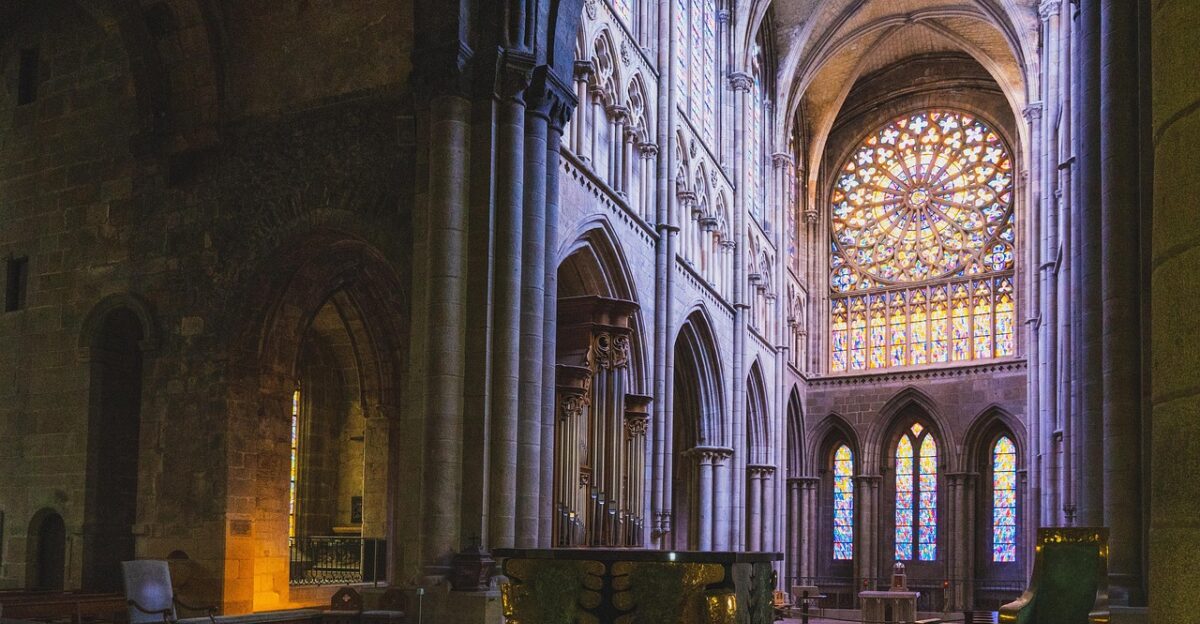
Canonization in the Catholic Church requires rigorous steps, including evidence of at least two miracles attributed to the candidate’s intercession. The first leads to beatification, the second to sainthood. Vatican investigators, including medical panels, scrutinize each case to ensure no scientific explanation exists.
Carlo’s cause advanced unusually quickly, with widespread devotion providing additional momentum. CNN reported that Church leaders cited his widespread digital following as proof of his global impact, echoing how saints of earlier eras inspired through travel and preaching.
The First Recognized Miracle
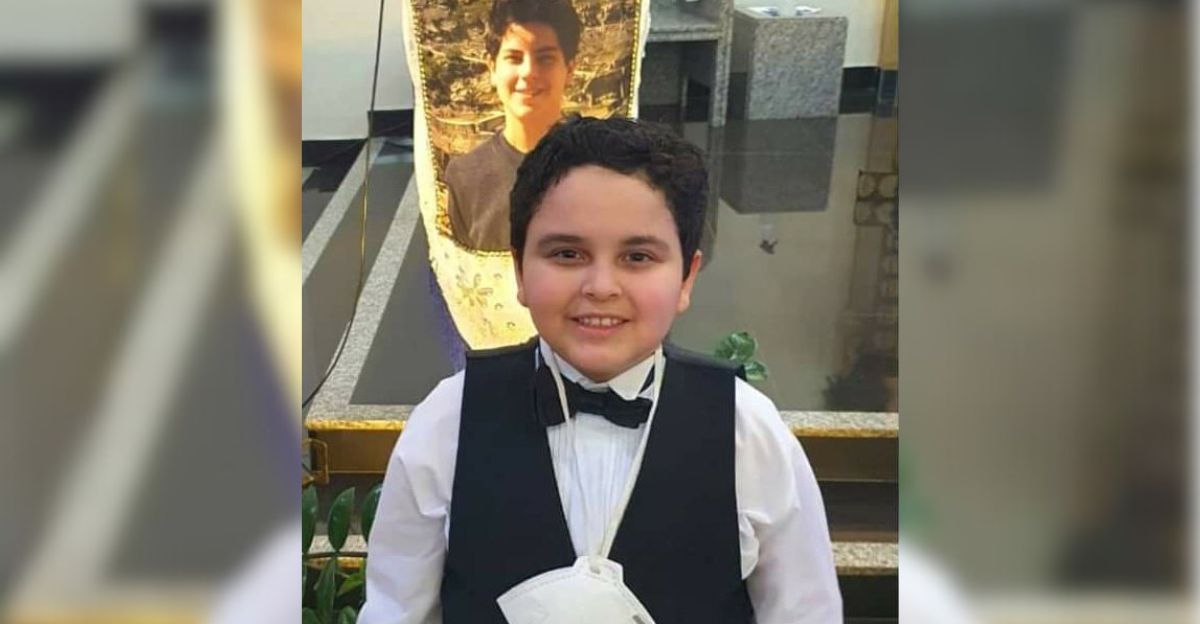
The initial miracle credited to Acutis involved a Brazilian boy suffering from a rare pancreatic disorder. After prayers were offered in Carlo’s name, the child recovered in a way doctors described as medically inexplicable. 2020 Pope Francis formally recognized this healing, paving the way for beatification.
Local bishops testified to the depth of devotion surrounding Carlo, noting how his story spread rapidly among young Catholics. This moment marked the Church’s acknowledgment of his intercession and set the stage for his eventual path to sainthood.
A Miracle in Costa Rica
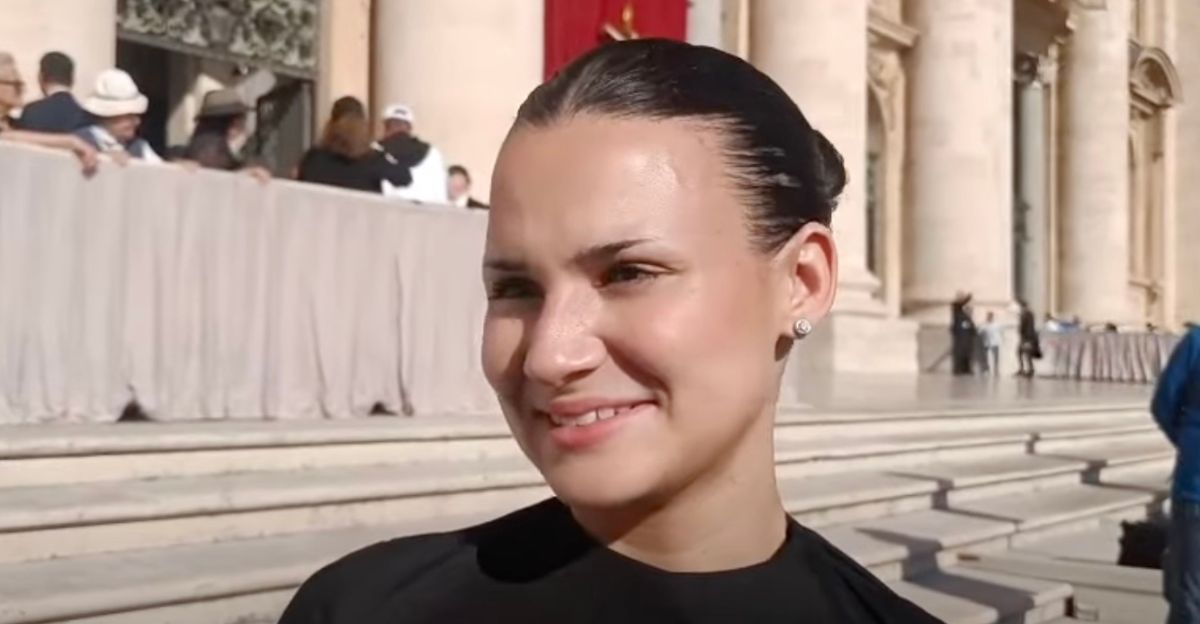
The second miracle came from Costa Rica. In 2022, 21-year-old Valeria suffered severe brain trauma in a cycling accident. Her mother traveled to Assisi, prayed at Carlo’s tomb, and soon after, doctors recorded a recovery they deemed extraordinary. Vatican investigators reviewed hospital records and concluded the healing defied natural explanation.
According to La Nación, the Costa Rican newspaper, medical experts who examined her case found no precedent for such rapid improvement. This event fulfilled the final requirement for canonization, securing Carlo’s place in Church history.
Medical Experts Weigh In

Though the Vatican relies on faith to interpret miracles, it also consults independent medical boards. In Valeria’s case, doctors confirmed the lack of scientific reasoning for her recovery. A Vatican statement summarized their conclusion: the healing was “instantaneous, complete, and lasting.”
For believers, these findings validate the role of divine intercession. For skeptics, they highlight the complexity of medicine when science cannot fully explain outcomes. Either way, Carlo’s association with these events became central to the Vatican’s decision to elevate him to sainthood.
Pope Leo XIV’s Homily
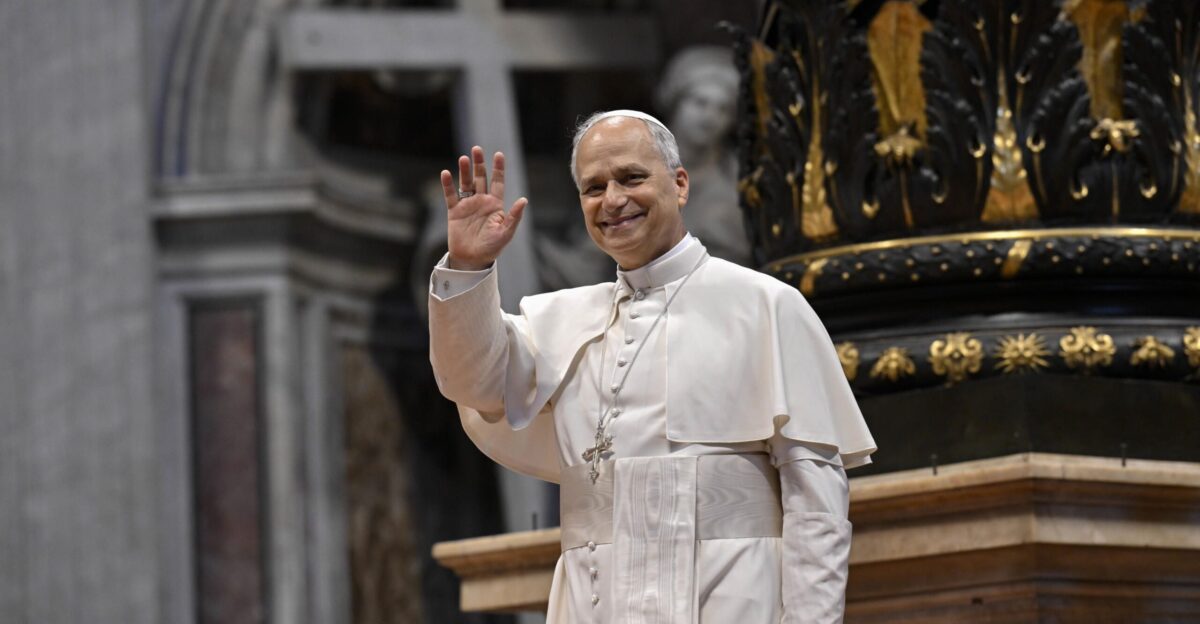
Pope Leo XIV, the first American pope, presided over Carlo’s canonization with words that resonated widely. In his homily, reported by Vatican News, he said Acutis “turned his short life into a masterpiece for God.”
He urged young Catholics to follow Carlo’s example, not by replicating his work exactly but by using their talents to serve others. By linking Carlo with Pier Giorgio Frassati, another young saint, Leo underscored the theme of youth as influential contributors to faith and community in the 21st century.
A Family’s Witness
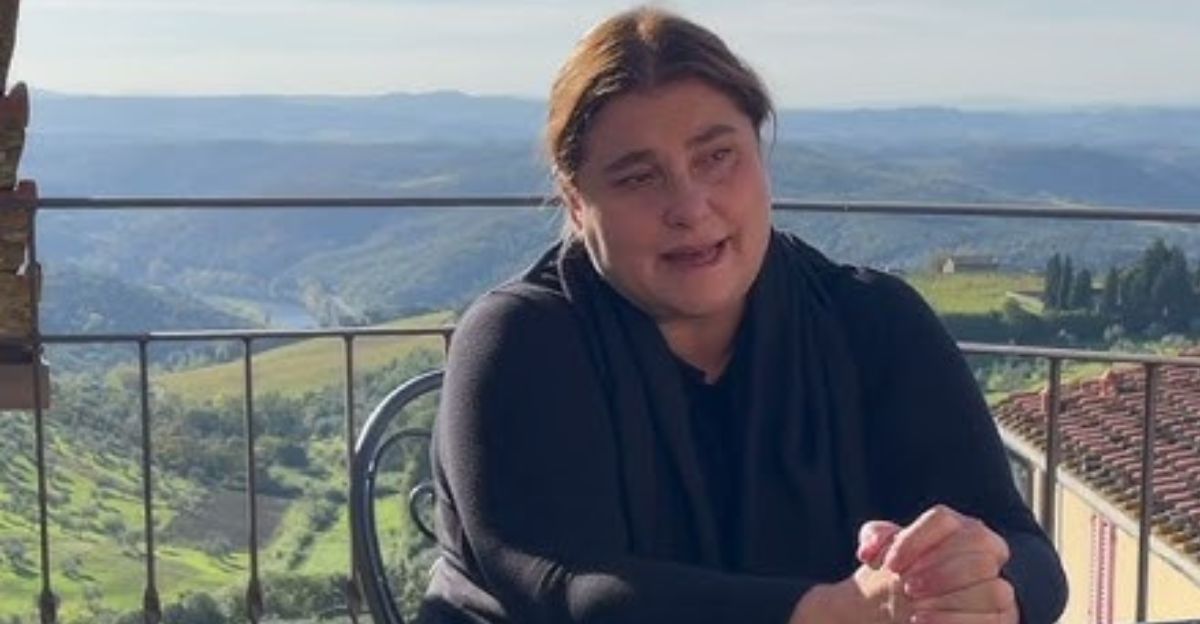
Carlo’s mother, Antonia Salzano, has become one of the most visible voices preserving his memory. At the canonization, she described seeing her son’s life “transformed into a sign for millions,” according to interviews with Vatican outlets.
She often speaks about his joy, generosity, and creative internet use as a counterweight to harmful online culture. For her, the canonization recognized holiness and comfort after personal loss. Her testimony humanizes Carlo, keeping his story grounded in the everyday realities of family life.
From Beatification to Canonization
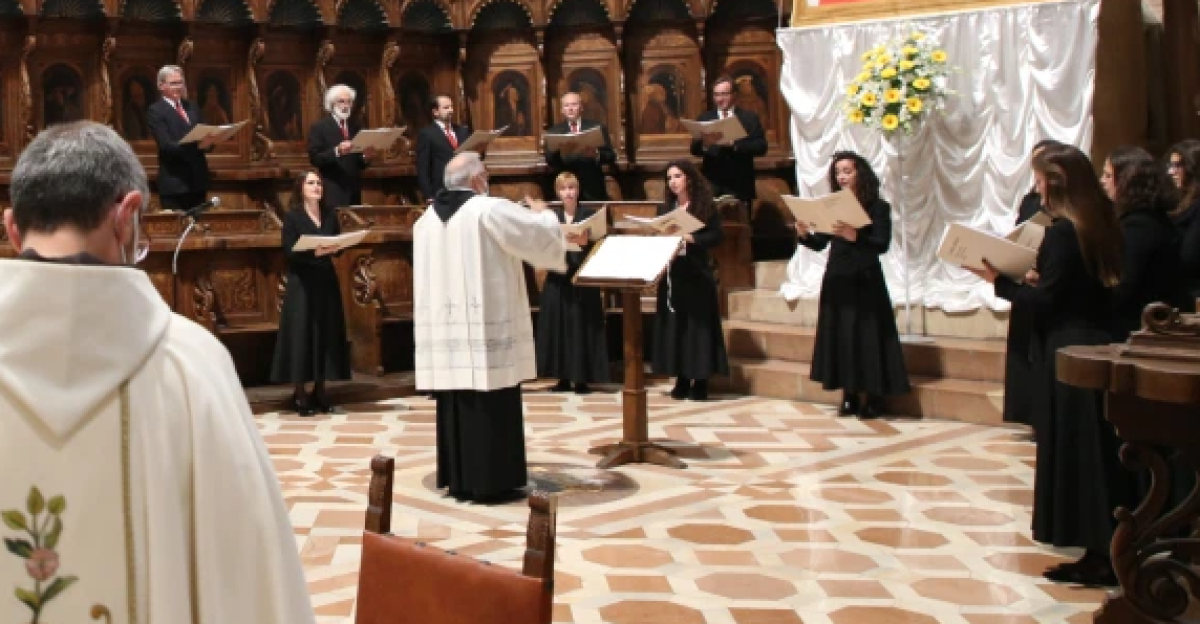
Carlo’s cause advanced at an unusual speed compared with most saints. In 2020, Pope Francis approved his beatification, following recognition of the Brazilian miracle. Beatification ceremonies in Assisi drew thousands, and images of Carlo in sneakers and jeans caught global attention.
Vatican historians pointed out that while some causes take centuries, Carlo’s digital footprint made verifying his virtues more straightforward. Photographs, writings, and videos left a vibrant record. Church officials suggested that this transparency accelerated trust in his candidacy and deepened devotion among young Catholics worldwide.
Relatable Role Model for Youth
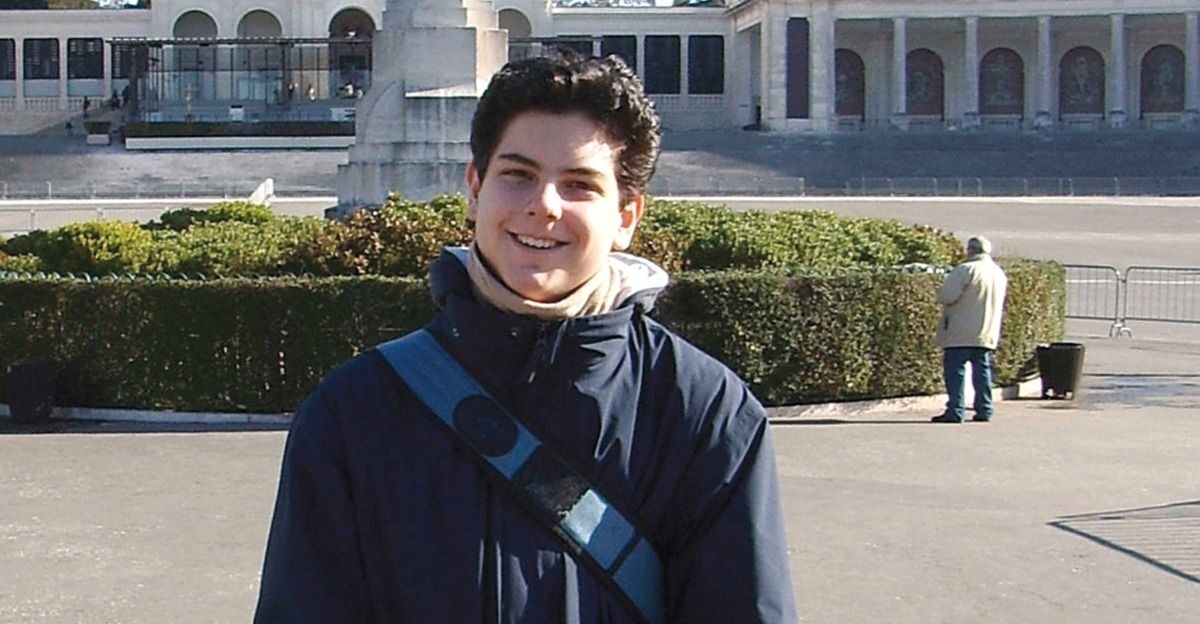
Carlo’s sainthood is especially significant for teenagers and young adults. Vatican officials often highlight that he loved sports, pets, and video games, ordinary interests that make him relatable. His ability to blend everyday hobbies with spiritual seriousness illustrates that sanctity need not mean detachment from modern life.
As the Catholic Herald reported, schools and parishes worldwide have adopted his story as a teaching tool, emphasizing that holiness can look like a young person in casual clothes who chooses generosity and faithfulness each day.
Stories of Kindness in Daily Life

Beyond coding and projects, friends and family recall Carlo’s daily acts of kindness. He was known to sit with classmates experiencing family difficulties, share food with people experiencing homelessness, and give pocket money to people in need.
These stories, shared in diocesan bulletins, paint a portrait of someone whose faith was lived out in practical ways. Unlike saints of earlier centuries whose lives can feel distant, Carlo’s actions are easy to imagine in a modern context, which helps explain his popularity among young Catholics.
A Legacy of Online Evangelism
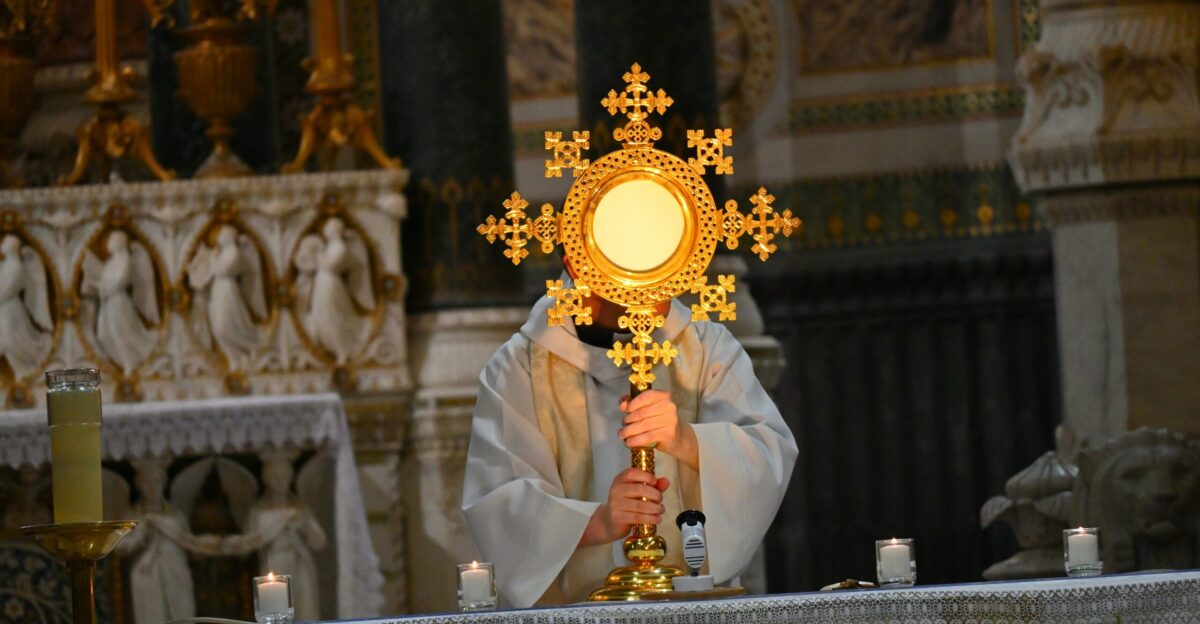
Carlo’s website, documenting Eucharistic miracles, attracts millions of visitors in multiple languages. Catholic schools often use it in religion classes, and parishes have adapted it for local exhibitions. According to the Catholic News Agency, the site remains one of the most visited Church-related resources online.
This enduring presence shows that Carlo’s influence extends beyond his short life. His canonization formalizes what happened when young Catholics turned to him as a role model and digital guide.
Engaging the Digital Generation
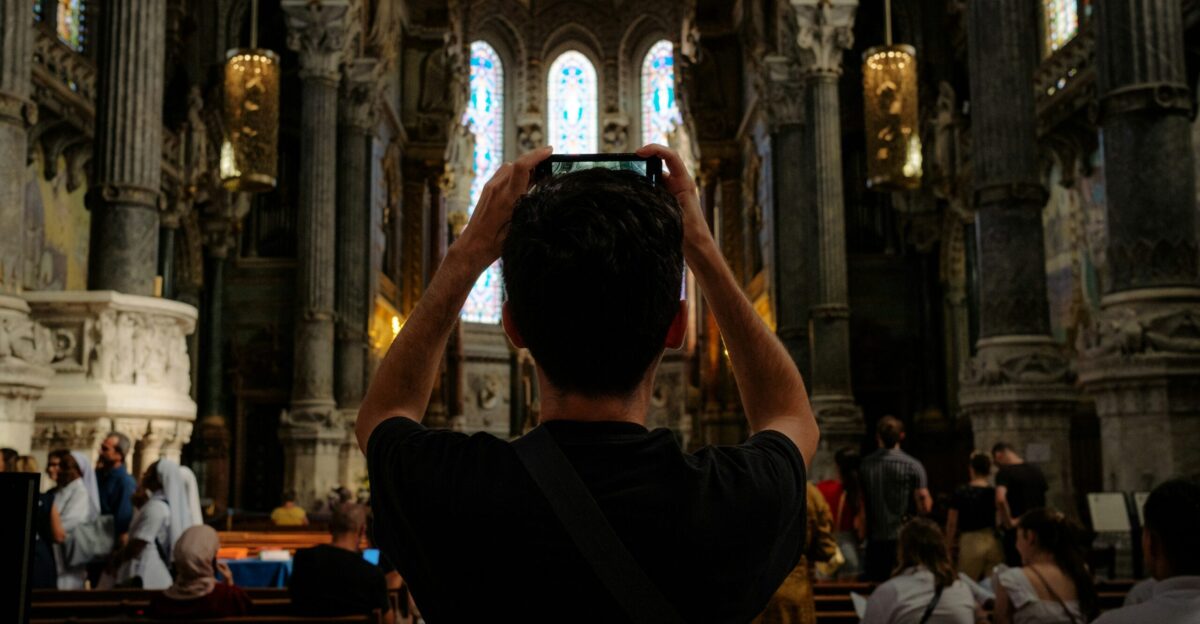
Vatican officials have openly connected Carlo’s canonization to broader outreach. Archbishop Rino Fisichella, head of the Dicastery for Evangelization, said in a press briefing that his sainthood demonstrates “the Church’s recognition of the digital continent.”
Discussions surrounding his canonization included themes of online safety, responsible social media use, and building positive communities online. By elevating Carlo, the Church highlighted his individual life and its desire to meet young people where they are, on screens, in forums, and across global networks.
Challenging Traditional Imagery
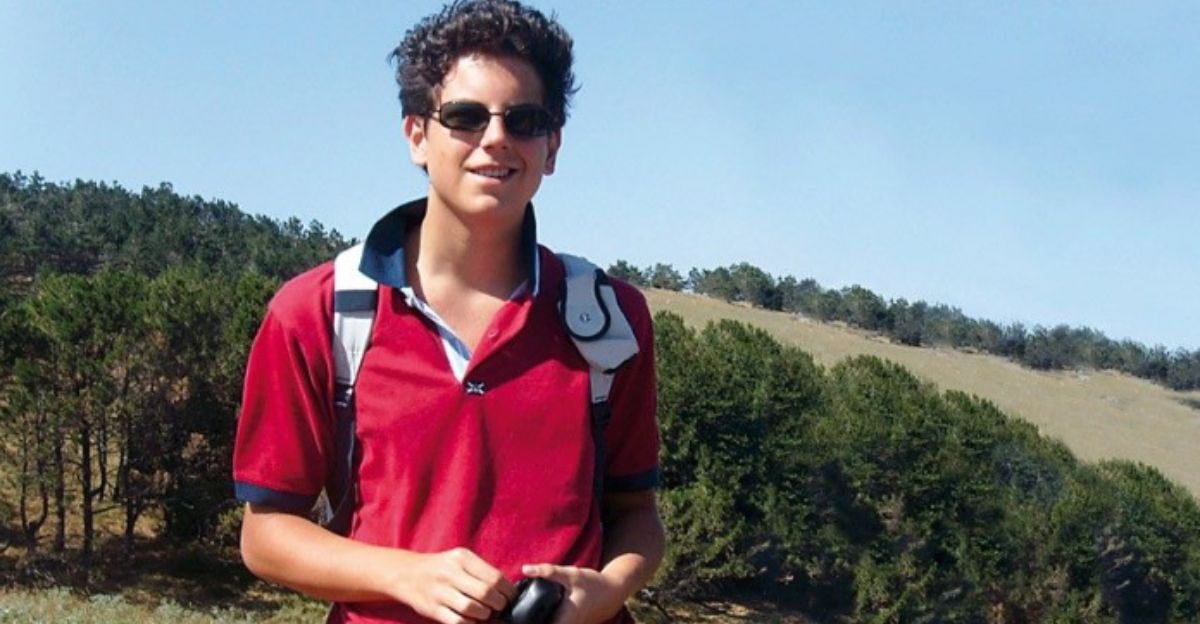
Carlo’s image departs sharply from traditional saint portrayals. Official artwork and widely circulated photos show him in jeans, sneakers, and T-shirts, often with his signature tousled hair. Catholic media outlets note that his casual appearance resonates with teenagers who might struggle to relate to saints depicted in medieval robes or solemn portraits.
This visual shift reflects a more profound message of how holiness can look ordinary. For the Church, it is a symbolic break from centuries of imagery, aligning with the reality of modern youth culture.
Global Reactions to Sainthood
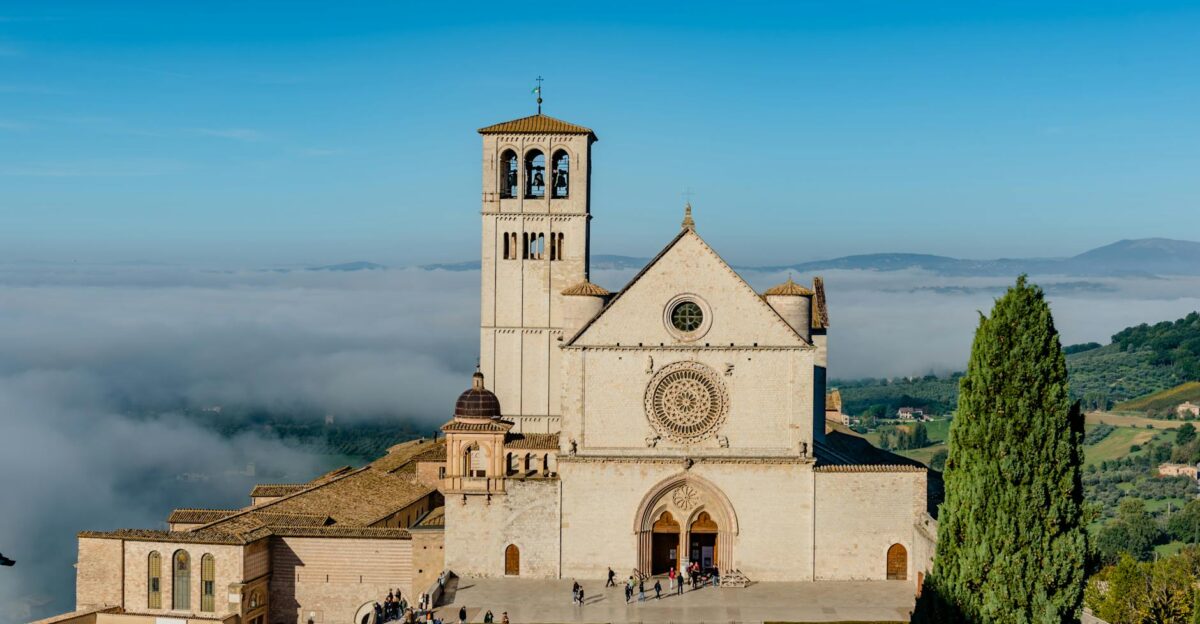
After the canonization, pilgrimages to Carlo’s tomb in Assisi surged. Families, youth groups, and individuals from dozens of countries have traveled to honor him. According to Italy’s La Repubblica, organizers reported record numbers of visitors in the weeks following the event.
For many young Catholics, Carlo’s story affirms that faith and modern life are not mutually exclusive. His recognition sparked renewed energy in parishes worldwide, particularly among youth ministries seeking role models who reflect spiritual depth and contemporary relatability.
Educational and Social Impact
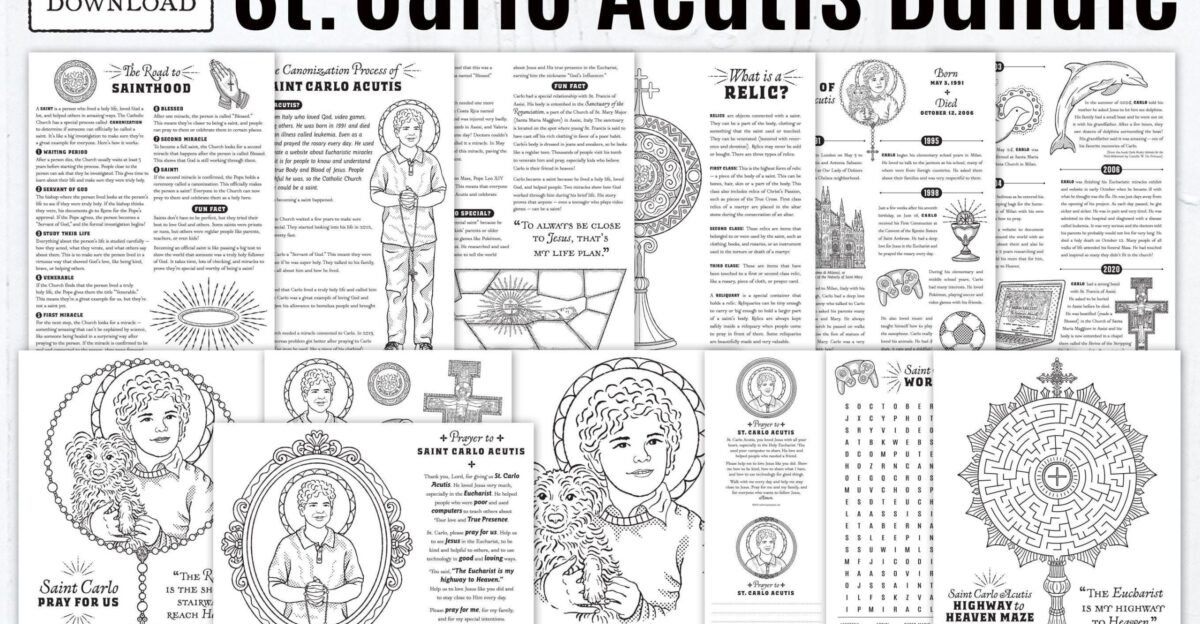
Catholic schools and dioceses are already weaving Carlo’s story into curricula and outreach programs. Workshops encourage students to use digital skills for good causes, echoing Carlo’s projects. International youth events feature exhibitions based on his Eucharistic miracles website.
Crux reported that educators see in him a model of how faith can inspire creative service. This lasting institutional impact ensures that his influence extends well beyond ceremonies in Rome, shaping how young people engage with technology and faith in the years ahead.
The Meaning of Carlo’s Canonization
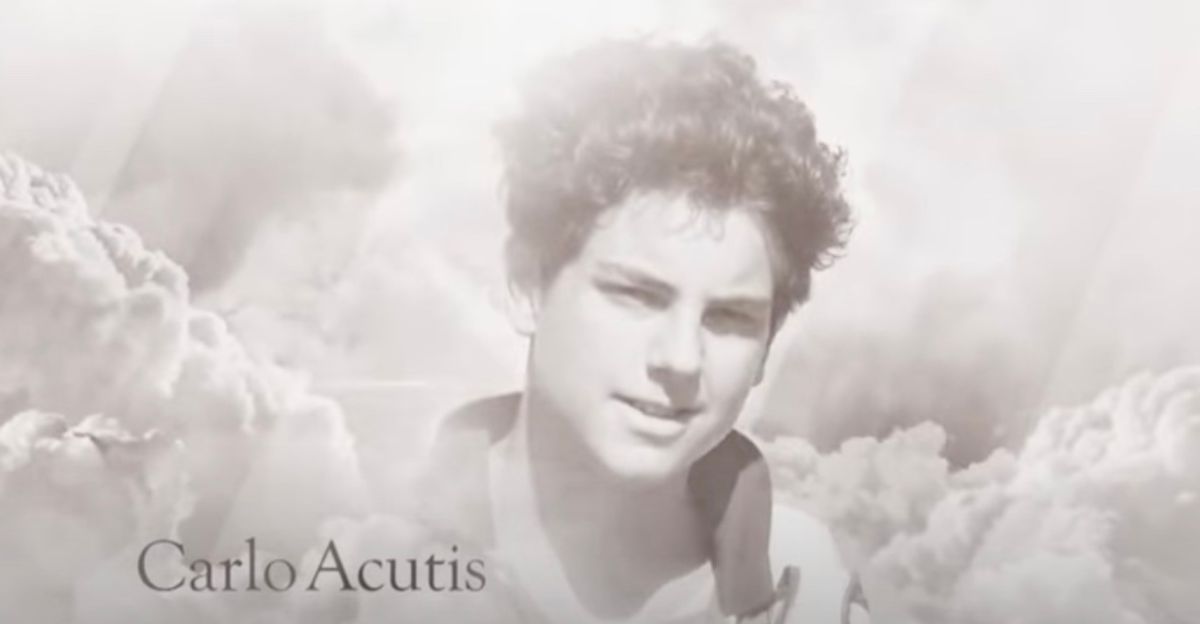
The recognition of Carlo Acutis as a saint signals a turning point. The Church acknowledged that sanctity can thrive in digital spaces by honoring a millennial who lived through the internet age. His story bridges old and new, faith and technology, offering a blueprint for how religion adapts to contemporary life.
For many Catholics, it affirms that ordinary young people, with laptops and smartphones, can embody extraordinary virtue. Carlo’s legacy is now a beacon for a generation searching for purpose and connection.