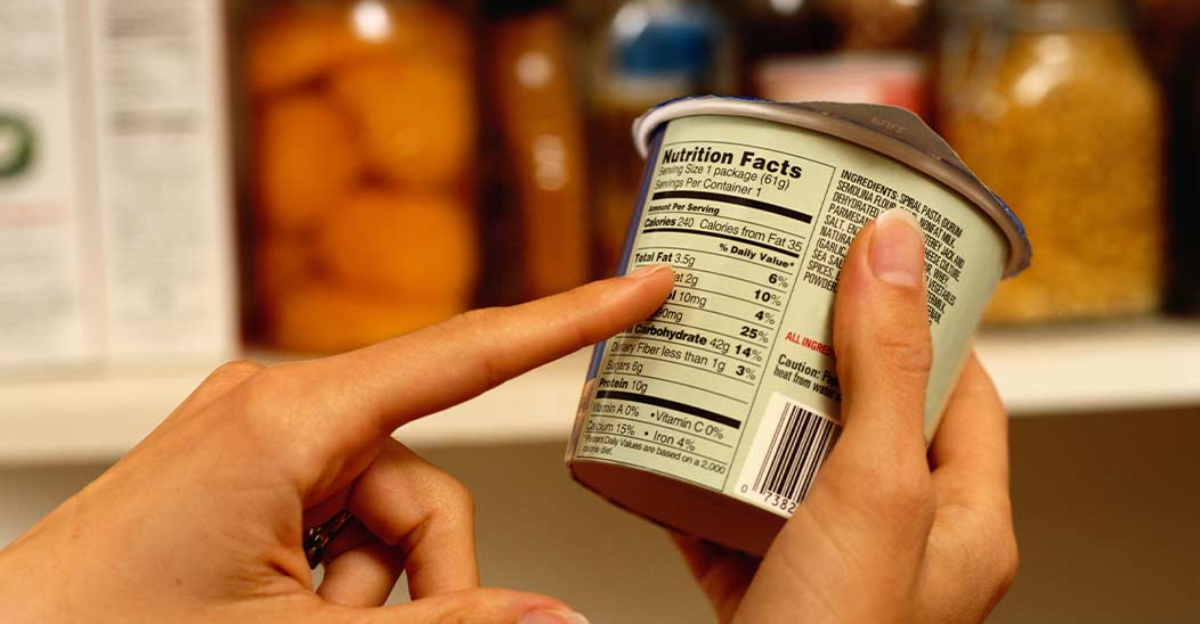
If you’ve ever stared at a nutrition label and felt like you were busy with a scientific equation, you’re definitely not alone. Between grams, percentages, and ingredients you can’t pronounce, those little boxes can be pretty intimidating. But once you know what to look for, and what to ignore, nutrition labels become one of your best tools for making smarter choices without giving up your favorite foods.
Start with the Serving Size
The first thing to look at on any nutrition label is the serving size. It’s the starting point for everything else like calories, fat, sugar, all of it. The tricky part? Packages often containhave more than one serving, even if it looks like a single snack. That “150 calorie” bag of chips could really be two servings, meaning you’ll end up eating 300 calories if you polish off the whole thing.
A good trick is to visualize the serving in real-world terms, like cups, pieces, or slices. That makes it easier to match what’s on the label to what’s actually on your plate. If you end up skipping the serving size and just eat what you feel like, you might be shocked as to how many calories you’ve actually had.
Calories and the Nutrients That Matter
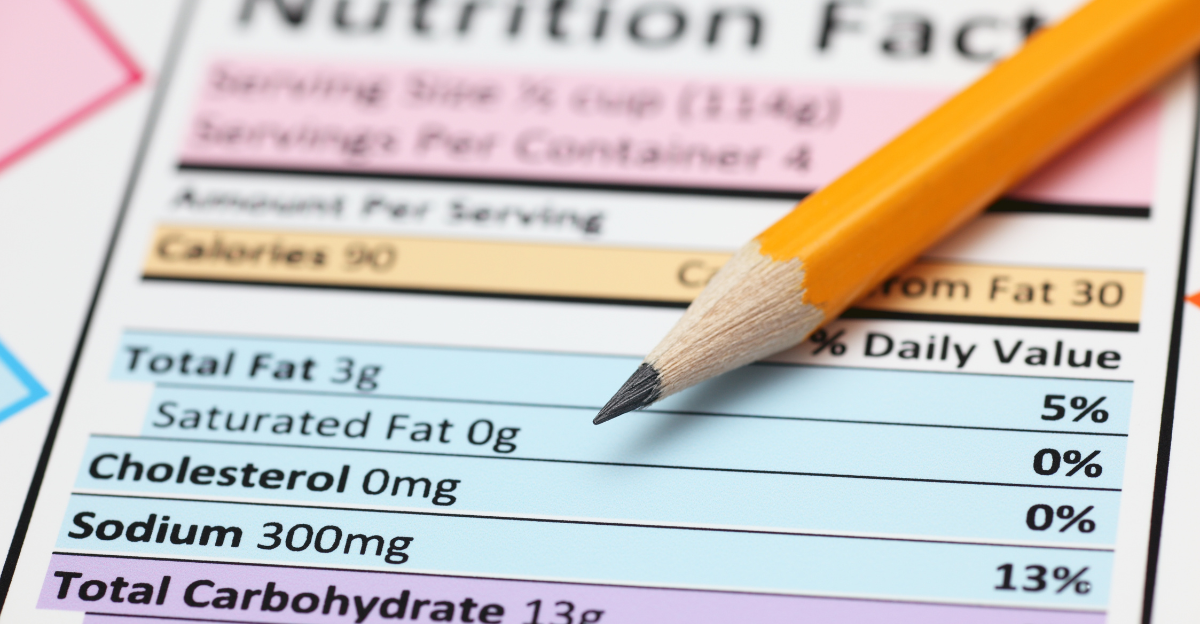
Calories tell you how much energy a food offers, but they’re not the full picture. What matters more is where those calories come from. A handful of almonds might be high in calories, yet it’s packed with protein and healthy fats that keep you full. On the other hand, a “100-calorie” cookie might hit your sweet tooth but leave you hungry again an hour later.
When scanning the rest of the label, focus on two categories: nutrients to limit and nutrients to embrace. Try cutting back on saturated fat, sodium, and added sugars as too much of these can take a toll on heart health and energy. Look for higher amounts of fiber, protein, calcium, and iron instead. Fiber, especially, is your friend. It helps keep you satisfied longer and supports healthy digestion.
The Power of % Daily Value
That “% Daily Value” (%DV) column down the right side of the label is like your quick reference guide. It shows how much a nutrient contributes to your daily diet, based on a 2,000-calorie day. Think of it as a traffic light system: 5% or less means the food is low in that nutrient, while 20% or more means it’s high.
So, a cereal with 25% DV of added sugar might make you pause, but one with 20% DV of calcium deserves a gold star. Keeping an eye on these numbers helps you balance your overall intake throughout the day.
The Ingredient List
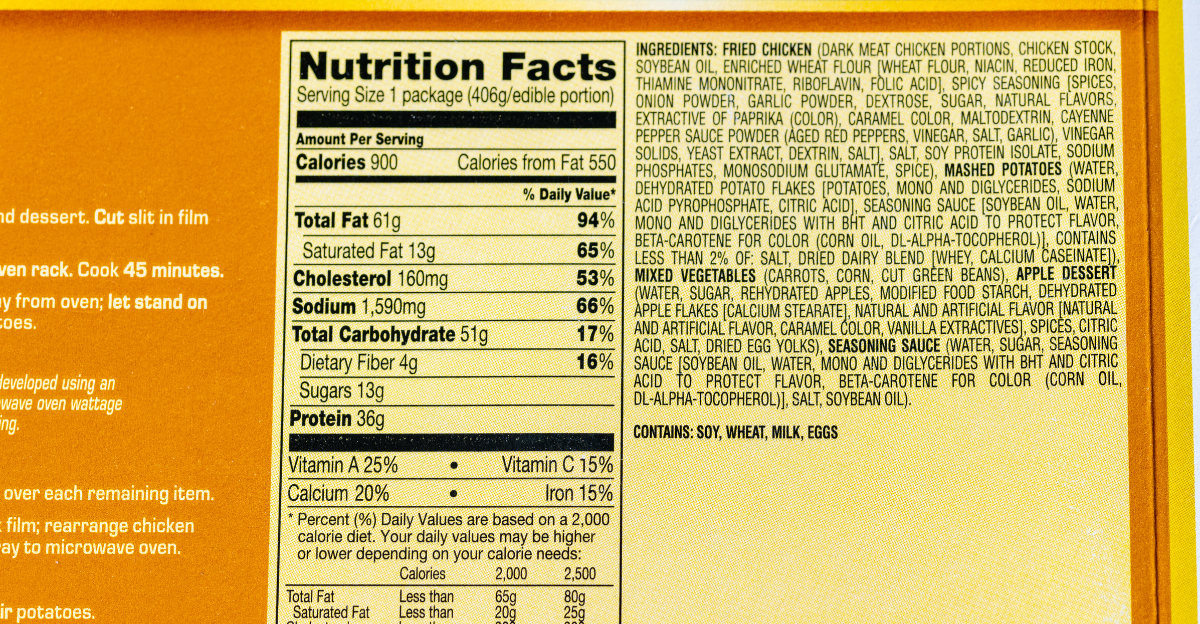
The bottom of the nutrition label is the most important part of it all, this is where you know what you’re really putting into your body. Ingredients are listed from most to least by weight, so the first few make up the majority of what you’re eating. If sugar, corn syrup, or refined flour show up early, the product is more treat than nutrition.
Also, don’t be fooled by trendy marketing terms like “multigrain,” “natural,” or “low-fat.” “Multigrain” doesn’t always mean whole grain, and “low-fat” foods often compensate with added sugar. Instead, look for simple, recognizable ingredients and words like “whole grain,” “high fiber,” or “no added sugar.”
One last thing, sugar goes by a shocking number of names like cane juice, dextrose, malt syrup, agave, honey, even fruit juice concentrate. If you spot several of these in one product, it’s a clue that sweetness is being added in different forms. Ideally, choose foods with fewer than 10 grams of added sugar per serving.
Putting It All Together
Once you get the hang of it, reading nutrition labels becomes second nature. You’ll start noticing that Greek yogurt generally has more protein than flavored varieties, or that your “healthy” granola bar might have just as much sugar as the cookie you’re actually craving. It’s not about memorizing every number, it’s about understanding the patterns.
With just a quick scan of the serving size, calories, key nutrients, and ingredients, you’ll have all the information you need to make better choices every time you shop. With a little practice, you’ll be label-savvy, confident, and fueling your body with foods that help you thrive rather than trick you.
Sources:
U.S. Food and Drug Administration (FDA), “How to Understand and Use the Nutrition Facts Label,” May 2, 2024
Heart Foundation South Africa, “Understanding Food Labels 101,” February 21, 2018
Bestmed, “How to Read a Nutrition Label Like a Pro: A Dietitian’s Guide,” March 25, 2025
NHS (UK), “Food Labels,” September 27, 2022
American Heart Association, “Understanding Food Nutrition Labels,” September 10, 2025
Academy of Nutrition and Dietetics (Eatright.org), “The Basics of the Nutrition Facts Label,” June 22, 2025