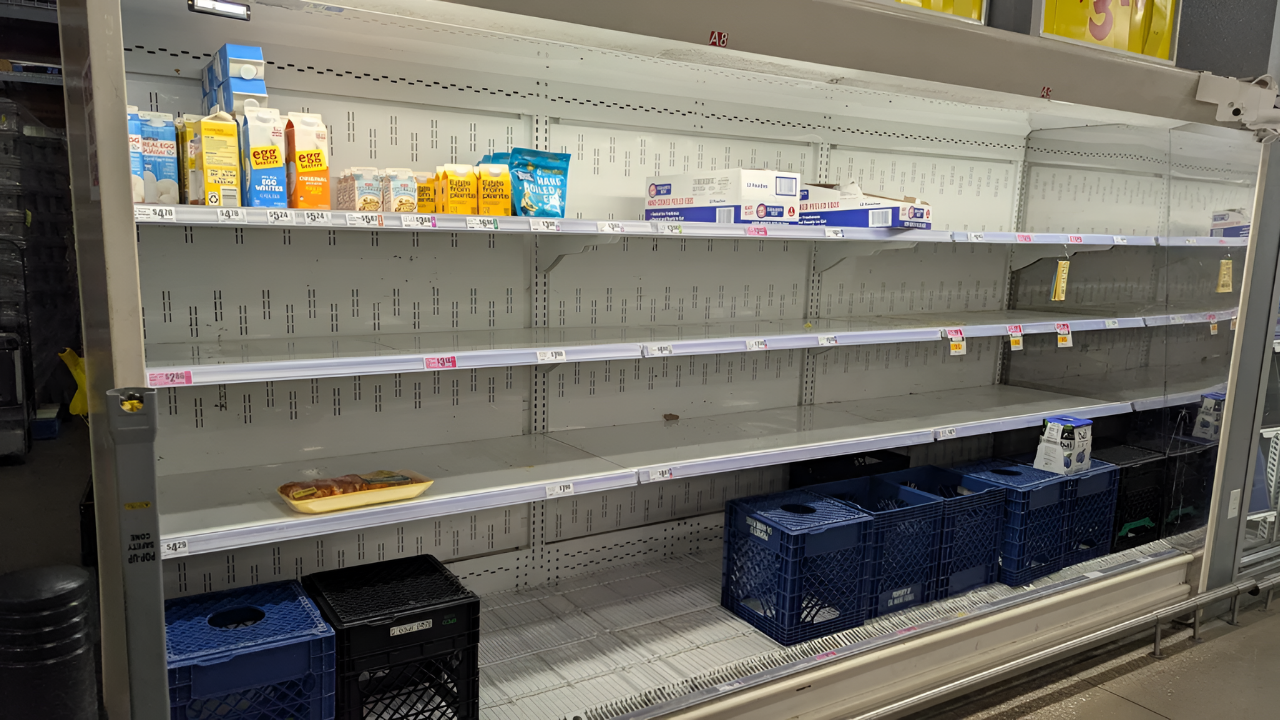
A massive winter storm spanning nearly 2,000 miles has unleashed one of North America’s most severe weather events in recent years, merging Arctic cold with Gulf moisture to threaten millions across the Mid-South, Great Plains, South, and Northeast.
Arctic Blast Origins
Disruptions in the upper atmosphere elongated and displaced the polar vortex from its usual hold over Canada and Alaska, plunging frigid air southward. This cold air mass collided with moisture from the Gulf of Mexico and eastern Pacific, creating atmospheric instability that drove a sprawling ice and snow onslaught. Families in affected regions heavily depleted store shelves, grabbing food, water, batteries, and heating aids as widespread Winter Storm Watches escalated into Warnings.
Panic Buying Surge
In Kentucky, Tennessee, and Arkansas, residents rushed retailers on January 22, rapidly buying up stocks as fears of power outages and blocked roads mounted. From January 23 to 25, more than 10,000 flights in the United States were canceled or postponed as icy conditions and heavy snow disrupted air travel, complicating restocking efforts for major chains. Hardware and home‑improvement outlets across the South and Midwest saw surging demand for generators, space heaters, and propane, with some locations imposing purchase limits to curb hoarding.
Widespread Disruptions
The storm has caused dozens of fatalities across the United States, including deaths from hypothermia in Louisiana, Michigan, Tennessee, and other states, as well as multiple traffic crashes in snow and ice. By January 25, over one million customers had lost power, primarily in Texas, Louisiana, the Mississippi Delta, and parts of the southern Ohio River basin, as ice coated lines and winds over 70 mph toppled infrastructure. Governors in at least 24 states, from Texas to Georgia and up through the Midwest and Mid‑Atlantic, issued emergency declarations, activating National Guard units and allocating funds such as Arkansas’s $250,000 disaster response authorization. Retail closures, halted Amtrak routes, and postponed sports events — including NBA games — compounded disruptions, stranding some communities with limited access to groceries, fuel, and pharmacies.
Far-Reaching Economic Ripples
The storm has strained supply chains nationally and internationally: more than 20,000 flights have been canceled over several days, delaying passenger travel and cargo movements across North America. Cold and ice have disrupted transportation networks and energy production, affecting deliveries of North American agricultural products, industrial goods, and fuel. Agriculture and energy markets have reacted with notable volatility, including spikes in some agricultural futures and regional power and fuel prices. Hospitals in hard‑hit areas have reported surges in weather‑related injuries, traffic accidents, and exacerbations of chronic conditions, while ambulance response times have slowed and some elective procedures have been postponed.
Debates on Resilience
The storm’s scale has fueled discussions on climate change’s role in extreme winter weather, with some experts suggesting that Arctic warming and polar vortex disturbances may influence such events, while others emphasize natural variability and existing climate patterns. Emergency and repair sectors — from HVAC services and propane deliveries to towing and utility crews — have seen intense demand, even as the event exposes grid frailties and infrastructure vulnerabilities. As weather patterns grow more erratic, calls are increasing for infrastructure upgrades, including hardened power lines, improved vegetation management around utilities, and more resilient transportation and communication networks.
This event underscores modern vulnerabilities: from local runs on store supplies to global transportation and market delays, it highlights the need for robust supply networks, emergency readiness, and adaptive investments to mitigate escalating weather risks.
Sources:
“Winter Storm Fern Turns Deadly: Live Updates.” The Weather Channel, 25 Jan 2026.
“January 2026 North American winter storm.” Wikipedia, 25 Jan 2026.
“Winter storm grips much of US in snow, ice, Arctic cold.” Reuters, 24 Jan 2026.
“Winter storm leaves over a million people without power, thousands of flights cancelled.” Al Jazeera, 25 Jan 2026.