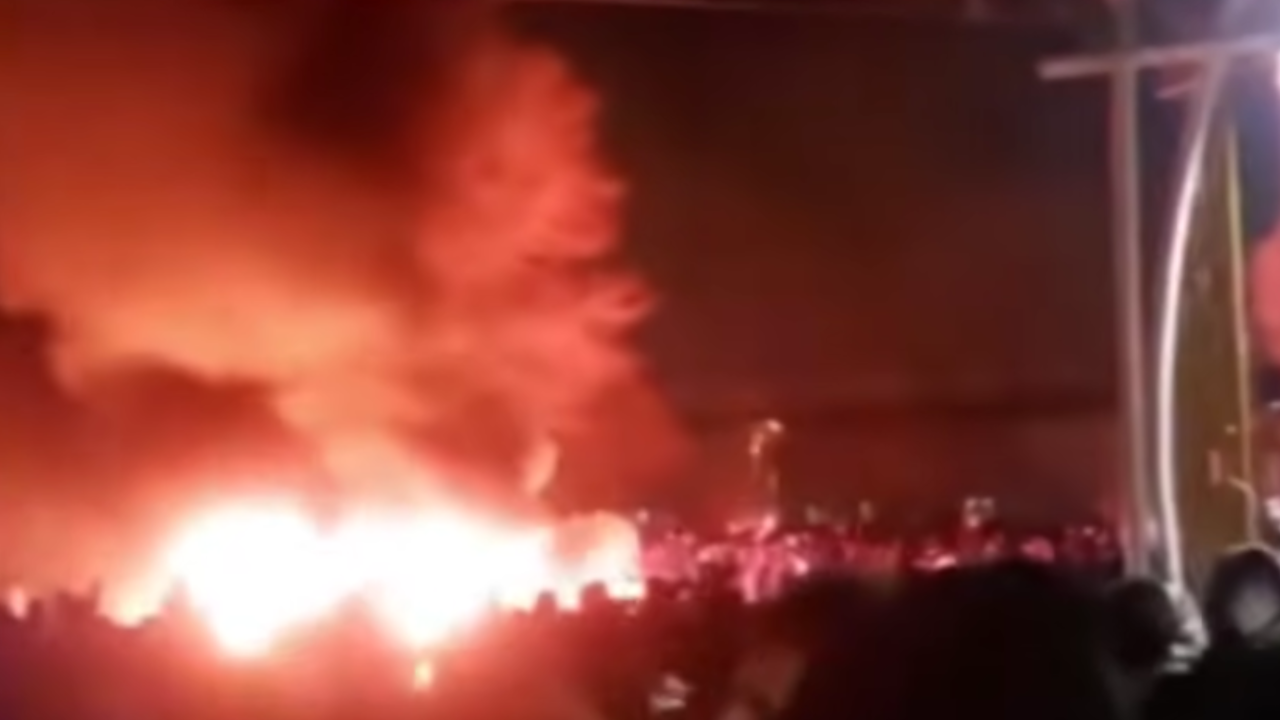
A blinding flash pierced the Ukrainian night sky on January 8, 2026, as Russia’s Oreshnik hypersonic missile streaked toward its target at speeds exceeding Mach 10. Striking the Lviv region, just 60-70 kilometers from Poland’s border, the attack thrust the conflict perilously close to NATO’s eastern flank, prompting urgent assessments from alliance leaders.
Second Deployment Signals Escalation
This marked the Oreshnik’s second known combat use, following its debut against Dnipro in late 2024. By shifting to western Ukraine, nearer NATO territory, Russia demonstrated the missile’s extended reach and precision. Western governments viewed the strike as deliberate signaling, underscoring Moscow’s readiness to deploy advanced systems beyond frontline zones.
Oreshnik’s Advanced Capabilities
Russia touts the Oreshnik as a pinnacle of its arsenal: a hypersonic intermediate-range ballistic missile capable of evasive maneuvers that challenge interception. Open-source analysis indicates it can carry multiple warheads with submunitions and is nuclear-capable. NATO’s existing defenses, optimized for slower or predictable threats, face vulnerabilities against such high-speed, agile weapons, though some Western systems show partial effectiveness in select scenarios.
Massive Barrage Hits Critical Targets
The Oreshnik formed part of a sweeping January 8-9 assault blending drones and missiles—one of the most intense in months. Strikes hammered energy infrastructure nationwide, with Kyiv suffering the brunt. Power failures plunged the capital into darkness amid sub-zero temperatures around minus 10 degrees Celsius. Roughly 500,000 residents lost electricity, and half the city’s housing stock faced heating disruptions, exacerbating winter hardships.
Lviv saw direct ballistic impacts on industrial sites tied to energy and aviation, leaving craters and blast damage. No immediate fatalities were reported there, but the proximity to Poland amplified continental alarm.
Humanitarian Toll and Mass Exodus
Casualties mounted across targeted cities: Ukrainian reports confirmed civilian deaths, including an emergency responder, plus numerous injuries from hits on residential zones, hospitals, and water systems. Diplomatic sites in Kyiv sustained blast effects, blurring lines between civilian and official areas.
In response, Kyiv Mayor Vitali Klitschko reported 600,000 residents fleeing the city that month—crowding trains and roads as families, elderly, and medical cases sought refuge amid blackouts and strike fears. Utility teams raced against freezing conditions to mend grids, achieving partial restorations before mid-January follow-ups forced renewed outages.
NATO Response and Strategic Concerns
NATO convened emergency talks, condemning the barrage as escalation. Leaders like German Chancellor Friedrich Merz pushed for bolstered air defenses and aid to Ukraine. President Volodymyr Zelenskyy warned Europe that strikes on Lviv and Kyiv threatened the continent’s security, pressing for more interceptors, long-range arms, and funding.
Russia portrayed the operation as reprisal for Ukrainian strikes on Kremlin-linked targets, yet analysts highlighted its timing—post-Oreshnik boasts—and border proximity as tests of Western mettle. No nuclear payload was evident, but the system’s dual-use design fuels fears of future escalations.
The strikes expose air defense shortfalls: Patriot batteries have downed various Russian missiles, but Oreshnik’s speed and maneuvers demand next-generation upgrades for Ukraine and NATO’s east. As advanced weapons proliferate, the conflict enters a riskier phase, balancing immediate civilian survival against long-term European deterrence needs.[4][1]
Sources:
“Russia fires hypersonic missile at target in Ukraine near NATO-member Poland.” Reuters, 9 Jan 2026.
“Russia hits Ukraine with Oreshnik hypersonic missile – why it matters.” Al Jazeera, 10 Jan 2026.
“Oreshnik ballistic missile fired in fresh strikes on Ukraine.” BBC News, 9 Jan 2026.
“Over half a million left Kyiv in January amid Russia’s energy blitz, mayor Klitschko says.” The Kyiv Independent, 20 Jan 2026.