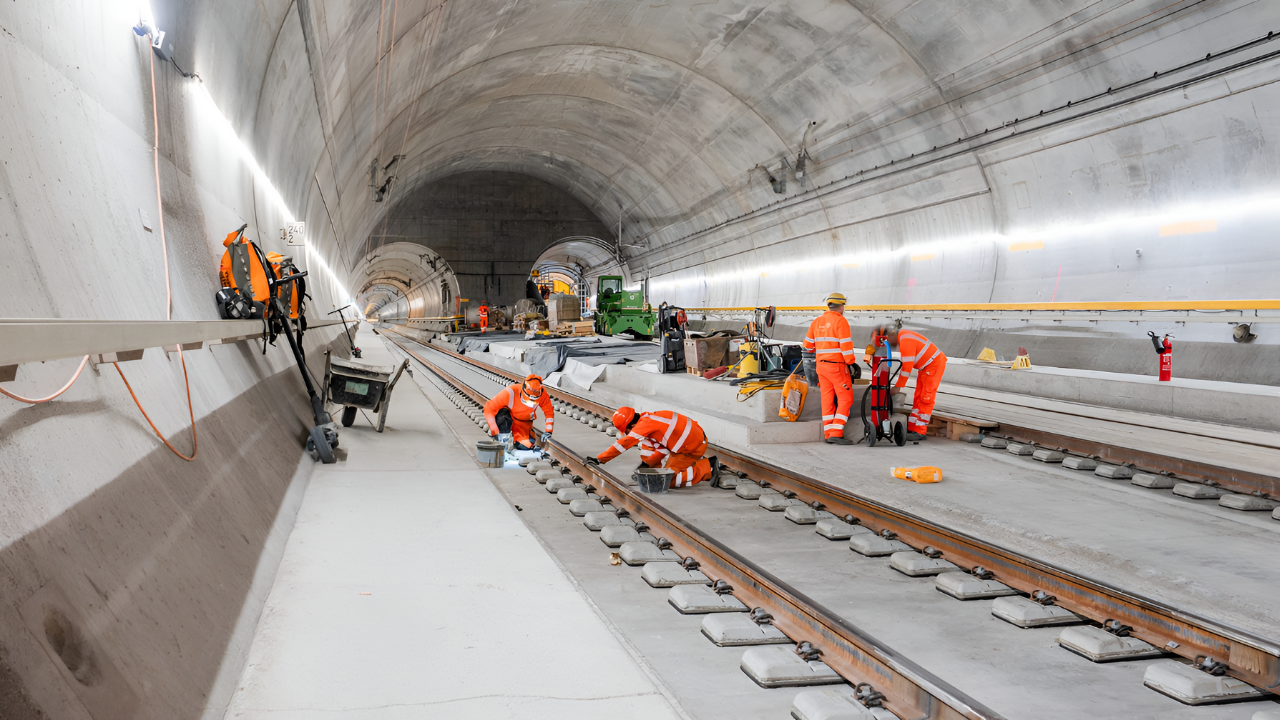
Switzerland’s mountains conceal a vast underground network spanning over 2,000 kilometers of tunnels, rail lines, roads, pipes, and shafts, forming an invisible backbone for transporting goods and people across the Alps. This hidden system, rivaling major metro networks, keeps heavy traffic off surface roads, preserving the pristine environment above.[1][4]
The Underground Network
Modest entrances blend into the landscape, masking the scale of this subterranean grid designed for efficient motion and logistics. Freight trains glide through, bypassing steep climbs, while passengers above traverse quiet valleys. The infrastructure supports Switzerland’s reputation for precision, minimizing noise, emissions, and road congestion in a country where the Alps divide north from south.[1][2]
The 1994 Turning Point
A pivotal public vote in 1994 approved the Alpine Initiative, mandating a shift from trucks to trains to curb pollution and protect mountain ecosystems. Citizens, alarmed by highway noise and fumes, endorsed this change, sparking three decades of transformation in national transport. The policy enshrined environmental protection in the constitution, imposing distance-based fees on trucks while prioritizing rail development.[1][4]
Core Tunnels Driving Change
The New Rail Link through the Alps (NRLA) integrates the Lötschberg, Gotthard, and Ceneri Base Tunnels into a flat, high-speed corridor linking Europe. The Gotthard Base Tunnel, at 57 kilometers, stands as the world’s longest railway tunnel, completed after 17 years and over $12 billion in costs by 2,600 workers. Its twin tubes slice through granite and gneiss, reducing passenger transit to 20 minutes of darkness and enabling seamless freight flow.[1][3]
Engineering Feats and Sustainability
Excavation removed 28 million tons of rock—volume equivalent to multiple Great Pyramids—recycled into concrete, wetlands, and land reshaping. Giant boring machines operated under intense heat and pressure. This rail-focused approach uses one-fifth the energy and one-quarter the emissions of trucks per tonne-kilometer, turning tunnels into tools for cutting CO2 and diesel pollution. The Federal Office of Transport notes the constitutional commitment to shielding the Alps from transit harm.[1][2]
Progress and Challenges Ahead
Rail now handles 72-74% of transalpine freight, outpacing neighbors like Italy and Austria, replacing dozens of trucks per train and lowering heavy vehicle counts to two-decade lows around 880,000 annually. Villages once choked by lorries report cleaner air, safer streets, and booming tourism, with soundscapes shifting from engines to natural rhythms. Yet truck crossings exceed the 650,000 legal cap at nearly 900,000, as some firms detour via neighbors to evade fees. The tunnels also provide climate resilience, operating reliably amid floods and landslides that block roads.[1][5]
This system demonstrates how policy, investment, and engineering can align economic needs with environmental goals, though sustained rail upgrades and enforcement are needed to meet targets amid rising global trade. As weather extremes intensify, Switzerland’s buried routes offer a model for resilient transport, balancing progress with planetary limits.[1][4]
Sources:
Ecoticias, Switzerland has excavated a “second country” beneath the Alps, 16 January 2026
Times of India, Switzerland has built an underground world so vast that it competes with metro systems, 14 January 2026
Wikipedia, Gotthard Base Tunnel, last updated (page active since) 29 May 2004
Swiss Federal Statistical Office (FSO), Transalpine goods transport, (current online edition, accessed 2026), no specific day given
About Switzerland (Federal Administration), Freight transport, 25 September 2025