
A comprehensive study of hundreds of Dutch millionaires uncovered a striking disparity: affluent individuals control significantly more of their working hours than average earners, enjoying roughly one additional hour of autonomous work time per day. This autonomy gap—equivalent to one full hour of self-directed time daily—represents the invisible divide between genuine prosperity and financial dependence. Professor Paul Smeets of Harvard Business School and Maastricht University, who led the research, found that wealthy individuals fundamentally restructure their relationship with time itself, designing lives centered on freedom rather than obligation.
Despite America minting approximately 1,000 new millionaires daily throughout 2024—adding around 379,000 individuals to wealth ranks—many refuse to identify as wealthy, with surveys suggesting roughly two-thirds to 70% of millionaires do not consider themselves rich. Meanwhile, a paradox unfolds across digital platforms: designer logos and luxury vehicles flood feeds, yet authentically affluent individuals increasingly embrace “stealth wealth,” the defining status strategy researchers and analysts identify for 2025. This intentional invisibility reflects profound psychological shifts in how secure prosperity manifests in daily behavior.
The Autonomy Advantage

Genuinely wealthy individuals move through airports and daily routines without visible urgency because they’ve architecturally designed what behavioral economists call “time affluence.” Professor Ashley Whillans, co-author of the Netherlands millionaire study, explains that wealthy respondents worked similar total hours but exercised dramatically greater control over work methods, timing, and objectives. This autonomy differential creates the calm, unhurried presence observers recognize as prosperity’s most powerful yet invisible manifestation.
Research published in a Nature portfolio journal, Humanities and Social Sciences Communications, examining over 1,100 millionaires found significantly elevated emotional stability as wealth’s defining personality characteristic. Lower neuroticism enables superior decision-making and stress management, particularly among self-made millionaires. “This ‘rich’ personality profile was more prominent among individuals who had accumulated wealth through their own efforts than among individuals who had been born into wealth,” explains study co-author Marius Leckelt, suggesting personality drives accumulation rather than resulting from it.
Warren Buffett exemplifies this stability through remarkable consistency: residing in the same Omaha home purchased for $31,500 in 1958, and famously opting for modest McDonald’s breakfasts despite a net worth now well over $100 billion. Genuinely wealthy individuals maintain stable routines—same modest vehicles, same comfortable patterns—because financial security eliminates psychological needs for constant status reassurance through purchases. Performative wealth fluctuates wildly between extravagance and credit panic, while authentic affluence appears unremarkable from external observation.
The Psychology of Invisibility
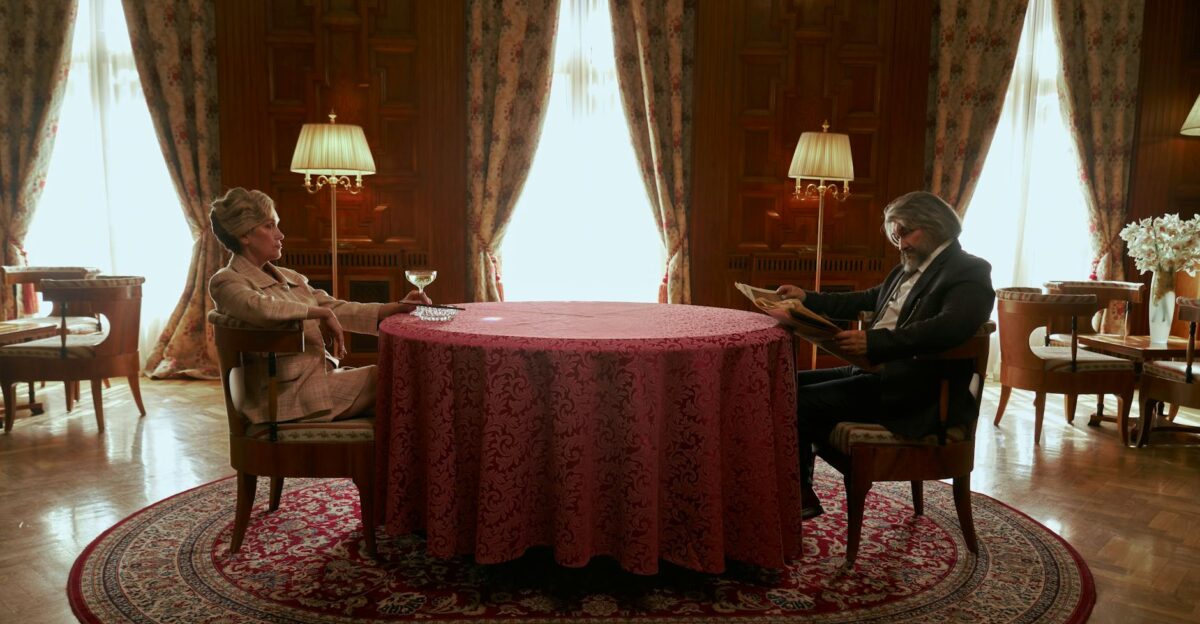
“For my clients, the most impressive thing you can wear is something expensive that nobody recognizes,” explains a Singapore private banker quoted in recent discussions of quiet luxury and stealth wealth, echoing themes highlighted in Deloitte’s Global Fashion & Luxury analysis. This philosophy reflects fundamental shifts: when individuals possess authentic resource security, they eliminate compulsions to broadcast status through visible consumption. Studies on quiet luxury demonstrate expert consumers select subtle goods precisely because recognition requires insider knowledge—functioning as inconspicuous signals of genuine social capital rather than desperate status-seeking.
Recent consumer and luxury research indicates that a majority of high-income shoppers favor quality-over-quantity buying behaviors, helping explain demand surges for durable fabrics and understated craftsmanship. Bain and Company’s luxury analysis confirms that savvy affluents increasingly prioritize longevity and craftsmanship over conspicuous consumption, reflecting deeper currents including economic uncertainty and authenticity desires.
People who gasp at luxury vehicles typically lack ownership experience; those who quietly acknowledge and redirect conversation may own several. When financial resources eliminate scarcity, material symbols lose emotional power. This counterintuitive response reflects psychology confirmed by comprehensive research led by Johannes König at Germany’s Socio-Economic Panel: millionaires scored significantly higher on emotional stability, risk tolerance, openness, extraversion, and conscientiousness compared to general populations.
Strategic Thinking and Protective Discretion

Wealthy individuals think in decades rather than days because resource security enables waiting for genuine value instead of accepting quick wins. Conscientiousness—characterized by planfulness, organization, persistence—emerges as the personality trait most predictive of wealth accumulation, enabling individuals to forego immediate consumption in favor of long-term investment.
Truly prosperous individuals employ cost-per-use calculations rather than focusing on unit price. A quality tool lasting fifty years delivers superior financial and ecological value compared with cheap alternatives requiring frequent replacement. This perspective treats material longevity as liberation of resources—financial and cognitive—otherwise expended on replacement and clutter management.
Philip Anschutz, whose net worth is estimated in the tens of billions of dollars, is widely described as intensely private, with only a handful of press conferences or full-length media interviews over his entire career. His extreme privacy exemplifies patterns researchers observe: individuals constantly referencing income require external validation, while genuinely wealthy people prioritize protective discretion. Surveys and advisory research on family finances indicate that many families report difficulty discussing wealth, with several studies suggesting that a clear majority struggle with these conversations, particularly in high-inequality societies.
Visible wealth attracts lawsuits, solicitations, security risks, and resentment. During recessions and social unrest, conspicuous consumption often decreases among the wealthy as they recognize that displays during widespread hardship can create dangerous backlash. Ultra-high net worth individuals practice intentional stealth wealth as strategy, understanding discretion provides access to opportunities that visible displays might compromise.
Generosity Without Performance

Neurological research demonstrates that brain reward systems activated by food and money also engage during charitable donations, releasing dopamine that can elevate mood. Studies confirm philanthropic activities correlate with higher life satisfaction, though benefits maximize when donors maintain autonomy over giving decisions. Genuinely wealthy people often avoid publicizing charitable contributions—their generosity reflects gratitude rather than performance.
This neurological reinforcement helps explain patterns among financially secure individuals: they fund scholarships, assist friends in need, and tip lavishly without requiring attention or documentation. Their abundance naturally flows outward because giving activates intrinsic reward systems independent of external validation.
Research from Aalto University examining nearly 100,000 individuals across 66 countries found that autonomy—sense of control over one’s life—correlates universally with well-being, with the relationship even stronger in wealthier and more individualistic countries. For affluent individuals, autonomy extends across fundamental domains: whether to work, what work to pursue, when and where to work, and with whom to collaborate. This freedom represents wealth’s ultimate expression—not material possessions but liberation from constraint.
Sources:
“Time Use and Happiness of Millionaires: Evidence From the Netherlands.” Harvard Business School and Maastricht University, Personality and Social Psychology Bulletin, 2020.
“The Personality Traits of Self-Made and Inherited Millionaires.” Johannes König et al., Nature Humanities and Social Sciences Communications, 2022.
“Global Wealth Report 2025: Wealth Growth Accelerated in 2024.” UBS Global Wealth Management, 2025.
“Even Millionaires Don’t Feel Wealthy These Days.” Northwestern Mutual wealth perception study, USA Today, December 2025.
“The Quiet Luxury Comeback: Why Stealth Wealth Dominates 2025.” Brill Creations luxury market analysis, 2025.
“The Science of Generosity.” UC Berkeley Greater Good Science Center; Harvard Business School research on prosocial behavior.