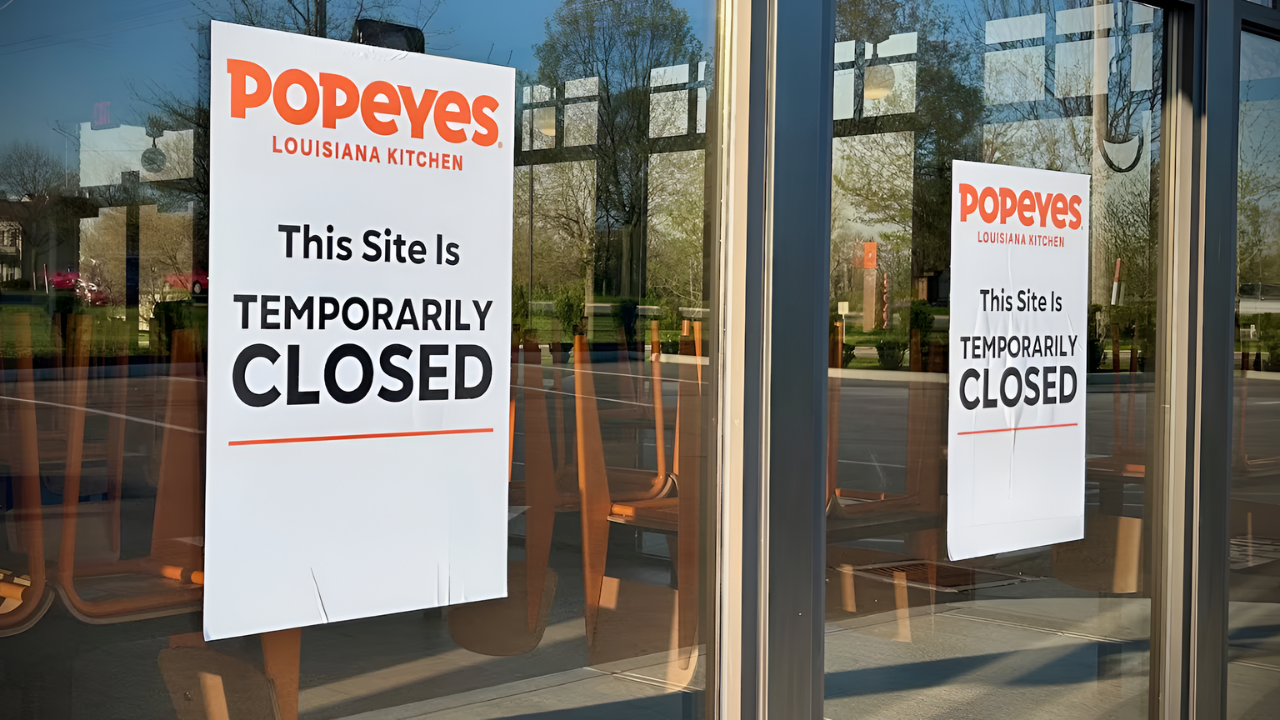
Miami-based Sailormen Inc., one of America’s largest Popeyes franchisees, filed Chapter 11 bankruptcy January 15, 2026, threatening 136 restaurants across Florida and Georgia.
The operator, founded in 1984 and acquired in 1987 by Bob Berg and Steve Wemple, crumbled under nearly $130 million in debt, landlord disputes, and supplier conflicts.
Despite $233 million in 2025 sales, the company posted an $18.8 million operating loss. Inflation, rising labor costs, and declining consumer traffic have crushed franchise economics across quick-service restaurants, making Sailormen’s 40-year history irrelevant against mounting pressures.
A 40-Year Empire Crumbles
Sailormen was founded in 1984. In 1987, it was acquired by Bob Berg and Steve Wemple, who began with 11 Miami-area Popeyes locations.
Over nearly four decades, it became one of Popeyes’ largest franchisees, running 136 restaurants generating $233 million annually. Yet 2025 brought an $18.8 million operating loss—exposing franchise fragility.
The company employs approximately 3,272 hourly workers facing potential layoffs.
For Florida and Georgia families, neighborhood Popeyes that served as community staples for decades now face closure, threatening thousands of jobs and disrupting daily routines.
The Debt Cascade
Sailormen’s path to bankruptcy accelerated through interconnected crises. Rent arrears began April 2024, prompting landlord evictions. A 2023 attempted sale of 16 Georgia locations to Tar Heels Spice collapsed, leaving Sailormen liable for leases and mounting losses.
BMO Bank sued December 2025 for $112 million in unpaid loans, seeking a receiver. Rather than lose control, Sailormen filed Chapter 11 preemptively.
Suppliers—IT firms, food vendors—pressed unpaid invoices. This domino effect shattered operator confidence and accelerated creditor action, forcing bankruptcy filing.
The Macro Squeeze
Popeyes system-wide same-store sales fell 4% in Q1 2025, improved only to -2% by Q3. Franchisees face collapsing economics: ingredient inflation surges, labor costs mount, overhead climbs, borrowing rates spike.
According to GlobalData’s Neil Saunders, “The economics for franchise owners no longer make sense. Costs have gone up—raw ingredients, wages, overheads—putting enormous pressure on franchisees.”
This squeeze hits across fast food: Del Taco and Burger King franchisees have also filed bankruptcy recently, signaling systemic stress in the franchise model itself.
Impact on Popeyes
Sailormen operates roughly 4% of all U.S. Popeyes locations (136 of 3,100 stores). Large-scale closure in Florida and Georgia reshapes regional footprint and tests parent Restaurant Brands International’s franchise network stability.
Popeyes’ new leadership—President Peter Perdue (November 2025) and CMO Matt Rubin (January 2026)—claim most franchisees remain profitable at system averages.
Perdue acknowledged Sailormen has “more leverage than common” but suggested stabilization is achievable through debtor-in-possession financing and finding qualified buyers.
The Restructuring Path
Sailormen’s Chapter 11 strategy centers on three pillars: securing debtor-in-possession financing and operational cash to keep stores open; launching a sale process to locate buyers for locations; renegotiating terms with landlords and suppliers for reduced payments.
The restructuring timeline spans months. Success means emergence under new ownership with streamlined operations.
Failure means widespread closures, thousands of job losses, and asset liquidation. For affected communities, outcome remains uncertain—preservation or erasure of neighborhood staples.
Real Estate and Lease Obligations

Real estate costs became Sailormen’s critical vulnerability. When the 2023 sale of 16 Georgia locations to Tar Heels Spice collapsed, Sailormen remained liable for leases on underperforming units.
Beginning April 2024, the company stopped paying rent, triggering landlord actions and eviction proceedings.
This cascading crisis demonstrated how lease guarantees on failed transactions can destabilize an entire portfolio, particularly when unit-level economics deteriorate simultaneously.
Supply Chain Disruption

Beyond landlords and lenders, Sailormen faced mounting pressure from suppliers—food vendors, IT firms, logistics providers—demanding payment of overdue invoices.
Unlike formal creditors, suppliers lack legal recourse and respond by cutting off service or demanding cash-on-delivery. When a restaurant operator loses supply access, operations collapse quickly.
Sailormen’s experience illustrates how supplier relationships deteriorate when franchisees exhibit financial stress, forcing impossible payment choices.
The Human Cost
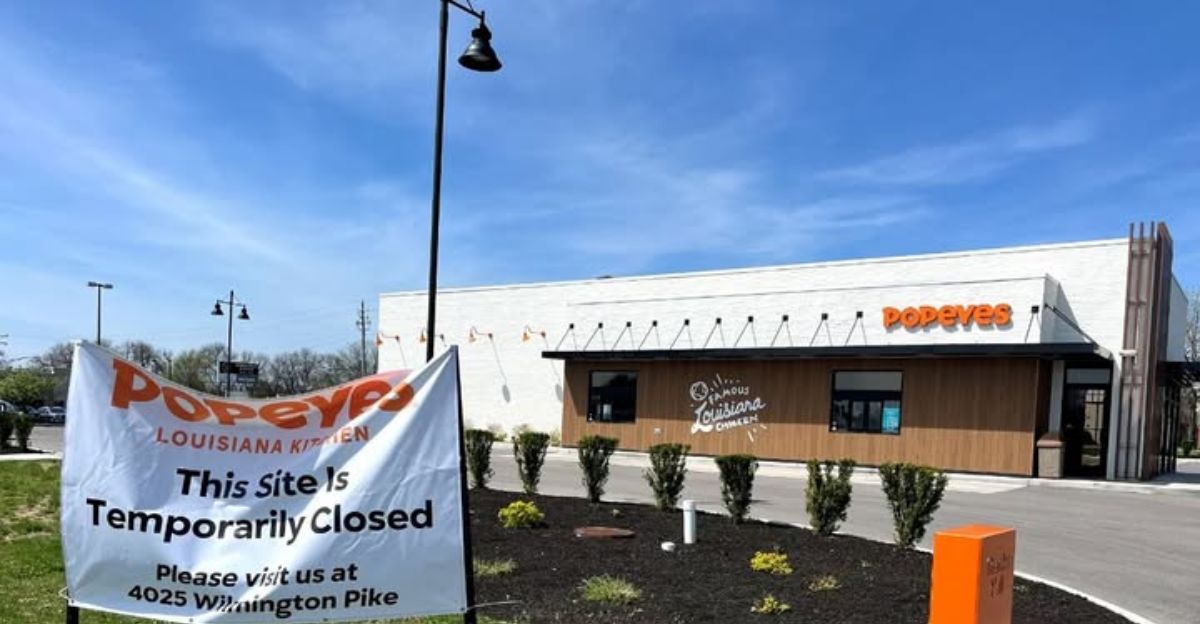
The 3,272 hourly workers across Sailormen’s locations face sudden unemployment. Store closures eliminate jobs with limited warning, disrupting household finances and forcing workers into tight labor markets.
Beyond individual workers, communities lose neighborhood staples and economic activity. Schools, youth centers, and adjacent businesses suffer from reduced foot traffic and lost sponsorships. The ripple effects extend throughout regional economies.
Popeyes Brand Performance
Popeyes’ system-wide same-store sales declined 4% in Q1 2025, improving only to -2% by Q3. This broader weakness signals structural challenges affecting most franchisees, not just outliers.
Sailormen operated within a weakening system where turnaround efforts faced headwinds beyond management control. National marketing campaigns struggled to drive traffic while franchise unit economics deteriorated system-wide.
Comparative Bankruptcies
Sailormen’s filing joins comparable waves: Del Taco and Burger King franchisees filed bankruptcy recently, suggesting systemic rather than brand-specific stress.
These parallel collapses indicate the franchise model’s vulnerability when inflation, labor scarcity, and capital costs shift simultaneously.
Franchisees lose the margin of safety that justified reliance on borrowed capital and long-term leases. Scale and brand strength offer limited protection.
The Bankruptcy Process
Chapter 11 provides legal protection pausing creditor actions while Sailormen pursues restructuring. However, the process unfolds over months, requiring debtor-in-possession financing, detailed disclosures, creditor negotiations, and location marketing.
Significant legal and accounting costs further erode equity. Bankruptcy court oversight limits management control. The uncertain timeline creates extended job insecurity for employees, payment uncertainty for suppliers, and unclear outcomes for communities.
Long-Term Franchise Sector Implications
Sailormen’s collapse raises fundamental questions about franchise model sustainability. If large, historically profitable franchisees cannot weather inflation and consumer pullback, the model’s traditional appeal—stability through scale—is diminished.
Prospective franchisees will demand flexible agreements and lower capital requirements. Franchisors may accept lower unit counts for network stability. The sector may consolidate toward larger operators while smaller franchisees exit entirely.
Franchise Model Under Siege
Sailormen’s bankruptcy raises systemic questions: Is the franchise model sustainable when operators cannot absorb normal economic cycles? Are unit economics broken for single and small multi-unit franchisees in high-cost markets?
Can brand innovation alone offset structural cost pressures? Data suggests systemic stress. Popeyes same-store sales declined throughout 2025.
Even iconic concepts with strong brand equity struggle for profitability. Sailormen’s 40-year track record offers no protection against inflation, labor scarcity, and consumer pullback.
What Happens Next?
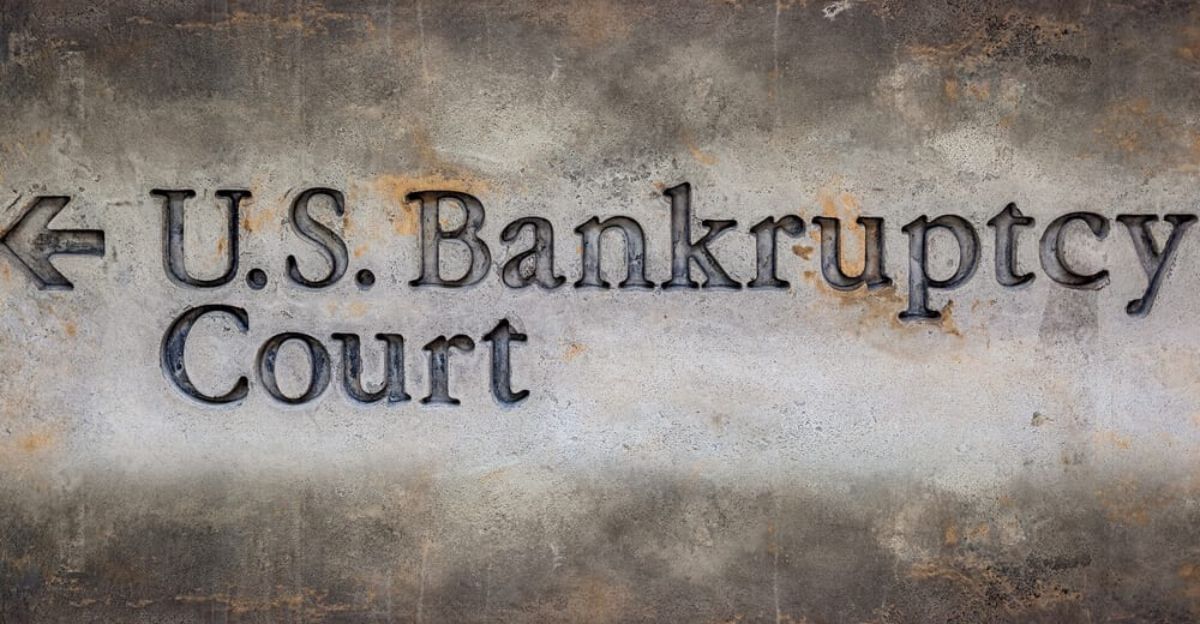
Bankruptcy court oversight will guide restructuring over coming months. Key phases: stabilization with franchisor and lender support; aggressive marketing of 136 locations to potential acquirers; emergence or liquidation outcomes. Successful restructuring preserves many locations under new ownership.
Widespread closures eliminate thousands of jobs and destroy neighborhood Popeyes that defined local food culture.
The question transcends Sailormen: Can Popeyes and other franchisors stabilize networks, or will inflation and labor costs force broader franchise sector reckoning?
Sources:
Nation’s Restaurant News, January 16, 2026
Restaurant Dive, January 15–16, 2026
Restaurant Business Online, January 15–20, 2026
USA Today, January 16, 2026
GlobalData retail analysis
Sailormen Inc. Chapter 11 bankruptcy court filings, Southern District of Florida, January 2026