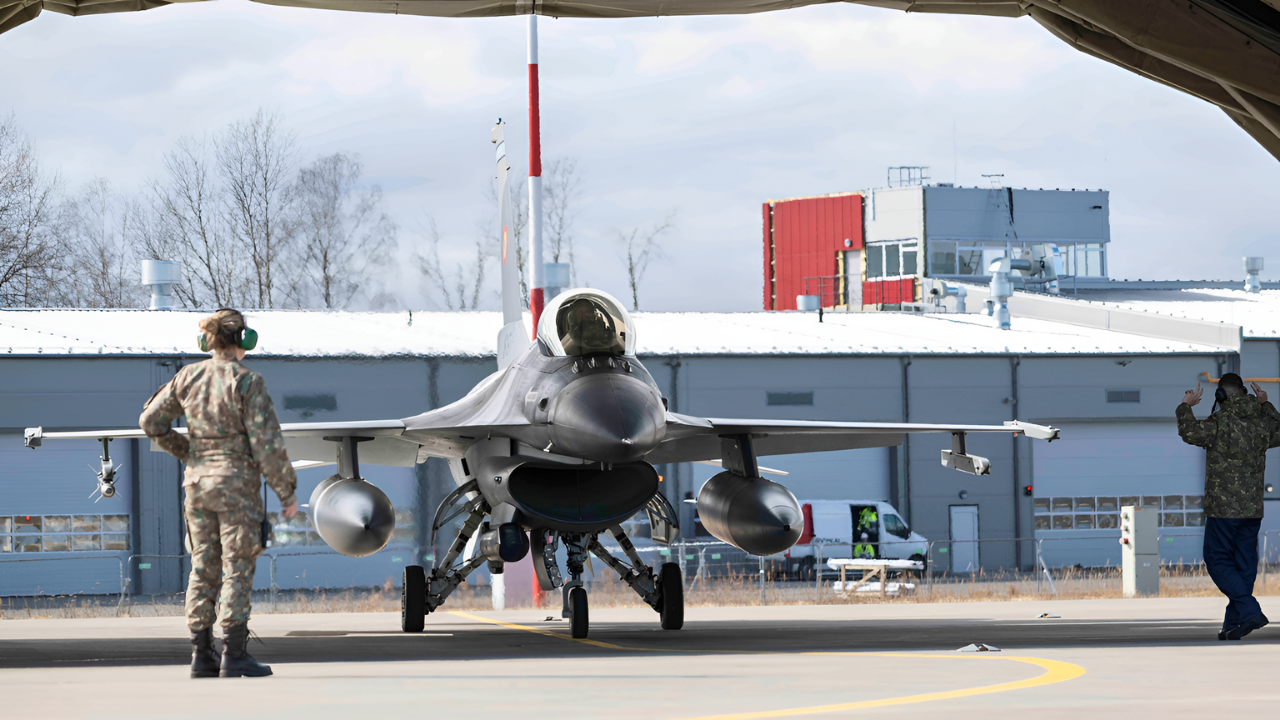
On a frigid January morning in Romania’s Black Sea region, the silence broke with the thunder of fighter jets. In northern Tulcea County, residents’ phones buzzed with an urgent RO-Alert: seek shelter due to possible falling drone fragments.
Two Romanian F-16s launched from the 86th Air Base at 11:50 a.m. on January 19, 2026, to monitor Russian drones targeting Ukrainian ports across the border. The 32-minute alert disrupted daily life for about 200,000 locals, halting businesses, slowing river traffic, and prompting parents to retrieve children from schools. Officials confirmed no hostile aircraft entered Romanian airspace, but the event underscored the war’s proximity to NATO territory.
Eastern Flank on Edge
Romania’s position along NATO’s eastern border has turned Russia’s war in Ukraine into a constant neighborly threat. Russian drones frequently strike Ukrainian Danube ports, vital for grain exports to Europe, Africa, and the Middle East, just kilometers from Romanian communities dependent on river trade and farming. These attacks form part of an economic pressure tactic, disrupting global food supplies.
The roughly 19 million Romanians, shielded by NATO’s collective defense, feel the strain despite official assurances of no direct danger. Blasts echo across the water, heightening unease in a region unaccustomed to air-raid warnings.
NATO Watch on the Border
Since Russia’s 2022 invasion, NATO has bolstered Black Sea defenses. Romania replaced its outdated Soviet MiG-21s with dozens of F-16s from Portugal, Norway, and the Netherlands, including 18 from the Dutch for a symbolic one euro. The 86th Air Base in Fetești now hosts a European F-16 Training Center, instructing Romanian and Ukrainian pilots in allied cooperation.
Dutch officials described the program as a model of collaboration that bolsters deterrence. NATO rotates air policing missions through Fetești and Câmpia Turzii, with Turkey and others planning more deployments to guard the skies.
Rising Drone Danger
Drones define the conflict’s border dynamics, with Russia deploying cheap, low-flying swarms against Ukraine’s grain corridor. These unmanned strikes avoid pilot risks while rattling economies and markets. Romanian radar tracks them nightly as they hug the border without crossing, testing NATO’s resolve.
The January incident marked a peak in this pattern, where monitoring missions symbolize readiness without engagement. Each F-16, valued at tens of millions, patrols a fleet worth billions, projecting alliance strength.
Shockwaves in Tulcea
In Tulcea County, the alert pierced routine existence. Social media buzzed with message screenshots as streets emptied and families sought cover. The Danube ports opposite, repeatedly hit, tie local jobs to the distant war, making every explosion a stark reminder of vulnerability.
Residents jolt awake to alarms, scanning for news of blasts. Past regional conflicts fuel fears, turning town squares into hubs of frustration over sleep disruptions and unclear timelines. Officials defend the alerts as vital safeguards for the nation’s 19 million people.
Lives Behind the Alerts
Families navigate repeated disruptions, balancing caution with normalcy. On Ukraine’s side, ports endure waves of strikes since 2022, with no de-escalation despite negotiation talk. The same day brought tragedy elsewhere: a Russian missile hit a Kharkiv residential area, while Moscow claimed Ukrainian fire killed dozens in occupied Kherson, a charge Kyiv rejected.
NATO’s posture aims to contain the conflict, avoiding Article 5 invocation. Analysts note a narrowing margin with near-misses, questioning long-term sustainability amid intensifying drone use and grain export threats that spike global food prices.
As F-16s stand ready and diplomacy persists—amid reports of a peace deal nearing completion but hinging on critical terms—the region braces for the next test. Visible deterrence seeks to hold the line, preserving stability for NATO’s flank and beyond while markets and communities watch war’s spillover risks.
Sources:
Aerospace Global News, Romania receives Dutch F-16s and expands F-16 Training Center, November 2025
Aerotime.aero, Analysis of Russian drone strikes on Ukrainian ports and NATO air posture, November 2025
The Defense Post, Romania’s 86th Air Base and modernization of F-16 operations, May 2025
Arise News, “Zelensky: Ukraine Russia Peace Deal 90 Percent Ready”, 1 January 2026
BBC News, “Zelensky says peace deal is 90% ready in New Year address”, 1 January 2026