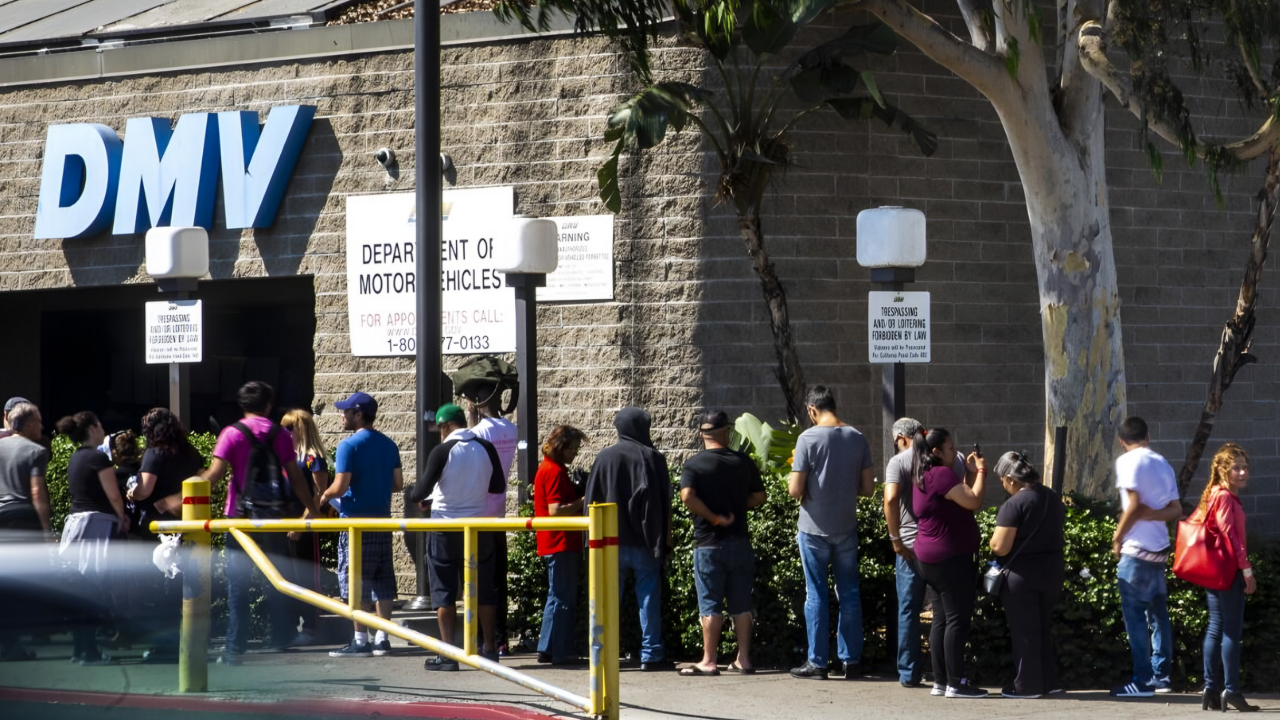
Decades-old technology continues to hamper government efficiency nationwide. The average state motor vehicle agency operates on systems older than the Internet itself. Across America, aging mainframes and legacy software burden DMVs with slow processing, frequent outages, and security vulnerabilities. Citizens wait hours for renewals.
Data breaches expose driver records. For decades, this burden has been normalized. Yet one state finally confronted the problem with an unprecedented solution: a complete statewide operational shutdown. The question: What’s so fundamentally broken that turning everything off becomes the only solution?
The Weight Of Decades

New York’s DMV serves over 12.3 million licensed drivers and processes millions of transactions annually. Behind the scenes, hundreds of software applications struggle to coexist. Some date back to the 1960s, the era of Governor Nelson Rockefeller. These systems never communicate efficiently with one another. Staff manually move data between incompatible platforms.
Online services lag because they run on ancient infrastructure. Every outdated application represents accumulated technical debt. The state had accumulated approximately 50 years of it. By January 2026, the backlog had become critical, demanding radical intervention.
Engineering The Fix

In 2024, New York’s DMV leadership made a transformative decision: commission a complete technology rebuild. The state contracted with FAST Enterprises, LLC, a firm specializing in modernizing legacy government systems. The $200 million project required 2 years of intensive development. Hundreds of fragmented software applications would be consolidated into one unified platform.
Approximately 30 million driver records, vehicle registrations, and license documents would be migrated. DMV staff underwent rigorous training. The deployment strategy: launch the new system over Presidents’ Day weekend, when service demand is lowest.
The Point Of No Return

As January 2026 progressed, the February 13 deployment date approached inexorably. DMV officials faced mounting operational pressure: execute the transition flawlessly or risk cascading system failure across the state. The agency could not simply “test” without shutting down. Gradual rollouts or partial upgrades were impossible, as old and new systems could not safely coexist.
Total shutdown was mandatory. All 129 DMV locations, 27 state-run facilities, and 102 county-operated offices would close simultaneously. Online transactions would vanish. Phone lines would disconnect. For five consecutive days, every channel of DMV access would cease operating. This was not a single office closure; it was an entire state losing its motor vehicle infrastructure.
The Blackout Commences

On Friday, February 13, 2026, at 2:00 p.m., New York State’s Department of Motor Vehicles ceased all operations. Every office is closed. Every online system went offline. Every phone line is disconnected. For 129 DMV locations across the state serving 20.1 million residents, services would remain unavailable until Wednesday, February 18, 2026. Five days without exception.
No workarounds. No backup services. No alternatives. This marked the longest planned statewide DMV shutdown in recent American history. More than 12 million licensed drivers, countless residents needing credential renewals, and millions requiring vehicle registration services faced complete inaccessibility. The state had temporarily vanished from the licensing business entirely.
Regional Devastation: Upstate New York

Monroe County residents confronted their own statewide crisis with tangible local consequences. The Monroe County DMV posted urgent warnings: “All branches will be unavailable February 13-18. No new or renewal registrations can be processed.” Hundreds of thousands of drivers in the Rochester metropolitan area faced a sudden service cutoff.
Commuters need vehicle registration. Business owners managing fleet operations. Parents attempting to register newly purchased vehicles. Local auto bureaus that typically operate at consistent capacity would remain completely silent. Monroe County officials advised residents: complete all DMV transactions by February 13 at 2 p.m., or wait until February 18 to resume.
The Human Consequences

For New Yorkers with time-sensitive DMV needs, the shutdown’s timing proved catastrophic. A driver’s license expiring during the five-day blackout cannot be renewed until offices reopen. Vehicle registrations that lapse during February 13-18 remain lapsed throughout the outage, with no remedy available. Someone who requires an ID for employment verification or travel has no recourse.
College students returning from semester break discovered that the license’s expiration fell within the blackout window. Commercial fleet operators couldn’t register new vehicles or renew existing registrations. DMV Commissioner Mark J.F. Schroeder acknowledged the disruption: “We ask for patience as we adjust to the new system in the days immediately after it launches.” The human friction was structurally unavoidable.
The Technical Gauntlet

Behind the scenes, FAST Enterprises faced a staggering technical challenge: migrating 30 million individual records to a new consolidated platform while maintaining complete accuracy. Each record had to correctly map driver histories, vehicle ownership, registration status, suspension flags, and revocation notices. One corrupted data field could invalidate thousands of licenses. One misconfigured mapping could trap registrations in limbo.
The company conducted months of validation testing. Backup systems were prepared for potential rollback. A contingency plan was in place in case of catastrophic failure during the migration. However, once the migration began, there was no pause button. The entire state’s motor vehicle data remained in transit for five days.
Why Total Shutdown Was Necessary

Few states have attempted such a radical approach. Most DMVs attempt phased transitions, gradual migrations, or maintain backup services during system upgrades. New York’s decision was extreme but technically justified. The old system could not operate in parallel with the new platform, as they were fundamentally incompatible at the architectural level. Legacy software could not speak to modern infrastructure.
Technicians concluded that a complete, bounded outage was safer than a prolonged, chaotic transition period. This gamble reflected confidence in the new platform but also acknowledged the stakes. Any critical error would paralyze the state’s transportation system for days or potentially weeks.
The Post-Reopening Crisis

A secondary crisis loomed beneath the headline: the post-February 18 surge. When DMV offices reopened on Wednesday morning, millions of New Yorkers would rush in at once. People with expired or soon-to-expire licenses. Businesses need vehicle registrations processed immediately. New residents requiring initial registration.
The backlog would dwarf any typical week. DMV officials projected massive wait times, potential multi-week queues, and months of operational gridlock. Staff would struggle to onboard the new system while managing record-breaking customer volume. The five-day blackout, in other words, would catalyze a five-week operational crisis on the back end, a cascading consequence most media coverage had overlooked or underestimated.
Frontline Anxiety

County clerks and DMV staff voiced legitimate concerns about the accelerated timeline. “We’ve trained extensively, but a transition this massive carries inherent risk,” said one upstate county official requesting anonymity. Frontline workers worried about system glitches, incomplete training, and angry customers blaming local staff for statewide technical failures beyond their control.
Some feared the new platform would introduce unfamiliar problems, confusing interfaces, different workflow logic, and unexpected bugs that would require immediate patches. DMV staff had labored for two years preparing. Yet doubt persisted throughout the workforce. Would FAST Enterprises deliver a seamless transition, or would the new system stumble at launch, undermining agency credibility?
Learning From Failure

This wasn’t New York’s first attempt at DMV modernization. The state had launched previous reform initiatives, most of which stalled, partially failed, or delivered incomplete systems unable to replace legacy infrastructure. Those failures created institutional skepticism within government and among the public. Why should February 2026 be different? Why trust this $200 million gamble? Senior DMV leadership understood the skepticism profoundly.
They had staked their professional credibility on FAST Enterprises delivering what previous vendors had not. The pressure was extraordinary. Any failure would compound decades of modernization attempts gone awry, cementing New York’s reputation for government IT incompetence.
The Vision Of Success

If the transition had gone flawlessly, New York would have emerged with a state-of-the-art DMV platform that would have transformed the agency. The new system promised capabilities the old infrastructure could never deliver: dramatically expanded online transactions, faster processing times, real-time data access across all functions, enhanced security, and fraud prevention.
Staff would use a single, unified interface instead of jumping between hundreds of fragmented applications. Citizens would experience shorter wait times, more online options, fewer errors, and better service overall. The modernization, if executed successfully, would transform the DMV from a 1960s relic into a genuinely 21st-century operation. This vision motivated the extraordinary gamble.
Industry Skepticism Lingers

However, government technology experts voiced cautious reservations. Large-scale state IT transitions have a distinctly checkered history. Healthcare.gov’s 2013 rollout was catastrophic. State voting system upgrades have encountered critical security flaws. Federal tax system modernizations have run decades behind schedule and billions over budget.
New York was betting everything on a compressed timeline with minimal margin for error or recovery. One significant bug: 12 million drivers would have no way to renew licenses for weeks or longer if a rollback became necessary. Industry analysts cautioned: success was not guaranteed. Optimism was not a strategy.
The Unanswered Question

As February 13 arrived, New York faced an unresolved question: Had the state chosen boldness or recklessness? Was a five-day total shutdown the only responsible path to modernization, or had DMV leadership backed itself into an avoidable corner through poor planning? The answer would only emerge after the transition succeeded or failed. If offices reopened smoothly on February 18 with the new system humming efficiently, the risk would be vindicated retrospectively.
If technical glitches cascaded, license processing broke down, and millions of residents remained unable to access services indefinitely, the shutdown would be remembered as a catastrophic miscalculation. For New York’s 12.3 million licensed drivers and 20.1 million residents, the weekend of February 13-18, 2026, would determine whether their state’s motor vehicle system had leaped forward or crashed backward.