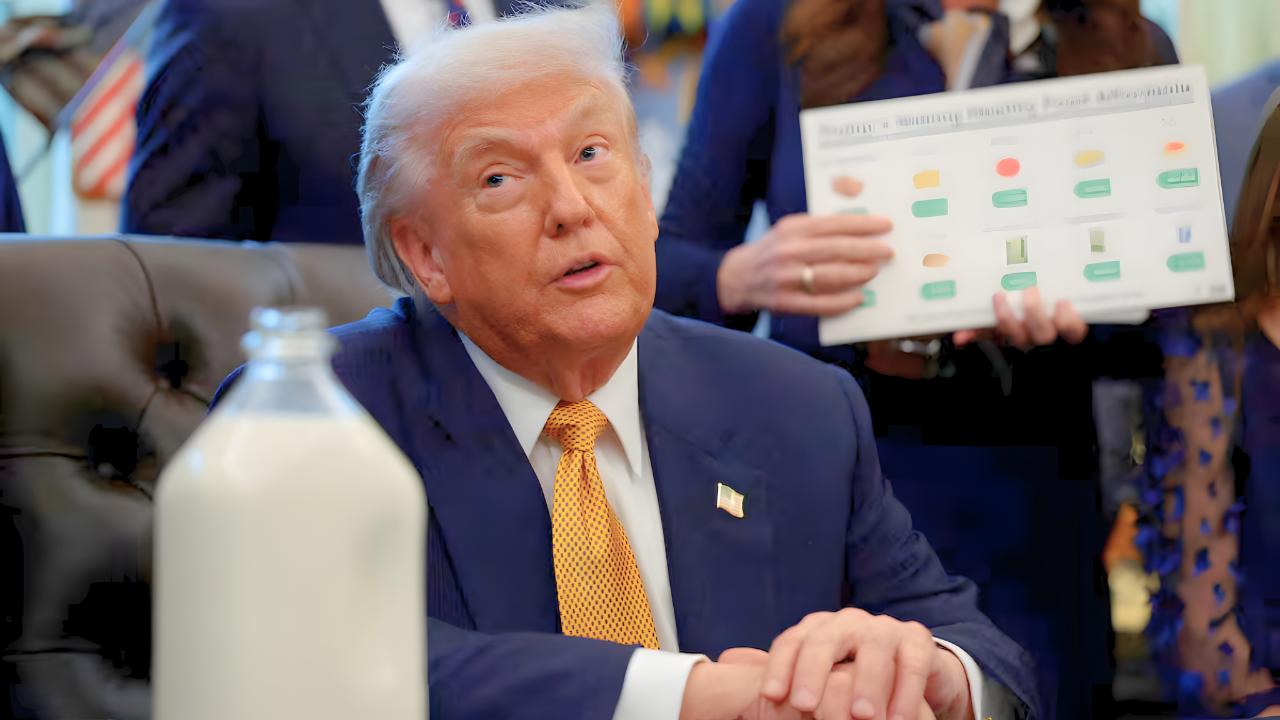
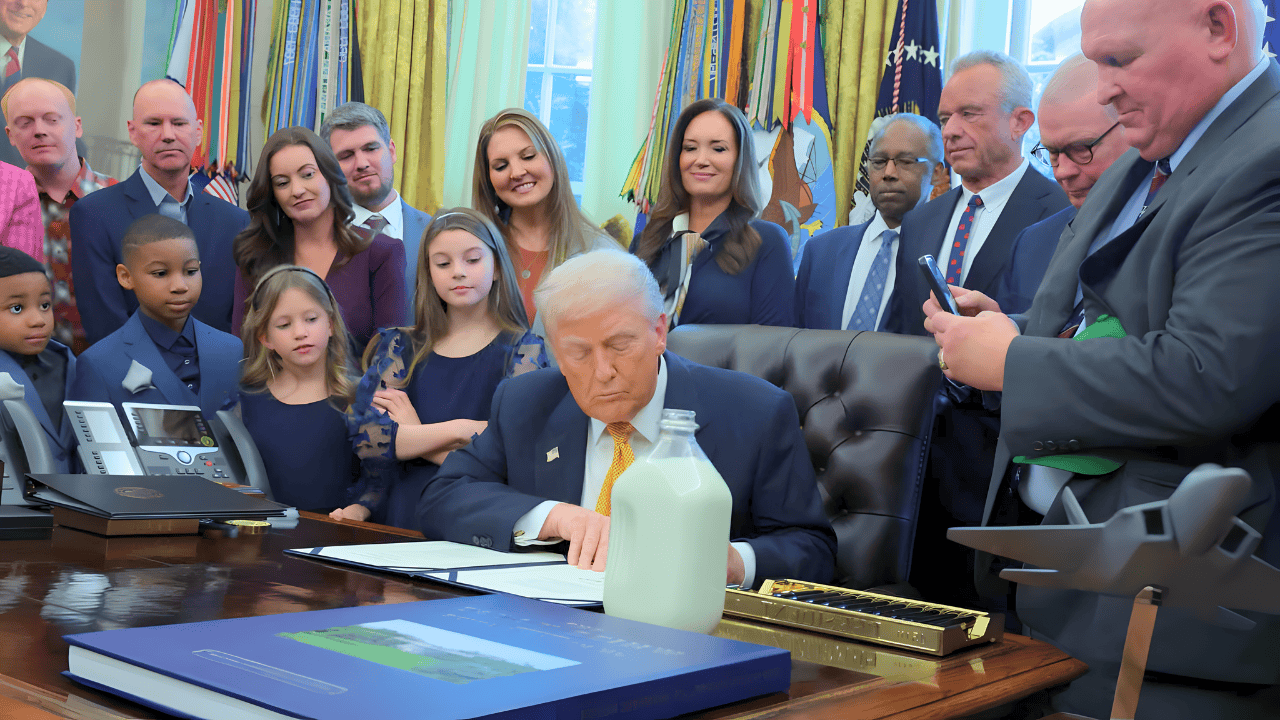
Whole milk is officially back on school lunch trays after more than a decade on the sidelines. With President Donald Trump’s January 14, 2026 signing of the Whole Milk for Healthy Kids Act of 2025, federal rules now allow a wider range of milk choices in the National School Lunch Program.
Nearly 30 million students in about 95,000 participating schools are affected, as USDA guidance restores options that had been restricted since 2012. Supporters call it flexibility. Critics see renewed nutrition risks. Here’s what’s happening as cafeterias adapt.
How Whole Milk Was Pushed Out
The roots of the restriction trace back to the Healthy, Hunger-Free Kids Act of 2010, which required USDA to align school meal standards with the Dietary Guidelines for Americans. Beginning in the 2012–2013 school year, reimbursable meals under federal programs were limited to fat-free or low-fat 1% milk, effectively removing whole and reduced-fat 2% milk from school lunches and breakfasts.
Flavored milk was required to be fat-free, and higher-fat options no longer qualified for reimbursement. Schools nationwide adjusted menus and purchasing practices to comply. Advocates argued these limits would reduce saturated fat intake and help address childhood obesity, while critics said the changes made meals less appealing and increased plate waste when students skipped milk altogether.
Childhood Nutrition Still Under Pressure

The policy shift arrives amid persistent concern about children’s health in the United States. From 2017 to March 2020, 19.7% of U.S. children and adolescents ages 2–19 had obesity, affecting about 14.7 million youths, according to the Centers for Disease Control and Prevention. Health experts describe childhood obesity as one of the most common chronic conditions among young people.
Milk remains a key component of school meals because of its nutrient density. An 8-ounce serving provides about 8 grams of high-quality protein along with calcium and other nutrients essential for bone growth. At the same time, federal nutrition guidance continues to emphasize limiting saturated fat, and school meals must still meet weekly standards for calories, sodium, and fat.
What the New Law Changes
The Whole Milk for Healthy Kids Act of 2025 amends Section 9(a)(2)(A) of the Richard B. Russell National School Lunch Act. Effective immediately upon Trump’s January 14, 2026 signature, schools participating in the NSLP may offer whole, reduced-fat 2%, low-fat 1%, and fat-free milk at lunch, alongside lactose-free milk and certain nutritionally equivalent nondairy substitutes.
USDA guidance allows these options to be unflavored or flavored and either organic or conventional, provided they meet safety standards like pasteurization. Schools must continue offering at least 2 milk choices daily, and flavored products are subject to added-sugar limits beginning in the 2025–26 school year.
Limits of the Policy Shift

The expanded milk options apply only to the National School Lunch Program. Requirements for the School Breakfast Program and the Child and Adult Care Food Program remain unchanged and tied to existing Dietary Guidelines for Americans standards.
That distinction matters because the NSLP serves close to 30 million children on a typical school day across roughly 95,000 schools and residential child care institutions. Milk policies within this program significantly influence overall dairy consumption among students. Even with added flexibility, schools remain responsible for ensuring weekly compliance with saturated fat, calorie, and sodium limits across their menus.
Rolling It Out in Cafeterias
USDA’s Food and Nutrition Service issued memorandum SP 01-2026 on January 14, 2026, instructing state and regional child nutrition directors that whole and reduced-fat milk may be offered immediately at lunch. The memo emphasizes that compliance with overall nutrition standards remains mandatory.
Districts now face logistical questions around procurement, storage, and supplier availability. Many school nutrition programs already operate under tight budgets, and adding new milk varieties could complicate ordering and inventory. USDA has indicated additional rulemaking is underway to align child nutrition programs with the Dietary Guidelines for Americans, 2025–2030, potentially reshaping menus again.
Conclusion: Flexibility Meets Scrutiny
The return of whole milk to school lunches reflects a broader debate over choice, nutrition, and student participation. Supporters argue that offering higher-fat options could improve satisfaction and reduce waste, especially among students who rejected skim or 1% milk. Critics counter that increased access to whole milk may raise saturated fat intake if it becomes the default choice.
USDA plans to monitor participation rates, menu compliance, and nutritional outcomes as districts adjust. Over time, data from schools and federal oversight may clarify whether expanded milk options strike the right balance between nutrient intake, public health goals, and what students are actually willing to drink at lunch.
Sources
Whole Milk for Healthy Kids Act of 2025 Implementation Requirements. U.S. Department of Agriculture Food and Nutrition Service, January 14, 2026
Secretary Brooke Rollins Op-ed On Whole Milk For Healthy Kids Act. Fox News, January 20, 2026
Dietary Guidelines for Americans 2025-2030. U.S. Department of Health and Human Services, January 9, 2026
School Lunch and Breakfast Participation A Snapshot of Recent Trends. Congressional Research Service, April 21, 2025