
The trucking industry is experiencing what insiders call the worst downturn in a generation. Freight demand has collapsed, capacity sits idle, and carriers are bleeding cash.
Yet most Americans have never heard of the “Great Freight Recession,” a four-year crisis that started in March 2022 and has quietly dismantled dozens of major operators. What’s really happening behind the scenes?
Dominoes Falling

The industry’s pain accelerated in late 2025 and early 2026. Montgomery Transport, a flatbed operator, liquidated in October 2025, wiping out 1,000 jobs overnight. RailCrew Xpress shed 400+ workers. By January 2026, logistics layoffs exceeded 2,200 across the sector.
The pressure has migrated upward from small carriers to household names. Which major player would topple next?
A Titan’s Rise

STG Logistics was not a minor, marginal player. Founded in 1985 as St. George Logistics in South Kearny, New Jersey, it grew into the nation’s fourth-largest asset-based intermodal marketing company.
The firm operated 15,000 containers across 32 warehouses, served 25+ states, and employed 1,170 workers. For 41 years, it was a pillar of American logistics big enough to weather almost any storm.
The Squeeze Tightens
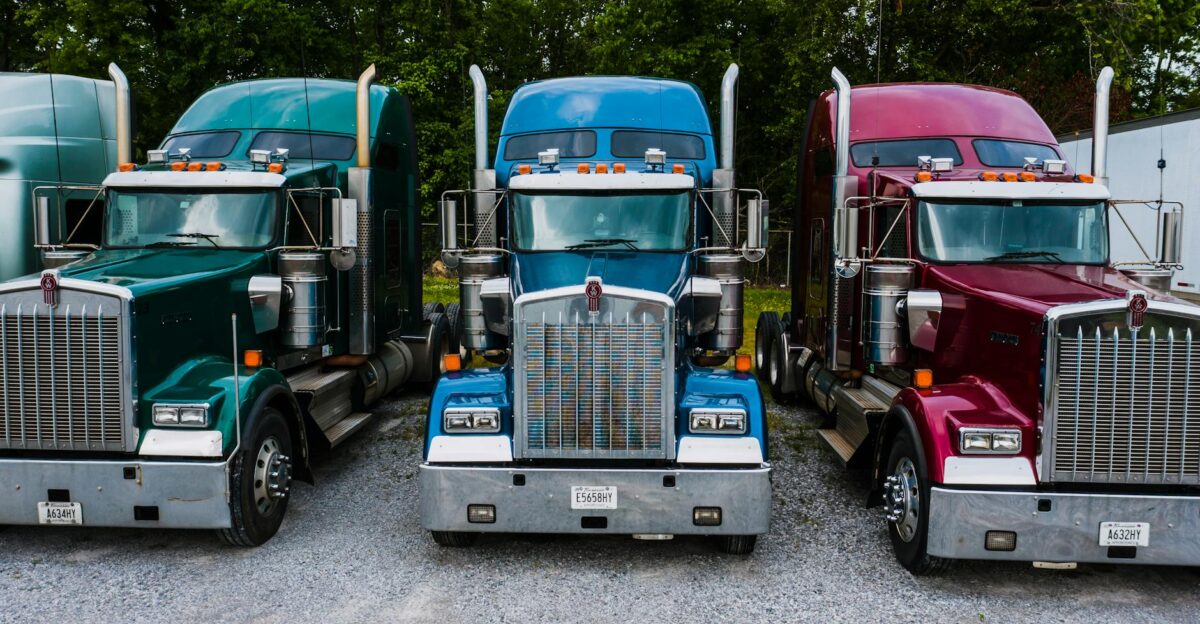
Despite its scale, STG faced relentless headwinds. The freight recession eroded pricing power: rates collapsed from $3.50+ per mile (2021) to under $1.80 (2025). Fuel, maintenance, and labor costs refused to budge downward. Equipment sat idle.
Shippers moved volume to discount carriers. By late 2025, STG’s debt burden, accumulated during the growth years, became untenable. The company needed restructuring, not just cost cuts.
The Bankruptcy Bombshell

On January 12, 2026, STG Logistics filed for Chapter 11 bankruptcy protection in the U.S. Bankruptcy Court for the District of New Jersey. The company carried $1.16 billion in funded debt.
Under a pre-negotiated restructuring plan, 91% of that debt, approximately $952 million, would be erased. New equity sponsors Wind Point Partners and Oaktree Capital Management secured $150 million in fresh capital. The company would restructure, not liquidate.
Ohio Shaken, Nation Watches

STG’s bankruptcy rippled across the heartland. Headquartered in Dublin, Ohio, a logistics hub serving the Midwest, the filing raised urgent questions about regional supply chains and interconnected shippers.
Customers in manufacturing, retail, and agriculture depended on STG’s intermodal network. Suppliers, trucking partners, and logistics vendors faced uncertainty. The fourth-largest player in a critical sector was now under court protection.
“We’re Not Shutting Down”

STG’s CEO, Geoff Anderman, moved quickly to reassure stakeholders. “Today’s announcement marks an important milestone in our efforts to strengthen STG amidst one of the most severe freight recessions in history,” he stated.
The company pledged: no service disruption, wages and benefits intact, customer commitments honored. Court filings showed $22.7 million approved to pay accrued employee compensation immediately. Workers would keep their paychecks. The firm would operate “business as usual.”
Lender Gamble

The restructuring hinged on creditor buy-in. Major lenders, including Oaktree and Blue Owl Capital, agreed to the debt-for-equity swap. The court approved $294 million in debtor-in-possession (DIP) financing on January 13-14, 2026, comprising $150 million in new capital and $144 million rolled up from existing debt.
Banks were betting STG could emerge stronger in 18 months. If the freight market recovered, the restructuring would pay off. If not, lenders would absorb losses.
The Macro Picture

STG’s bankruptcy was not isolated. The trucking industry has shed over 10,000 active carriers since 2022. Revenue per truck dropped 40% in four years. Utilization rates sank.
Worse, the industry faced structural headwinds: e-commerce normalized (post-pandemic surge ended), retailers’ inventory lean, tariffs, and trade uncertainty choking global supply chains. Recovery, analysts warned, would take years, not quarters. Other carriers were watching.
The Debt Trap

Here’s the lesser-known detail: STG’s debt wasn’t from reckless spending. It was from growth. When rates were strong (2016–2021), the company expanded aggressively, buying containers, leasing equipment, and opening warehouses. Debt-financed growth.
Then the market inverted, and that debt became a trap. The company couldn’t cut costs fast enough to service $1.16 billion in obligations. Bankruptcy wasn’t a failure; it was the only exit from a debt spiral built in good times.
Lender Lawsuit Complicates Exit

Even as STG filed a lawsuit, a lawsuit erupted among lenders. Some argued that the DIP financing terms favored new-money holders over first-lien creditors. A federal judge had to intervene to approve interim financing, giving STG breathing room.
The dispute threatened to derail the restructuring. What appeared orderly on the surface was chaotic underneath, a sign that even pre-negotiated bankruptcies hide deep conflicts.
A Changing Ownership

Chapter 11 typically means equity holders lose control. STG was no exception. Existing shareholders, including long-term investors, were wiped out or severely diluted. Wind Point Partners and Oaktree Capital, the new sponsors, would control the restructured company.
Leadership (CEO Geoff Anderman) remained in place, signaling continuity. But ownership had changed hands. Seasoned logistics operators knew the drill: restructuring meant new masters with different strategic priorities.
The Five-Month Sprint

STG’s plan called for a swift exit: emerge from bankruptcy within five months (by mid-May 2026). This aggressive timeline required nonstop court approvals, lender cooperation, and operational excellence.
Management would slash costs, exit unprofitable contracts, and focus on margin-positive lanes. The $150 million in new capital would fund working capital and equipment upgrades. Success meant a leaner, debt-free STG ready to compete. Failure meant liquidation.
Expert Skepticism

Industry analysts were cautiously pessimistic. “STG can restructure its balance sheet, but they can’t restructure the freight market,” one logistics consultant noted. Rates remained depressed. Demand was soft.
Even if STG emerged debt-free, it faced the same headwinds as competitors. Some observers questioned whether five months was realistic. Chapter 11 often misses deadlines, dragging into 12–18 months. Uncertainty hung over the company’s future.
Can the Freight Market Recover?

The critical question: When, if ever, does the freight recession end? Economists point to 2027 as a potential inflection point, assuming tariffs stabilize, inventory normalizes, and consumer spending holds. But predictions have been wrong before.
Shippers have learned to operate with less inventory and fewer carriers. Even a recovery won’t restore 2021-era pricing. For STG, emergence depends not just on restructuring but on macro forces beyond its control. What if recovery never comes?
Policy Blind Spot

Washington has largely ignored the freight crisis. While lawmakers debated manufacturing subsidies and electric vehicles, the trucking industry, the backbone of American commerce, was collapsing.
STG’s bankruptcy illustrates a policy gap: no emergency lending facilities, no rate protections, no strategic reserves. China and Europe prop up logistics sectors during downturns. The U.S. leaves carriers to fend for themselves. Future recessions may demand federal intervention.
Global Supply Chain Fragility
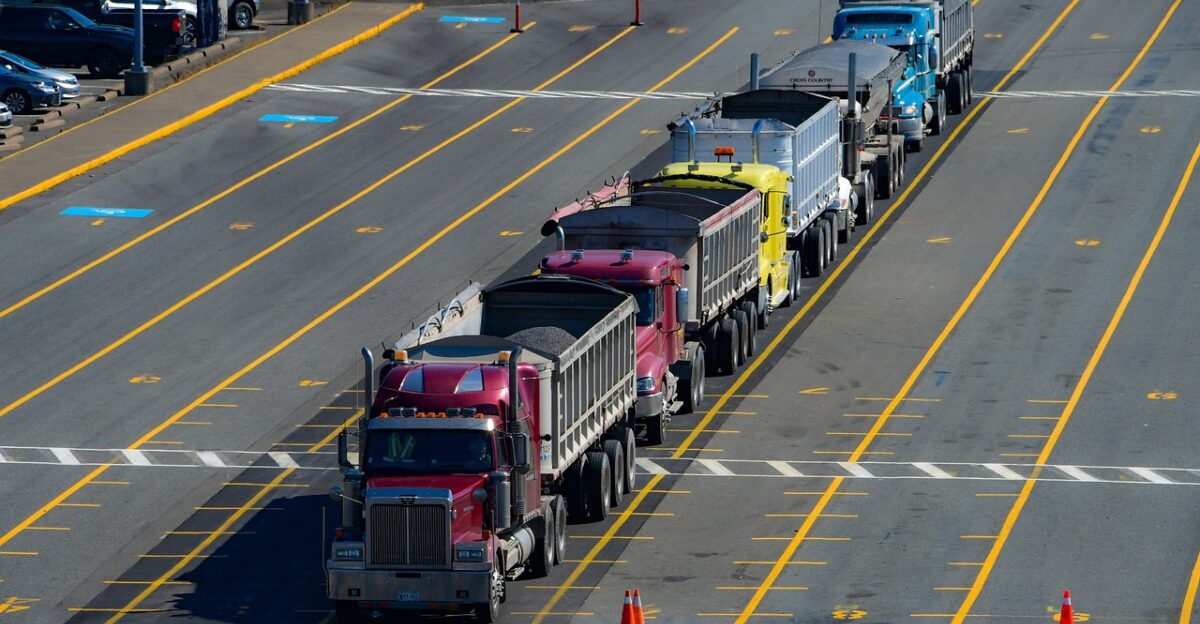
STG’s bankruptcy exposed vulnerabilities in U.S. supply chains. The company operated critical intermodal hubs connecting rail, truck, and port networks. It moved 15,000 containers across the country.
A restructuring or worse, liquidation would fragment that network, forcing shippers to use smaller, less efficient operators. Customers faced higher costs and longer transit times. The crisis also highlighted dependence on a shrinking number of large carriers, increasing systemic risk.
Labor Market Spillovers

Though STG announced no layoffs, the broader freight collapse has devastated workers. Over 2,200 logistics jobs were cut in early 2026 alone. Trucking wages have stagnated despite labor shortages. Benefits are eroding.
Warehouse workers face wage pressure and the threat of automation. STG’s restructuring may preserve 1,170 jobs, but the industry is shedding talent. Younger workers are leaving for tech, healthcare, or government jobs. Long-term, trucking faces a labor cliff that no restructuring can solve.
Consolidation Inevitable
STG’s bankruptcy is a harbinger of broader consolidation. Weak carriers will either restructure (like STG) or be acquired by stronger players. J.B. Hunt, Schneider, and Knight-Swift have capital to buy distressed competitors. The result: fewer, larger carriers with market power.
This could stabilize pricing but reduce competition and consumer choice. Shippers may face higher rates post-consolidation. The freight industry of 2030 will look very different, more concentrated, more automated, and leaner.
What STG Really Signals

STG Logistics’ bankruptcy is not just a company story; it’s a market story. A 41-year-old, fourth-largest player couldn’t survive a four-year downturn. That tells us the trucking industry is structurally fragile. Overcapacity is real.
Pricing discipline is broken. Recovery is uncertain. Even well-managed, large carriers face existential pressure. For shippers, the message is clear: lock in capacity now, diversify carriers, and prepare for higher costs. The days of cheap freight are over. What comes next is consolidation, automation, and higher barriers to entry.
Sources
FreightWaves – “What the 2026 Wave of U.S. Logistics Bankruptcies Tells Us about the Great Freight Recession”
NJ Biz – “STG Logistics files Chapter 11 bankruptcy”
TheStreet – “41-year-old trucking company giant files Chapter 11 bankruptcy”
Yahoo Finance – “Layoffs, bankruptcies batter U.S. logistics and manufacturing at start of 2026”
U.S. Bankruptcy Court for the District of New Jersey – “Case No. 2:26-bk-10258, STG Logistics Inc., Voluntary Petition”
Wall Street Journal – “STG Logistics Files for Chapter 11 Amid Lender Lawsuit”