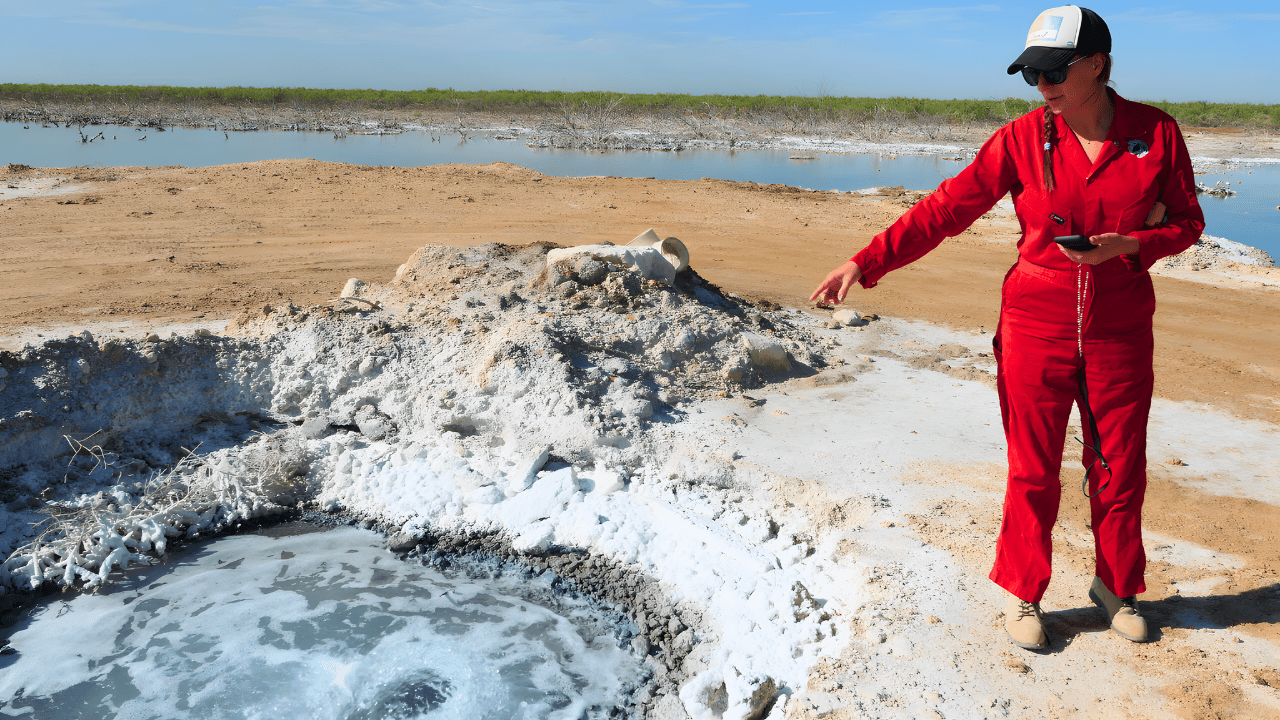
Four miles beneath the Permian Basin’s arid Texas terrain, advanced drilling has revealed 1.6 billion barrels of oil locked in formations twice as deep as current production zones, alongside 28.3 trillion cubic feet of natural gas—enough to power the U.S. for months.
What Lies Beneath

The Woodford and Barnett shale formations lie at 18,000 to 20,000 feet, where temperatures surpass 300 degrees Fahrenheit and pressures overwhelm standard equipment. These depths, deeper than Mount Denali’s height, span West Texas and southeastern New Mexico in the nation’s top petroleum region. Horizontal drilling and hydraulic fracturing have pierced rock sealed for millions of years, making extraction feasible for the first time.
A Resource Frozen in Time
Prior to recent technological leaps, these zones yielded just 26 million barrels since the late 1990s—barely one day’s U.S. consumption. Modern rotary steerable systems and gear handling 20,000 pounds per square inch have enabled access. The U.S. Geological Survey’s assessment notes these resources were previously impossible to reach due to depth.
The Scale of Discovery
This find equates to ten weeks of U.S. oil needs at 20 million barrels daily, with the gas sufficient for ten months of homes and businesses. It pales against the Permian’s 2016 Wolfcamp estimate of 20 billion barrels from shallower layers. The basin now pumps 6.1 million barrels daily, nearly half of U.S. crude and second only to Saudi Arabia’s Ghawar field globally.
Industry Pursuit and Economic Hurdles
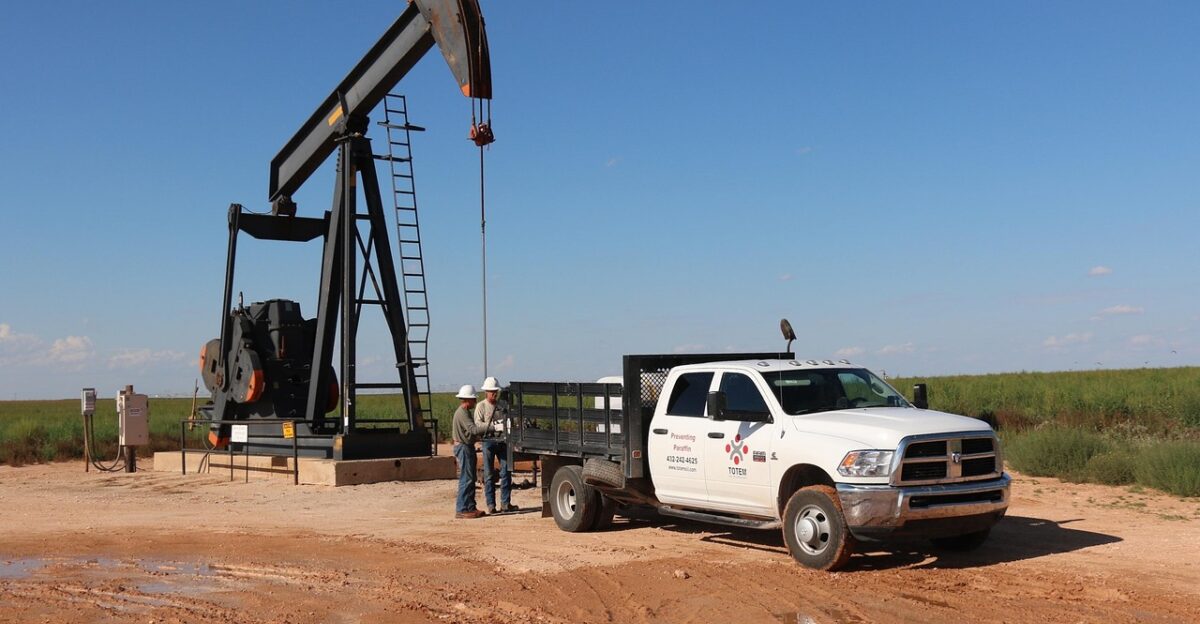
Major players like Diamondback Energy, ExxonMobil, Occidental Petroleum, and SM Energy are testing wells. Diamondback labels the zones potential “Tier 1” assets—top-tier profitable spots. SM Energy finished two exploratory wells on 20,000 net acres, yielding results that adjust strategies. Yet West Texas Intermediate crude hovers at $52 to $60 per barrel, below the $70 to $80 needed for viable ultra-deep operations. Such wells require specialized tools, longer timelines, and cost-doubling designs.
Strategic and Operational Edges

Analysts see this as long-term inventory amid shrinking shallower plays like Wolfcamp and Bone Spring. Deep zones cut water output sharply—unlike the basin’s four barrels of water per oil barrel average, easing disposal costs and constraints. ExxonMobil’s 2024 $64.5 billion Pioneer buyout bolsters capacity, targeting 2 million barrels of oil equivalent daily by 2027. Methane emissions intensity dropped over 50 percent from 2022 to 2024, with flaring 65 percent below 2015 peaks despite pipeline limits.
Regulatory and Market Pressures
Texas rules from June 2024 mandate plugging old wells near injection sites and capping pressures after seismicity linked to water disposal—15 million barrels daily, or 630 million gallons. The Energy Information Administration forecasts U.S. output dipping to 13.37 million barrels daily in 2026 from 13.61 million in 2025, with Permian rigs down 19.7 percent to 244. Oil averages $52 in 2026 and $50 in 2027 amid global oversupply of 0.5 to 2.5 million barrels daily. Pipeline expansions, like Matterhorn Express (2.5 billion cubic feet daily) and Eiger Express (3.7 billion cubic feet daily), aim to link to Gulf Coast LNG by 2029.
The Permian powers $119 billion in 2024 U.S. output and 862,250 jobs, funneling $3.4 billion to Texas funds and half of New Mexico’s budget. Shale has slashed net imports from 12 million barrels daily in 2005 to 1.2 million by 2022, with U.S. output at 24 million barrels—22 percent of global supply.
These technically recoverable volumes hinge on prices above $60 per barrel for economic viability, distinct from proven reserves needing 90 percent recovery certainty. Operators map geology via test wells, awaiting tech gains or price rises past $70. The find extends the basin’s lifespan, sustaining U.S. energy supply through a shift to deeper frontiers amid evolving markets and regulations.
Sources:
“Assessment of undiscovered continuous and conventional oil and gas resources, Woodford and Barnett Shales, Permian Basin Province, Texas and New Mexico.” U.S. Geological Survey, January 2026.
“USGS: Permian Secondary Shales Hold 1.6 Billion Barrels of Recoverable Oil.” Journal of Petroleum Technology, January 2026.
“USGS releases assessment of undiscovered oil and gas resources in Woodford and Barnett formations.” U.S. Geological Survey National News Release, January 2026.
“Short-Term Energy Outlook.” Energy Information Administration, January 2026.
“Oil prices forecast to ease in 2026 under pressure from ample supply.” Reuters, January 2026.
“Permian Basin Contributes Over $119 Billion And More Than 862,000 Jobs Nationally.” Permian Basin Petroleum Association, August 2025.
“Methane Emissions Intensity in the Permian Basin Dramatically Decline.” Energy In Depth, August 2025.