California’s retail shelves are under siege. Nationwide, organized theft rings steal an estimated $15 billion annually, yet most Americans don’t realize how sophisticated these operations have become.
From coordinated smash-and-grabs to interstate fencing networks, retail crime has evolved from petty shoplifting into an organized criminal enterprise. The scale is staggering, but enforcement responses have remained fragmented until now.
Rising Tide, Mounting Pressure

Over the past six years, organized retail crime investigations in California have exploded from a handful of cases to hundreds annually. Major retailers report losses reaching billions of dollars, straining already-fragile supply chains and forcing store closures in high-theft neighborhoods. The theft wave has become politically unavoidable, forcing policymakers to act.
By late 2024, a perfect storm of legislation, funding, and enforcement resources converged on one target: organized retail theft.
Legislative Turning Point
California lawmakers enacted sweeping reforms in 2024, passing 10 bipartisan retail theft bills that strengthened penalties and created new investigative tools. Governor Gavin Newsom signed legislation authorizing felony charges for repeat shoplifters and enabling theft aggregation, treating multiple small thefts as a single major felony.
Voters then passed Proposition 36 in November 2024, which took effect on December 18, 2024, increasing penalties further and shifting the political landscape. Retail crime became a bipartisan priority.
Funding and Force Expansion

The state allocated $267 million in grants to 55 communities for retail crime enforcement, officer hiring, and expanded investigative capacity. The California Highway Patrol’s Organized Retail Crime Task Force, established in 2019, received dedicated resources and strategic focus.
By 2025, the task force had grown from a 24-investigation baseline to a statewide operation capable of tracking criminal networks across jurisdictions. The machinery was in place for a dramatic enforcement surge.
The Numbers Revealed

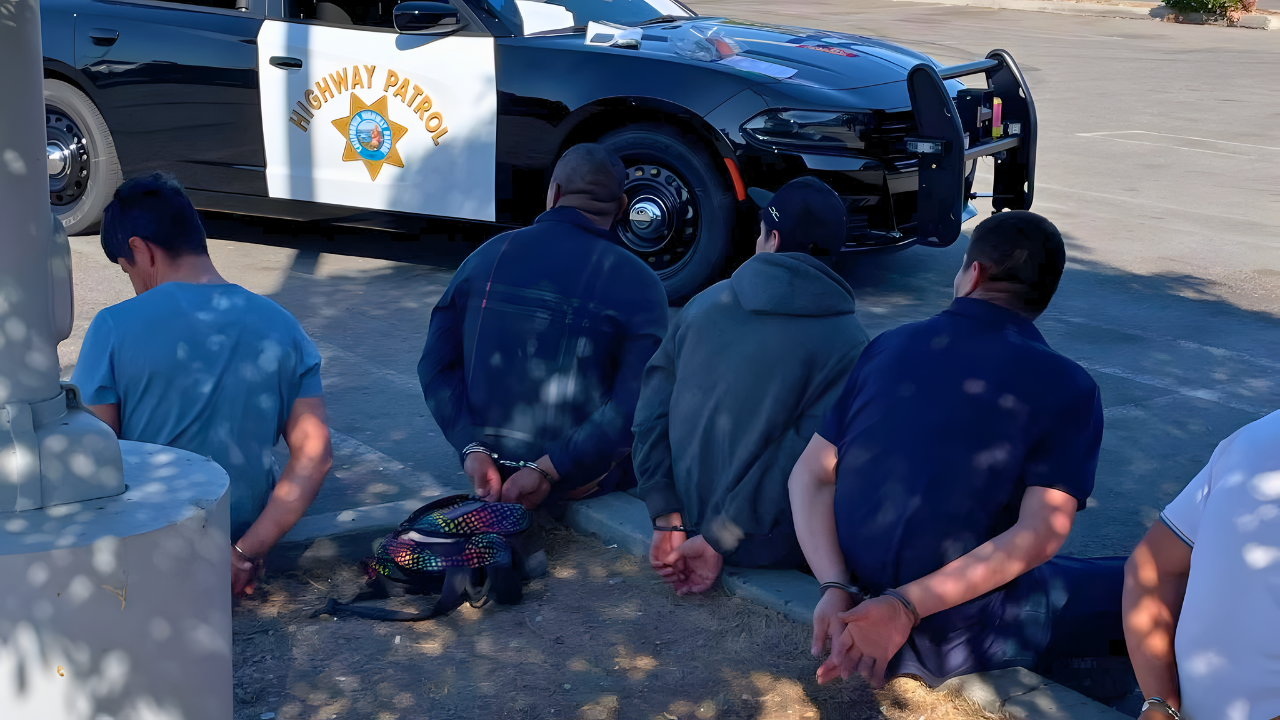
Here’s the stunning result: In 2025 alone, California’s task force recovered $17 million in stolen merchandise, arrested 1,208 suspects, and seized 272,000 stolen items through 734 investigations. The figures dwarf previous annual outputs, signaling a historic shift in enforcement capacity and political will.
Governor Newsom emphasized the scope in a January 2026 statement, framing the results as proof that “organized retail crime that preys on working families, small businesses, and local communities” can be confronted. The recovery rate is impressive, but what the statistics conceal is even more critical.
The Human Toll Beneath Statistics

Behind the $17 million figure lie individual victims whose lives were disrupted. The Sacramento Target bust on November 21, 2025, recovered 91 stolen items but uncovered something far graver: a juvenile human trafficking victim being held by thieves.
The discovery transformed a routine retail crime investigation into a rescue operation, highlighting how organized theft networks often intersect with human trafficking and exploitation. Five arrests followed, but the victim’s recovery was the true victory.
Small Business Under Siege

Independent retailers have been devastated by organized theft. Heller Jewelers in San Ramon experienced a particularly brazen attack: on September 22, 2025, approximately 20 masked thieves stormed the store in broad daylight, stealing roughly $1 million in jewelry in just over 60 seconds.
The thieves were armed and shot their way out when security attempted to lock them in, a sign of how dangerous retail crime has become. Seven suspects were subsequently arrested and charged with 13 counts of armed robbery, but the message to small businesses was clear: even fortified stores are vulnerable.
The Fencing Pipeline Exposed

Police didn’t just intercept thefts at the point of sale; they dismantled the downstream infrastructure enabling organized crime. In December 2025, a multi-agency operation dubbed “Operation Silent Night” arrested 13 suspects and recovered $800,000 in stolen goods from a fencing network operating at a California flea market.
The bust recovered 44,140 items and uncovered two illegal firearms, exposing how stolen merchandise flows from retailers through fencing operations to consumer markets. The operation proved that attacking the supply chain, not just the theft, is essential.
The Interstate Theft Ring

Organized retail theft often crosses state lines. A multi-county theft ring targeting Sephora stores across California was identified using advanced law enforcement surveillance technology (Flock cameras). The investigation recovered over 1,000 items valued at approximately $34,827 in stolen cosmetics and beauty products.
The sophistication of the operation coordinated across multiple jurisdictions, targeting a specific brand, and utilizing resale infrastructure underscores that retail crime is no longer local. It’s a statewide, organized enterprise.
The Pokémon Card Heist: A New Wrinkle

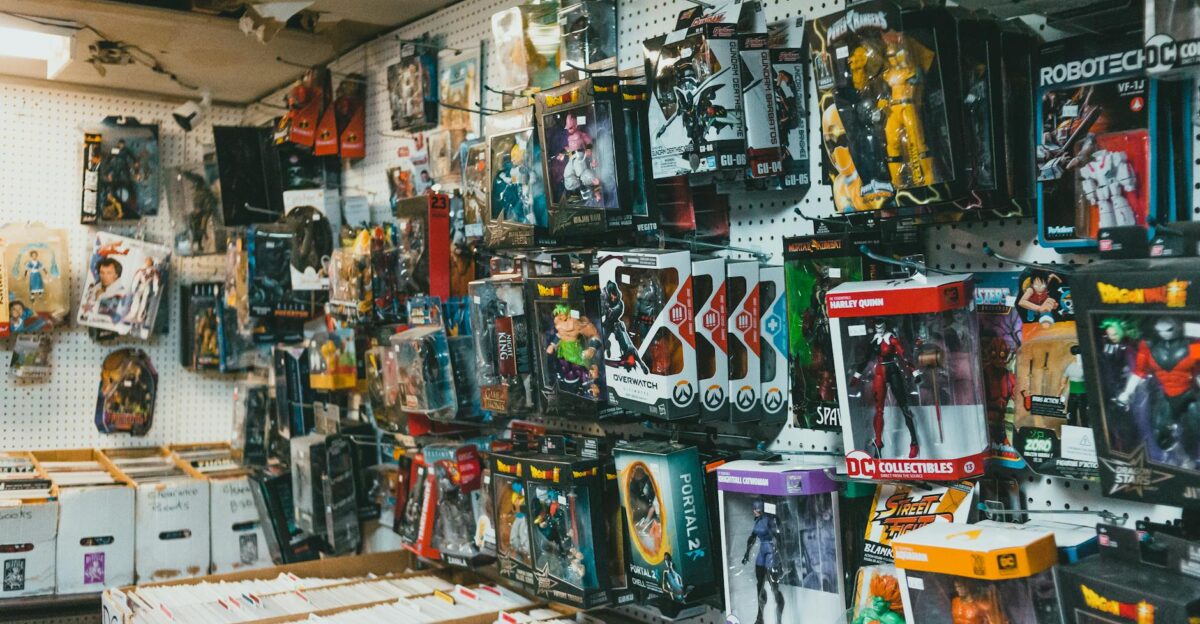
On January 5, 2026, thieves broke into Simi Sportscards in Simi Valley using an electric saw, a novel tactic, and stole approximately $50,000 in rare Pokémon cards and collectibles. The heist signals an alarming trend: organized crime rings have identified high-value niche merchandise beyond traditional targets like cosmetics and jewelry.
Trading cards, designer sneakers, and collectibles are now prime targets. This mini-nugget reveals that as law enforcement adapts, criminal networks are already pivoting to new product categories and tactics.
Retailer Frustration and Advocacy

Major retailers have grown increasingly vocal about their losses. Target, Sephora, and other national chains have publicly called for more vigorous enforcement and legislative support, frustrating executives who say law enforcement response remained inadequate for years despite escalating thefts.
The 2025 crackdown represents vindication of their advocacy efforts, but retailers note that the $17 million recovered likely represents only a fraction of actual losses. Industry estimates suggest that 70–90 percent of stolen goods remain unrecovered, meaning actual theft losses may reach $100 million or more annually in California alone.
Leadership and Political Capital
Governor Gavin Newsom made organized retail crime a personal policy priority, using the 2025 crackdown results to counter narratives about California’s public safety failures. Newsom framed the enforcement surge as evidence that “organized retail crime that preys on working families, small businesses, and local communities” can be stopped.
The 31-fold increase in investigations since he took office in 2019, from 24 to 734, serves as a political counter-narrative to critics who claim California is soft on crime. The political stakes are high.
Strategic Pivot: Prosecution and Penalties

California’s new approach paired arrests with aggressive prosecution. Proposition 36 enabled felony charges for repeat shoplifters with two or more prior theft convictions, even for thefts under $950. This legal architecture transforms retail crime from a misdemeanor revolving-door problem into a felony prosecution track.
The California District Attorney’s Association and county prosecutors have coordinated charging standards to ensure consistency. Early data shows increased felony convictions and longer sentences deterring organized crews from targeting California stores.
Expert Assessment and Skepticism

Criminologists and retail security experts cautiously celebrate the 2025 results while warning against overconfidence. “We’ve disrupted networks, but displacement is inevitable,” said retail crime researcher Dr. James Halleck in recent interviews. Organized crime rings may relocate to states with weaker enforcement or shift to online theft and package interception.
The $17 million represents success, but the underlying demand for stolen goods driven by resale marketplaces remains unaddressed. Sustainable solutions require attacking both supply and demand simultaneously.
What’s Next: The Unfinished Picture

California’s crackdown is impressive, but several questions linger. How will enforcement sustain momentum beyond the 2026 budget cycle? Will Proposition 36 produce predicted deterrent effects, or will organized crime networks become more sophisticated? Can law enforcement target the underground resale infrastructure, including online marketplaces, flea markets, and pawn shops, that enables stolen goods to reach consumers? The 2025 results are a milestone, but they pose as many questions as they answer about the future of retail crime enforcement.
Political Battleground: Public Safety Narrative

The retail crime crackdown sits at the center of California’s larger public safety debate. Republicans seized on crime statistics to challenge Newsom’s leadership and support for criminal justice reforms; Newsom countered with enforcement results and Proposition 36’s passage.
The 2025 crackdown allows Newsom to claim vindication: that swift, aggressive enforcement paired with innovative policy works. However, critics argue the state should have prioritized enforcement earlier and that Proposition 36’s passage suggests prior policies were inadequate. Public safety remains California’s most polarizing political issue.
National Implications and Replication

California’s organized retail crime task force model is now being studied by law enforcement agencies nationwide. The focus on coordinated investigations, multi-agency partnerships, and legislative backing rather than isolated local enforcement has proven effective.
Other states are exploring similar funding models and task force structures. The $267 million state investment and bipartisan legislative support created conditions for success that few other states currently match. However, scaling the model to lower-crime regions faces budget and political obstacles.
Digital Marketplace Complicity

A critical gap in the 2025 crackdown remains: online resale marketplaces that enable the sale of stolen goods. Facebook Marketplace, eBay, and lesser-known platforms have become de facto fencing operations. Stolen merchandise is often photographed, listed, and sold within hours of theft. Law enforcement has made limited progress in targeting these platforms, partly due to privacy protections and challenges with interstate jurisdiction.
Policymakers and retailers are increasingly calling for digital marketplace accountability, mandating seller verification, restricting specific categories, and granting law enforcement access. This battleground looms ahead.
The Human Cost Beyond Theft
Organized retail theft imposes costs beyond direct merchandise loss. Store closures in high-theft neighborhoods disproportionately affect low-income communities, limiting access to pharmacies, grocers, and other essential retailers.
Employees face trauma from violent confrontations during smash-and-grab robberies. Communities experience degradation and reduced economic activity. The 2025 crackdown success story, then, is also a story of protecting neighborhood commercial vitality. Policymakers increasingly frame retail crime enforcement as a social justice issue, preventing community harm and maintaining equitable access to services.
What This Really Signals

California’s $17 million recovery and 1,208 arrests in 2025 signal a fundamental shift: organized retail crime can be confronted when governments prioritize it, adequately fund it, and coordinate enforcement across agencies. The crackdown proves that supply-side enforcement, disrupting networks, seizing goods, and prosecuting offenders, works.
Yet the larger lesson is cautionary: that 70–90 percent of stolen goods remain unrecovered suggests the problem remains fundamentally unsolved. True victory requires addressing demand-side factors, closing online resale loopholes, reshaping consumer behavior, and attacking the profitability of organized theft networks. California’s success is real, but the broader war on organized retail crime is just beginning.
Sources
California Governor’s Office, Organized Retail Crime Investigations Up 31x Since Governor Newsom Took Office
Carrier Management, $17M Recovered in California’s Organized Retail Theft Crackdown
San Jose Inside, Newsom Claims Success in Battling Growth of Organized Retail Thefts
National Jeweler, $1M in Jewelry Stolen in Northern California Smash and Grab
ABC7 News, Heller Jewelers: Several of 2 Dozen Suspects Arrested Following $1 Million Jewelry Heist
CHP Press Release, Multiple Arrests Made in Statewide Organized Retail Theft Investigation