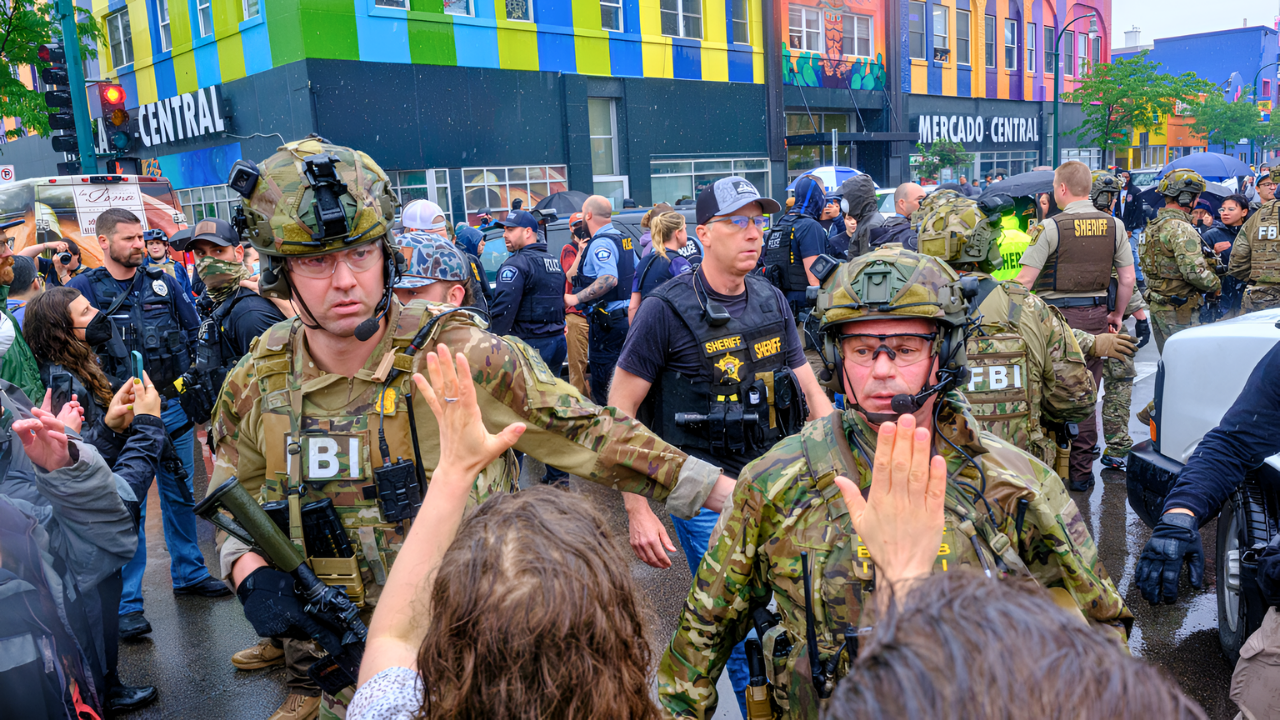
Renee Good ran errands on January 7 when ICE agent Jonathan Ross opened fire. She was a 37-year-old mother of three. Her death became the flashpoint for Operation Metro Surge—a massive deployment that had begun weeks earlier in December.
By mid-January, 3,000 federal agents occupied Minneapolis. Governor Walz called it “a war being waged against Minnesota.” Mayor Frey asked how his city became invaded.
The Morning That Changed Everything

At 9:37 a.m., Renee Good turned her steering wheel to the right. Video from ABC News and The New York Times shows her trying to move away from ICE agent Jonathan Ross. One second later: three shots. One through the windshield. Two through the driver’s side window. Four gunshot wounds—two in her chest, one in her forearm, one in her head.
Federal authorities said Ross perceived a threat. In that moment, a city already tense with federal presence ignited into something far more volatile.
The Eight Minutes That Divided A City
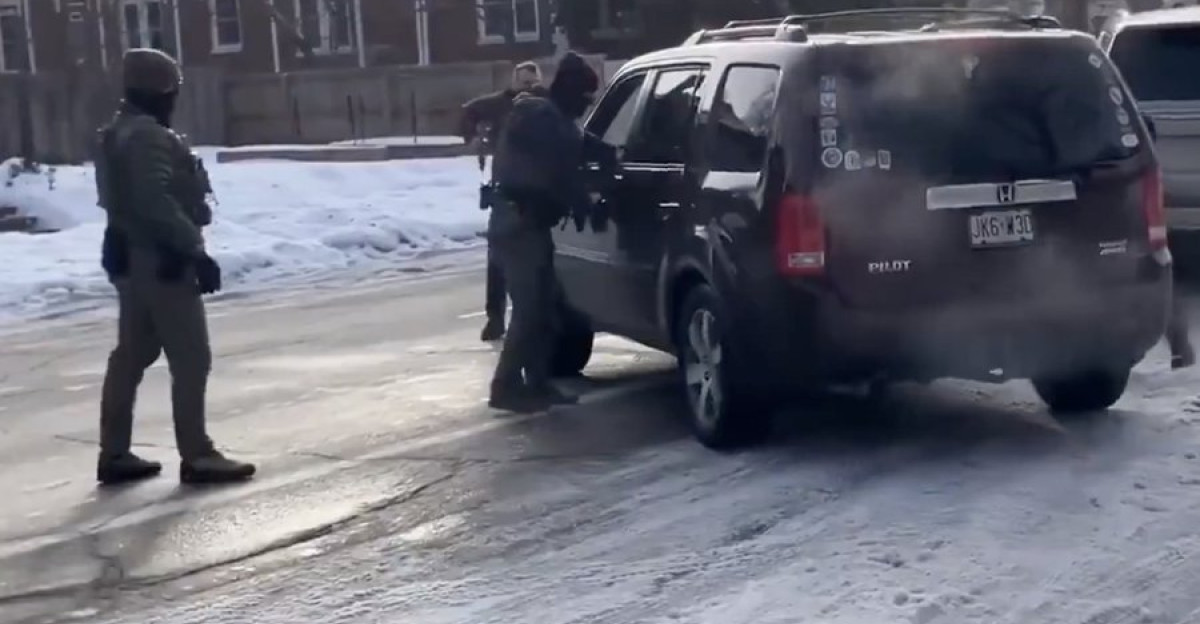
Good remained inside her Honda Pilot for eight minutes after being shot. A physician nearby stepped forward, willing to help. Federal agents blocked him, citing security and medical protocol. Bystanders pleaded. At 9:45 a.m., firefighters removed Good and began CPR.
She was pronounced dead at Hennepin County Medical Center. Federal authorities defended their response protocol. Minneapolis residents and advocates saw it differently. The eight minutes became a symbol that transcended the shooting itself.
The Operation That Was Already Underway
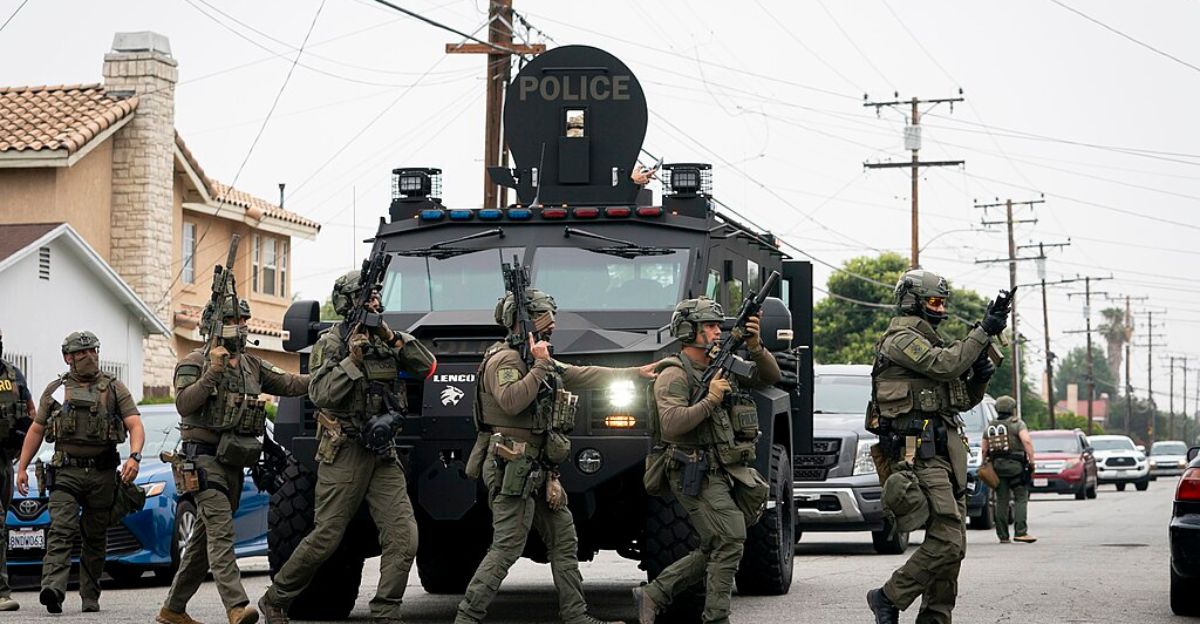
Operation Metro Surge began in December 2025, weeks before Renee Good’s death. The Trump administration characterized it as intelligence-driven enforcement targeting fraud and human trafficking involving Somali-operated child care centers.
The first wave of 2,000 agents arrived on January 6—one day before Good was killed. But the shooting transformed the operation’s meaning.
An Unprecedented Scale
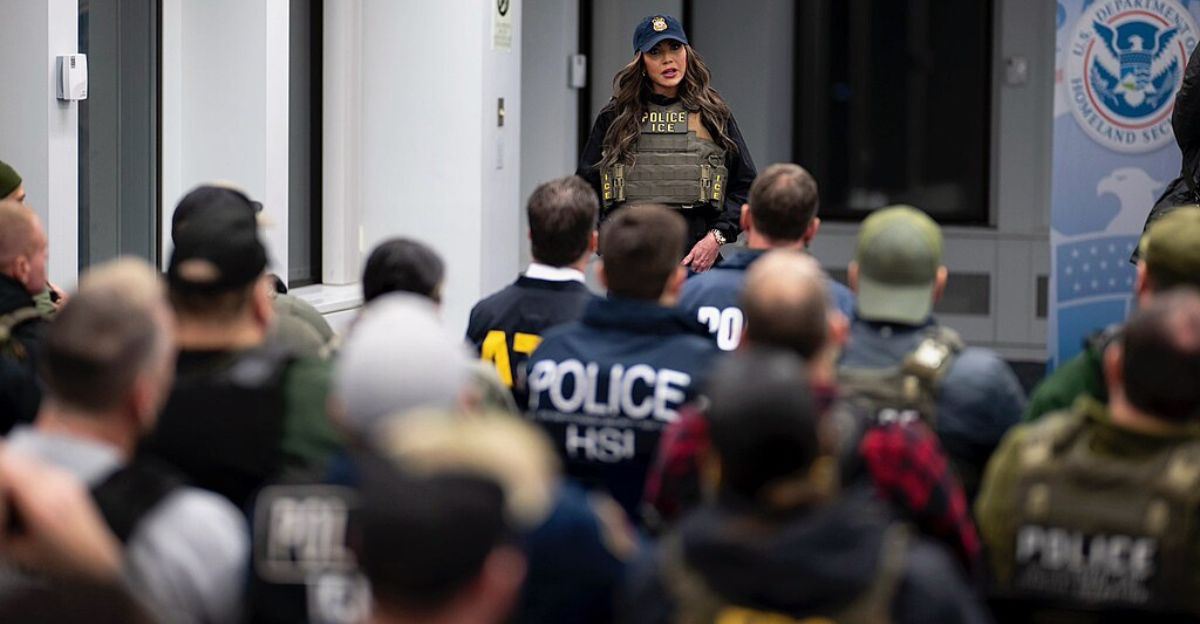
3,000 federal agents—ICE, Border Patrol, HSI—in a city of 430,000 people. One officer for every 143 residents. Federal officials argued that this scale reflected their investigative scope—hundreds of fraud cases that require substantial resources. According to PBS Newshour, ICE Director Todd Lyons called it the agency’s “largest immigration operation ever conducted.”
Chicago and Los Angeles paled in comparison. For residents: unmarked vehicles, federal checkpoints, door-to-door investigations. For federal agencies: necessary law enforcement addressing documented criminal activity.
How Neighborhoods Transformed Overnight
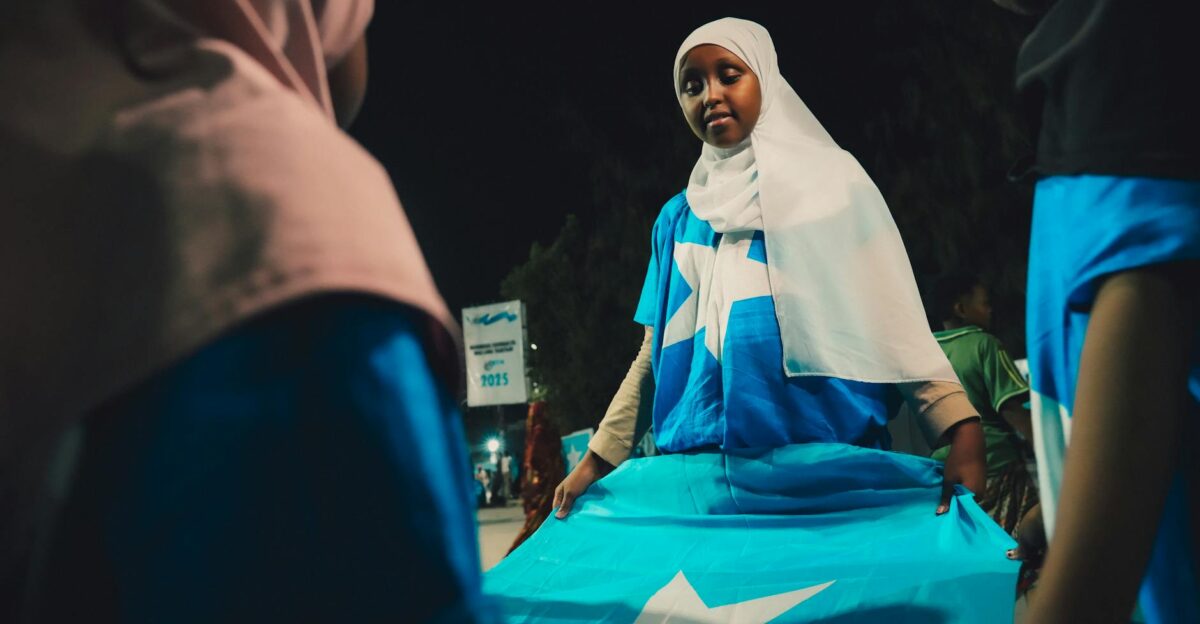
Minneapolis’s Somali American community felt the impact first. According to CNN, residents began carrying passports and identification, anticipating the worst-case federal encounters. Parents kept children home from school, worried about raids during drop-off.
Federal officials acknowledged residents’ concerns while emphasizing personnel were trained in community-sensitive policing.
The FBI’s Voluntary Request
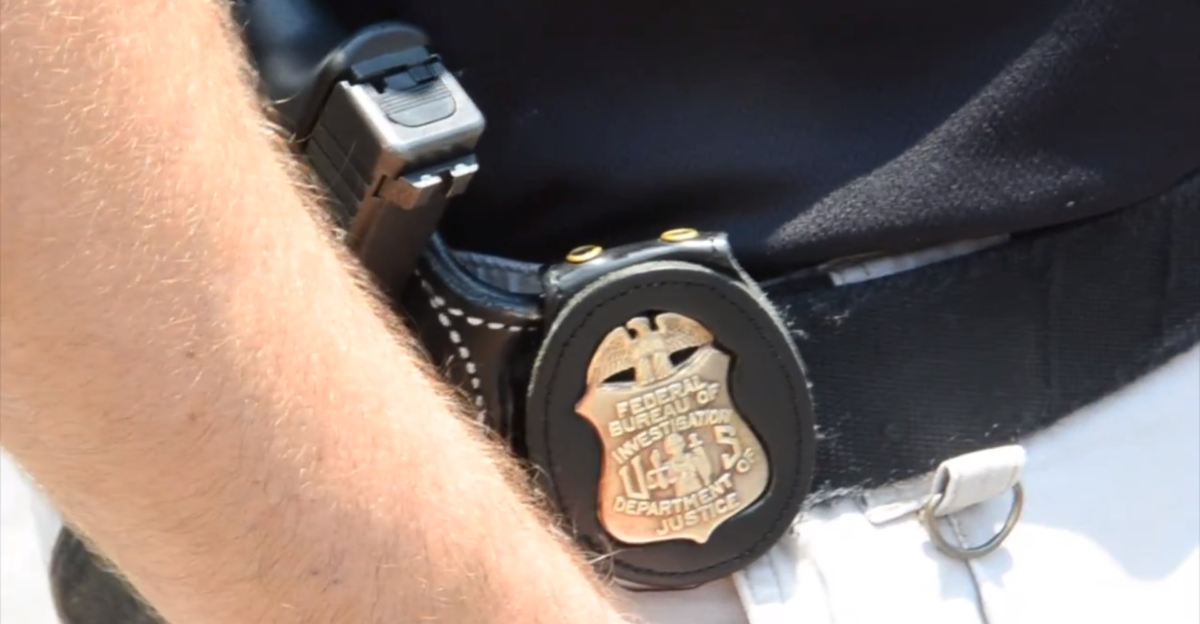
On January 17, ten days after Good’s death, the FBI asked agents nationwide to volunteer for temporary duty in Minneapolis. According to Fortune magazine, they’d investigate assaults on federal officers and vandalism of federal vehicles. No one was compelled to deploy.
Federal officials stressed why: agents faced real attacks during protests. Fireworks. Ice. Snowballs packed with debris. According to DHS reports, officer safety was threatened.
When Federal Property Became The Priority
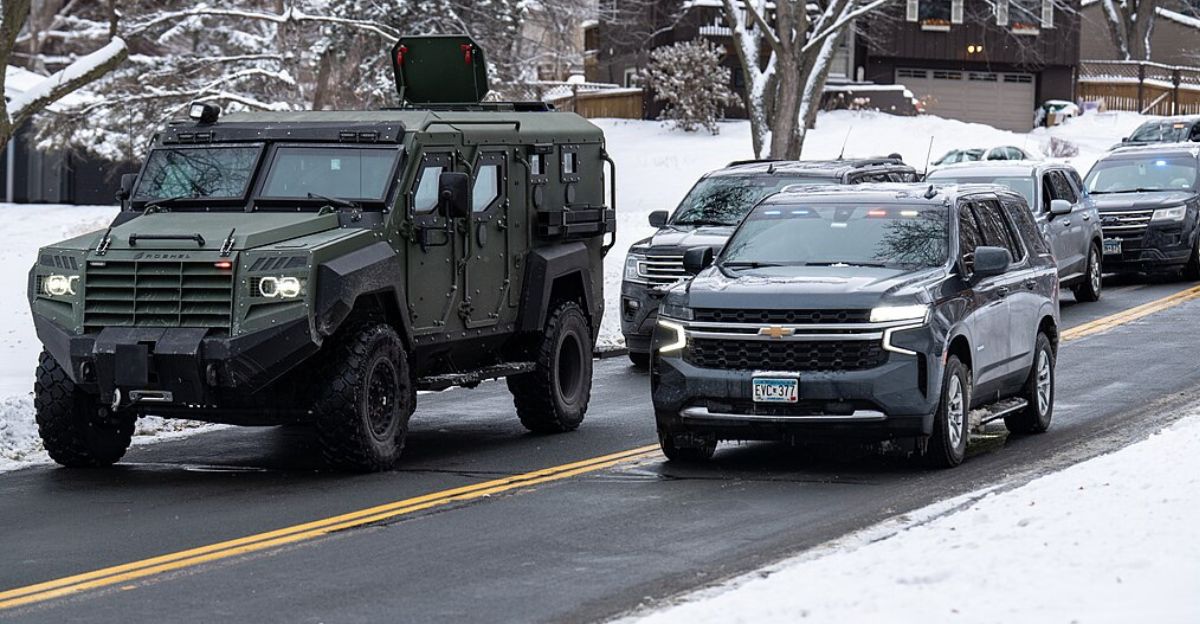
On January 15, federal vehicles were damaged during nighttime protests. Items were stolen from FBI cars. The FBI announced a $100,000 reward for information. Federal officials framed this as evidence of escalating violence, justifying their officer safety protocols.
The reversal struck critics hard: federal agents investigating crimes against themselves and their property.
Trump’s Conditional Threat
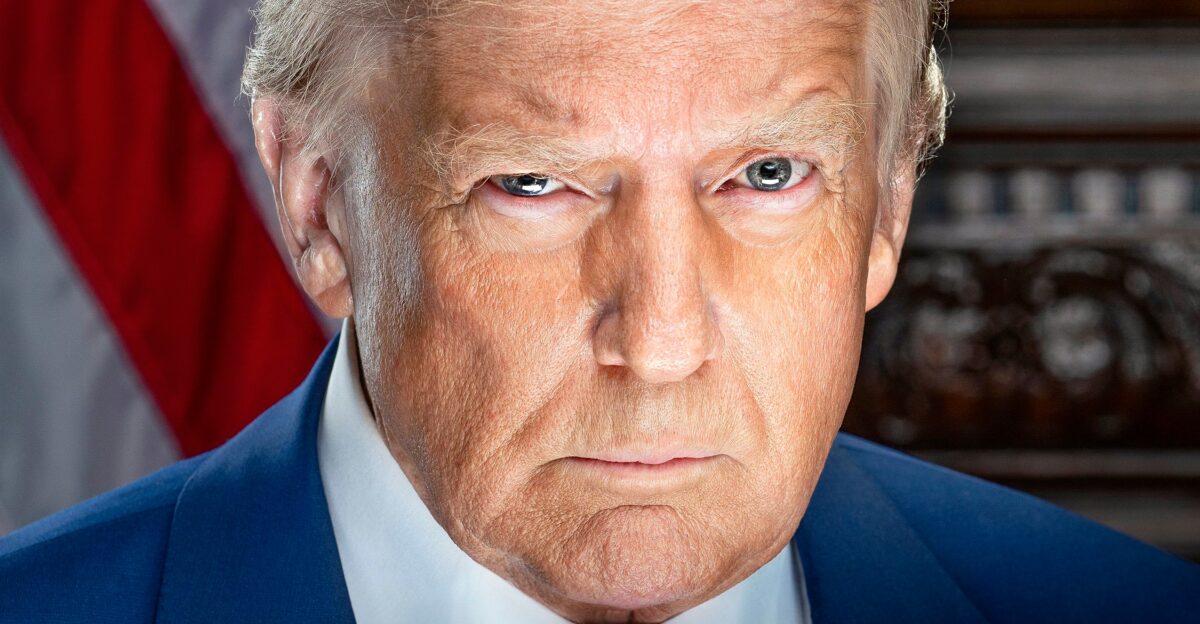
On January 15, President Trump posted to Truth Social: if Minnesota’s leadership didn’t stop “professional agitators and insurrectionists,” he would invoke the Insurrection Act. According to BBC News, this 1807 law grants the president the authority to deploy active-duty military for domestic law enforcement.
Last used in 1992 during the LA Riots, it represented extraordinary power. DHS Secretary Kristi Noem said Trump “certainly has the constitutional authority.”
The Military Prepares In Alaska
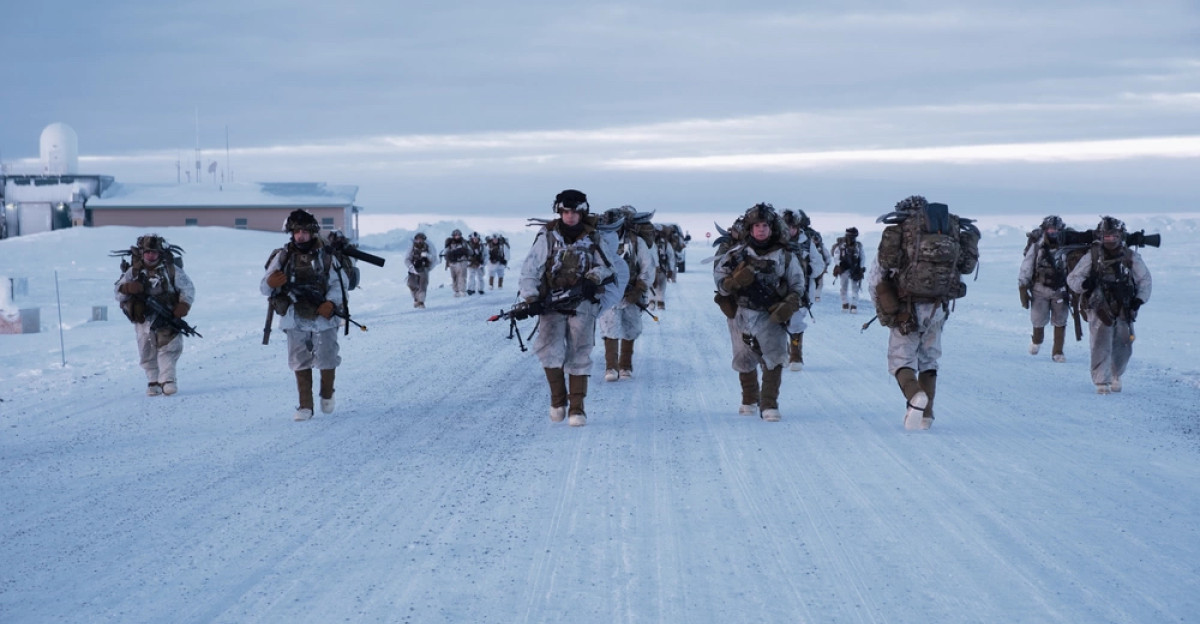
Pentagon planners moved quickly. Bloomberg reported that 1,500 active-duty soldiers from the 11th Airborne Division in Alaska—the “Arctic Angels”—received orders to prepare for a possible deployment to Minnesota. CBS News confirmed they remained on standby, awaiting potential deployment orders.
Federal officials stressed this was purely precautionary. Pentagon leadership emphasized that any deployment would require a direct presidential order.
The Second Shooting
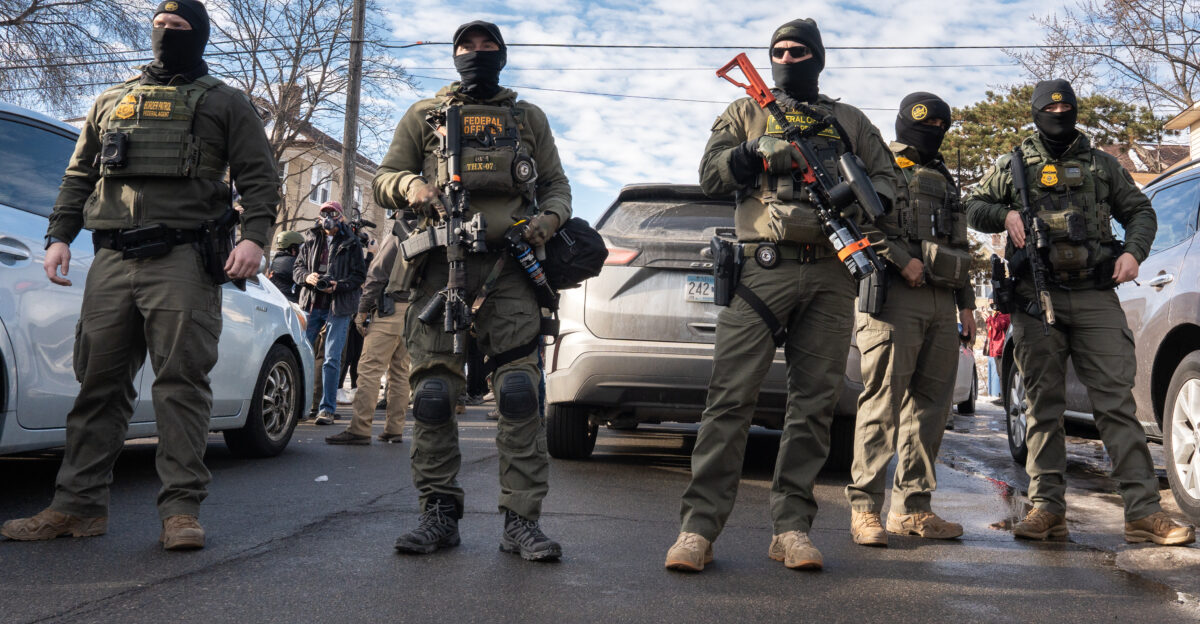
Eight days after Good’s death, on January 15, another federal agent discharged his weapon in Minneapolis. According to BBC News, the officer opened fire after an encounter with individuals he said assaulted him. A man was injured but survived.
The second shooting deepened residents’ fears. If federal agents killed one person and injured another within eight days, what trajectory was Minneapolis on? Federal authorities said both incidents reflected genuine officer safety threats.
The Political Tightrope

Governor Tim Walz, a Democrat who’d called ICE a “modern-day Gestapo,” attempted an impossible balance. He urged Minnesotans to avoid violence while criticizing the scale and timing of the federal surge. Mayor Jacob Frey demanded ICE withdraw entirely.
Yet at a late-night January 15 press conference, Frey addressed those damaging property: “For those destroying property and causing chaos, you are not helping.”
A National Symbol Emerges

Good’s death rippled far beyond Minneapolis. At the Golden Globe Awards on January 12, Mark Ruffalo and Wanda Sykes wore pins honoring her. Ruffalo’s “BE GOOD” pin was dedicated to “Renee Nicole Good, who was killed by ICE.” Cellphone footage circulated millions of times across social media.
Her name became a symbol in national conversations about immigration enforcement, federal power, and accountability. Federal officials acknowledged the tragedy while emphasizing incidents require investigation and due process.
The DOJ Decision
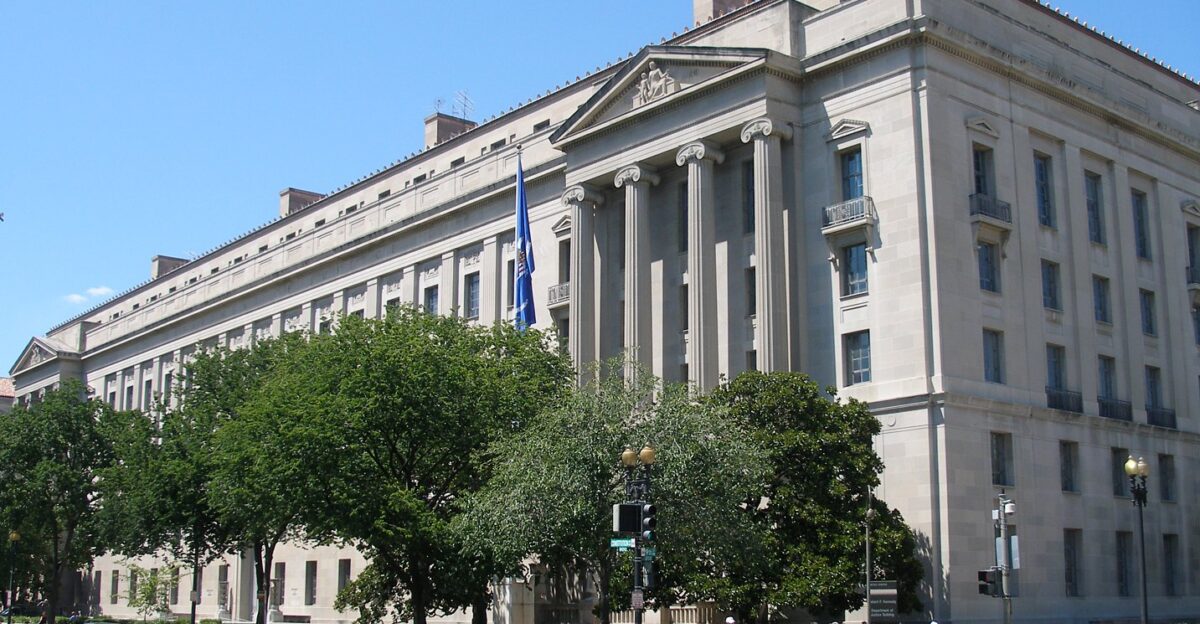
On January 12-13, the U.S. Justice Department announced it would not independently investigate the shooting. Federal protocol typically defers to local authorities for officer-involved shooting investigations. A DOJ spokesman said state and local authorities were conducting appropriate investigations.
Minneapolis residents and advocacy groups challenged this directly. How could local investigators maintain independence from federal colleagues involved in the incident?
What Comes Next For Minneapolis
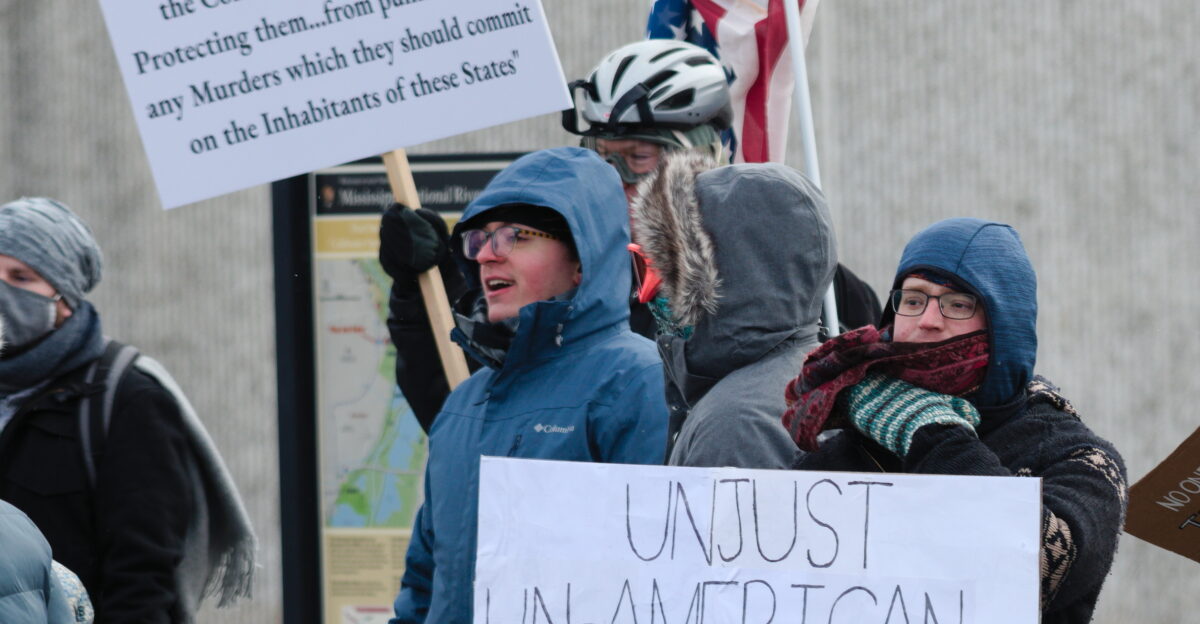
Multiple futures remain possible. If violence escalates, federal officials indicate the Insurrection Act could be invoked, fundamentally reshaping the relationship between the federal government and civilian authority. If conditions persist, the 3,000-agent deployment represents the largest peacetime federal law enforcement presence in any single American city.
Federal agencies maintain their presence to address documented criminal activity and officer safety. Local officials argue that excessive presence inflames conflict. Minneapolis watches competing visions of federal authority and appropriate force play out in real time.
SOURCES
ABC News – “Minneapolis ICE Shooting: A Minute-by-Minute Timeline” (January 8, 2026)
BBC News – “Trump Threatens to Invoke Insurrection Act to Quell Anti-ICE Protests” (January 15, 2026)
Bloomberg News – “Pentagon Readies 1500 Troops for Possible Minnesota Deployment” (January 18, 2026)
CBS News – “U.S. Justice Dept. Appeals Temporary Restraining Order” (January 18, 2026)
CNN – “2,000 Federal Agents Being Deployed to Minneapolis” (January 6, 2026)
Fortune Magazine – “FBI Asks Agents to Voluntarily Travel to Minneapolis” (January 17, 2026)