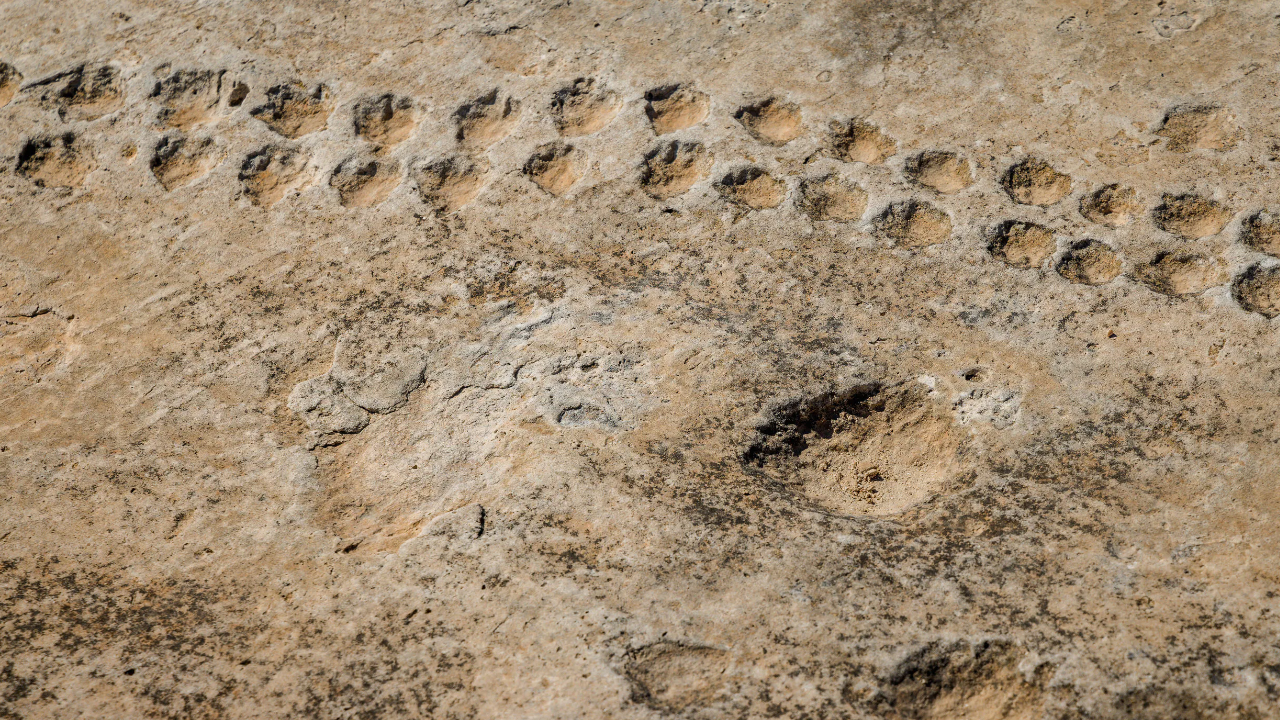
In the vast expanse of Saudi Arabia’s Nefud Desert, where scorching sands now dominate, a 2017 archaeological survey unveiled seven human footprints etched into an ancient lakebed. Preserved for more than 115,000 years, these tracks offer a rare window into a forgotten chapter of human history, just before the grip of the last Ice Age.
The Footprints Emerge

Amid tracks from elephants, camels, and other giant beasts, the seven human prints stood out clearly. Discovered in the western Nefud, they lay hidden until erosion exposed a sediment layer from a long-vanished freshwater lake. Over 370 animal footprints surrounded them, painting a picture of a thriving ecosystem in a region now barren. Researchers identified the human tracks through their distinct shape and size, larger than those typically linked to Neanderthals and more akin to early Homo sapiens—tall, possibly slender figures traversing the landscape.
Dating to a Warmer World
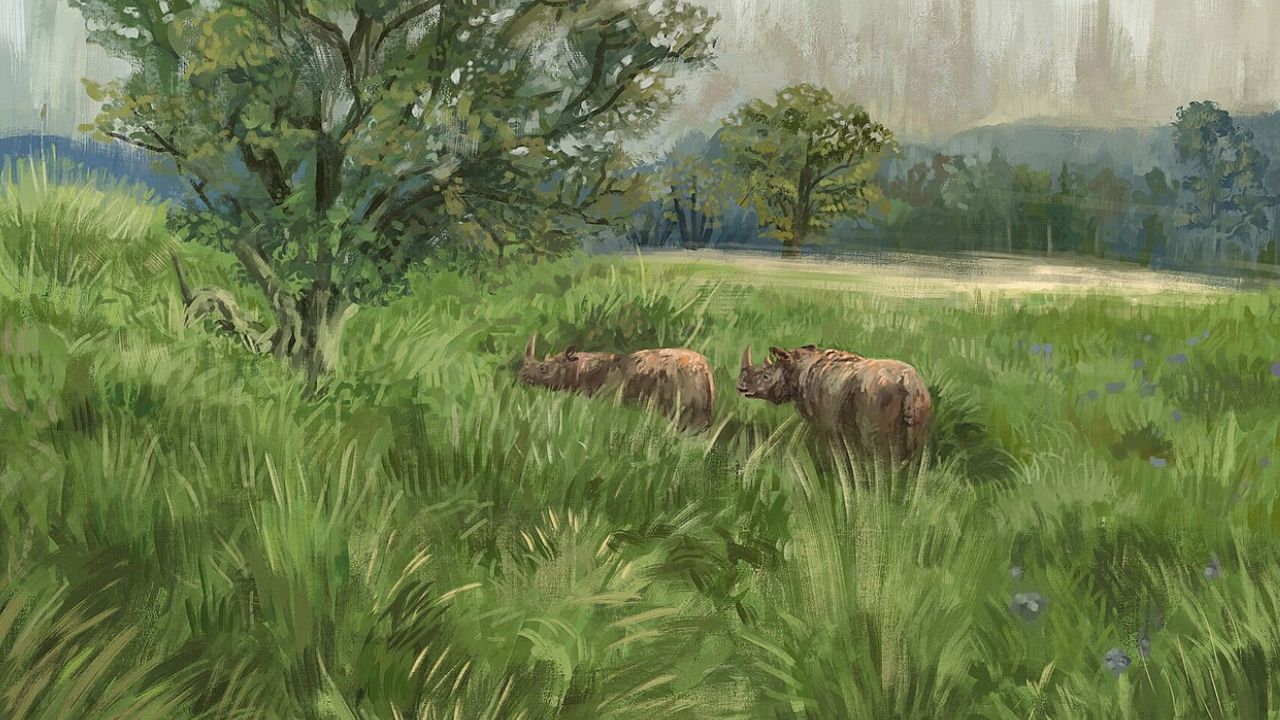
Optically stimulated luminescence dating pinned the prints to 112,000–121,000 years ago, during Marine Isotope Stage 5e, the Last Interglacial. Earth then basked in warmth exceeding today’s climate, one of the hottest phases in the past 800,000 years. Grasslands stretched where desert now reigns, drawing herds of elephants, camels, and horses to the lake’s edge. Humans likely paused there for water during this brief climatic oasis, before cooling ushered in glacial harshness.
A Fleeting Passage
No tools, bones, or camp remnants accompanied the tracks, ruling out prolonged stays. Experimental work shows mud prints fade fast unless buried swiftly, explaining their pristine state. The group—perhaps a small band—appears to have crossed quickly, their steps captured in a single, hurried moment. This absence of later traces suggests they were among the final visitors before aridity sealed the area.
Challenging Migration Paths

The Alathar site upends views of early human dispersal from Africa. Inland routes through Arabia, via freshwater oases, now rival coastal paths in importance. The peninsula served as a land bridge to Eurasia, with genetic data pointing to waves around 90,000 years ago under wetter conditions. These prints prove humans ventured deep into the interior far earlier, reshaping maps of our ancestors’ journeys.
Echoes of a Lost Landscape
The tracks reconstruct a vibrant scene: grazers on open plains, predators nearby, all sustained by the lake. Paleoecology reveals how such refuges lured life amid shifting climates. As the interglacial waned, corridors closed, stranding groups and influencing genetic lineages. Footprints, unlike scattered artifacts, freeze an instant, yielding precise behavioral clues.
This discovery spotlights Arabia’s pivotal role in human expansion, urging deeper surveys for matching evidence. Unresolved riddles—group size, exact origins, links to modern peoples—drive ongoing work. With climate corridors key to survival then, the prints warn of parallels today, as shifting environments test human adaptability across the globe.
Sources:
“Human footprints provide snapshot of last interglacial ecology in the Arabian interior.” Science Advances, 17 Sep 2020.
“Ancient Human Footprints in Saudi Arabia Provide Snapshot of Arabian Ecology 120,000 Years Ago.” Max Planck Institute for the Science of Human History, 17 Sep 2020.
“These 120,000-year-old footprints offer early evidence for humans in Arabia.” Science Magazine, 16 Sep 2020.
“Human Footprints Found in Saudi Arabia May Be 120,000 Years Old.” Smithsonian Magazine, Sep 2020.