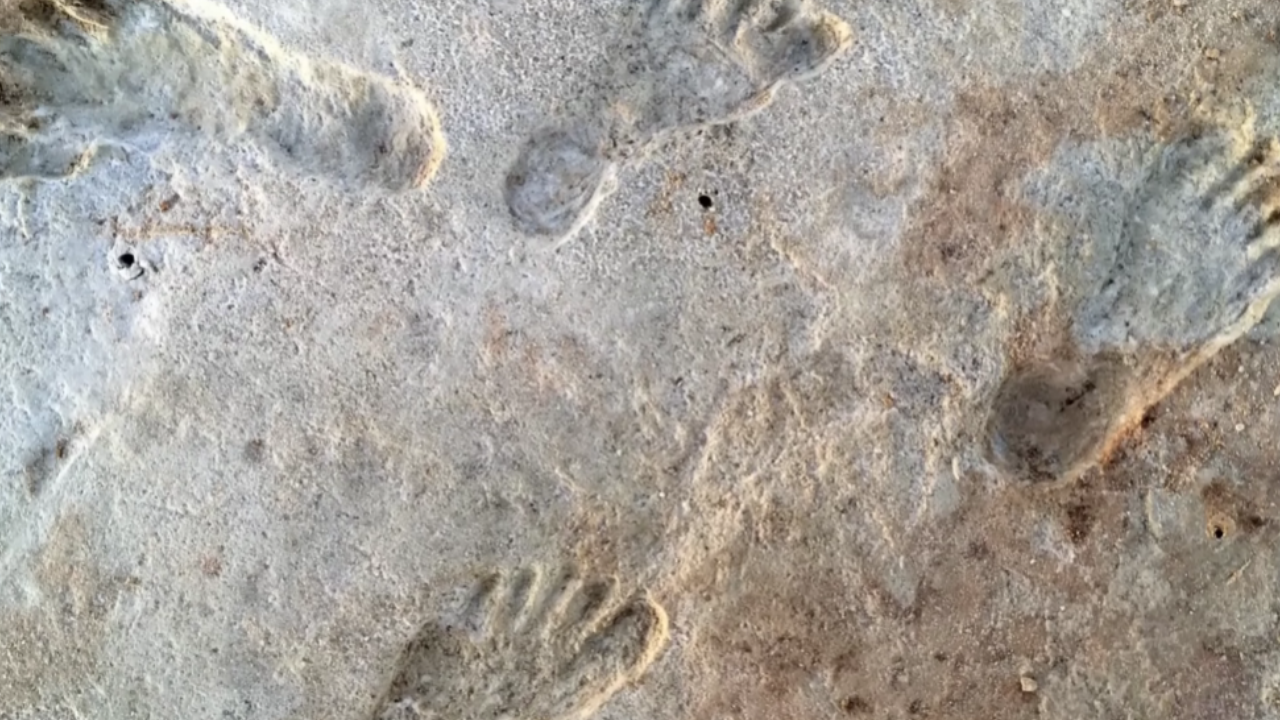
In 2017, archaeologists in northern Saudi Arabia made an astounding find—seven human footprints, perfectly preserved in an ancient lakebed. These tracks, preserved for over 115,000 years, present a glimpse into humanity’s past.
The discovery raises numerous questions: Who left them behind, and how did they survive? This astonishing find challenges everything we thought we knew about early human migration.
The Footprints: Who Walked Here?

The seven human footprints were found among tracks left by elephants, camels, and other megafauna. These ancient humans were likely walking through the area just before the onset of the Ice Age.
The discovery offers evidence of human presence in Arabia during a critical climatic window, when the Earth was warmer and wetter than today. But who were these early wanderers?
Time Period: The Last Interglacial

These footprints date back to the Last Interglacial Period, between 112,000 and 121,000 years ago. During this time, Earth’s climate was notably warmer than today.
This period, known as Marine Isotope Stage 5e, represents one of the warmest intervals in the last 800,000 years, just before the harsh conditions of the Last Glacial Period took hold.
Discovery in the Nefud Desert
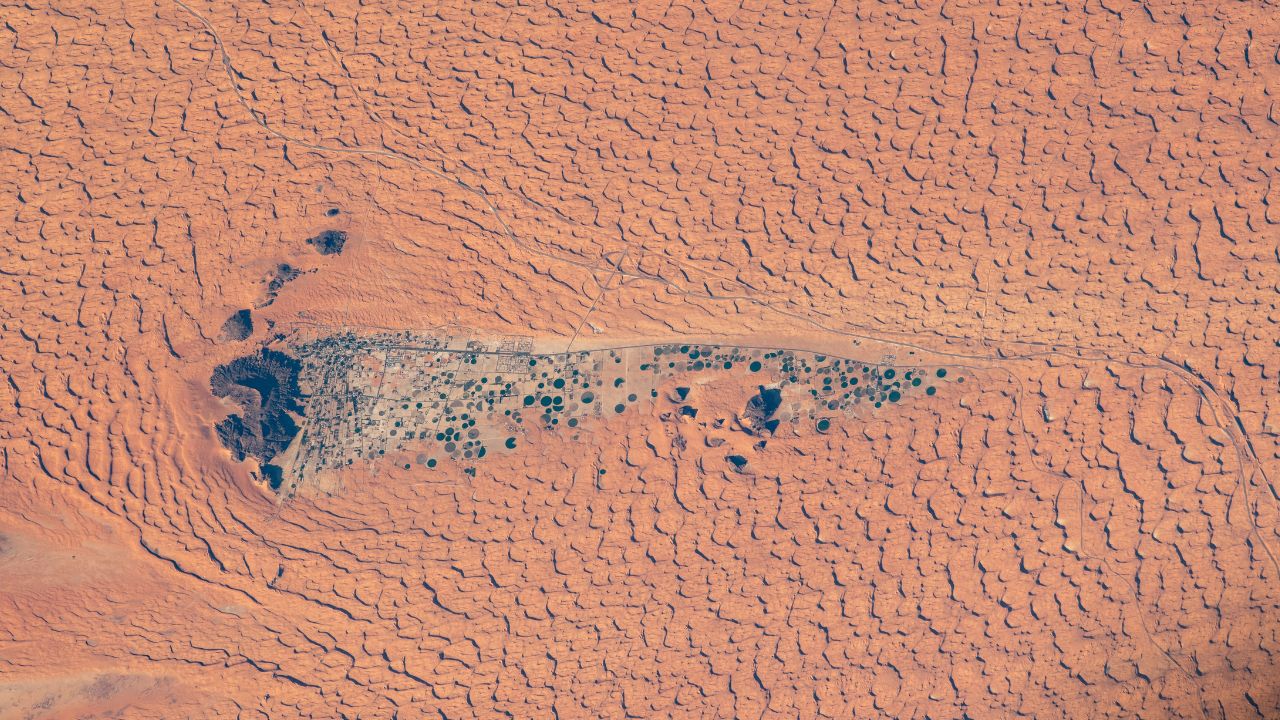
The footprints were uncovered during a 2017 archaeological survey in the western Nefud Desert, a region where modern-day conditions make such discoveries unexpected.
As the sediments eroded, a lakebed was revealed, showcasing over 370 footprints left by various animals, including elephants and camels. But among them, researchers identified seven distinctly human tracks.
The Challenge of Attribution

Determining who made these footprints is a puzzle. Comparing the tracks with known footprints of Homo sapiens and Neanderthals, the researchers lean toward early Homo sapiens.
The tracks are larger than those typical of Neanderthals, suggesting that the individuals were tall, perhaps lighter-built, and more consistent with early Homo sapiens, though uncertainty remains.
No Evidence of Long-Term Habitation

What makes the discovery even more intriguing is the lack of accompanying archaeological evidence. No tools, animal bones, or signs of long-term habitation were found.
This suggests that the humans who left these footprints were likely passing through the area, briefly stopping to drink from the freshwater lake, rather than settling for long periods.
The Brief Visit Hypothesis
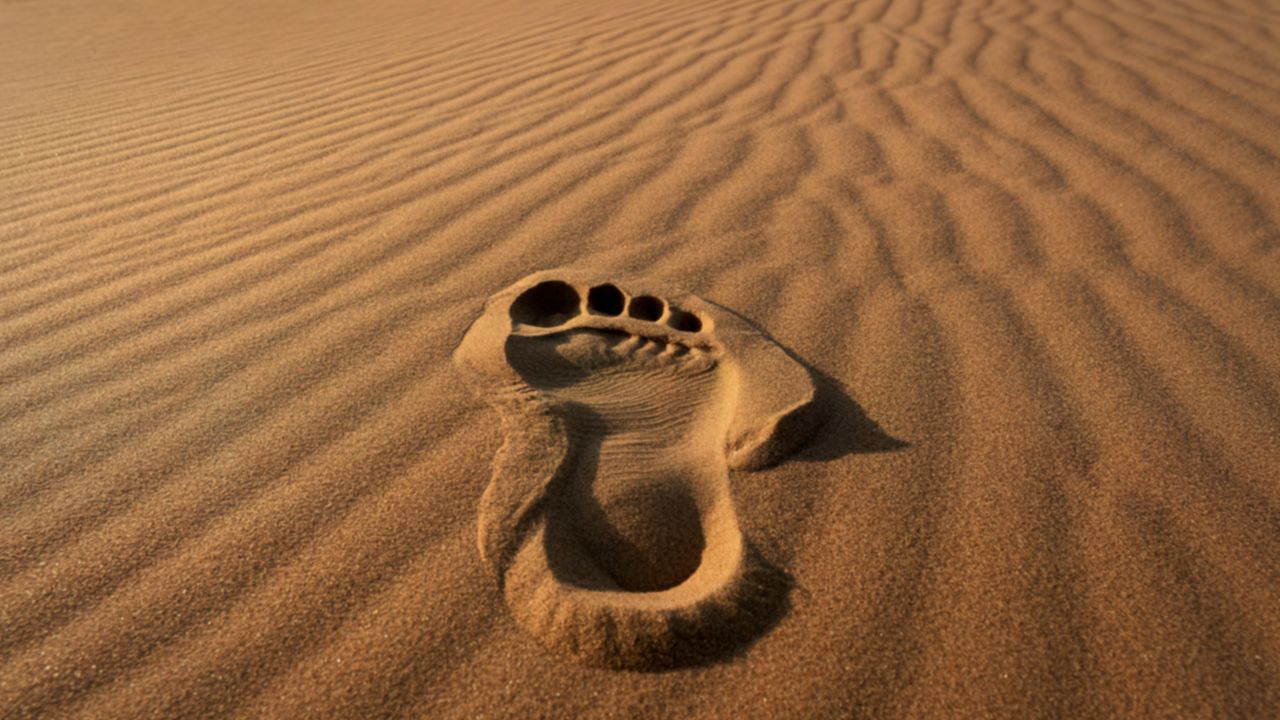
Experimental studies show that footprints in mud can vanish within days if not preserved quickly. The Alathar tracks, in their pristine condition, suggest that they were made rapidly and then quickly buried.
This points to a fleeting moment in time when humans passed through the region during favorable climatic conditions.
Rethinking Human Migration

The discovery at Alathar challenges the traditional theories of human migration out of Africa. Previously, scholars believed coastal routes were the primary paths for early humans.
However, the Alathar footprints provide evidence of humans moving inland into the Arabian Peninsula, offering a new perspective on human migration and the role of inland freshwater corridors.
An Ancient Ecosystem Reconstructed

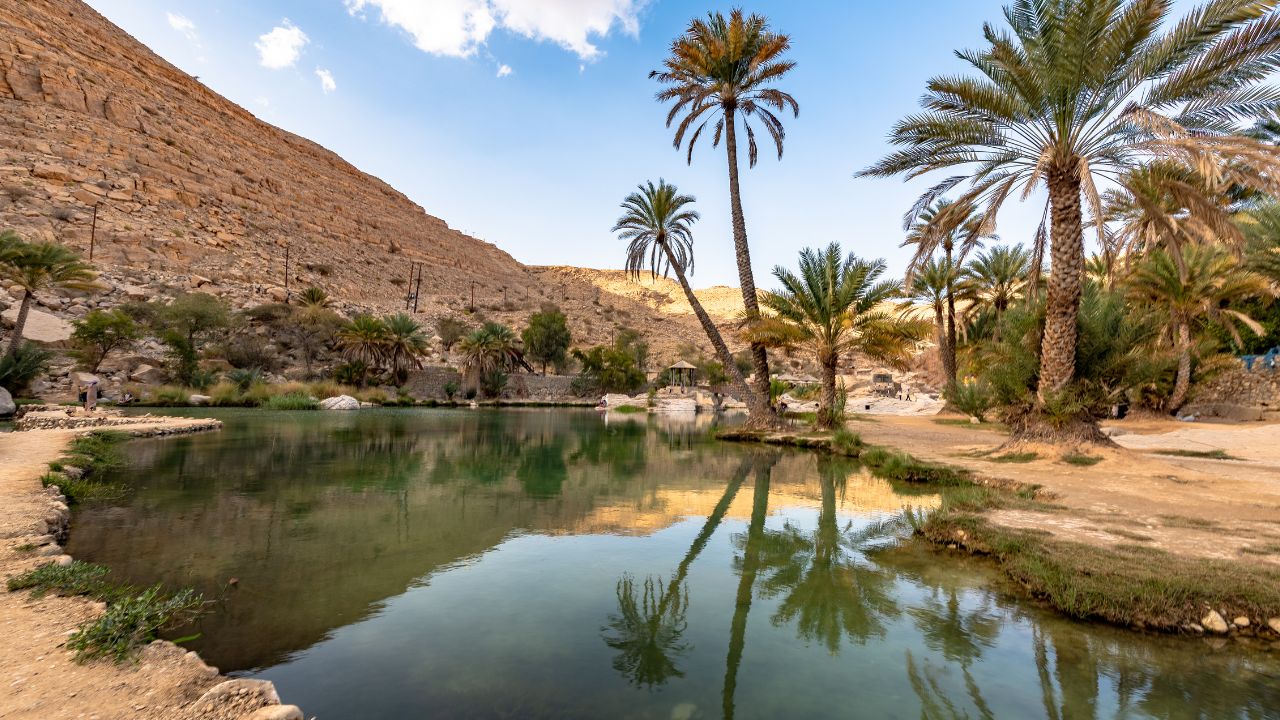
The tracks also reveal a vastly different landscape than what we see today. The freshwater lake at Alathar was home to a variety of large animals, including elephants, camels, and horses.
Paleoecological studies show that these animals were grazing on open grasslands, painting a picture of a lush, diverse environment that attracted both herbivores and carnivores alike.
Precise Dating with Scientific Rigor

The age of the footprints was confirmed using optically stimulated luminescence (OSL) dating, which measures when sediment grains were last exposed to sunlight.
This technique provided a secure dating range between 112,000 and 121,000 years ago, linking the footprints to a time of significant climatic transition.
The Puzzle of Singular Visitation
One of the most perplexing aspects of the Alathar discovery is the absence of additional footprints from later groups. If the lake was a vital water source, why didn’t subsequent groups of humans or animals leave tracks?
One theory is that these footprints represent one of the last human groups to pass through the region before the climate shifted, making the area inhospitable.
Arabia as a Gateway for Human Expansion

The Arabian Peninsula played a critical role as a land bridge connecting Africa and Asia, facilitating early human migration.
Genetic studies align with archaeological evidence, supporting the idea that humans moved from Africa into Eurasia via Arabia around 90,000 years ago, during favorable climatic conditions.
A Climate Shift and the Last Ice Age

The Alathar footprints mark a crucial moment just before the onset of the Last Glacial Period—a massive Ice Age that would drastically change Earth’s climate.
This transition from a warm, wet period to a harsh, arid one likely closed migration corridors, isolating populations and affecting the genetic development of human groups across the globe.
The Importance of Footprint Evidence
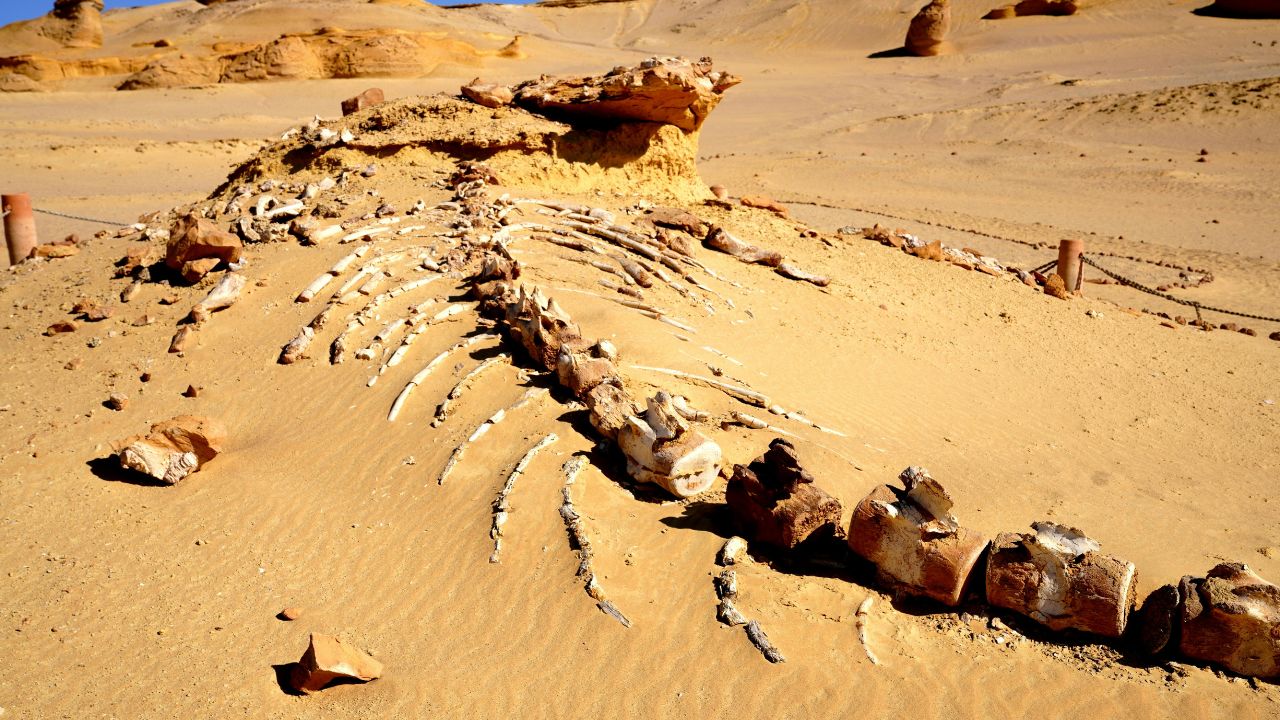
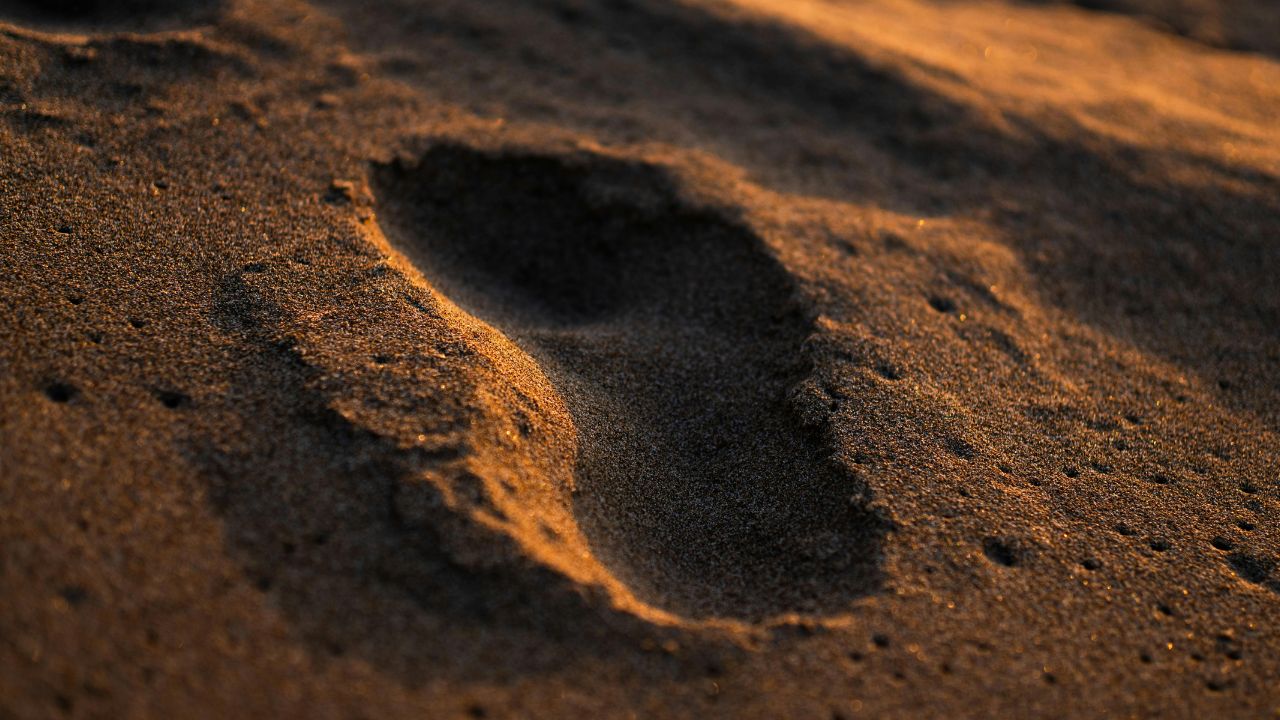
Footprints provide a rare and valuable form of fossil evidence. Unlike other archaeological remains, which can span long periods, footprints capture brief, specific moments in time.
The Alathar footprints offer an exceptional snapshot of human movement, allowing researchers to reconstruct behavior and migration patterns with unparalleled accuracy.
Future Research and Unanswered Questions
While the Alathar discovery is groundbreaking, many questions remain. How many people made these tracks? What route did they take? Did this early migration contribute to modern populations?
Researchers continue to explore the Arabian Peninsula, hoping to find more evidence that will help us understand humanity’s journey out of Africa and into the wider world.
Sources:
“Human footprints provide snapshot of last interglacial ecology in the Arabian interior.” Science Advances, 17 Sep 2020.
“Ancient Human Footprints in Saudi Arabia Provide Snapshot of Arabian Ecology 120,000 Years Ago.” Max Planck Institute for the Science of Human History, 17 Sep 2020.
“These 120,000-year-old footprints offer early evidence for humans in Arabia.” Science Magazine, 16 Sep 2020.
“Human Footprints Found in Saudi Arabia May Be 120,000 Years Old.” Smithsonian Magazine, Sep 2020.