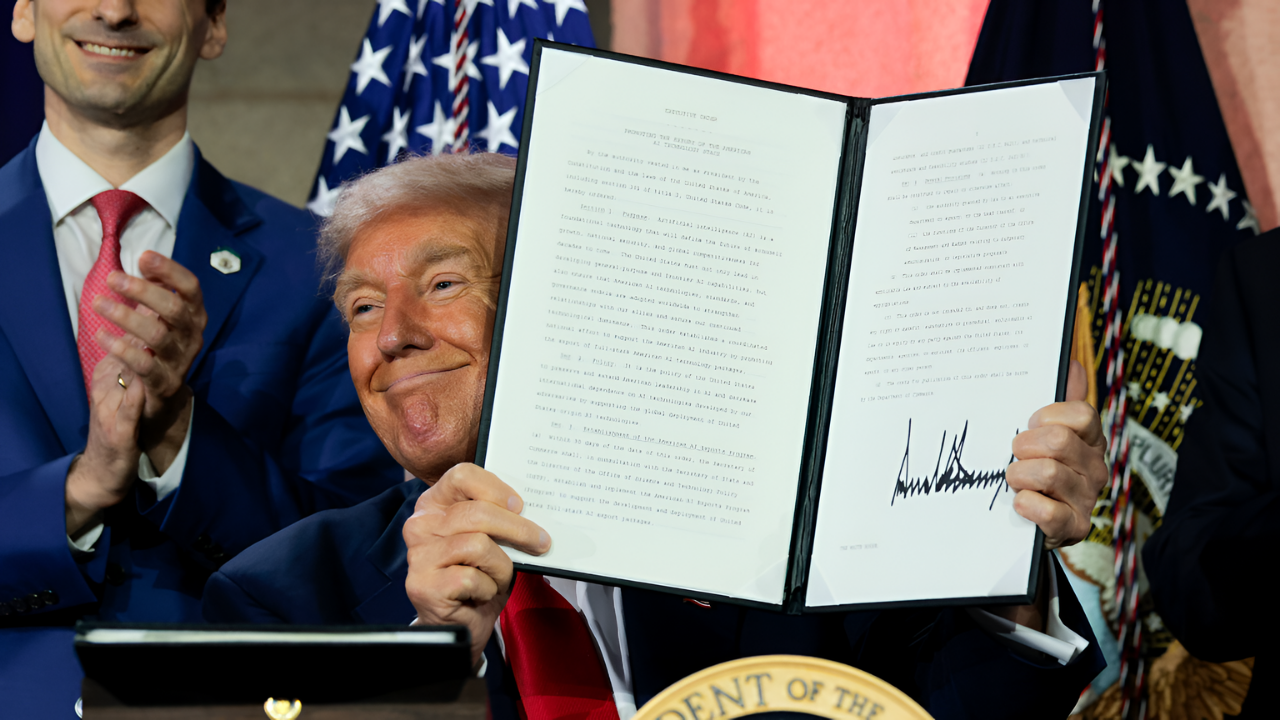
A December 2025 executive order from President Trump demands states abandon artificial intelligence regulations or forfeit billions in federal broadband funding. The directive weaponizes $42.45 billion allocated for rural internet expansion, forcing states to choose between consumer protections and infrastructure money. Colorado, with comprehensive algorithmic discrimination safeguards, now confronts this stark dilemma. Within thirty days of the order, Attorney General Pam Bondi must establish an AI Litigation Task Force to challenge state laws using dormant Commerce Clause theories, federal preemption claims, and First Amendment arguments.
The maneuver follows congressional resistance to Trump administration efforts to impose federal restrictions on state AI laws. After opposition from state attorneys general derailed legislative efforts, the White House pivoted to executive action, bypassing democratic deliberation to achieve through presidential directive what Congress declined to authorize.
Constitutional Confrontation on Shaky Ground

Legal scholars warn the federal assault rests on questionable constitutional foundations. “An executive order cannot preempt state law on its own, as preemption must rest on congressional statutory authority,” constitutional experts at the National Taxpayers Union explain. Trump’s order attempts an end-run around this principle by directing federal agencies to assert preemptive authority and the Justice Department to file challenges. Without congressional legislation establishing federal AI standards, no baseline exists against which state laws can conflict.
The order’s most coercive mechanism targets the Broadband Equity Access and Deployment program, threatening to make states with “onerous” AI laws ineligible for approximately $21 billion in non-deployment funds by March 11, 2026. Rural regions that overwhelmingly supported Trump face potential denial of infrastructure their communities desperately need. Yet state laws remain in effect unless and until successfully challenged in court.
State Regulatory Explosion Fills Federal Vacuum

During 2025, states across the nation introduced AI legislation, with dozens enacting measures addressing algorithmic bias, deepfake fraud, child safety, and healthcare decisions. This activity filled a federal void: Congress has passed no comprehensive AI legislation despite rapid technology deployment affecting employment, housing, credit, and civil rights. Colorado’s Consumer Protections for Artificial Intelligence Act stands as the only state law explicitly named in Trump’s order.
Effective June 30, 2026, the legislation requires AI developers to prevent algorithmic discrimination in consequential decisions about jobs, loans, housing, and healthcare. California enacted 13 AI-related laws in 2025—more than any state—covering frontier model transparency, deepfake restrictions, and performer digital rights. Governor Gavin Newsom issued a sharp response, calling the order “ongoing grift” designed to “enrich himself and his associates.”
Bipartisan Resistance and Industry Silence
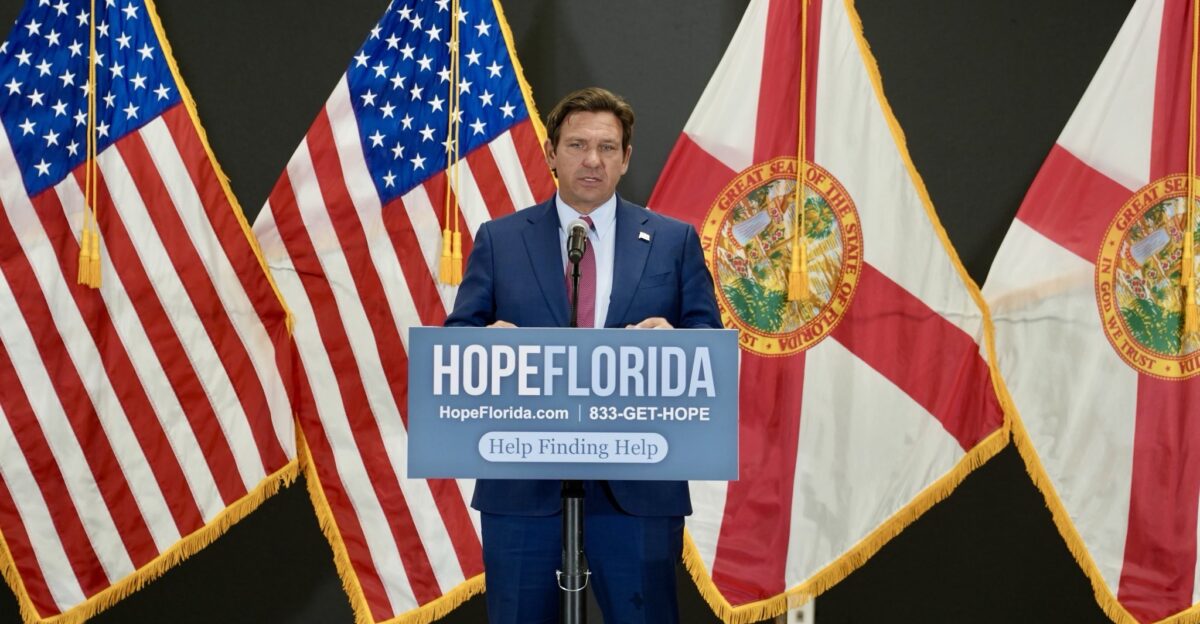
Republican Florida Governor Ron DeSantis joined Democratic leaders in rejecting federal interference, signaling confidence in state authority to regulate AI within constitutional bounds. This coalition demonstrates that concerns about federal overreach transcend partisan divisions on technology policy. Major AI companies including OpenAI, Google, Microsoft, and Meta issued no public statements supporting or opposing the order.
This silence reflects complex calculations: maintaining relationships with state regulators, existing voluntary compliance with state standards, and legal uncertainty about whether courts will uphold the order’s constitutional theories. White House AI and Crypto Czar David Sacks, who shaped the executive order, maintains extensive investments in AI companies while serving as “special government employee” without full financial disclosure requirements, raising questions about potential conflicts of interest.
Uncertain Legal Path Forward

Trump’s litigation strategy centers on the dormant Commerce Clause—arguing state AI regulations unconstitutionally burden interstate commerce. But the Supreme Court’s 2023 decision in National Pork Producers v. Ross significantly narrowed this doctrine’s application. “Neither of the two main strands of dormant commerce clause doctrine is likely to condemn the most significant state AI laws,” Gibson Dunn concludes. Organizations developing AI systems face a paradox: the executive order creates uncertainty but doesn’t invalidate state laws.
Legal experts advise companies should still be expected to follow state and local AI laws. The executive order’s most revealing provision directs White House advisors to prepare legislative recommendations for Congress establishing uniform federal standards with explicit preemption authority. This acknowledges lasting preemption requires congressional action, not executive directive. The next 18 months will determine whether this constitutional confrontation produces durable policy or collapses into judicial rejection and regulatory disarray.
Sources:
“Ensuring a National Policy Framework for Artificial Intelligence.” White House Presidential Actions, 11 Dec 2025.
“Trump signs order blocking states from enforcing own AI rules.” BBC News, 11 Dec 2025.
“President Trump’s Latest Executive Order on AI Seeks to Preempt State Laws.” Gibson Dunn, 15 Dec 2025.
“Three Issues with the Trump Administration’s Proposed Preemption of State AI Laws.” National Taxpayers Union, 11 Dec 2025.
“Trump’s AI executive order advances corruption, not innovation.” California Governor’s Office, 11 Dec 2025.
“Biden-Harris Administration Announces State Allocations for $42.45 Billion High-Speed Internet Grant Program.” National Telecommunications and Information Administration, 2023.
“Is China Catching the US in AI? Hassabis Says Gap is ‘Just Months’.” Vertu, 18 Jan 2026.