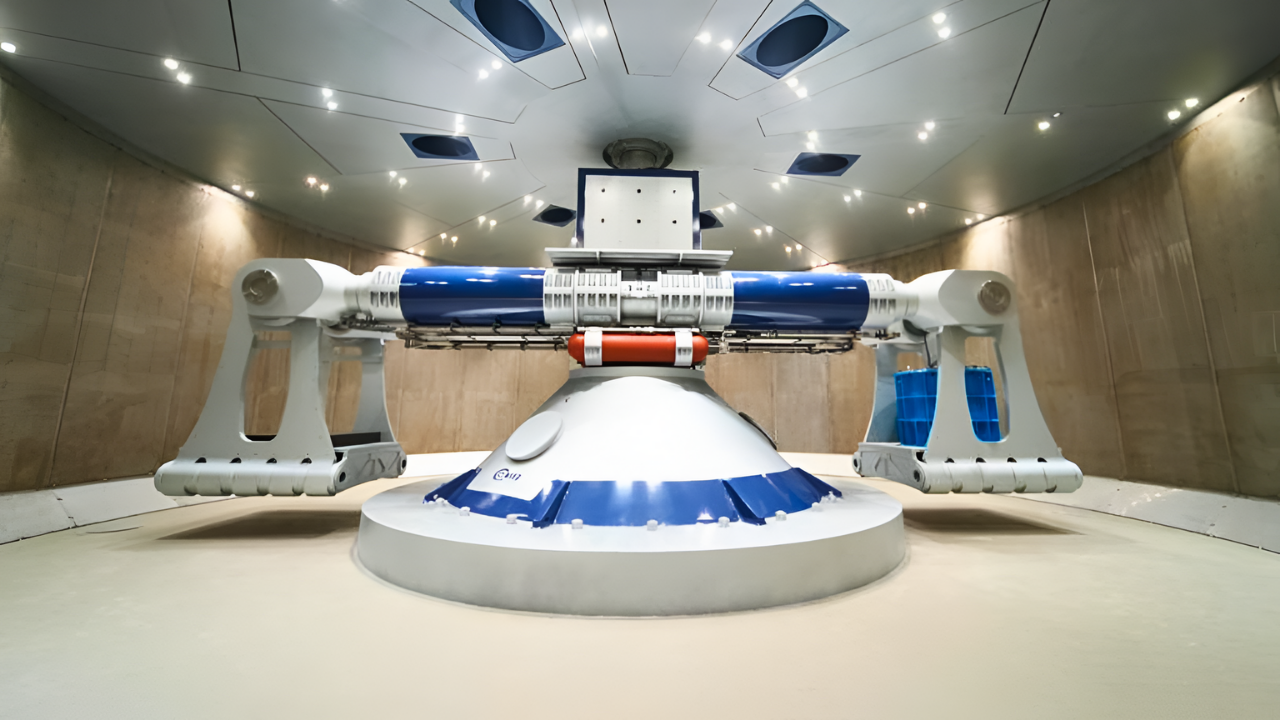
A massive underground centrifuge chamber in Hangzhou houses what has become the most powerful gravity research machine ever constructed. CHIEF1900, delivered to Zhejiang University on December 22, 2025, can generate forces reaching 1,900 times Earth’s gravity—eclipsing every comparable facility worldwide and marking a decisive shift in experimental physics capability.
This achievement arrives just months after China activated CHIEF1300 in September 2025, which itself broke the longstanding record held by the United States Army Corps of Engineers facility in Vicksburg, Mississippi. That American centrifuge, capable of producing 1,200 g-tonnes, had dominated geotechnical testing for over a decade. CHIEF1900 now surpasses it by roughly 58 percent, establishing China as the undisputed leader in hypergravity research infrastructure.
Compressing Centuries Into Days
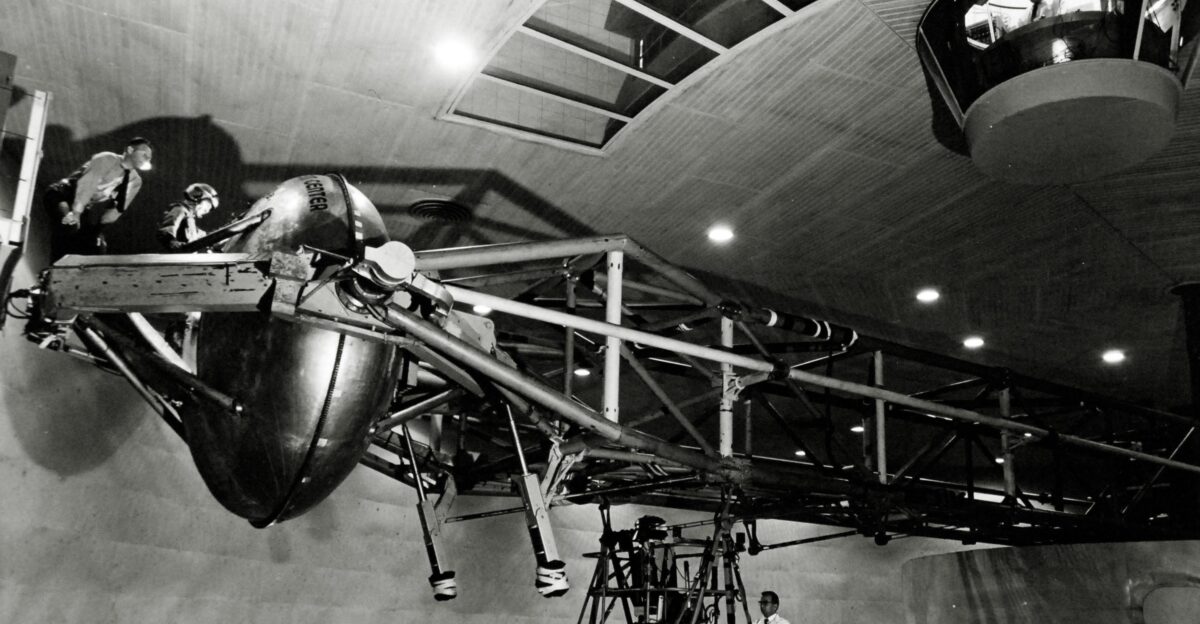
The practical applications extend far beyond academic curiosity. At 100g acceleration, a three-meter dam model experiences identical stresses as a full-scale 300-meter structure. Soil contamination experiments that would naturally unfold over millennia compress into days of laboratory observation. Deep-sea mining equipment faces pressures matching extreme ocean depths without leaving controlled conditions.
Chen Yunmin, chief scientist of the facility and professor at Zhejiang University, explained the transformative scope: “We aim to create experimental environments that span milliseconds to tens of thousands of years, and atomic to kilometre scales—under normal or extreme conditions of temperature and pressure. It gives us the chance to discover entirely new phenomena or theories.”
This temporal compression fundamentally alters what questions engineers can realistically investigate, collapsing research timelines that would otherwise span generations into experimentally manageable periods.
Strategic Infrastructure Investment
Construction began in February 2020 following approval from China’s National Development and Reform Commission in 2018. The project received 2 billion yuan in funding—approximately $285 million—reflecting national-level commitment to experimental science infrastructure.
Shanghai Electric Nuclear Power Group partnered with Zhejiang University to execute the engineering challenge. The facility sits 15 meters beneath the university campus, an intentional design choice minimizing external vibration interference that could compromise precision at extreme rotational speeds.
The rapid timeline raised international attention. CHIEF1300’s September 2025 activation was followed by CHIEF1900’s December delivery, demonstrating execution speed that surprised observers accustomed to prolonged construction schedules for comparable facilities.
Engineering at Extreme Scales
Building a 1,900 g-tonne centrifuge presented unprecedented technical obstacles. Rotors must withstand immense mechanical stress while maintaining precise balance—minor imperfections become catastrophic at operational speeds. Heat generation posed another critical challenge, addressed through custom vacuum-based temperature regulation combining coolant circulation with forced-air ventilation.
Zhejiang University assembled multidisciplinary expertise spanning civil engineering, automation, thermodynamics, and environmental science to develop components from foundational principles. Many standard engineering solutions proved inadequate, requiring custom fabrication for nearly every major system element.
Beyond Geotechnical Testing
While early applications focus on infrastructure resilience—earthquake modeling, foundation stability, dam integrity—the facility’s research scope extends considerably further. Materials scientists can study alloy behavior under extreme loads. Aerospace engineers can simulate crash dynamics and launch stresses. Seismic researchers can refine earthquake-resistant architectural designs.
Zhejiang University announced international accessibility, positioning CHIEF as a global research hub open to universities, institutes, and industries worldwide. This openness builds scientific credibility while subtly shifting the geographic center of hypergravity experimentation toward China.
Geopolitical Dimensions
Research infrastructure rarely captures public attention, yet it shapes long-term scientific leadership by concentrating talent and expertise. Chinese researchers historically relied on American, European, or Japanese facilities for advanced experimental work, facing scheduling delays, significant costs, and geopolitical vulnerability during periods of international tension.
CHIEF eliminates that dependency. With world-leading capability domestically available, Chinese scientists gain experimental autonomy in critical research domains. The facility also supports China’s deep-sea mining ambitions and global infrastructure projects, enabling domestic testing and certification that previously required Western validation.
American and European hypergravity facilities remain operationally valuable, but now face a newer, more powerful competitor backed by sustained state funding. Whether Western governments will respond with comparable investment remains uncertain. Institutional inertia, regulatory constraints, and budgetary pressures may slow reactions.
Research partnerships and experimental priorities typically follow capability. As CHIEF produces results and accumulates citations, institutional prestige grows—delivering intellectual leadership through sustained infrastructure investment. The machine itself represents strategic patience and execution at national scale.
As climate change intensifies seismic risks, floods, and coastal pressures, understanding material behavior under extreme conditions becomes strategically essential. CHIEF accelerates development of resilient infrastructure—precisely the engineering knowledge required for an era of environmental instability.
Sources:
South China Morning Post | “China builds a record-breaking hypergravity machine to compress space and time” | December 30, 2025
Interesting Engineering | “China’s record 1900g-tonne hypergravity machine” | December 31, 2025
New Atlas | “China’s new hypergravity centrifuge models extreme forces” | January 7, 2026
China Daily | “China debuts world’s mightiest centrifuge, unleashing ultra-high gravity” | September 28, 2025
Global Construction Review | “China completes first phase of world’s most advanced hypergravity machine” | November 19, 2024
China Daily Hong Kong | “World’s largest-capacity centrifuge is now operational” | October 1, 2025