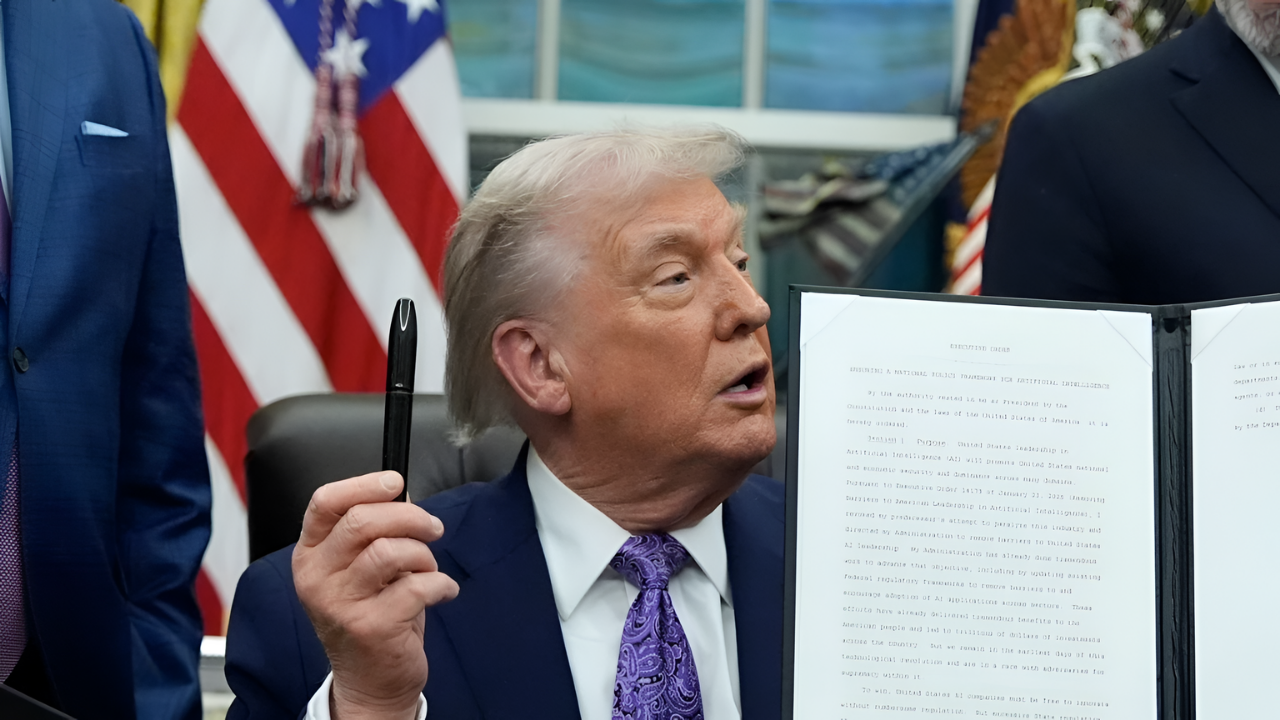
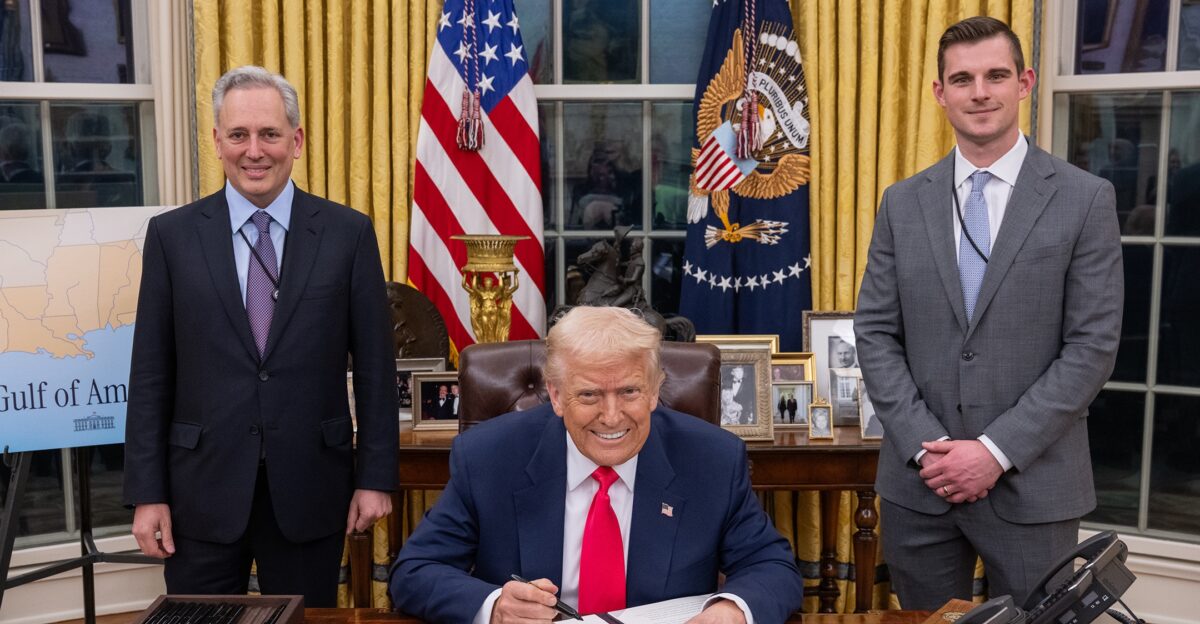
President Donald Trump’s administration delivered a stark ultimatum to state governments on December 11, 2025: abandon laws regulating artificial intelligence or lose billions in federal broadband funding. The executive order targets $42.45 billion allocated for rural internet expansion, weaponizing infrastructure money to force compliance with White House AI policy.
States like Colorado, with comprehensive algorithmic discrimination protections, now face a choice between consumer safeguards and critical federal dollars.
The Constitutional Powder Keg
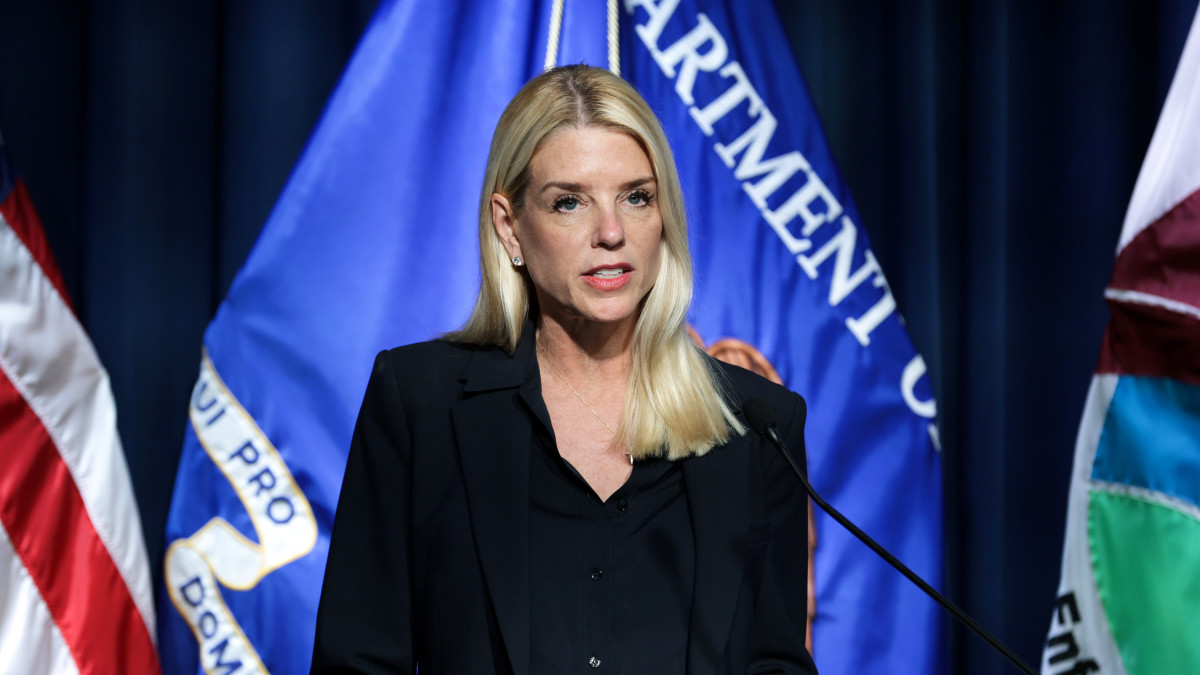
Within thirty days, Attorney General Pam Bondi must establish an AI Litigation Task Force with one mission: sue states over their AI regulations.
The order directs the Justice Department to challenge state laws using dormant Commerce Clause theories, federal preemption claims, and First Amendment arguments. But legal experts warn this constitutional confrontation rests on shaky ground that courts may quickly demolish.
What Sparked the Federal Assault
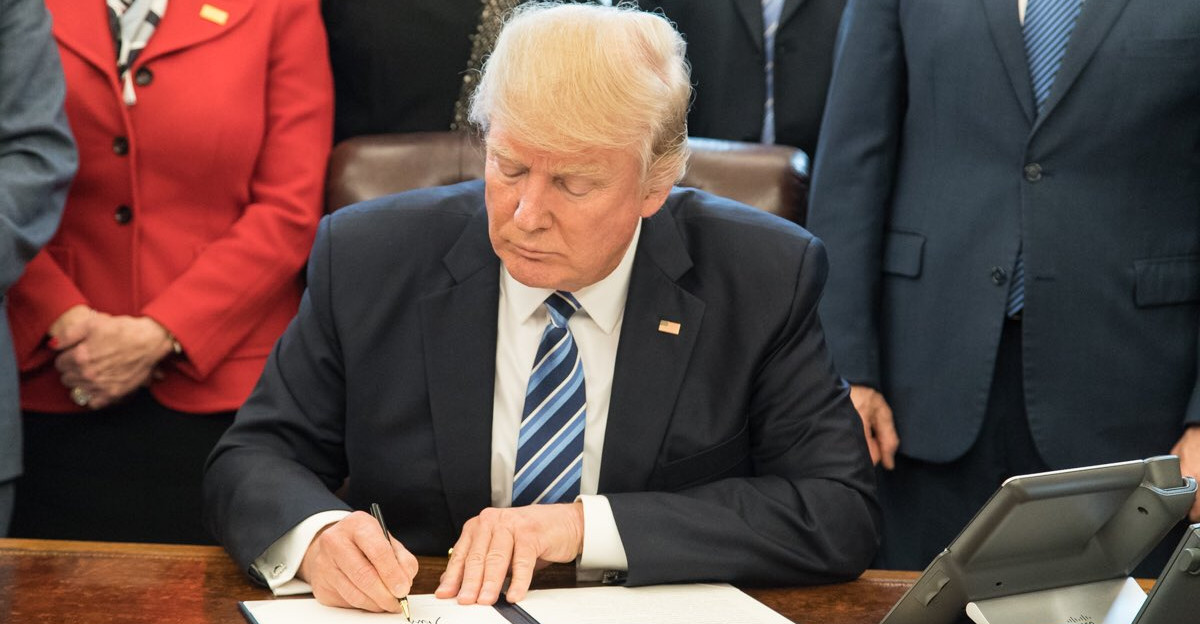
The executive order arrives after Congress twice rejected Trump administration attempts to impose a ten-year moratorium on state AI laws. When legislative efforts failed following bipartisan opposition from 40 state attorneys general, the White House pivoted to executive action.
This maneuver bypasses democratic deliberation, using presidential authority to achieve what Congress explicitly declined to authorize.
The State Regulatory Boom

During 2025, all 50 states introduced AI legislation, with 38 states enacting approximately 100 measures addressing algorithmic bias, deepfake fraud, child safety, and healthcare decisions.
This explosion of state activity filled a federal vacuum: Congress has passed no comprehensive AI legislation despite rapid technology deployment affecting employment, housing, credit, and civil rights. States viewed their regulations as essential consumer protection where Washington refused to act.
Colorado Becomes Ground Zero

Colorado’s Consumer Protections for Artificial Intelligence Act stands as the only state law explicitly named in Trump’s executive order.
The legislation, effective June 30, 2026, requires AI developers and deployers to prevent algorithmic discrimination in consequential decisions about jobs, loans, housing, and healthcare. The White House claims Colorado’s law “may even force AI models to produce false results” to achieve equitable outcomes.
Legal Foundations Built on Sand

“An executive order cannot preempt state law on its own, as preemption must rest on congressional statutory authority,” constitutional scholars at the National Taxpayers Union explain.
Trump’s order attempts an end-run around this fundamental principle by directing federal agencies to assert preemptive authority and the Justice Department to file constitutional challenges. But without congressional legislation establishing federal AI standards, there’s no baseline against which state laws can conflict.
The Broadband Weapon
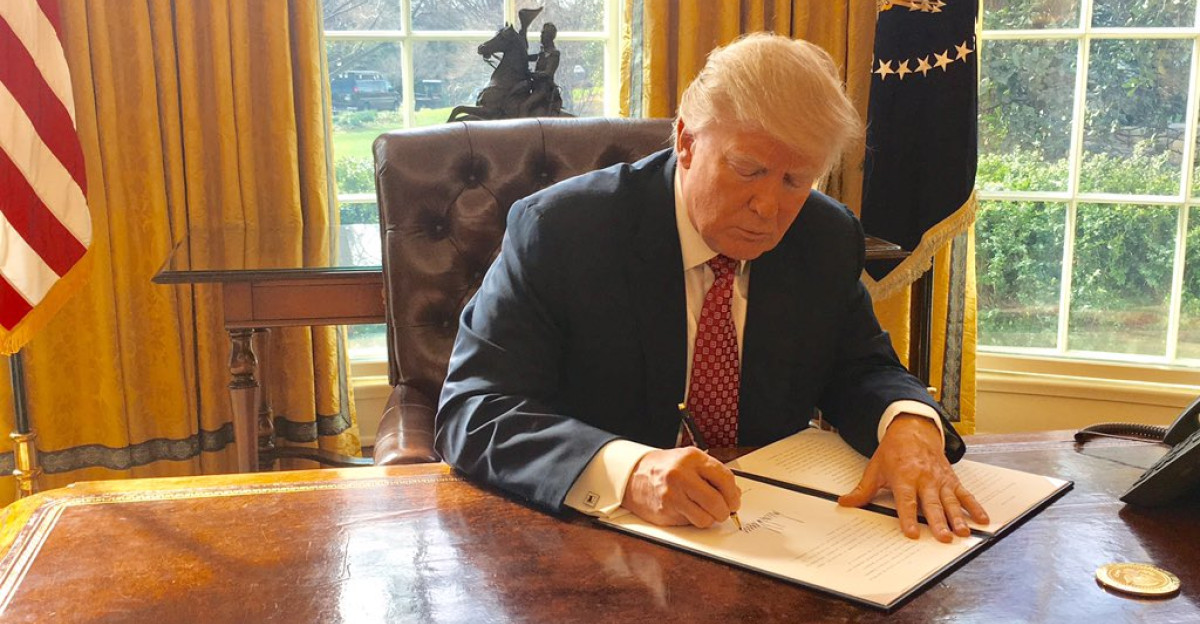
The executive order’s most coercive mechanism targets the Broadband Equity Access and Deployment (BEAD) program, which allocated funds to expand high-speed internet in underserved communities. By March 11, 2026, the Commerce Department must issue policy making states with “onerous” AI laws ineligible for non-deployment funds—approximately $21 billion currently unallocated.
Rural regions that overwhelmingly voted for Trump face potential denial of internet infrastructure their communities desperately need.
Bipartisan Backlash Builds
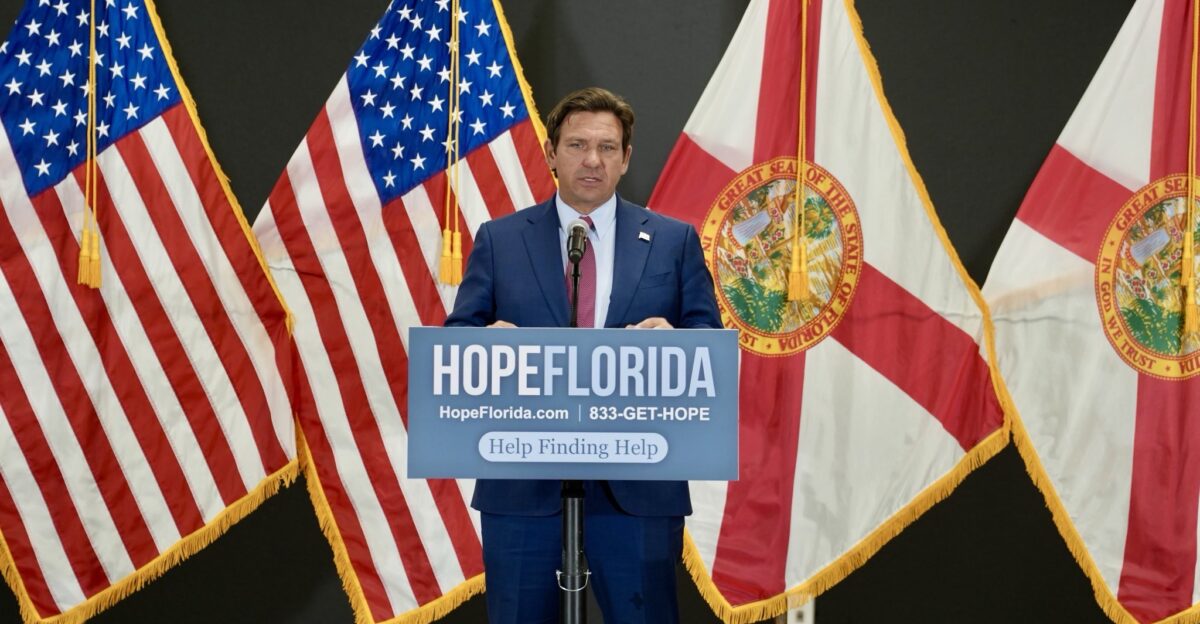
Republican Florida Governor Ron DeSantis joined Democratic leaders in rejecting federal interference with state AI regulation. “I am confident that we would prevail, as we are clearly legislating within our 10th Amendment rights as states,” DeSantis declared.
This unusual coalition demonstrates that concerns about federal overreach and state sovereignty transcend partisan divisions on technology policy. When 40 state attorneys general unite against Washington, constitutional principles outweigh political allegiance.
California Draws Battle Lines

Governor Gavin Newsom issued a blistering response hours after Trump signed the order, calling it “ongoing grift” designed to “enrich himself and his associates.” California enacted 13 AI-related laws in 2025—more than any state—covering frontier model transparency, deepfake restrictions, child safety protections, and performer digital rights.
“California currently has laws that help foster and guide the development of frontier AI models,” Newsom emphasized, signaling readiness for protracted legal warfare.
The China Competition Card

Trump and his advisors justify the aggressive federal posture by invoking U.S.-China AI competition. “There’s only going to be one winner here, and that’s probably going to be the U.S. or China.
And right now, we’re winning by a lot,” Trump stated during the executive order signing. This framing positions state consumer protection laws as national security threats that advantage Beijing by hampering American innovation.
DeepMind’s Sobering Warning
The competitiveness narrative gained urgency from industry assessments showing China rapidly closing the AI capabilities gap. Demis Hassabis, CEO of Google DeepMind, warned in January 2026 that China’s leading AI models are now “just a matter of months” behind top-tier Western systems—a dramatic improvement from the 24-month gap estimated two years earlier.
Chinese firms including DeepSeek and Alibaba have demonstrated extraordinary ability to match performance despite U.S. semiconductor export controls.
The Stargate Backdrop
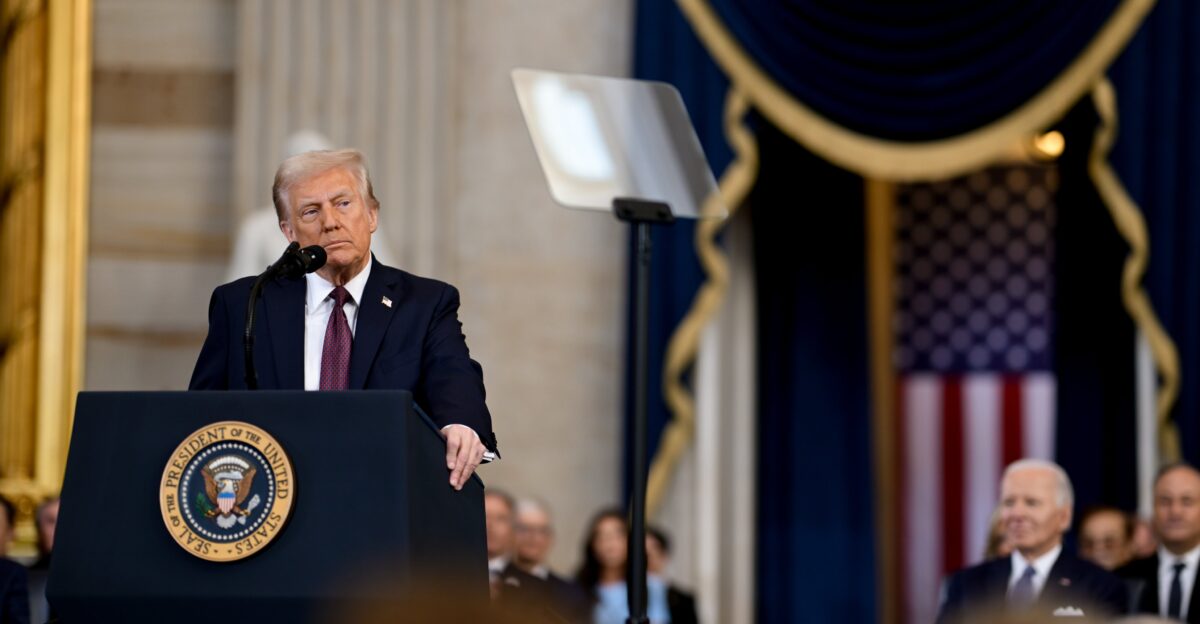
Three weeks before the executive order, Trump announced the Stargate Project—a $500 billion AI infrastructure investment by OpenAI, SoftBank, and Oracle through 2029. Trump called it “the largest AI infrastructure project in history” and emphasized needing “one central source of approval” rather than navigating “50 different approvals from 50 different states.”
The executive order follows this narrative: massive private investment requires government removal of regulatory barriers.
Agency Authority on Thin Ice
The executive order directs the Federal Trade Commission and Federal Communications Commission to assert preemptive authority over state AI laws—despite neither agency possessing clear congressional mandate for AI regulation.
Nearly two dozen state attorneys general filed a December 2025 letter urging the FCC not to issue preemptive regulations, arguing the agency lacks statutory authority. “Section 253 gives the FCC the ability to preempt a state law that ‘prohibit[s] the ability of any entity to provide any interstate or intrastate telecommunications service,’ which does not typically encompass AI providers,” Gibson Dunn legal analysts observe.
The Commerce Clause Gamble Faces Long Odds

Trump’s litigation strategy centers on the dormant Commerce Clause—arguing state AI regulations unconstitutionally burden interstate commerce. But the Supreme Court’s 2023 decision in National Pork Producers v. Ross significantly narrowed this doctrine’s application to non-discriminatory state laws.
“Neither of the two main strands of dormant commerce clause doctrine is likely to condemn the most significant state AI laws,” Gibson Dunn concludes. State laws regulating AI deployment within their borders don’t violate the Constitution merely because companies choose to apply those standards nationally.
Industry’s Conspicuous Silence
Major AI companies including OpenAI, Google, Microsoft, and Meta issued no public statements supporting or opposing the executive order.
This silence reflects complex calculations: maintaining relationships with state regulators who control enforcement, existing voluntary compliance with state standards like impact assessments and transparency disclosures, and legal uncertainty about whether courts will uphold the order’s constitutional theories. Companies face binding state law obligations regardless of executive order rhetoric.
Utah’s Quiet Exemption
Utah reportedly secured informal exemption from federal targeting through direct negotiations with White House officials. Senate President Stuart Adams stated lawmakers convinced administration officials to “back away” after demonstrating Utah’s regulatory sandbox approach allows rapid AI development while embedding consumer safeguards.
Representative Jordan Fiefia suggested Utah’s framework may become a federal model. This selective enforcement reveals flexibility beneath the order’s absolutist language.
David Sacks’s Investment Entanglements
White House AI and Crypto Czar David Sacks, who shaped the executive order, maintains extensive investments in AI companies while serving as “special government employee” without full financial disclosure requirements.
New York Times analysis identified Sacks retaining—either directly or through his venture capital firm Craft Ventures—449 AI-related investments. Companies in Craft’s portfolio stand to benefit from deregulatory policies Sacks advocates, raising questions about whether the order serves public interest or private portfolio returns.
The Compliance Trap for Businesses

Organizations developing or deploying AI systems face a paradox: the executive order creates legal uncertainty but doesn’t invalidate state laws.
“I don’t think this executive order has any substantive impact on companies building or using AI; they should still be expected to follow state and local AI laws,” advises Jonathan Walter, senior policy counsel at The Leadership Conference on Civil and Human Rights. Companies must maintain full state compliance while preparing for potential federal preemption, a costly dual-track approach.
Texas Charts Alternative Path

Texas enacted the Responsible Artificial Intelligence Governance Act with intent-based prohibitions targeting the most harmful AI uses: developing systems to manipulate behavior toward self-harm, infringe constitutional rights, unlawfully discriminate, or produce child exploitation material.
The law’s focus on preventing specific intentional harms—rather than Colorado’s outcome-based algorithmic discrimination standards—may prove more defensible against federal challenge. Different state approaches create natural experiments in AI governance.
Congress Holds the Trump Card
The executive order’s most revealing provision directs White House advisors to prepare legislative recommendations for Congress establishing uniform federal AI standards with explicit preemption authority.
This acknowledges that lasting preemption requires congressional action, not executive fiat. By initiating federal-state conflict through executive order, Trump creates pressure for Congress to resolve the crisis through legislation—potentially his underlying strategy despite the order’s questionable legal mechanics. The next 18 months will determine whether this constitutional confrontation produces durable AI policy or collapses into judicial rejection and regulatory chaos.
Sources:
“Ensuring a National Policy Framework for Artificial Intelligence.” White House Presidential Actions, 11 Dec 2025.
“Trump signs order blocking states from enforcing own AI rules.” BBC News, 11 Dec 2025.
“President Trump’s Latest Executive Order on AI Seeks to Preempt State Laws.” Gibson Dunn, 15 Dec 2025.
“Three Issues with the Trump Administration’s Proposed Preemption of State AI Laws.” National Taxpayers Union, 11 Dec 2025.
“Trump’s AI executive order advances corruption, not innovation.” California Governor’s Office, 11 Dec 2025.
“Biden-Harris Administration Announces State Allocations for $42.45 Billion High-Speed Internet Grant Program.” National Telecommunications and Information Administration, 2023.