On December 4, 2023, delivery workers across New York City watched their tip income vanish overnight. Average gratuities plummeted from $3.66 to just $0.76 per delivery—a staggering 79% collapse that erased $550 million in worker earnings over 18 months.
DoorDash and Uber Eats had quietly relocated their tipping buttons to post-checkout screens on the exact day NYC’s $21.44 minimum wage took effect.
A Coordinated Interface Change

Both platforms simultaneously moved tipping prompts from the prominent checkout process to separate, post-purchase screens that city regulators describe as “easy to miss and difficult to navigate.”
The timing wasn’t coincidental. As platforms faced mandatory wage increases, they restructured their apps in ways that dramatically reduced how much customers tipped, according to a January 14, 2026 report from NYC’s Department of Consumer and Worker Protection.
The Numbers Tell a Stark Story
The interface changes cost individual workers approximately $5,800 annually across New York’s 65,000-person delivery workforce. DCWP Commissioner Samuel Levine didn’t mince words: the report “exposes a significant scheme by Uber and DoorDash aimed at reducing worker compensation.”
Workers received higher base pay from minimum wage laws, only to watch voluntary tips—traditionally the majority of their income—evaporate through app redesigns.
The GrubHub Comparison Reveals the Impact

GrubHub maintained pre-checkout tipping prompts throughout the same 18-month period and averaged $2.17 per delivery—nearly three times higher than DoorDash and Uber Eats.
This comparison provides smoking-gun evidence that interface design, not changing consumer behavior or economic downturns, drove the tip collapse. Same city, same customers, same time period—but radically different tipping outcomes based solely on button placement.
But What Happened Next Forced a Constitutional Battle
DoorDash and Uber Eats filed a federal lawsuit in December 2025 challenging new NYC laws requiring pre-checkout tipping prompts with minimum 10% suggestions.
The platforms argue these requirements violate First Amendment protections against compelled speech, characterizing the mandates as forcing them to convey “government-mandated messages” about tipping practices. The case could reshape how cities regulate digital platform design nationwide.
The Platform Defense Strategy
DoorDash defended its interface changes by arguing that “moving tipping to after checkout isn’t novel or nefarious—it’s how tipping works in many areas of life.” The company contends post-service tipping better reflects service quality and mirrors hospitality industry norms in restaurants and hotels.
They also raised concerns that prominent upfront tipping combined with increased delivery fees would drive customers away and reduce order volumes.
The Psychology of Digital Tipping

Consumer behavior research demonstrates that tipping prompt timing and prominence dramatically influence generosity. Pre-checkout tipping leverages social proof, default bias, and reduced friction—customers see suggested percentages and click without additional effort.
Post-checkout tipping introduces extra steps after customers mentally close transactions, resulting in significantly lower completion rates across all digital platforms and industries.
Economic Pressures Behind the Changes

Platforms raised average service fees by $2.30 per order to fund minimum wage compliance, with consumer delivery fees jumping 60% year-over-year in Q2 2024—from $4.87 to $7.79 per delivery.
The strategic calculation was clear: display lower upfront costs by hiding tips until after checkout, reducing sticker shock while shifting compensation from voluntary gratuities to mandatory fees that platforms control.
Mayor Mamdani’s Aggressive Enforcement Approach
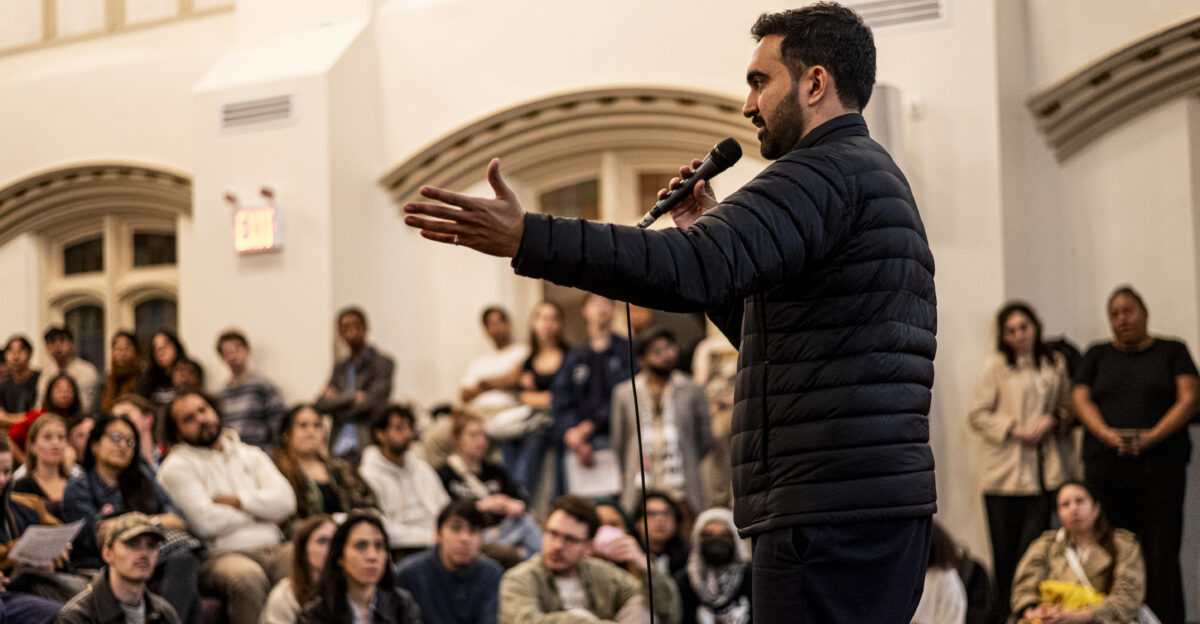
Mayor Zohran Mamdani, who assumed office in January 2026, positioned worker protection as his administration’s defining priority. His team sent warning letters to over 60 delivery apps and committed to “vigorously enforce” the January 26 tipping law despite ongoing litigation.
During his campaign, DoorDash contributed $1 million to Mamdani’s primary opponent, establishing the current mayor’s adversarial relationship with delivery platforms.
The Historic Minimum Wage Victory

New York City became America’s first major city to implement minimum pay standards for app-based delivery workers following sustained organizing by Los Deliveristas Unidos, representing predominantly immigrant workers.
The phased implementation reached $21.44 per hour in April 2025, applying to active delivery time. Before these protections, workers earned as little as $5-7 hourly while bearing equipment costs and accident risks.
Workers Saw Substantial Earnings Increases Initially

DCWP data shows delivery workers earned an average $19.26 per hour after tips in Q1 2024—a 64% increase from $11.72 in Q1 2023. Total weekly earnings reached $28.3 million, representing approximately $12,000 in additional annual income for workers averaging 20 hours weekly.
Platform payments to workers increased by $1.2 billion since implementation, demonstrating the regulation’s initial success.
Platforms Remained Financially Strong Despite Regulations

Both companies demonstrated robust financial performance throughout the regulatory compliance period. DoorDash achieved its first full year of GAAP profitability in 2024 with $123 million net income, while Uber posted $3.1 billion in net income for H1 2025.
Revenue growth remained strong at 18-25% year-over-year, suggesting minimum wage compliance didn’t threaten core business viability or shareholder returns.
Consumer Demand Proved Surprisingly Resilient

Despite fee increases, total weekly orders increased 8% from Q1 2023 to Q1 2024, with consumer spending reaching record highs of $120.2 million in Q1 2025.
James Parrott, Director of Economic and Fiscal Policies at The New School, observed that “whatever has happened to worker pay has not diminished, literally, the appetite of consumers for food delivery”.
The Hidden Cost Shift to Customers
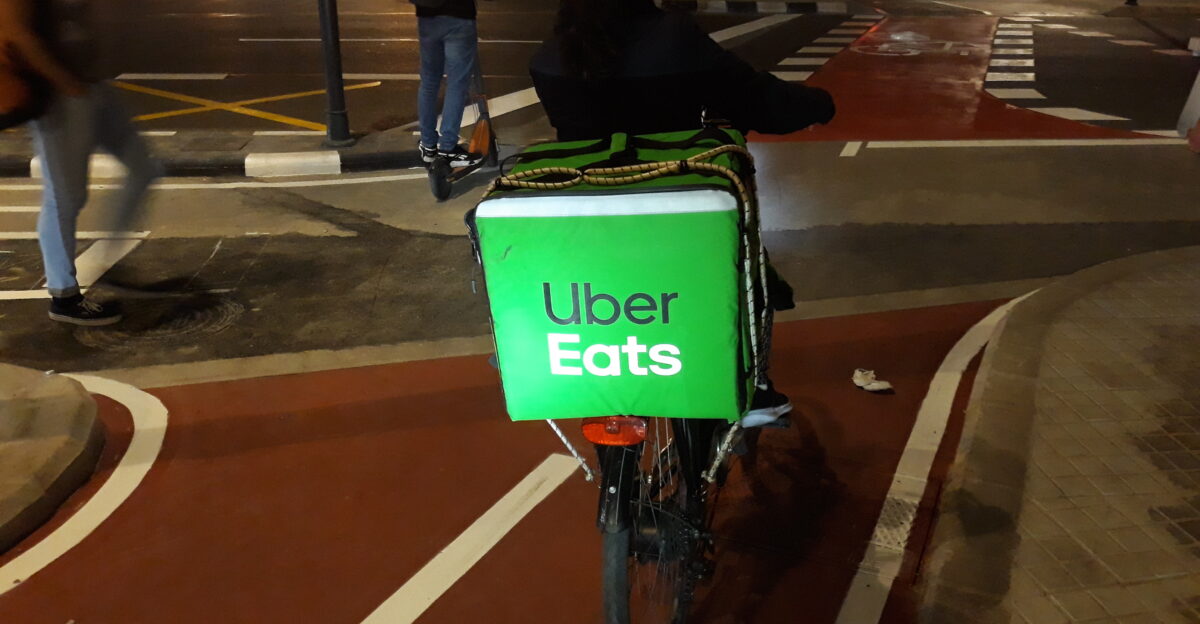
Total consumer costs rose only modestly—from $38.35 to $39.11 per order—because decreased tips largely offset higher platform fees.
Customers paid approximately the same total amount, but the composition shifted from voluntary gratuities flowing directly to workers toward mandatory fees captured by platforms. This redistribution of the same consumer dollars represents the core of the regulatory dispute.
Tips Constitute Majority Worker Income
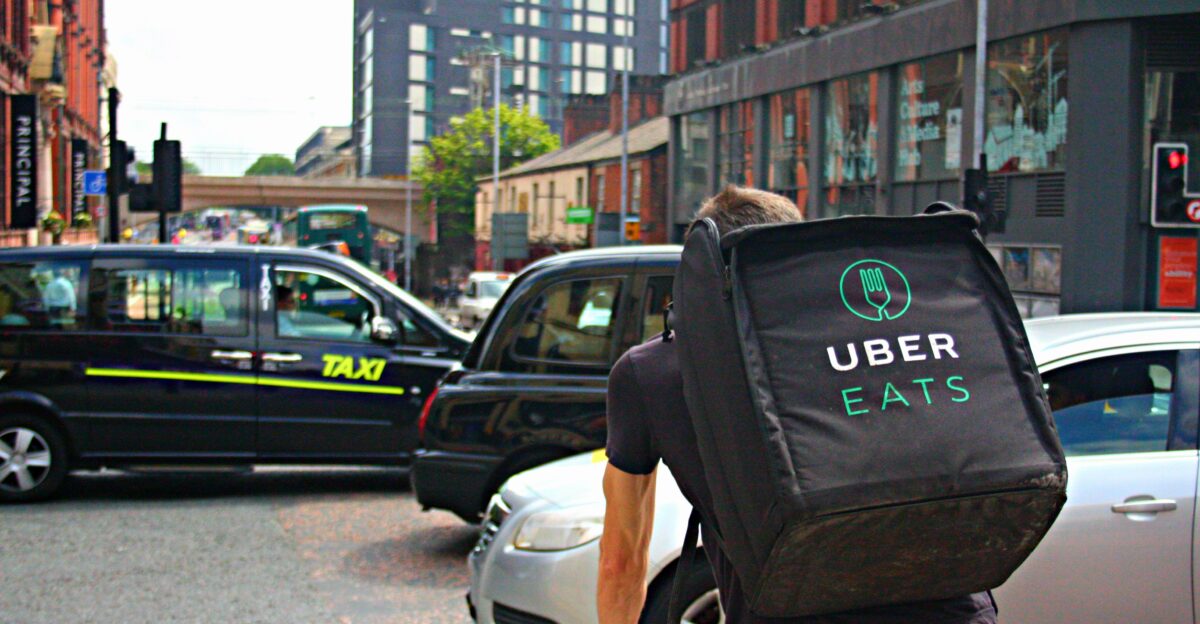
Research found food delivery workers derived 53.4% of their total 2024 earnings from tips—the majority of their compensation rather than supplemental income. This dependency creates income volatility and makes workers vulnerable to unilateral platform interface decisions.
When tips constitute primary earnings, design changes can instantly reduce worker compensation by three-quarters, challenging independent contractor classifications that assume business autonomy.
Los Deliveristas Unidos Organizing Success

Worker collective Los Deliveristas Unidos mobilized thousands of predominantly undocumented immigrant workers who risked deportation to advocate publicly.
Executive Director Ligia Guallpa emphasized that platforms “exploited” regulatory absence, with deliveristas risking their lives during the pandemic while earning poverty wages. Their advocacy secured not just minimum wages but also equipment provisions, rest areas, and maximum distance protections.
The Constitutional Question on Interface Design

The platforms’ lawsuit seeks to establish that government mandates regarding interface design constitute protected commercial speech violations.
They cite successful 2024 precedent challenging NYC’s customer data-sharing law, where a federal judge ruled compelled information disclosure violated First Amendment protections. However, courts historically afford governments broad latitude in wage-and-hour regulation and consumer protection.
A Global Regulatory Trend Emerges

NYC’s approach exists within broader gig worker protection movements. Seattle implemented $17.27-$26.40 hourly minimums in 2022. The EU Platform Work Directive establishes employment presumptions by December 2026, potentially reclassifying millions of contractors.
Malaysia passed comprehensive gig worker protections in 2025. These developments signal global regulatory realignment challenging the independent contractor model underlying platform economics.
Restaurant Industry Faces Margin Pressure
Delivery platforms charged restaurants an average $5.63 per delivery in Q2 2024—19.7% of order subtotals—up 9% year-over-year. Combined with commission structures reaching 30-35% of order value, restaurants operating on 3-9% net profit margins face existential pressure.
When delivery fees consume 30-40% of order value, many restaurants lose money on app orders or must raise menu prices substantially.
Court Hearing Set for Critical January Decision
Judge George Daniels is scheduled to hear arguments on the platforms’ preliminary injunction request, with the mandatory pre-checkout tipping law set to take effect January 26, 2026.
Legal experts note that if platforms prevail, it could significantly constrain municipal authority to regulate interface design, creating precedent extending beyond tipping to broader consumer protection measures and algorithmic transparency requirements.
Sources:
“DoorDash, Uber Cost Drivers $550 Million in Tips, NYC Says.” Bloomberg News, January 14, 2026.
“Uber, DoorDash Cost Gig Workers $550 Million in Tips.” Business Insider, January 12, 2026.
“DoorDash, Uber Eats deprived workers of $550M in tips in NYC, Mamdani administration alleges.” New York Post, January 13, 2026.
“Mamdani Warns Delivery Apps to Follow New Worker Protection Laws or Else.” Streetsblog NYC, January 15, 2026.
“DoorDash, Uber Eats sue NYC over tip prompt rules.” Restaurant Dive, December 11, 2025.
“NYC Mayor Zohran Mamdani Is Cracking Down On Food Delivery Apps.” Yahoo News, January 16, 2026.