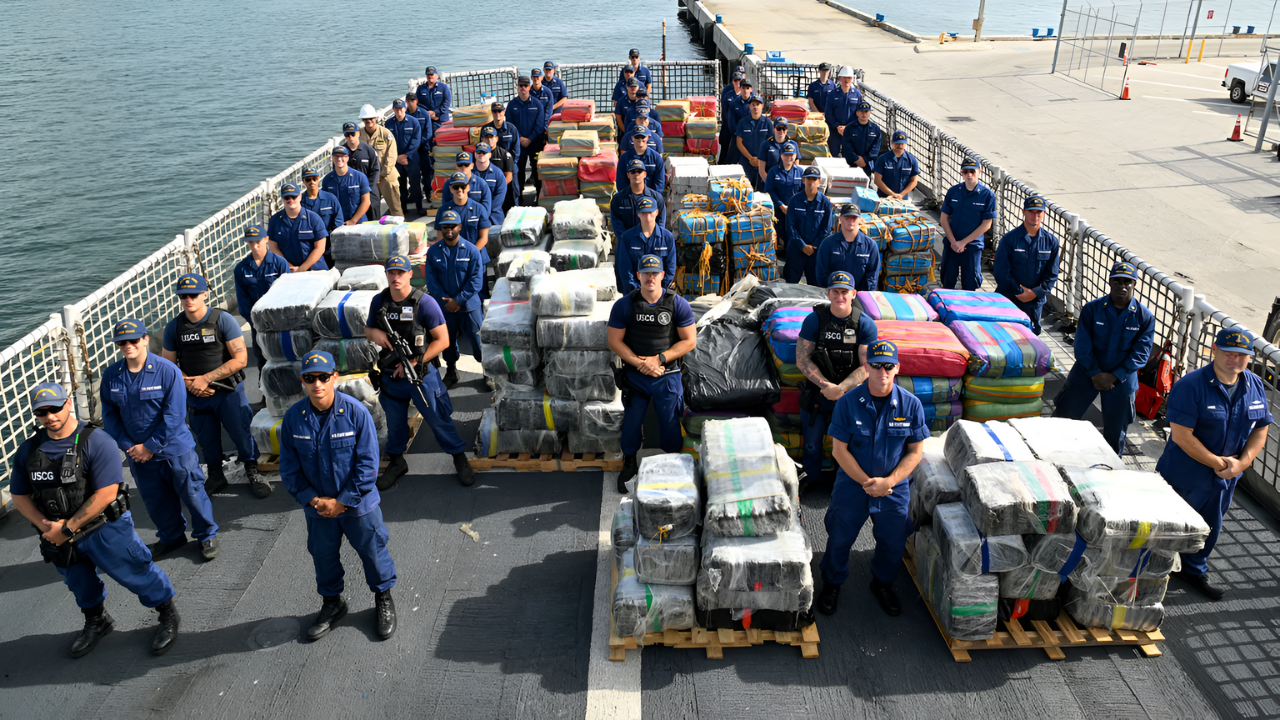
Fentanyl, a powerful synthetic opioid, has become one of the deadliest drugs in the United States. In 2023, it killed 72,776 Americans, roughly one every 96 minutes. Although fentanyl-related deaths dropped by about 21% from 2024 to August 2025, the number of lives lost remains devastating. Much of this crisis is fueled by drugs trafficked through international routes, including the Caribbean, where cocaine and other drugs often pass before reaching U.S. shores. In response, the U.S. government launched a large-scale military effort to stop the flow of drugs and cripple the networks behind them.
In mid-2025, drug shipments from Venezuela were flowing freely into the Caribbean, an estimated 350 to 500 tons a year. When President Trump returned to office, his administration declared a new “war on drugs,” labeling traffickers as foreign terrorists. This changed the government’s approach from law enforcement arrests to direct military confrontation.
The Military Moves In
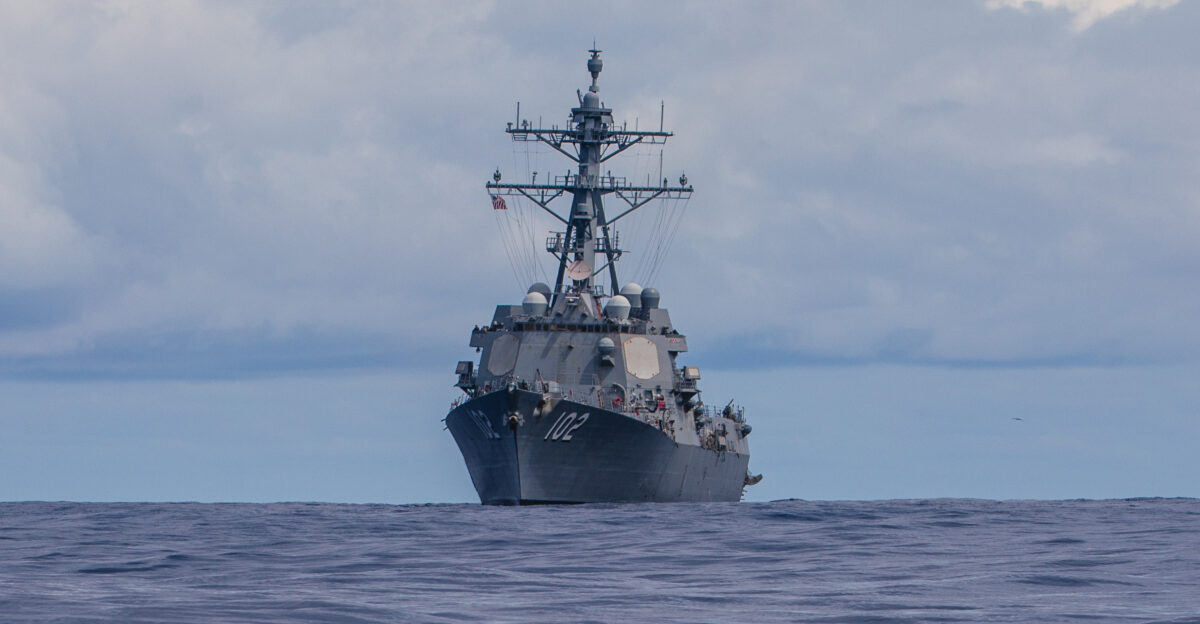
By late August 2025, the Caribbean saw the largest U.S. naval presence since the 1960s. Three destroyers, the USS Gravely, USS Jason Dunham, and USS Sampson, joined the operation, supported by the USS Iwo Jima group with about 6,700 personnel, including 2,200 Marines. In total, ten major naval ships, special forces, and advanced surveillance aircraft surrounded Venezuelan waters. What started as an anti-drug mission turned into a full military campaign.
The Coast Guard also launched Operation Pacific Viper, seizing over 75,000 pounds of cocaine in just one month. By September 2025, U.S. ships were capturing about 1,800 pounds of drugs each day. Traffickers lost control of major sea routes, and surveillance drones tracked nearly every vessel leaving South America. Then, in early September, the U.S. military used lethal force for the first time, destroying a speedboat allegedly run by the Venezuelan gang Tren de Aragua. Eleven suspected traffickers were killed. This marked the official start of Operation Southern Spear, a campaign merging counter-drug enforcement with direct military strikes.
Regional Reactions and Legal Concerns
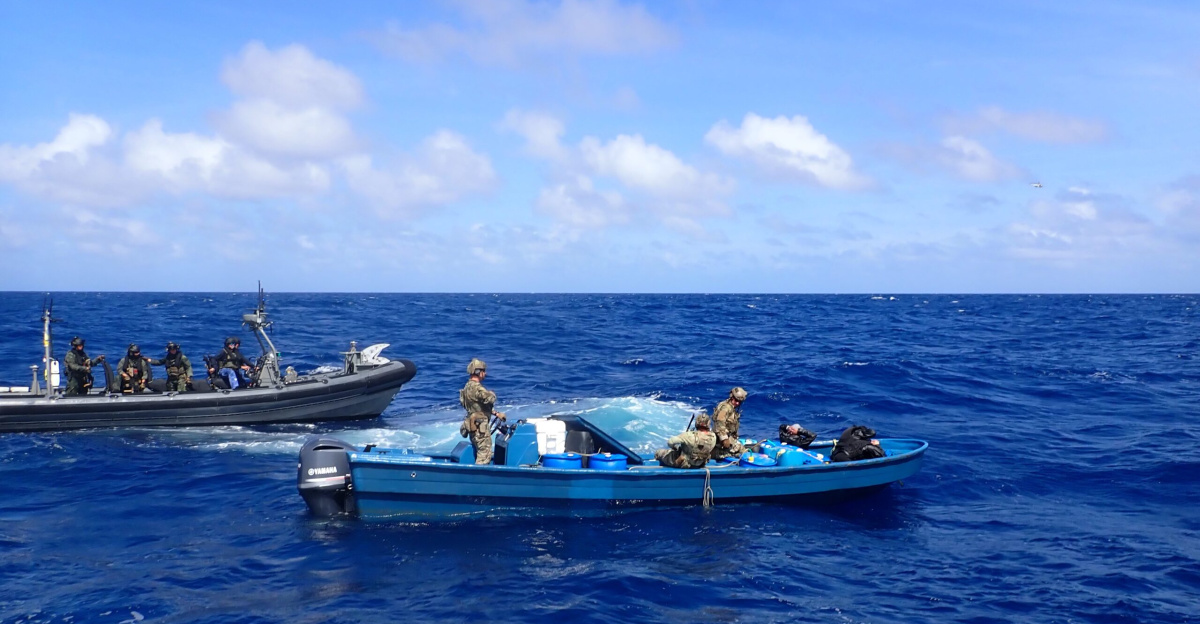
The strikes sent shockwaves throughout the Caribbean. Local navies recovered cocaine from wrecked boats, and bodies washed ashore across nearby islands. Fishermen and residents reported constant helicopter and jet activity. Regional governments saw this as more than a crackdown, it felt like a U.S. occupation of Caribbean waters.
As the months passed, the human toll grew. Families in Venezuela and Trinidad reported missing relatives, but no formal list of casualties was released. By October, the U.S. claimed the Caribbean smuggling route was “effectively shut down.” Patrols seized vessels before they could even leave Venezuelan territory. According to the Miami Herald, the operation’s deeper goal was to cut off drug money that kept Venezuela’s military loyal to leader Nicolás Maduro. Each seizure weakened the finances of officials in Caracas and threatened their control.
However, not everyone supported the campaign. Legal experts inside the Pentagon questioned the attacks, since in many cases, it was unclear who was on board or whether drugs were actually present. Some survivors were reportedly killed in follow-up strikes, raising international outrage. The United Kingdom even stopped sharing intelligence, citing possible violations of international law. In Congress, Democrats demanded transparency, while Republicans asked for proof that the targets were legitimate.
By November, Defense Secretary Pete Hegseth made Operation Southern Spear official. The USS Gerald R. Ford, the world’s largest aircraft carrier, anchored in the Caribbean with 4,000 sailors and 75 fighter jets. Altogether, about 15,000 U.S. troops were operating in the region, with 5,000 more stationed in Puerto Rico. The campaign gained new authority, including permission for the CIA to conduct lethal operations inside Venezuela itself.
Uncertain Results and Unanswered Questions
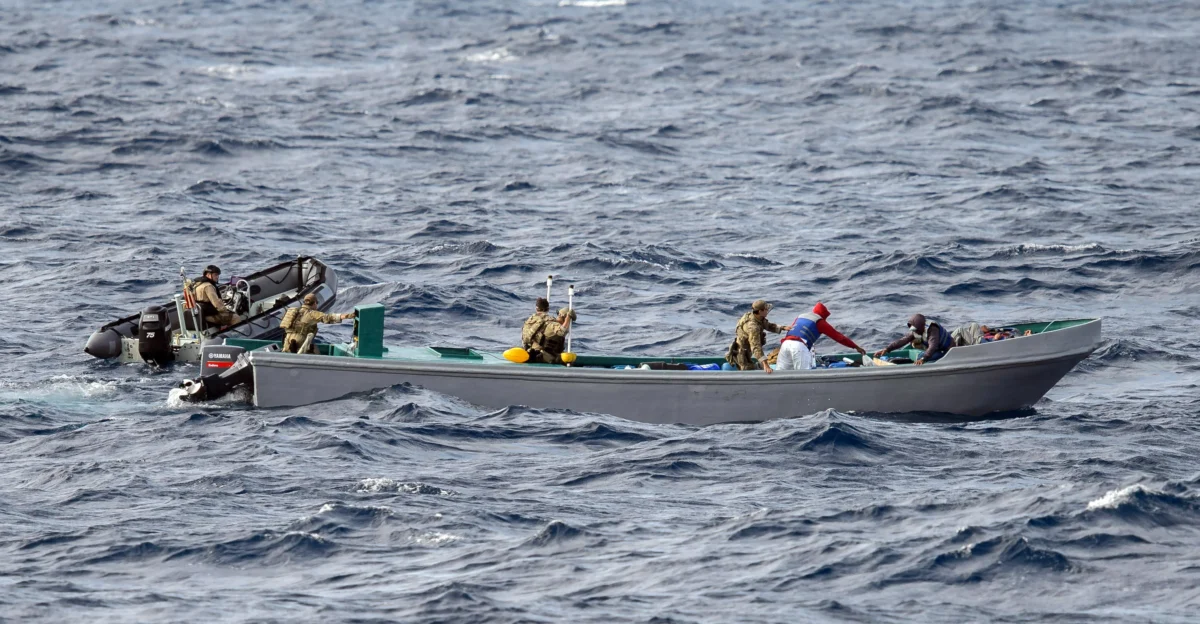
By the end of 2025, the U.S. military had completed at least 35 airstrikes against suspected drug boats in the Caribbean and Pacific. At least 115 people were killed, but in many cases, there was no confirmed evidence that those boats carried drugs. Despite the controversy, operations continued at full speed. In total, Coast Guard and Navy forces seized over 511,000 pounds of cocaine worth nearly $3.8 billion, over three times the average annual total. This included the largest single seizure in U.S. history: 49,010 pounds of cocaine unloaded from the Coast Guard Cutter Stone at Port Everglades.
Supporters praised the campaign for its decisive action and record-breaking drug seizures. But critics wondered if these military victories translated into real change at home. Experts pointed out that most fentanyl deaths come from synthetic drugs produced in Mexico or the U.S., not from Caribbean routes. As one analyst said, choking off Venezuelan cocaine traffic might weaken Maduro’s regime but do little to stop the opioid epidemic.
By year’s end, one question remained: if the Caribbean is now “under full control,” why are tens of thousands of Americans still dying from fentanyl overdoses? The U.S. military may have won control of the drug routes, but the battle to save lives from synthetic opioids is far from over.
Sources
CNN, US military carried out second strike killing survivors on a boat, November 2025
Council on Foreign Relations, The U.S. Military Campaign Targeting Venezuela and Counter-Narcotics Operations, December 2025
Wikipedia, United States military buildup in the Caribbean during Operation Southern Spear, September 2025
Miami Herald, Caribbean drug trafficking route effectively shut down by military deployment, October 2025
BBC, US military says five killed in strike on alleged drug boats, December 2025