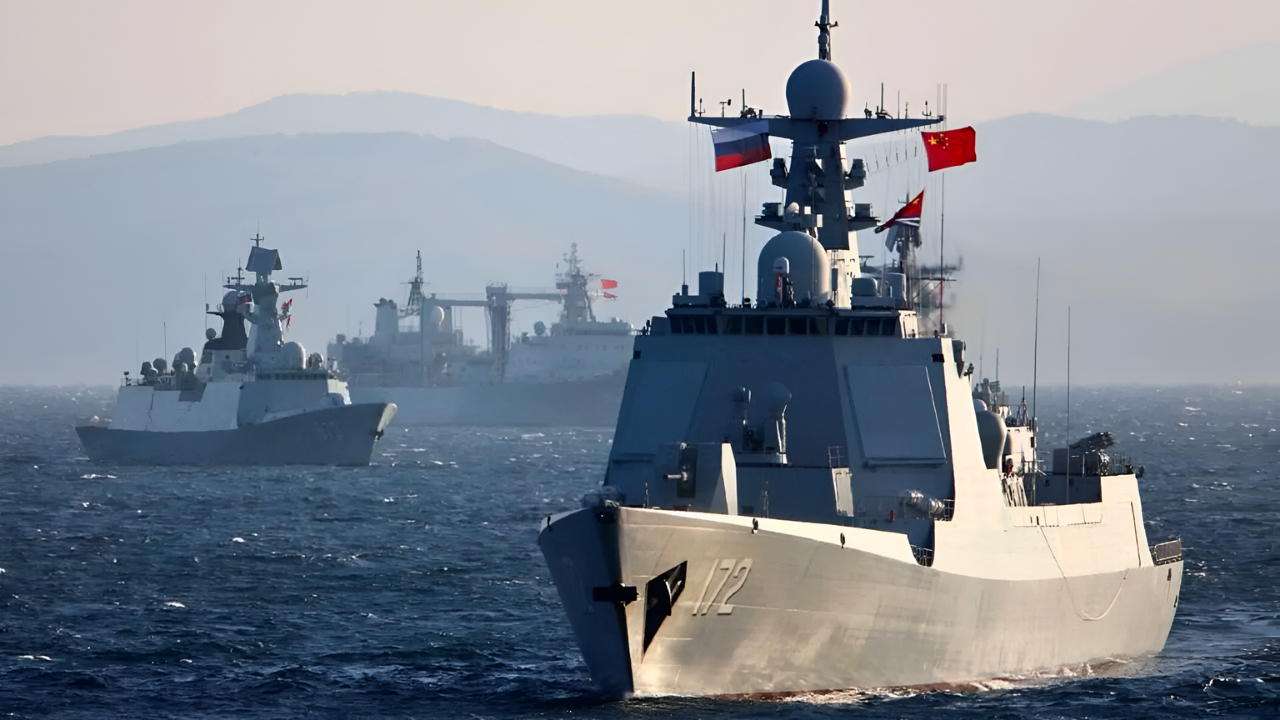
A powerful show of naval strength is unfolding just off South Africa’s coast, along one of the world’s most important shipping routes. When violence and uncertainty in the Red Sea push ships away from Suez, much of that traffic swings around the Cape of Good Hope instead, concentrating an estimated trillions of dollars in trade along South Africa’s shores. Now warships from China, Russia and their partners are operating close to this lifeline, raising questions about how secure it really is and whether freight costs will rise again.
Analysts say high container rates during the Red Sea crisis showed how vulnerable global trade is to shocks, especially on the busy Asia–Europe corridor. As fleets assemble in False Bay, diplomats, traders and insurers are watching for any sign that strategic posturing could spill over into real disruption, or whether this exercise will remain what its hosts insist it is: a training event meant to protect, not threaten, commercial shipping.
Warships Dock
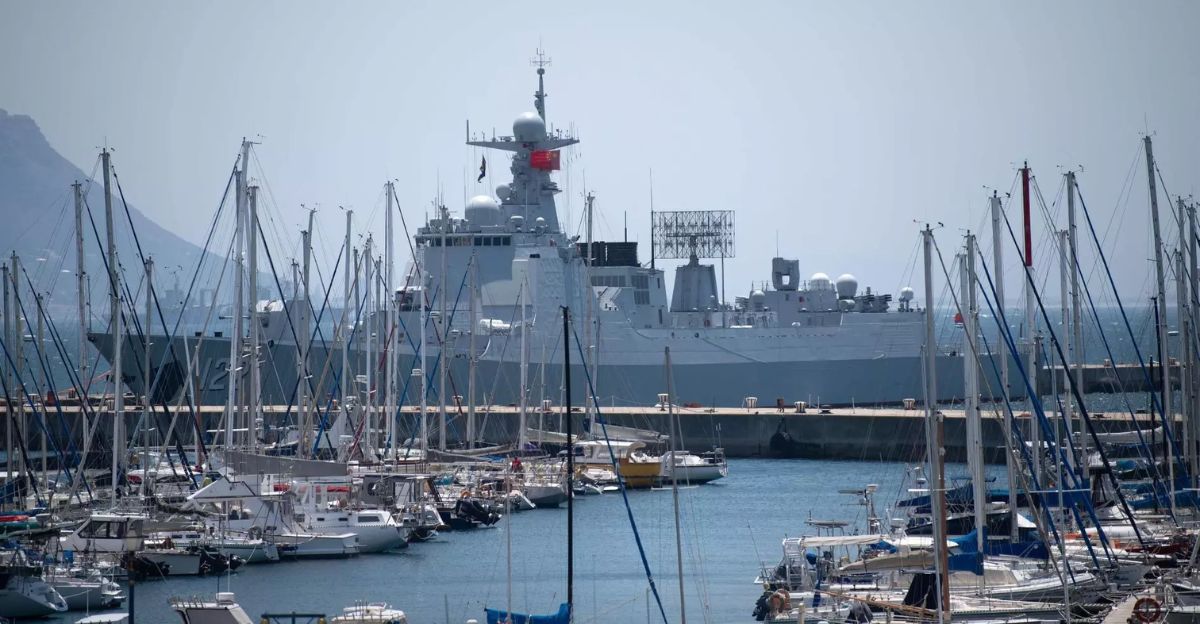
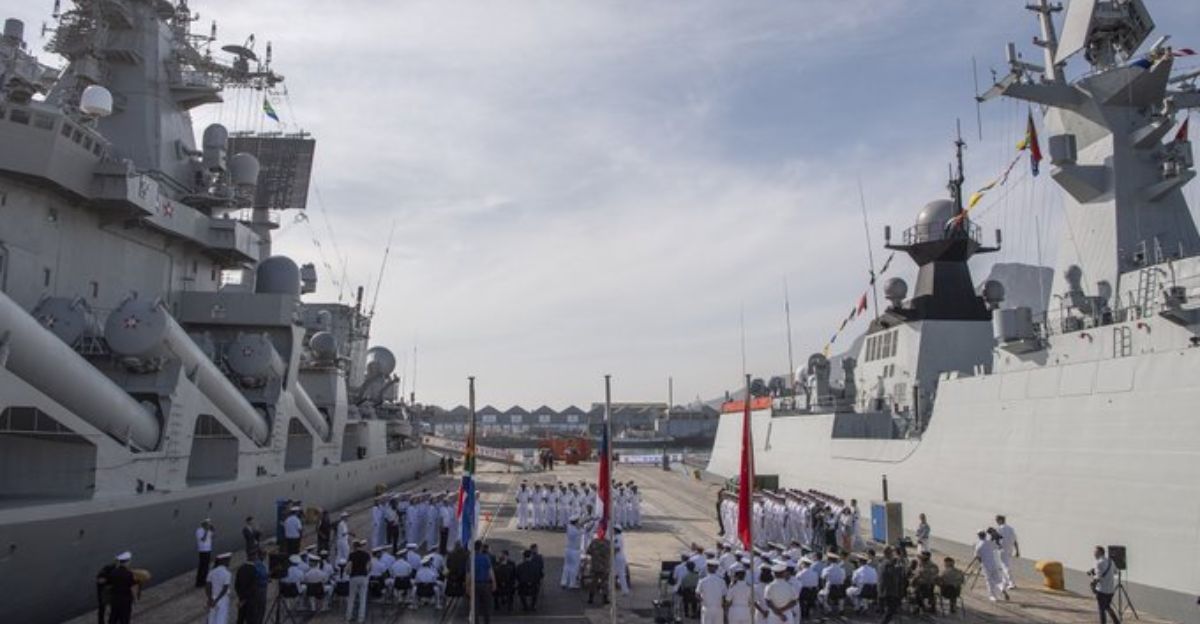
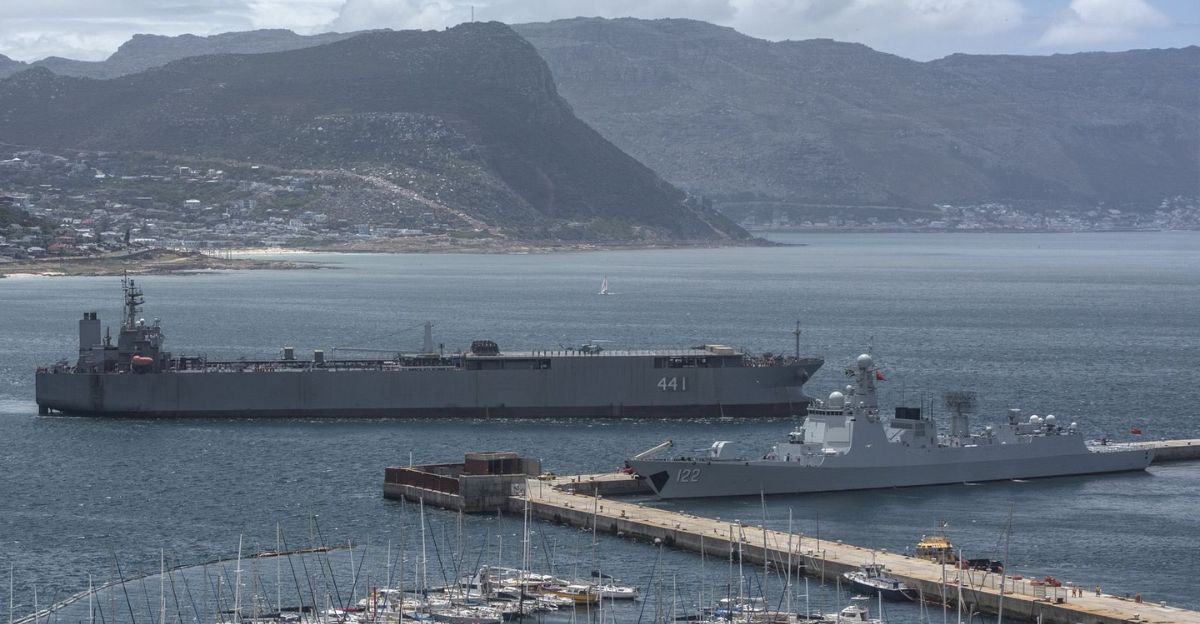
At Simon’s Town Naval Base, the arrival of China’s guided‑missile destroyer Tangshan set the tone: this is no routine courtesy visit, but a full‑scale multinational drill. The Chinese destroyer, designed to escort carrier groups and defend against air and missile threats, now lies alongside Russian, South African and other BRICS Plus ships in a harbour usually associated with lower‑profile regional cooperation.
Their presence comes as Houthi attacks and other threats in and around the Red Sea have pushed many merchant ships to abandon Suez and reroute around the Cape, adding time, fuel cost and risk to journeys between Europe and Asia. Critics in the West view the cluster of Chinese, Russian and Iranian vessels near this chokepoint as a pointed reminder that alternative power centres are flexing their muscles.
BRICS Roots
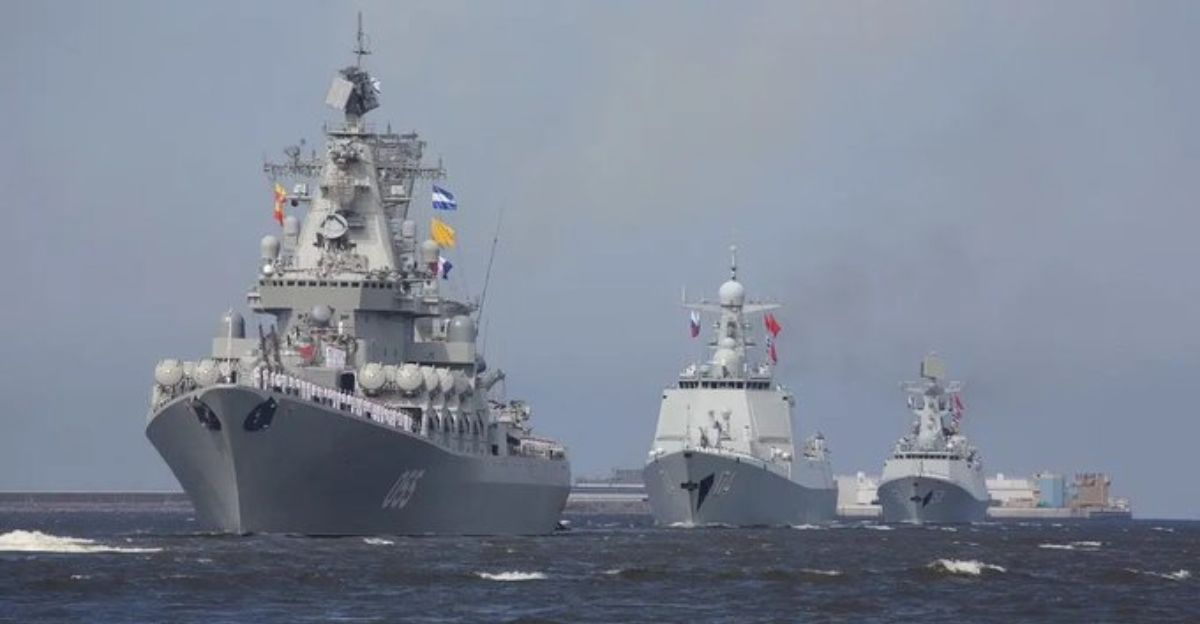
The story of these drills begins with BRICS itself, which started as an economic club of Brazil, Russia, India, China and South Africa and has gradually pulled in new partners such as Iran and the United Arab Emirates. Originally sold as a way for major emerging economies to coordinate on trade and finance, the grouping is now experimenting with military cooperation, using naval exercises to build shared procedures at sea.
South Africa’s Defence Ministry describes Will for Peace 2026 as a maritime safety exercise meant to “ensure the safety of shipping and maritime economic activities,” a theme that aligns with BRICS’ long‑standing message that the current world order should not be dictated solely by Western powers.
Mounting Pressures
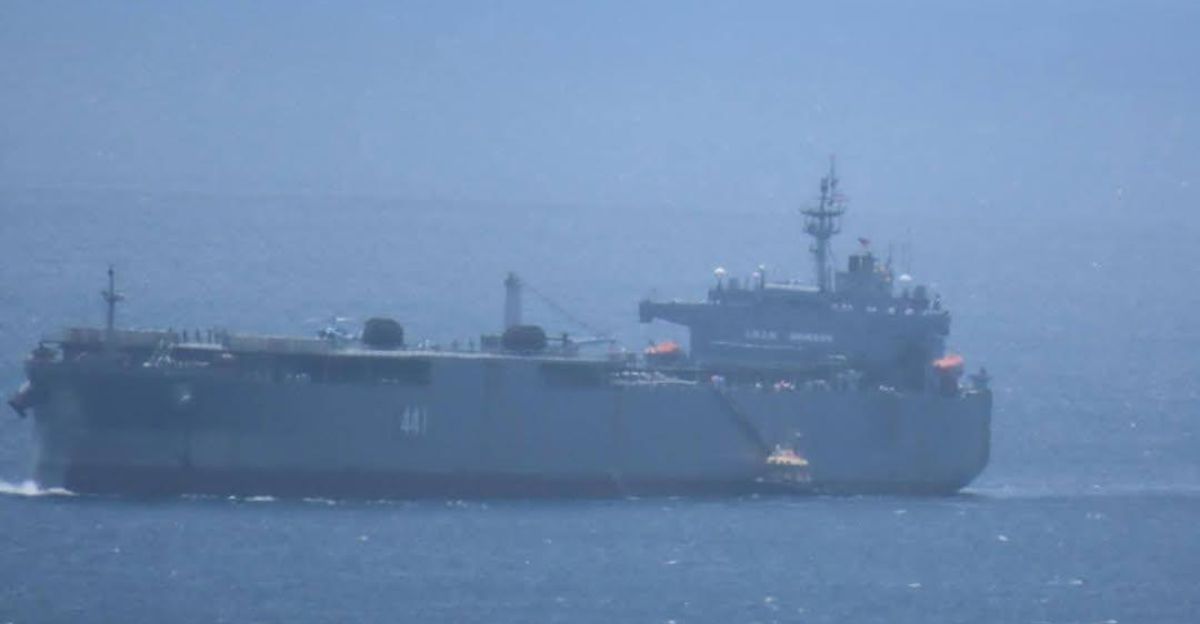
Behind the choreography at sea lies a web of mounting pressures on global shipping and South African diplomacy. Disruptions in and around the Red Sea have turned what was once a secondary route around the Cape into a critical corridor for Asia–Europe trade, with diversions absorbing ship capacity and helping to push freight rates sharply higher during 2024.
Even as new vessels entering service eased some of that strain in 2025, logistics analysts note that the system remains fragile, with any new shock likely to ripple quickly through supply chains. At the same time, South Africa is negotiating the renewal of key trade preferences with the United States under the African Growth and Opportunity Act, a programme that supports billions of dollars in exports.
Drills Launch
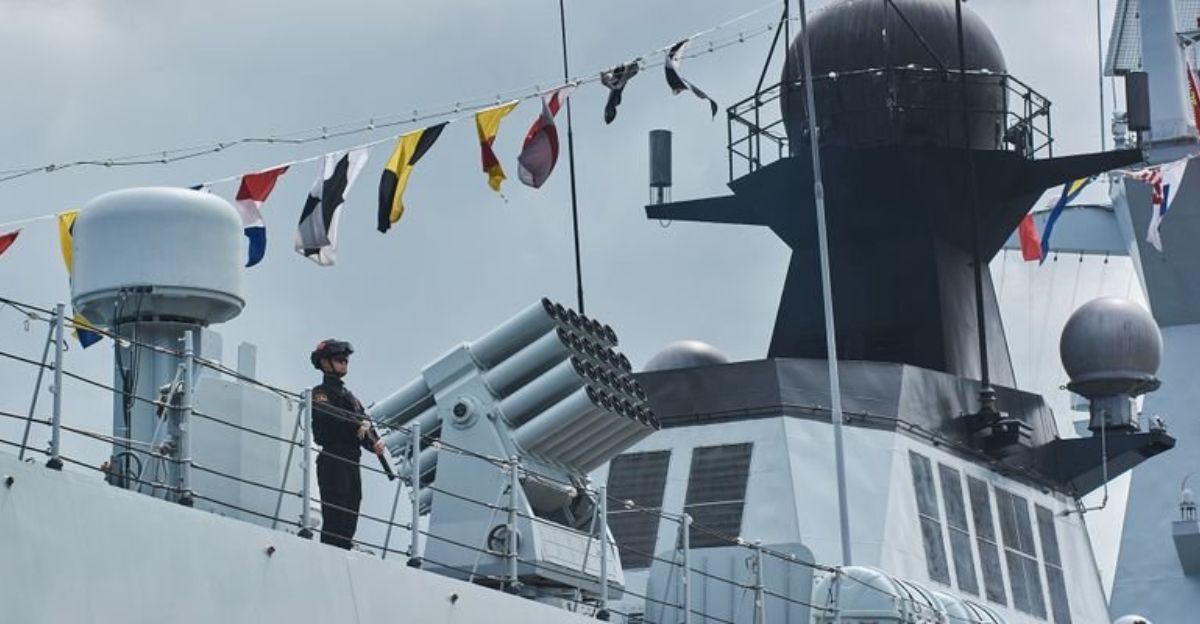
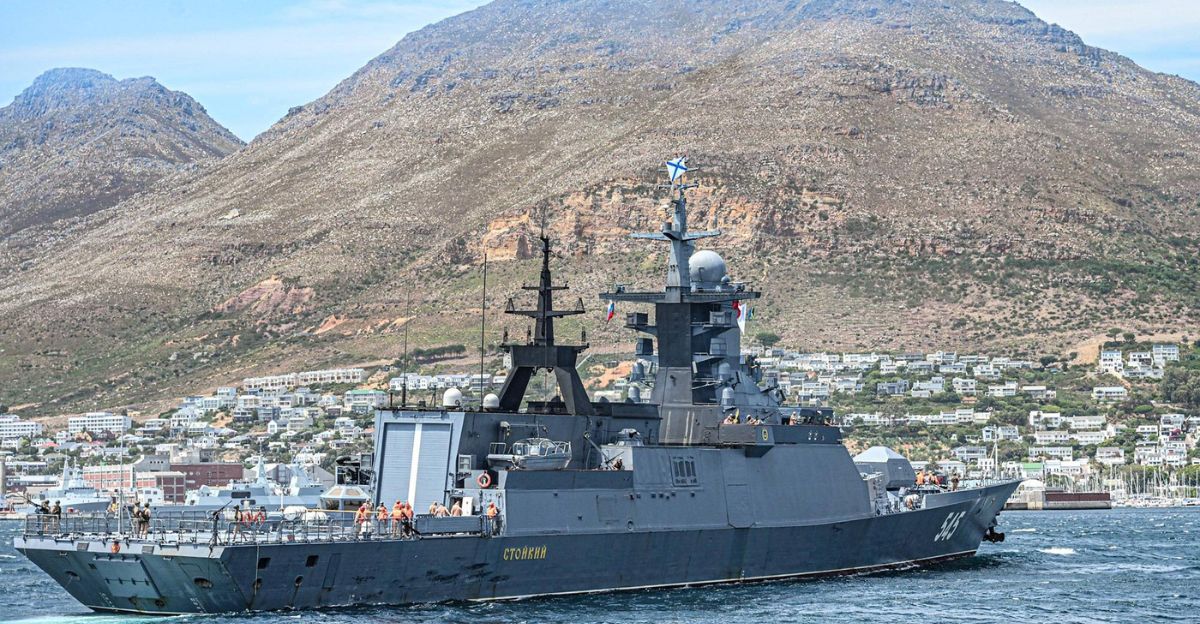
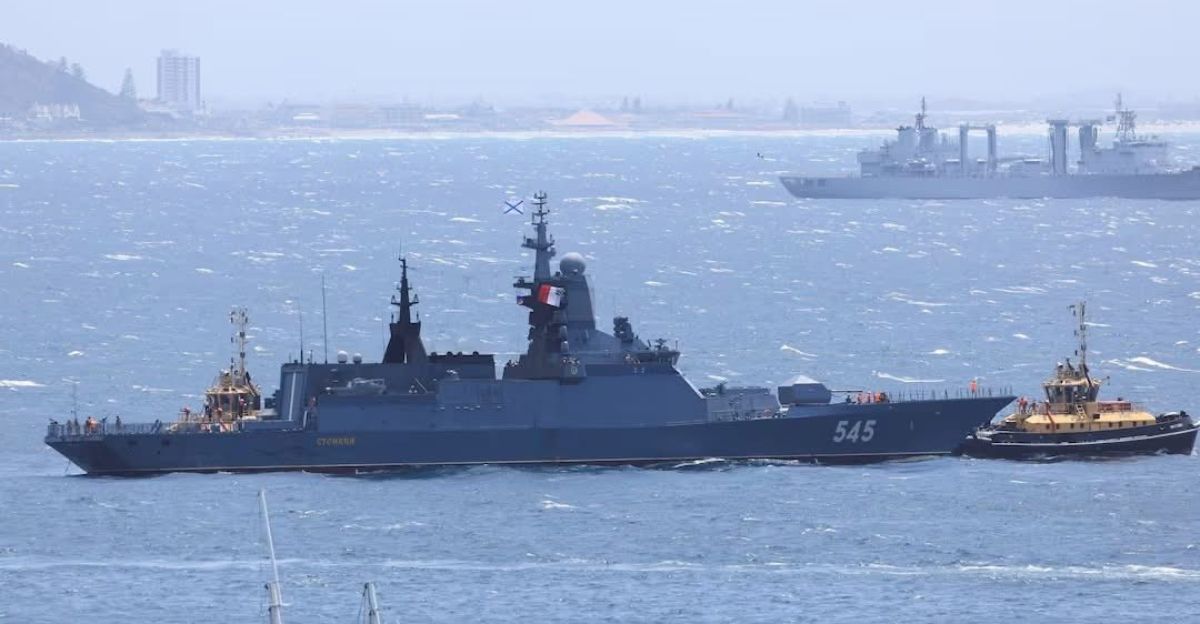
The exercise known as Will for Peace 2026 formally began with a parade at Naval Base Simon’s Town before shifting into sea phases off False Bay. China leads the operation and has sent the destroyer Tangshan along with the replenishment ship Taihu, while Russia has deployed the corvette Stoikiy and support tanker Yelnya. South African vessels join them, and Iran and the UAE are also present in varying roles, forming what organisers describe as a BRICS Plus flotilla focused on maritime safety tasks such as anti‑piracy drills, search‑and‑rescue, and the protection of shipping routes.
SA Navy Captain Ndwakhulu Thomas Thamaha, the joint task force commander, has argued that the manoeuvres are “a demonstration of our ability to resolve to work together,” and insisted that “in an increasingly complex environment, an operation such as this is not optional; it is essential.”
Cape Route Strain
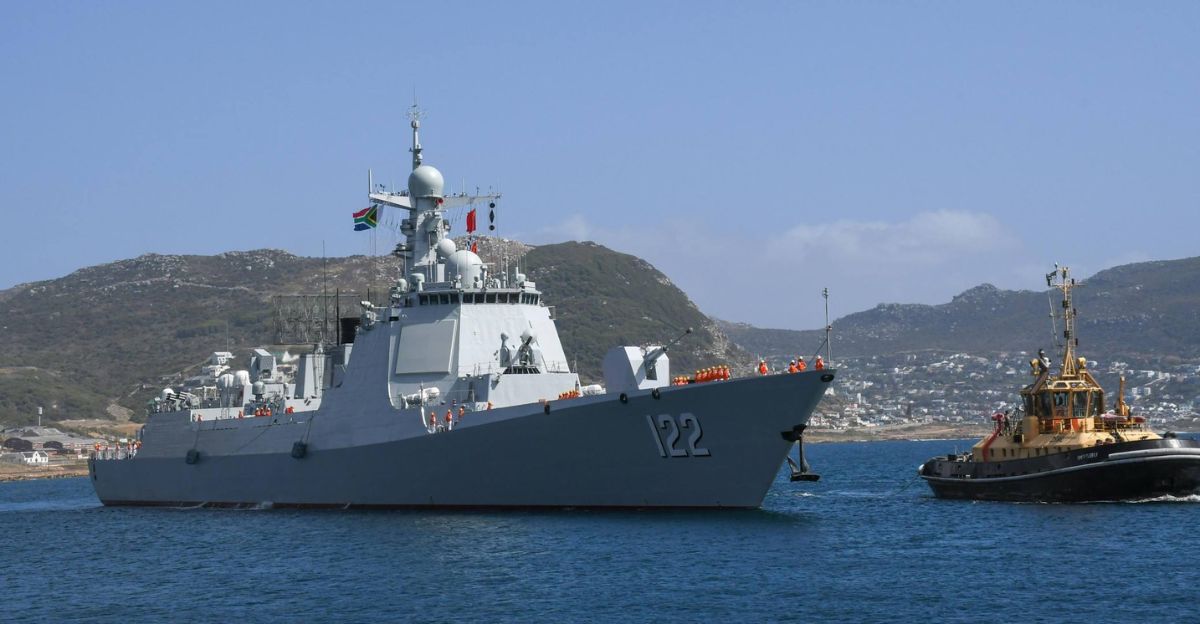
As warships fan out into False Bay and beyond, the commercial shipping lanes off the Cape continue to feel the strain of global rerouting. Logistics platforms report that diversions around southern Africa lengthen voyage times and tie up vessels, which helped push container rates for key routes to between about 8,000 and 10,000 dollars per forty‑foot unit at the height of the disruption.
Although prices cooled in 2025, the extra distance still means higher fuel use and tighter schedules, especially when ports must handle more traffic than they were built for. South African terminals from Durban to Cape Town have been under pressure to maintain throughput, and any hint of instability near their approaches worries cargo owners and insurers already wary after several years of volatility.
Local Voices
On the quayside, the geopolitical drama feels more personal. Sailors from South Africa, China, Russia and other participating countries tour each other’s ships, share meals and compare training methods, building relationships that officers say are vital in any future joint operations.
South African commanders have framed the event as a chance to improve skills at home as much as abroad; SABC News reported that authorities expect a “transfer of knowledge” that will strengthen local maritime practices and safety standards. At the same time, protests and interviews with residents around Simon’s Town and False Bay show deep unease, particularly over Russia’s role in the drills while its forces continue to fight in Ukraine.
Rival Alignments
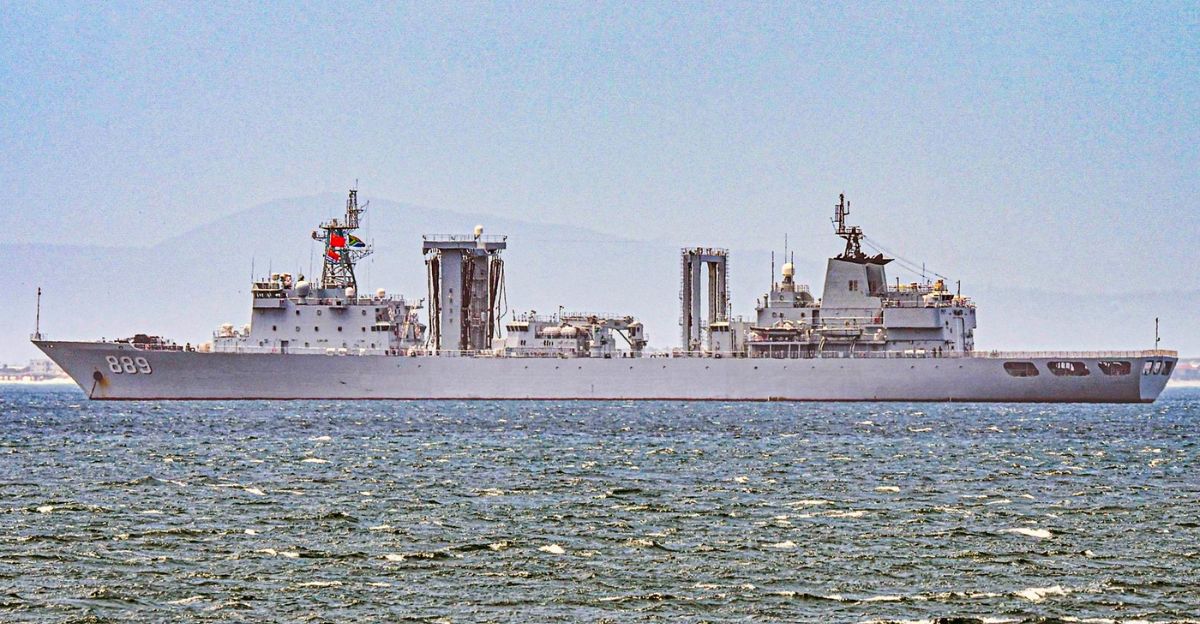
The sight of BRICS Plus vessels operating together off South Africa has not gone unnoticed in Washington and European capitals. US lawmakers have warned that deepening military ties with countries like Russia and Iran could affect South Africa’s standing under AGOA, which gives many of its exports duty‑free access to the American market. In parallel, the UAE has emerged as one of the more active BRICS‑aligned participants, dispatching its own warship to the drills and signalling its interest in a greater security role along these key sea lanes.
Other regional players, including Egypt and Ethiopia, have taken part as observers, underscoring how the exercise doubles as a diplomatic stage. Legal scholars note that under the UN Convention on the Law of the Sea, such activities in a host country’s territorial waters are permitted with its consent, which South Africa has clearly given.
Trade Juggernaut
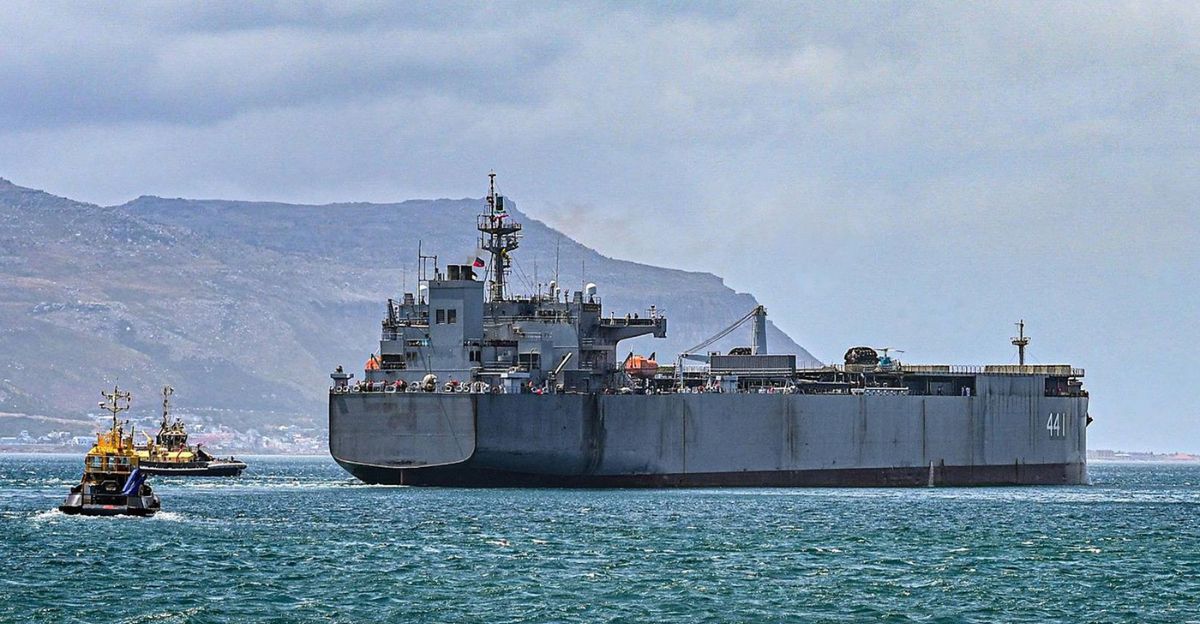
The strategic stakes become clearer when the numbers are laid out. During periods when the Red Sea has been too risky for many operators, analysts estimate that cargo worth several trillion dollars a year has been pushed onto the longer but safer route around the Cape of Good Hope.
Although those levels have eased, trade specialists warn that the very fact so much value now flows through one alternative corridor makes insurance markets jumpy whenever warships congregate nearby. BRICS countries like China and Russia present their joint drills as proof that they are serious about protecting these flows, while also pushing the idea of a more multipolar economic order in which their combined weight rivals that of Western‑led institutions.
Iran Pulls Back
One of the most dramatic twists in the exercise came when Iran quietly scaled down its role. Iranian vessels had already reached South African waters when, according to local reports, Pretoria asked Tehran to withdraw from active participation amid growing concern in Washington about the partnership. News outlets described the move as a last‑minute attempt to ease tensions just as the US Congress advanced a multi‑year extension of AGOA, though analysts cautioned that doubts over South Africa’s eligibility would not vanish overnight.
Defence commentators said the downgrade exposed divisions inside South Africa’s government and security establishment, with some arguing that inviting Iran in the first place showed poor strategic judgment.
Political Backlash
Inside South Africa, the drills have triggered a heated political fight. Opposition parties, especially the Democratic Alliance, accuse the government of undermining the country’s claimed non‑aligned stance by joining high‑profile naval activities with Russia and Iran while benefiting from Western trade preferences. Defence analysts quoted in specialist outlets such as DefenceWeb have also highlighted what they see as a worrying gap between the Presidency and the South African National Defence Force, arguing that foreign‑policy decisions appear driven more by political symbolism than by clear security strategy.
At the heart of the criticism is a simple question: does the prestige of hosting BRICS Plus warships outweigh the potential cost if relations with the US and Europe sour further, threatening investment and export opportunities?
Leadership Strain
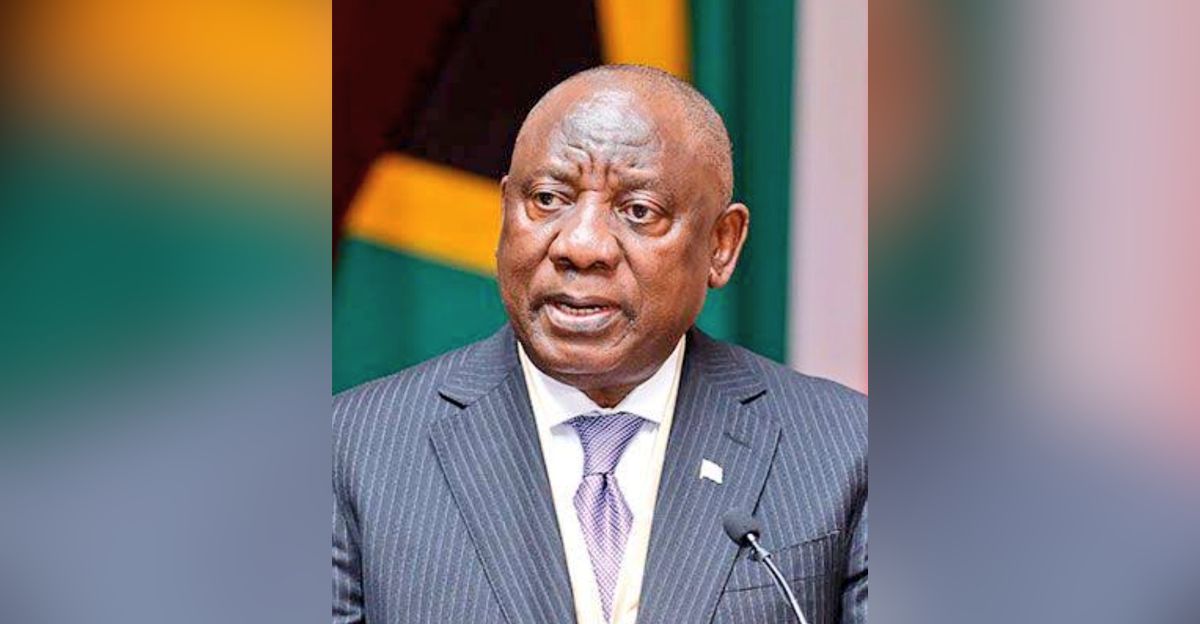
For President Cyril Ramaphosa, the episode has become a test of leadership in a complex coalition environment. Reports of confusion over Iran’s status in the drills, including a swiftly deleted social media post suggesting deeper involvement at sea, have fuelled perceptions of mixed messages between civilian leaders and the military.
Since Donald Trump’s return to the White House, some US lawmakers have taken a tougher line on partners developing closer defence links with countries Washington labels adversaries, raising the stakes for Pretoria’s choices. In this fraught context, each statement about Will for Peace 2026 and each adjustment to the participant list is read not just as a technical decision but as a signal of South Africa’s broader strategic direction.
Strategy Shifts
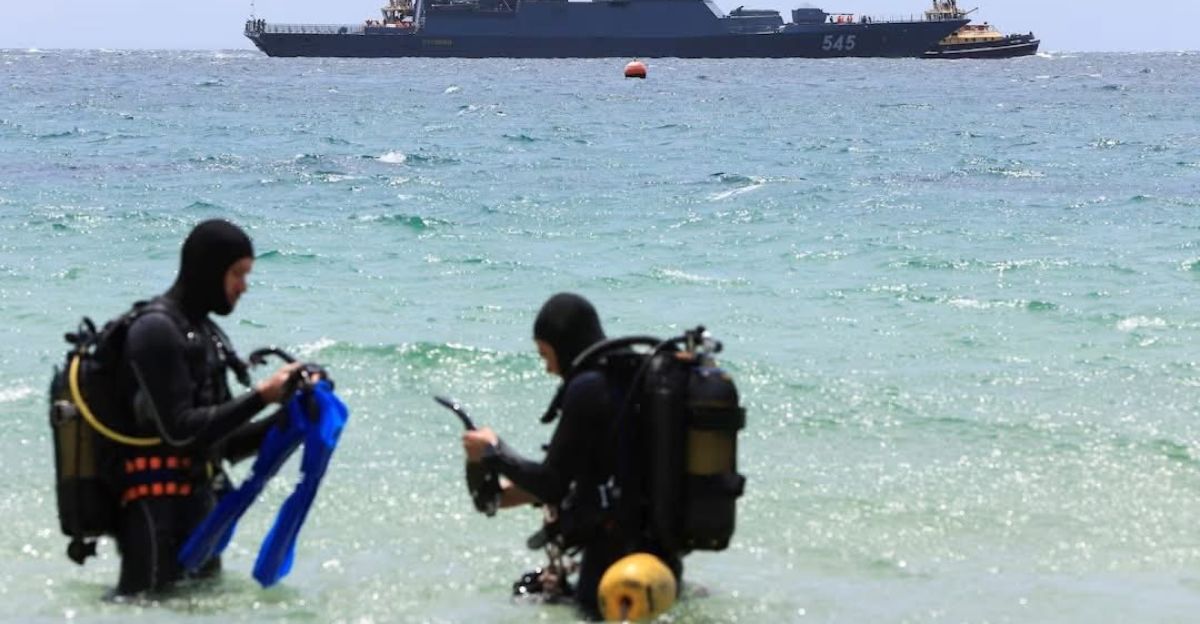
South Africa’s own navy has tried to keep the spotlight on practical cooperation at sea. Official notices describe the deployment of ships such as the frigate SAS Amatola as part of a programme of “joint actions to ensure the safety of shipping and maritime economic activities,” language that emphasises shared interests rather than ideological alignment.
Exercises reportedly include communications drills, coordinated manoeuvres, casualty transfers and other tasks that would matter in real‑world emergencies involving commercial vessels.
Expert Doubts
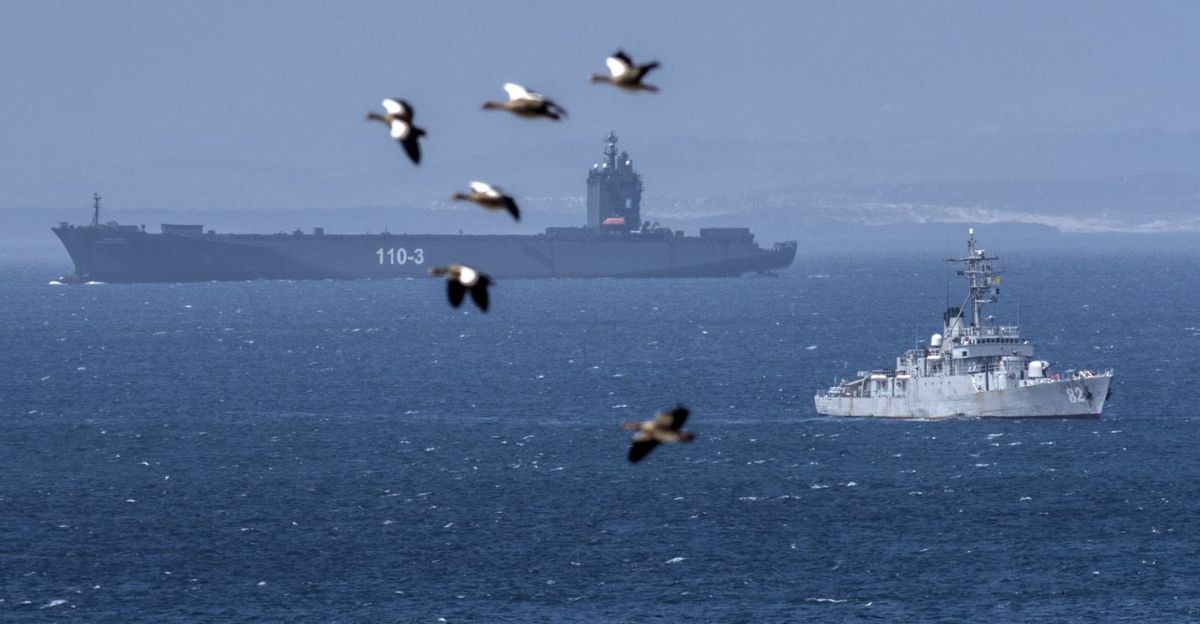
Not everyone is convinced that the benefits outweigh the risks. Defence analyst Darren Olivier and others have warned that even if the drills do not threaten to close any route outright, the image of heavily armed non‑Western fleets operating together near such a vital trade artery could unsettle insurers and push up risk premiums.
Critics also question the branding of the operation, with one Ukrainian community leader in South Africa deriding the title Will for Peace as “the height of cynicism” given Russia’s ongoing war in Ukraine.
Future Horizons
As the drills wrap up, the focus shifts from manoeuvres to consequences. For South Africa, the coming months will show whether hosting BRICS Plus navies strengthens its claim to be a bridge between global power blocs or deepens suspicions in Washington and Brussels.
Analysts say much will depend on what follows: further BRICS‑linked events such as another Maritime Security Belt exercise could entrench these naval partnerships, while any incident or diplomatic clash could quickly revive talk of boycotts or sanctions.
Sources:
DefenceWeb, “BRICS Plus navies commence exercise off South African coast amid controversy”, 12 January 2026
Daily Maverick, “Iran, Russia and China sail into Simon’s Town as Exercise ‘Will for Peace’ kicks off”, 7 January 2026
South African Government (Gov.za), “Defence hosts Exercise Will for Peace 2026, 9 to 16 Jan”, 29 December 2025
SABC News, “South Africa hosts navies from BRICS Plus countries” (video report), 10 January 2026