
Walmart’s stock price touched $117.48 on January 12, 2026—an all-time high—as investors grasped the magnitude of the retailer’s January 11 partnership with Google Gemini. The announcement sent shares climbing approximately 3% in a single trading session, adding billions to the company’s market capitalization.
The deal positions Walmart to capture a share of what McKinsey projects as a $900 billion to $1 trillion U.S. agentic commerce market by 2030.
What Just Happened at Walmart
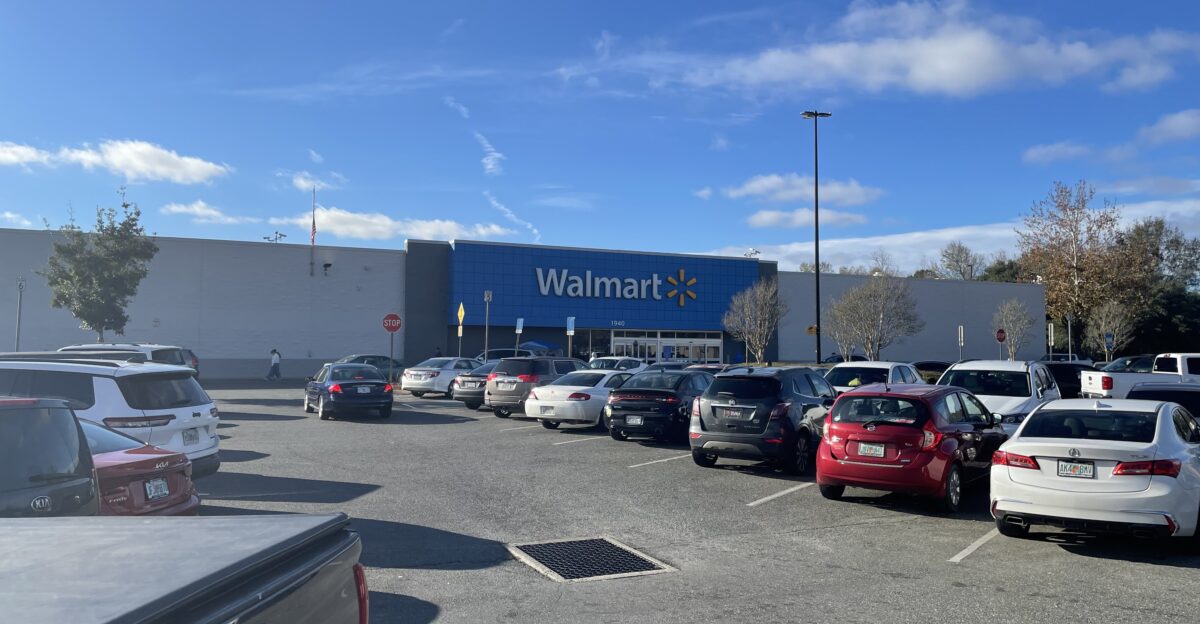
Walmart and Google unveiled their collaboration at the National Retail Federation’s Big Show in New York City, integrating the retailer’s entire product catalog into Gemini AI assistant. Customers can now shop conversationally through Gemini without visiting websites, completing purchases via Google Pay while the AI surfaces personalized recommendations based on past purchases.
Delivery arrives in as little as 30 minutes for select items, collapsing the traditional shopping journey into seconds.
Leadership Stakes Company’s Future on AI

Incoming CEO John Furner, who assumes leadership February 1, 2026, co-announced the partnership with Google CEO Sundar Pichai, calling agentic AI “the next great evolution in retail”. Furner declared at NRF 2026: “We aren’t just watching the shift, we are driving it”.
The timing signals strategic intent—Walmart’s new leader is betting the company’s future on AI-driven commerce transformation. Outgoing CEO Doug McMillon acknowledged that “it’s abundantly clear that AI is poised to transform virtually every position” at the world’s largest retailer.
The Technology Powering the Revolution

Google and Shopify co-developed the Universal Commerce Protocol (UCP), which standardizes how AI agents interact with merchant systems across platforms. Prior to UCP, each retailer required custom integrations with every AI platform—a scalability bottleneck that restricted widespread adoption.
The protocol handles discount codes, loyalty credentials, subscription billing, and transaction terms through a universal language. Over 20 major retailers including Target, Home Depot, Best Buy, Wayfair, and Etsy have endorsed UCP.
Walmart’s Multi-Platform AI Strategy

The Gemini partnership represents Walmart’s second major AI collaboration within three months of the October 2025 OpenAI announcement enabling shopping through ChatGPT. This dual-platform approach provides access to ChatGPT’s 700 million weekly users and Gemini’s 350 million monthly active users simultaneously.
Tom Guggenberger, Walmart’s chief e-commerce officer, explained the rationale: agentic AI “helps us engage with customers earlier in their shopping experiences and across a wider range of platforms”.
Meet Sparky: Walmart’s Proprietary AI

Walmart simultaneously developed Sparky, its customer-facing AI assistant embedded in the company’s mobile app, to maintain strategic independence from external platforms. Sparky helps shoppers discover products, compare items, summarize reviews, and understand occasion-based recommendations like suggesting jerseys when asked “What sports teams are playing tonight?”.
The assistant is trained on retail-specific large language models and Walmart’s proprietary internal data.
AI Shopping Now Serves Advertisements
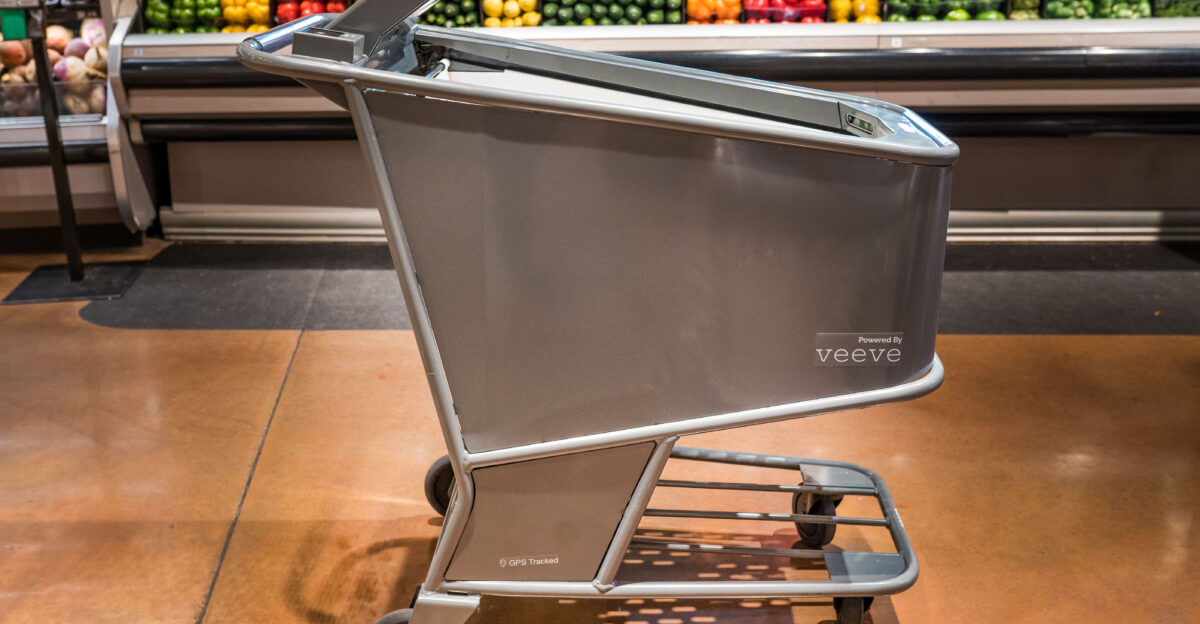
In January 2026, Walmart began expanding sponsored ads within Sparky, monetizing AI-driven product discovery. With 81% of Sparky users engaging the assistant to check availability or research details before purchase, sponsored prompts now appear directly in recommendation flows.
This move demonstrates how retailers plan to maintain advertising revenue as shopping shifts from keyword search to conversational interfaces.
Amazon Takes the Opposite Approach
Amazon has pursued a closed, proprietary strategy with Rufus, its AI shopping assistant that remains exclusively within Amazon’s ecosystem. CEO Andy Jassy projected Rufus would generate over $10 billion in annual incremental sales, with customers who engage the tool 60% more likely to complete purchases.
Amazon seeks to keep customers within its platform, preventing them from discovering competing retailers through third-party AI systems. This walled-garden philosophy contrasts sharply with Walmart’s open partnership model.
The Trillion-Dollar Market Opportunity

McKinsey Research projects the U.S. B2C retail market could see $900 billion to $1 trillion in orchestrated revenue from agentic commerce by 2030, with global figures reaching $3 trillion to $5 trillion. These projections represent 15-25% of total e-commerce flowing through agentic channels within four years.
Morgan Stanley estimates $190 billion to $385 billion in U.S. e-commerce spending through AI agents, capturing 10-20% market share by decade’s end. Bain & Company’s forecast aligns closely at $300 billion to $500 billion in U.S. agentic commerce by 2030.
Early Results Show Promise and Challenges
Salesforce estimates AI and autonomous agents influenced approximately 20% of global retail sales—$272 billion—during the 2025 holiday season. AI agents influenced about $3 billion in U.S. Black Friday 2025 sales alone.
However, conversion rates from AI-assisted shopping remain 86% worse than traditional affiliate channels, highlighting infrastructure gaps. While 39% of consumers have adopted AI shopping tools and ChatGPT referrals to retail sites grew 805% year-over-year, merchant systems cannot yet capture demand effectively.
Infrastructure Gap Creates Competitive Advantage

The performance gap between AI shopping’s potential—4.4x higher conversion—and current reality represents both challenge and opportunity. Retailers with properly structured data, responsive APIs, and agent-friendly architectures could achieve dramatically higher conversion rates than competitors.
That advantage builds now, compounds through 2026, and becomes increasingly difficult for competitors to replicate as the category matures.
Financial Markets Reward the Strategy

Walmart is on track to exceed $710 billion in revenue for fiscal year 2026, with operating margins improving to 3.3%—up from sub-3% historically—due to high-margin services like advertising and automated fulfillment. The company commands over 25% of the U.S. grocery market and serves 250 million customers weekly.
Extending these relationships into AI interfaces where customers spend increasing time positions Walmart to capture disproportionate value as agent-mediated shopping scales.
Privacy Concerns Threaten Adoption Rates

While 29% of consumers plan to try AI-assisted purchasing in 2026, a striking 82% cite privacy and control concerns. Currently, only 12% of consumers trust AI to complete purchases on their behalf. Conversational AI encourages users to share detailed natural-language requests revealing preferences, constraints, and sensitive contextual information.
Chatbot interaction logs could become as sensitive as transactional data, increasing risks of over-collection, misuse, or unintended exposure.
Workforce Transformation Looms for Millions

As the largest private employer in the United States, Walmart faces profound workforce implications from AI automation. Research suggests up to 60% of routine retail functions—from repetitive admin and inventory checks to basic checkout tasks—could be automated or heavily augmented within the next decade.
However, as AI handles routine work, human employees become more valuable in customer experience, creative problem-solving, and AI-assisted sales strategy.
Regulatory Scrutiny Intensifies Nationwide

New York now requires algorithmic pricing disclosures, while the Federal Trade Commission scrutinizes “surveillance pricing” practices across the retail industry. The EU AI Act and GDPR convergence creates additional compliance requirements for AI systems processing consumer data.
Retailers must navigate evolving regulations across multiple jurisdictions while iterating AI models at unprecedented speed. The legal landscape remains fragmented, creating compliance challenges for companies operating nationally and internationally.
Physical Stores Gain Strategic Importance

Agentic commerce doesn’t threaten physical retail—it elevates brick-and-mortar locations as competitive advantages. When purchase decisions happen in seconds through AI, shipping windows and delivery uncertainty become more noticeable friction points.
Physical stores offering same-day pickup, instant possession, easy exchanges, and human reassurance provide differentiation that becomes more valuable as digital purchase processes accelerate. Walmart’s 4,600-store network enables 30-minute delivery—a capability pure-play e-commerce competitors cannot easily replicate.
New Leadership Brings Continuity and Vision
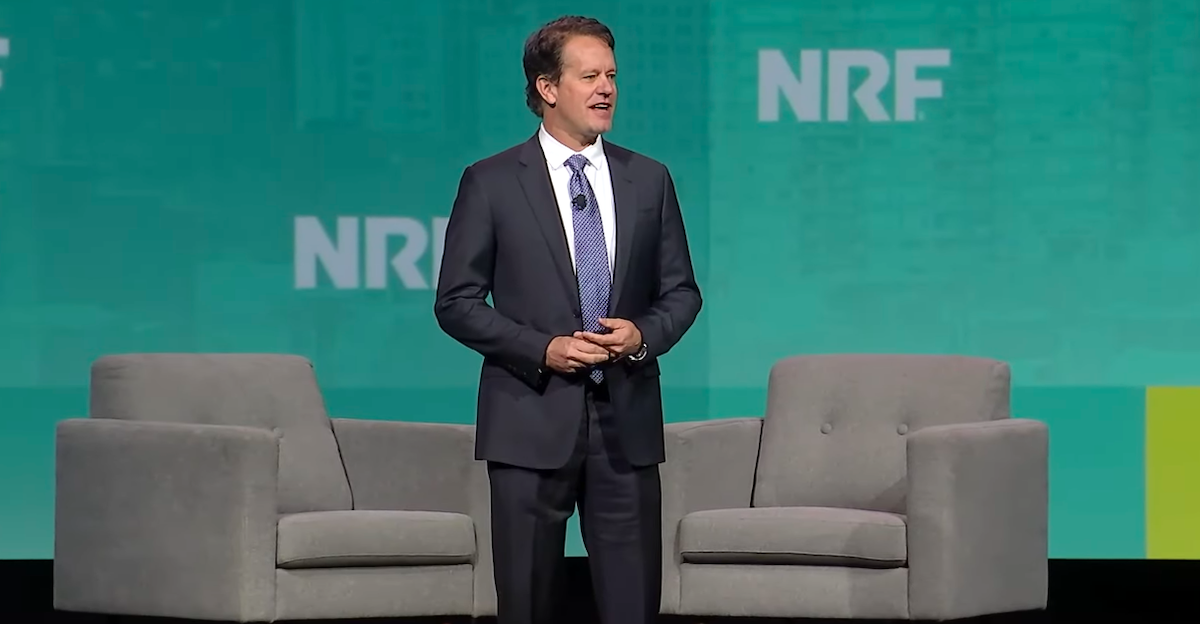
John Furner brings over 30 years of Walmart experience, starting as an hourly associate in 1993 and progressing through leadership roles across merchandising, operations, and global functions. As CEO of Walmart U.S. since 2019 and previously CEO of Sam’s Club, Furner oversaw the company’s digital acceleration during rapid transformation.
Doug McMillon specifically cited Furner’s “digital acumen” and capability to “lead the company through this next AI-driven transformation” as key qualifications.
Zero-Click Purchasing: The Ultimate Evolution

In the zero-click paradigm, consumers never visit websites or apps—they simply state intent to their AI assistant, which researches, compares, purchases, and arranges delivery autonomously. This “intent-to-ownership” collapse from hours to minutes fundamentally restructures the entire shopping funnel.
Success requires maintaining the richest product data feeds, fastest fulfillment network, most compelling membership benefits, and sufficient consumer trust to delegate purchase authority.
Industry Reaches Historic Inflection Point

The retail industry faces transformation comparable to the e-commerce revolution of the early 2000s or the mobile commerce shift of the 2010s. Protocol standardization through UCP resolves the integration complexity that previously limited AI shopping at scale.
Google’s infrastructure provides massive distribution—Gemini reached 350 million monthly active users by late 2025, with 1.5 billion AI Overview interactions in Google Search. As more merchants join, the protocol becomes more valuable; as more platforms adopt UCP, merchants gain broader reach with minimal incremental integration cost.
What Happens Next Will Reshape Retail

The convergence of standardized protocols, massive AI platform distribution, and early consumer adoption creates conditions for explosive 2026-2027 growth in agentic commerce. Cross-merchant orchestration represents the next frontier—when customers ask for “a complete home office setup under $2,000,” optimal responses include products from multiple retailers coordinated through a single checkout.
Protocol extensions for coordinated multi-merchant checkout will begin testing in 2026. Walmart’s early adoption of UCP and dual AI partnerships creates structural advantages competitors must now overcome.
Sources:
“Walmart partners with Google Gemini on shopping tool.” CNBC, 11 Jan 2026.
“Walmart and Google Turn AI Discovery Into Effortless Shopping Experiences.” Walmart Corporate News, 10 Jan 2026.
“Walmart Stock Jumps on Google AI Partnership.” Yahoo Finance, 12 Jan 2026.
“Agentic Commerce Impact Could Reach $385 Billion by 2030.” Morgan Stanley Insights, 7 Dec 2025.
“2030 Forecast: How Agentic AI Will Reshape US Retail.” Bain & Company, 16 Dec 2025.
“Walmart Announces John Furner as President and Chief Executive Officer.” Business Wire, 13 Nov 2025.