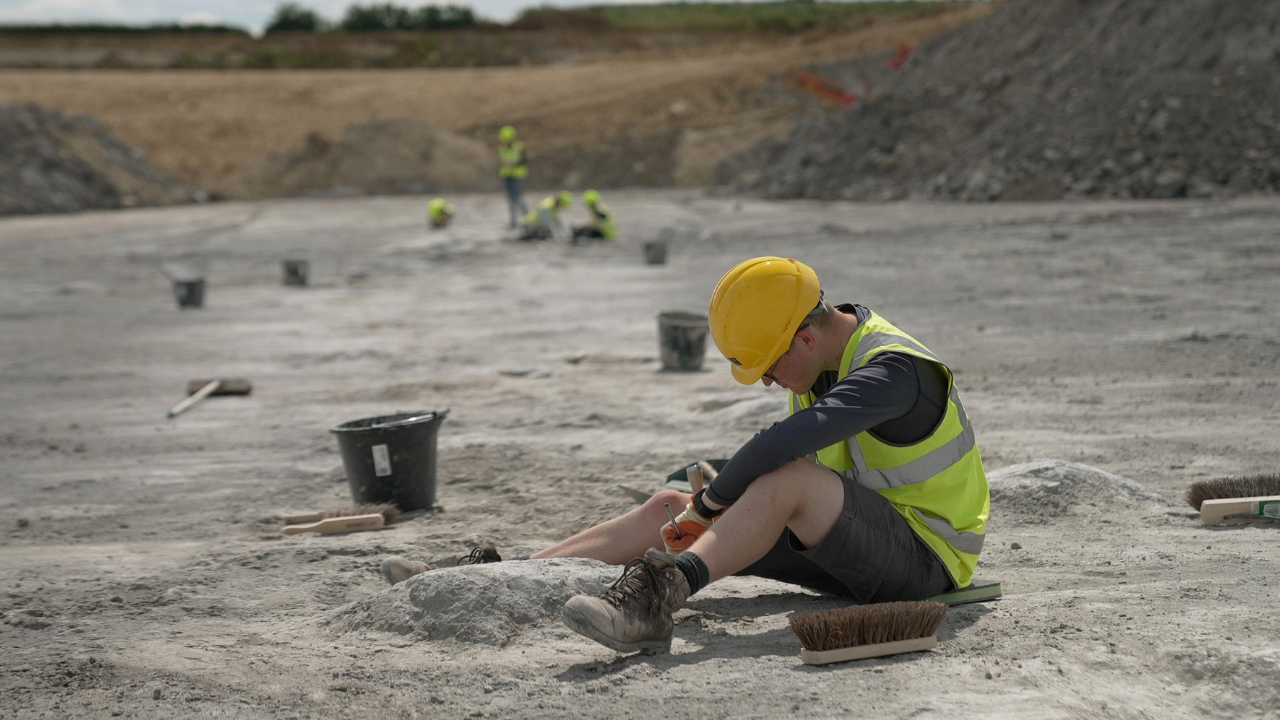
A routine workday in an Oxfordshire quarry became a paleontological sensation when Gary Johnson, clearing clay at Dewars Farm Quarry in 2022, noticed peculiar ridges in the mud beneath his machinery. What emerged from that moment of curiosity now ranks as one of Britain’s most extraordinary dinosaur tracksite discoveries: more than 200 footprints from two distinct species, frozen in time for 166 million years.
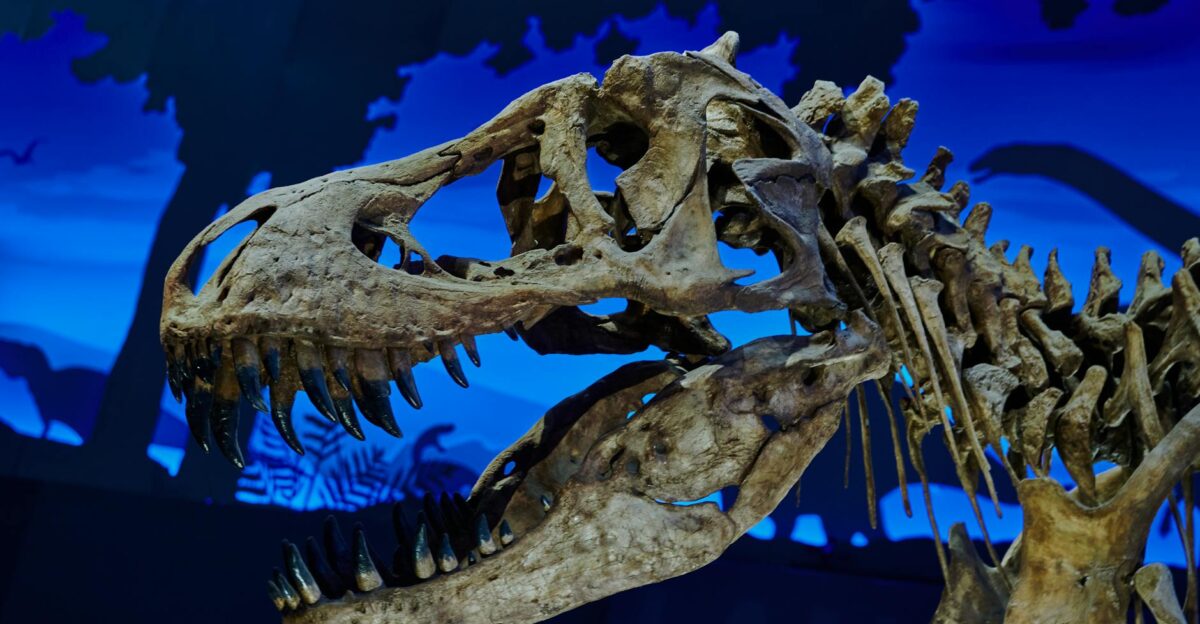
The ancient impressions left by Cetiosaurus, a long-necked herbivore, and Megalosaurus, a formidable predator, offer an unprecedented window into Middle Jurassic life when these giants traversed what was then a coastal lagoon.
From Mud to Scientific Marvel
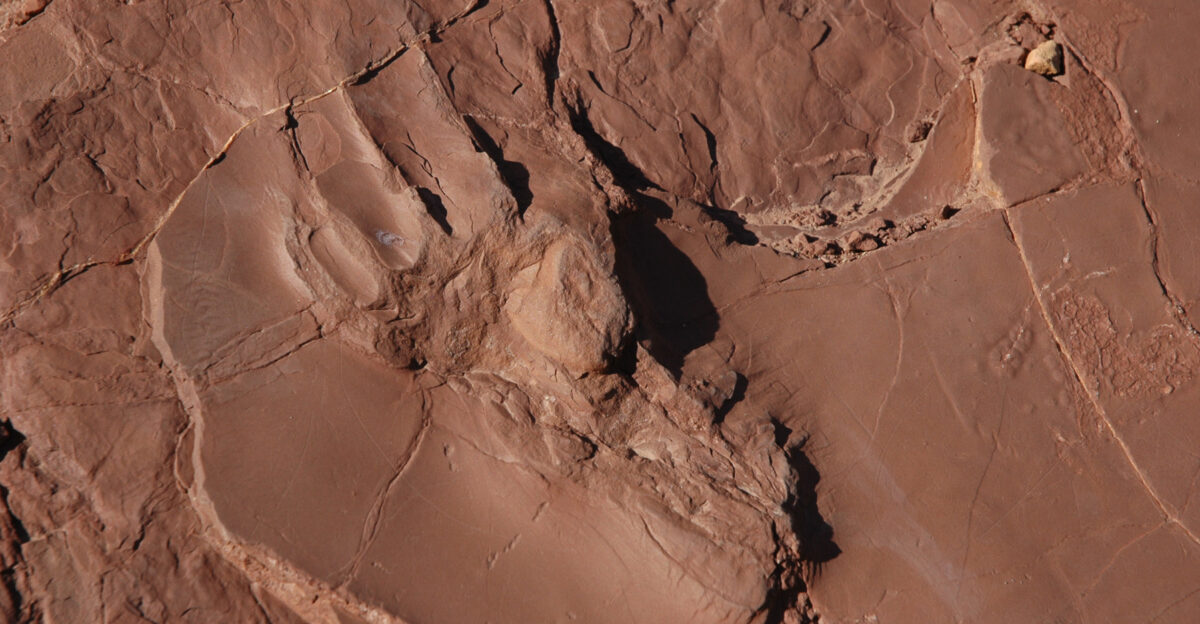
Johnson’s initial observation in 2022 triggered a chain of events that culminated in intensive excavation work throughout June 2024. The quarry’s limestone extraction operations had inadvertently exposed remarkably well-preserved tracks embedded in hardened sediment.
What makes this discovery particularly valuable is the exceptional clarity of the impressions, which captured not just the presence of these creatures but details of their movement patterns across an ancient landscape. The site lay dormant for millions of years beneath layers of rock, only to be revealed through modern industrial activity.
Collaborative Precision and Digital Innovation
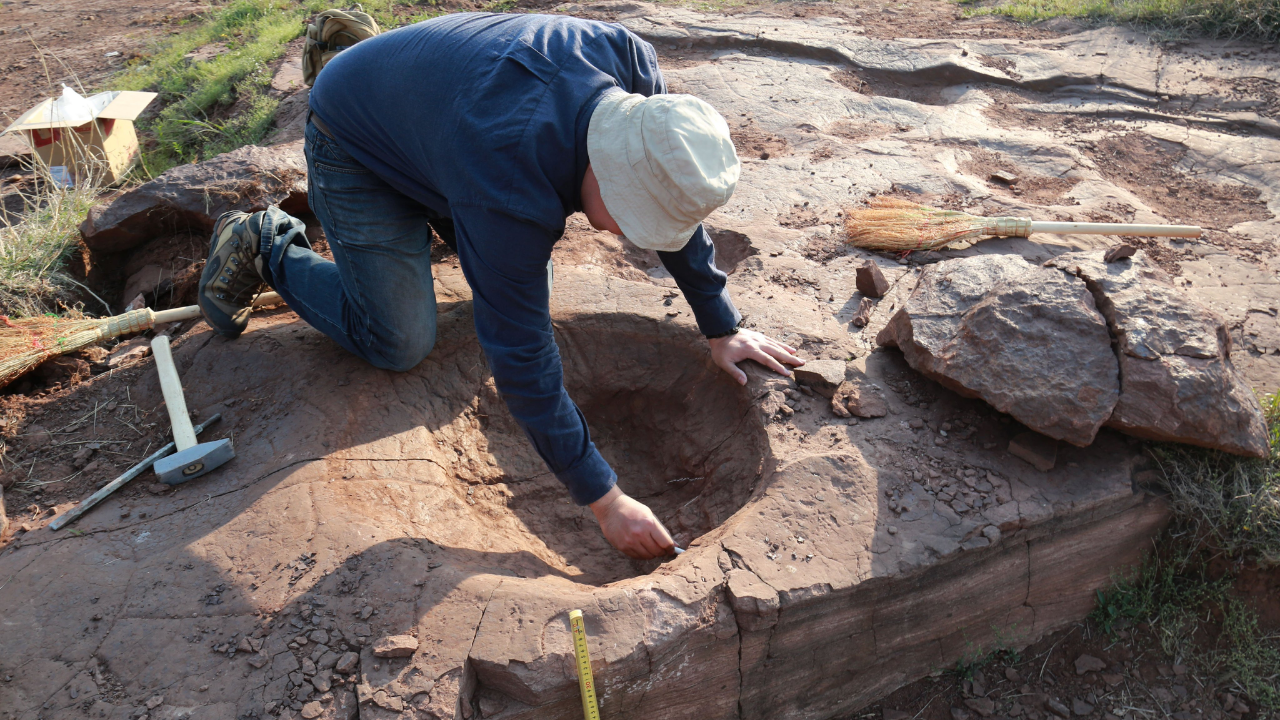
The magnitude of documenting such a sprawling site demanded unprecedented cooperation between commercial and academic interests. Smiths Bletchington, the quarry’s operator, coordinated extraction schedules with research teams from Oxford, Birmingham, and Liverpool John Moores universities, enabling over 100 scientists, students, and volunteers to access the location.
The excavation employed cutting-edge drone photogrammetry to create detailed three-dimensional digital models of every footprint. This technology ensures permanent documentation even as quarrying operations continue, allowing researchers worldwide to study the trackways virtually. The method represents a significant advancement in paleontological preservation, transforming physical discoveries into accessible digital archives.
Britain’s Largest Dinosaur Tracksite Emerges
The 2024-2025 excavations revealed trackways stretching approximately 220 meters across the geological surface, establishing new benchmarks for British paleontological sites. When integrated with trackways discovered during the 1990s at neighboring Ardley on the identical geological layer, Dewars Farm now forms the centerpiece of the United Kingdom’s most extensive dinosaur tracksite network.
The collection primarily features four distinct sauropod pathways alongside one theropod route, each offering unique insights into how these animals moved and potentially interacted. The previous British record holder, Ardley Quarry, documented trackways reaching 180 meters in length following its 1997 discovery. International paleontologists have taken notice of Dewars Farm’s exceptional preservation quality and the diversity of tracks present.
Protected Heritage and Future Prospects
Dewars Farm operates within the Ardley Trackways Site of Special Scientific Interest, a protected designation that legally safeguards the geological significance of the area’s dinosaur evidence. Researchers continue negotiations with Smiths Bletchington and Natural England to develop comprehensive long-term conservation strategies for the newly exposed tracks.
This protection framework ensures that commercial limestone extraction must accommodate scientific priorities, demonstrating how industrial operations and academic research can coexist productively. The Oxford University Museum of Natural History leads ongoing analytical work, with teams examining mud cracks, shell fragments, and sedimentary features to reconstruct the ancient lagoon ecosystem where these dinosaurs once walked.
Lasting Implications for Science and Education
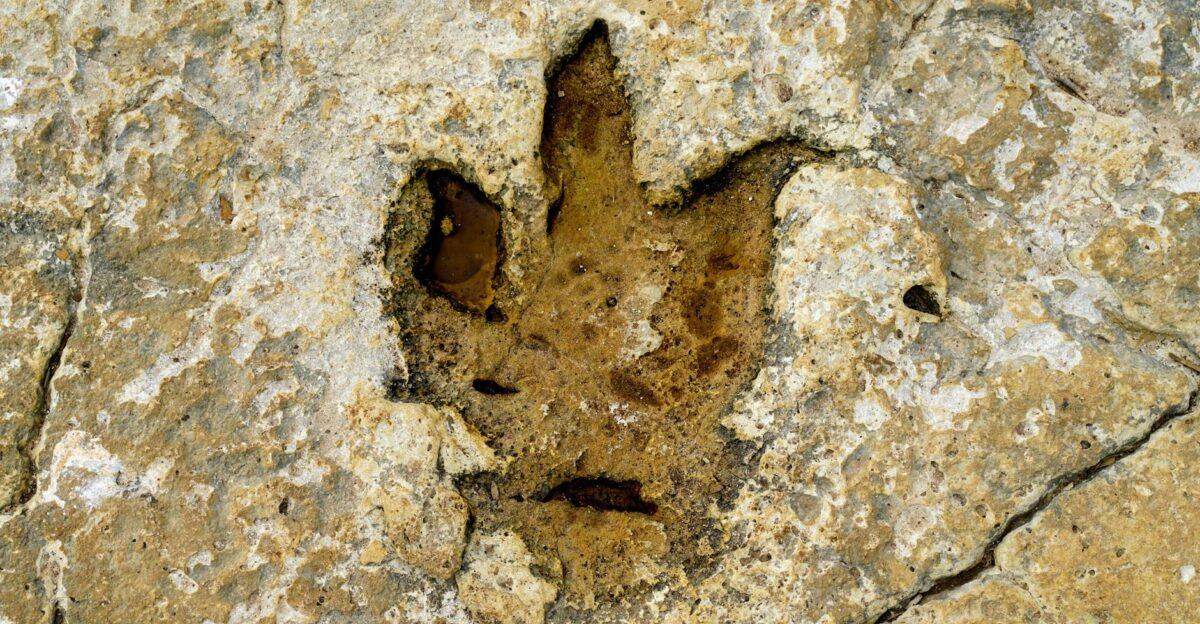
The discovery enriches both Britain’s paleontological record and public understanding of the nation’s deep prehistoric past. Scientists continue analyzing the tracks to decode dinosaur locomotion patterns, estimate body mass, and explore possible interactions between herbivores and predators sharing the same territory. With significant portions of the quarry yet unexposed, research institutions maintain monitoring protocols as extraction progresses, anticipating potential additional finds that could further illuminate Middle Jurassic ecology.
The site’s educational value extends beyond academic circles, providing tangible evidence that connects modern landscapes to vanished worlds. Gary Johnson’s observant moment has secured Dewars Farm’s position in British scientific heritage, reminding us that monumental discoveries often emerge from unexpected circumstances and the collaborative efforts of everyday workers, commercial enterprises, and dedicated researchers working toward common preservation goals.
Sources:
“UK’s biggest ever dinosaur footprint site unearthed.” BBC News, 2 Jan 2025.
“Researchers return to Britain’s Jurassic ‘Highway’ to uncover new dinosaur footprints.” University of Birmingham, 8 Dec 2025.
“How we uncovered the UK’s biggest site of dinosaur tracks in a quarry in Oxfordshire.” The Conversation, 23 Jan 2025.
“Footprints from a vast dinosaur highway discovered in the UK.” Natural History Museum, Jan 2025.