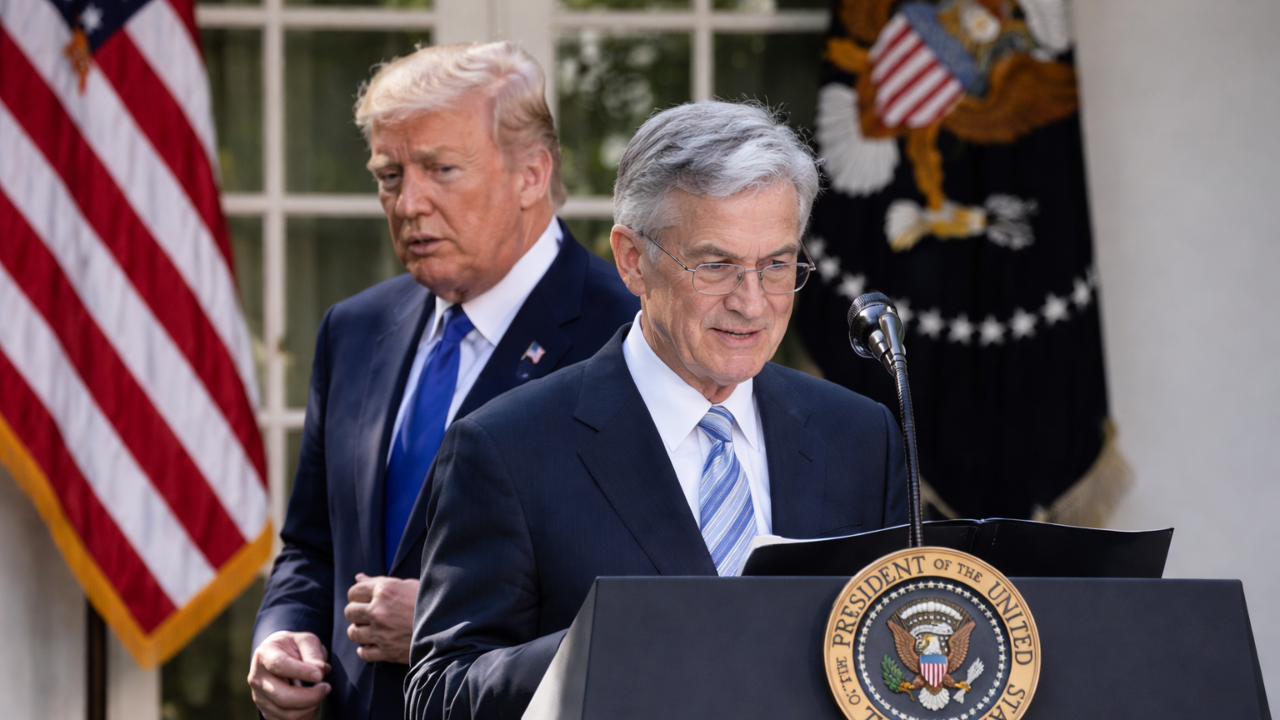
Federal Reserve Chair Jerome Powell faces a criminal investigation following his June testimony to Congress regarding the central bank’s $2.5 billion headquarters renovation project. On January 10, the Department of Justice served grand jury subpoenas to the Federal Reserve itself, marking the first time in 110 years that a federal agency has pursued such action against the central bank. This development signals an unprecedented escalation in tensions between the White House and the nation’s most important financial institution.
Powell responded with a rare Sunday video statement, characterizing the investigation as a political retaliation for the Fed’s refusal to cut interest rates more quickly. He emphasized that the threat of prosecution stems not from renovation details, but from the Federal Reserve’s determination to set monetary policy based on economic data rather than presidential preference. The investigation centers on whether Powell misled Congress about design features in the two buildings—structures built in 1935 and 1937 that required major overhauls after nearly a century without significant renovations.
The Renovation That Triggered a Constitutional Crisis

The renovation encompasses asbestos removal, lead abatement, replacement of outdated electrical systems, and addressing water-table issues resulting from the buildings’ location on former swamp land. The initial 2021 estimate of $1.9 billion has climbed past $2.5 billion, a 30 percent increase driven largely by engineering complexity and preservation requirements for historically protected structures.
When asked about luxury features during Senate testimony last June, Powell denied the presence of marble facades, water features, and rooftop gardens. Congressman Anna Paulina Luna disputed this characterization, later referring the matter to prosecutors.
Trump visited the renovation site in July 2025 and publicly disputed the cost figures, claiming expenses had reached $3.1 billion or higher. He publicly promised litigation against Powell, declaring the project the “Taj Mahal on the National Mall.” The timing of the Justice Department investigation—launched just months after these attacks—appears closely coordinated with broader administration efforts to pressure the Federal Reserve’s leadership.
The Fight Behind the Investigation

The real dispute concerns monetary policy independence. Trump demanded aggressive interest rate cuts; Powell maintained that Fed decisions must follow economic indicators, not political demands. The Fed cut rates three times in late 2025, but not to the extent Trump desired. Legal observers warn that prosecution of a sitting Fed chair for policy disagreements represents an unprecedented threat to institutional autonomy.
The investigation has triggered rare bipartisan concern in Congress. Republican Senator Thom Tillis announced that he would block the confirmation of any Federal Reserve nominees, including the chair position, until the matter is resolved. This stance holds significance—Tillis’s single vote could deadlock the banking committee and prevent Trump from installing a successor to Powell, whose term expires in May 2026.
Global Finance Leaders Sound the Alarm

International response has been swift and unified. On January 13, leaders of ten major central banks, including the European Central Bank and Bank of England, issued a joint statement affirming that central bank independence constitutes “a cornerstone of price, financial and economic stability.” All living former Federal Reserve chairs, spanning both political parties, have condemned the investigation as a threat to the credibility of monetary policy. JPMorgan Chase CEO Jamie Dimon warned publicly that attacking the Fed undermines global financial stability.
The investigation occurs amid parallel challenges to Fed independence. The Supreme Court is scheduled to hear oral arguments on January 21 in the case of Federal Reserve Governor Lisa Cook, whom Trump attempted to fire based on unsubstantiated mortgage fraud allegations. If the Court permits such removal, Trump would gain authority to dismiss Powell more easily. The combined pressure—prosecution threat, removal precedent, and leadership succession—creates a coordinated campaign targeting institutional autonomy.
What It Means for Your Money

The implications extend far beyond governance. Interest rates set by an independent Fed influence mortgage payments, savings yields, job creation, and the value of retirement accounts. Markets containing roughly $25 to $50 trillion in American assets fluctuate in response to Federal Reserve decisions. If those decisions become subject to political coercion or threats of prosecution, inflation could spiral out of control, currency confidence could erode, and ordinary Americans would absorb the consequences through reduced purchasing power and diminished savings.
Powell remains defiant, having publicly stated that he will not yield to political pressure, regardless of the legal consequences. Yet the question looms: will his successor inherit the precedent that compliance with presidential rate demands offers protection from prosecution? The Supreme Court’s ruling, the confirmation battle ahead, and ongoing investigations by prosecutors will collectively determine whether the Federal Reserve retains its independence or becomes another instrument of executive power.
Sources
Federal Reserve Chair Jerome H. Powell, Video Statement, January 11, 2026
U.S. Attorney’s Office for the District of Columbia, Criminal Investigation Records, January 2026
Senate Banking Committee, Hearing Transcript, June 2025
Department of Justice, Grand Jury Subpoena Records, January 10, 2026
Jamie Dimon, JPMorgan Chase CEO Statement, January 2025