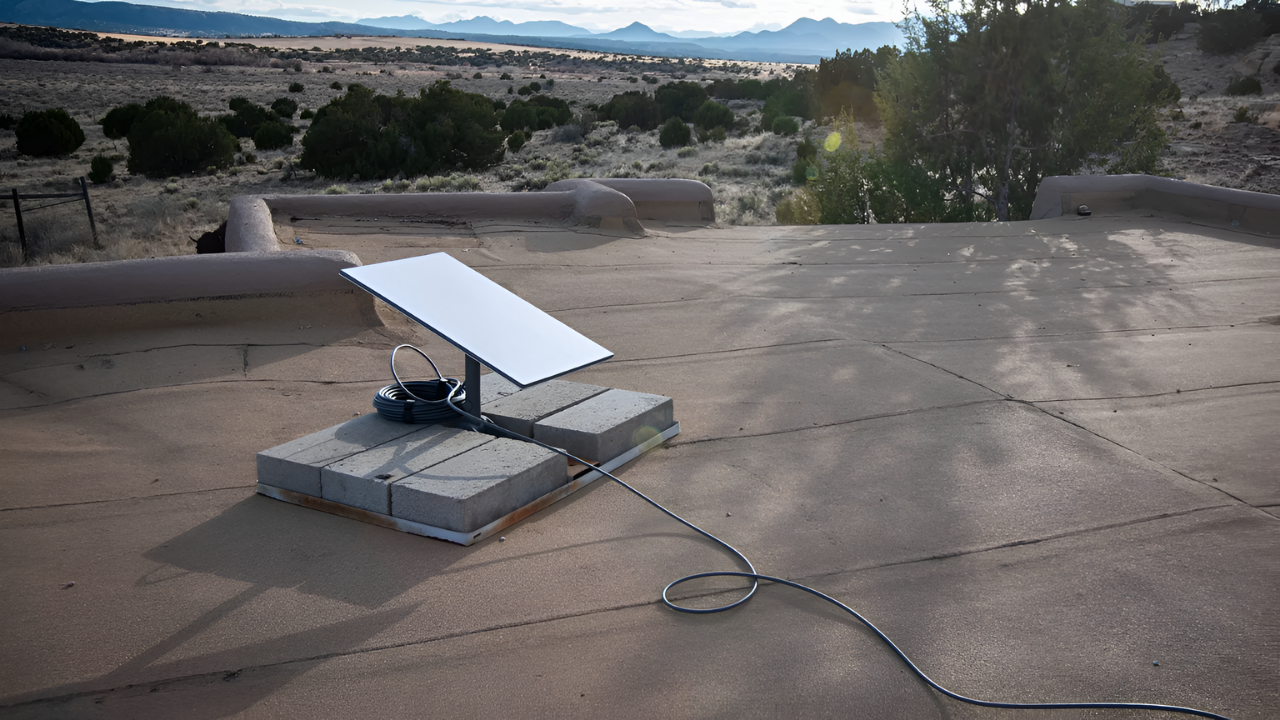
On the evening of January 8, 2026, Iran’s government severed every digital connection linking its 90 million citizens to the outside world. Internet access vanished. Cell service disappeared. Bank systems went offline. Then authorities deployed military-grade jamming equipment to cripple Starlink, the satellite internet service that had become the final lifeline for protesters documenting massacres in the streets. In an instant, the Islamic Republic had engineered near-total information blackout—and with it, the cover to escalate violence without witnesses.
Protests Unseen Since the Revolution

The demonstrations erupting across Tehran, Mashhad, Isfahan, and Shiraz represented the largest challenge to the regime since the 1979 revolution that brought it to power. Economic collapse and runaway inflation had made ordinary survival impossible, transforming public anger into a direct assault on the government’s legitimacy. Protesters chanted calls for the dictator’s death and waved flags bearing the Lion and Sun emblem—the symbol Iran used before clerics seized control decades earlier. The regime understood what these images meant: this was no longer about economics. This was about survival.
The Last Connection

As darkness descended over Iranian cities, one technology remained operational: Elon Musk’s Starlink. Activists and journalists with smuggled satellite dishes risked arrest to transmit footage of security forces firing on unarmed demonstrators. “Starlink is pretty much the only way to connect, to send news out of the country,” said Mehdi Yahyanejad, co-founder of NetFreedom Pioneers.
Without those transmissions, the regime’s crackdown would unfold in complete invisibility. Starlink’s 9,000-satellite constellation beams internet directly from space, bypassing every government-controlled checkpoint. This architectural advantage made it nearly impossible for Iran to block entirely—but it also made Starlink something unprecedented: a private company wielding more power than a nation-state when it came to information freedom.
Electronic Warfare Deployed

Iran’s response escalated by January 10. The regime deployed sophisticated jamming equipment targeting Starlink’s upload capability, causing packet loss ranging from 30 to 80 percent across different regions. “It’s electronic warfare,” said Amir Rashidi, director of digital rights at the Miaan Group. Experts believe Iran obtained the jamming technology from Russia, which has used identical equipment against Ukrainian forces relying on Starlink terminals.
The escalation marked the first time a nation deployed military-grade electronic warfare specifically against satellite internet—a warning to every activist depending on this technology worldwide. When jamming proved insufficient, security forces launched door-to-door searches. Authorities used drones to patrol Tehran rooftops, hunting for satellite dishes. Under Iranian law, possessing a Starlink terminal carries espionage charges punishable by up to ten years in prison.
Presidential Intervention
On January 11, aboard Air Force One, President Donald Trump told reporters he would call Musk about restoring internet access. “We may get the internet going if that’s possible. I’m going to call him as soon as I’m finished with you,” Trump said. White House Press Secretary Karoline Leavitt confirmed the conversation took place. Musk agreed to help. By Sunday afternoon, SpaceX engineers were developing technical countermeasures against Iranian jamming.
The company reactivated inactive user accounts and waived subscription fees. By January 13, SpaceX had made Starlink service completely free for all Iranian users. It was a deliberate escalation: Starlink wasn’t merely staying operational—it was actively facilitating opposition to the regime. Meanwhile, on January 9, Musk’s platform X replaced Iran’s official flag emoji with the pre-revolutionary Lion and Sun symbol. The change applied globally, meaning even Iranian officials now displayed the emblem their government had abolished.
Evidence as Deterrent
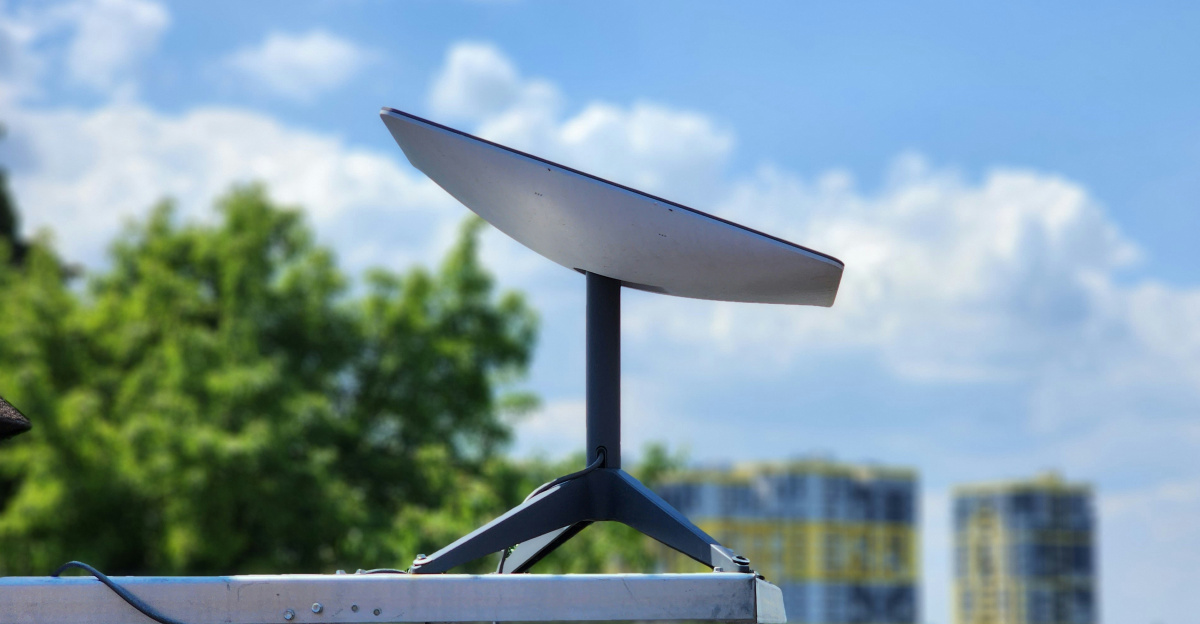
An estimated 100,000 Starlink terminals were hidden across Iran, smuggled through mountain passes and concealed in vehicles. Each terminal represented someone willing to risk death. On the black market, a single dish sold for $2,000—roughly 20 times Iran’s average monthly wage. The death toll remained unknowable because the communications blackout obscured verification. Footage from a Tehran suburb showed at least 400 bodies at a morgue, many with gunshot wounds.
Human rights groups estimated deaths ranged from hundreds to thousands, but the blackout made confirmation impossible. Mahsa Alimardani, a technology specialist at human rights organization Witness, framed the stakes simply: every minute Starlink stays operational is a deterrent to further regime violence. “If that window could be expanded, it could be a boon and even a deterrent to the regime in its efforts to commit what is likely going to be labelled an atrocity under a blackout.” Starlink had become more than internet access—it was evidence. And in the darkness of Iran’s blackout, evidence might be the only force capable of restraining a regime determined to silence dissent at any cost.
Sources
Mehdi Yahyanejad, NetFreedom Pioneers co-founder, interview on Starlink connectivity in Iran, January 2026
Amir Rashidi, Miaan Group director of digital rights, documentation of Iranian jamming interference, January 2026
Ahmad Ahmadian, Holistic Resilience executive director, confirmation of Starlink free service expansion, January 2026
White House Press Secretary Karoline Leavitt, statement on Trump-Musk coordination, January 2026
Mahsa Alimardani, Witness technology specialist, analysis of Starlink as deterrent to regime violence, January 2026
NasNet organization, report on jamming interference reduction in Iran, January 2026