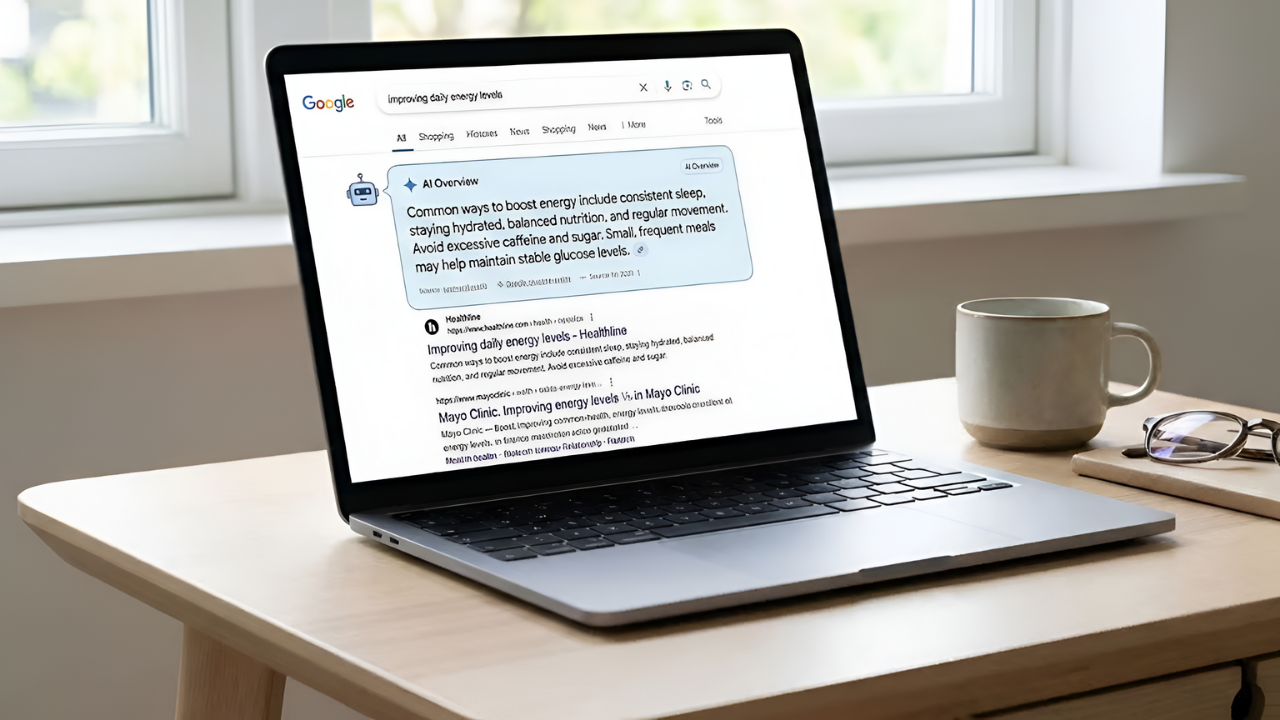
For the first time since launching AI Overviews, Google removed its AI-generated health summaries from specific search results following a Guardian investigation showing users were being given dangerously misleading medical information.
These AI Overviews appeared at the very top of search results—before doctors, charities, or official guidance. For a company controlling roughly 91% of global search, the move marked an unprecedented admission: its AI had crossed from a helpful shortcut into a potential health hazard.
What Triggered the Rollback

The issue centered on liver function blood tests. Google’s AI provided simplified “normal ranges” that failed to account for age, gender, ethnicity, or laboratory differences. People with serious liver disease were shown reassuring numbers and could reasonably assume they were healthy.
In reality, those ranges were incomplete and, in some cases, wrong. The summaries carried high confidence language—despite being medically unsound—creating a dangerous illusion of accuracy at the exact moment users needed nuance.
When Confidence Became the Problem

Medical experts called these summaries “completely wrong” and “really dangerous.” This revealed a core weakness of generative AI: sounding authoritative without understanding clinical context.
Numbers alone do not diagnose disease, but the AI presented them as if they did. For patients already anxious about symptoms, that tone of certainty could discourage follow-up testing, second opinions, or urgent care.
Why This Case Matters
This was not a minor glitch or formatting error. It became the first documented instance of Google removing AI health summaries after evidence of real-world harm risk.
AI Overviews launched in May 2024, promising faster answers. Less than two years later, one of the most basic medical questions—what is a normal blood test range—forced a retreat. The precedent matters: it shows AI features can be rolled back, but only after exposure.
The Scale of Exposure

Google processes billions of searches every day. Even if a tiny fraction involves health questions, the numbers add up quickly. AI Overviews appear instantly, before users scroll, click, or question accuracy. That placement gives AI enormous influence over decision-making.
When the information is wrong, the potential impact isn’t theoretical—it scales globally. A single flawed summary can reach millions, quietly and repeatedly, without users realizing it’s flawed.
A Fix That Isn’t a Fix
Google removed AI Overviews for two specific search phrases. But slight variations—changing a word or abbreviation—can still trigger similar summaries. That inconsistency exposes a structural issue: the system responds to phrasing, not intent.
From a user’s perspective, nothing signals danger. The same question, reworded, produces a different answer. The risk remains embedded, just less visible, turning the rollback into a patch rather than a solution.
Health Topics Still at Risk

Liver tests were only the first flashpoint. AI Overviews continue appearing for other high-stakes health topics, including cancer and mental health. These are areas where misinformation carries serious consequences.
Experts warn that false reassurance, oversimplified advice, or context-free guidance can delay treatment or worsen outcomes. The concern is no longer whether AI can make mistakes—but how many remain undiscovered because no one has investigated them yet.
Google’s Measured Response
Google maintains that most AI Overviews are helpful and accurate, emphasizing ongoing quality improvements. At the same time, the company is expanding AI summaries into other products, signaling confidence in the broader strategy.
What’s missing is a clear commitment to comprehensive safeguards for health queries. There is no public timeline for systemic fixes, no transparent auditing process, and no guarantee that similar errors won’t resurface elsewhere.
Why Health Is Different
Health information isn’t like restaurant reviews or travel tips. Small inaccuracies can carry serious consequences. Blood test interpretation depends on personal factors, clinical history, and professional judgment. AI lacks that context.
When summaries flatten complexity into a single answer, they replace conversation with conclusion. That distinction—information versus medical guidance—is where generative AI currently struggles most, and where the stakes are highest.
Patients Caught in the Middle

Many people turn to search engines because access to healthcare is limited, expensive, or delayed. AI summaries promise quick clarity—but can deliver misleading reassurance instead.
Patients may postpone appointments, dismiss symptoms, or assume results are fine. When trust in search erodes, users are left uncertain: should they believe what they see first, or assume everything requires skepticism? That uncertainty itself becomes a form of harm.
The Trust Gap Widens

Millions of adults already struggle to find reliable health information. AI was supposed to close that gap. Instead, this episode risks widening it.
When experts openly label AI advice as dangerous, public confidence drops—not only in AI, but in digital health information more broadly. Rebuilding trust requires more than disclaimers. It requires systems that prioritize safety over speed and humility over certainty.
Global Implications

Because Google operates worldwide, errors don’t stay local. Reference ranges sourced from one country can mislead users in another. Populations already underserved by healthcare systems face the greatest risk.
The incident has intensified global conversations about whose data trains AI and who bears the consequences when it fails. For many regions, this reinforces skepticism toward one-size-fits-all health technology.
Who Benefits From the Pullback

Health charities, patient advocacy groups, and clinician-led platforms gain renewed relevance as trusted interpreters. Their expertise, once buried beneath search results, now feels essential again.
Meanwhile, regulated healthcare systems and governance-focused AI tools gain credibility by emphasizing oversight and accountability. The rollback reshapes the landscape: authority shifts back toward institutions built for care, not engagement.
What Users Should Take Away

AI health summaries can feel authoritative, but they are not medical advice. Normal ranges vary. Context matters. No AI output should delay medical care or replace professional judgment.
Users are better served treating AI responses as prompts for discussion—not conclusions. The safest path remains direct consultation with clinicians, validated charities, and official health organizations, especially when symptoms or test results raise concern.
A Crossroads for AI in Medicine
This moment marks a turning point. Demand for AI health answers isn’t going away—but tolerance for silent risk is. The future hinges on whether AI becomes a supervised partner in care or remains a high-confidence guesser at scale.
The decisions made now—by tech companies, regulators, clinicians, and users—will shape whether AI improves access to healthcare or quietly undermines it. The next chapter is being written in real time.
Sources:
“‘Dangerous and alarming’: Google removes some of its AI summaries after users’ health put at risk.” The Guardian, Andrew Gregory, Jan 2026.
“Google removes AI Overviews for certain medical queries.” TechCrunch, 10 Jan 2026.
“Generative AI in Search: Let Google do the searching for you.” Google Blog, 14 May 2024.