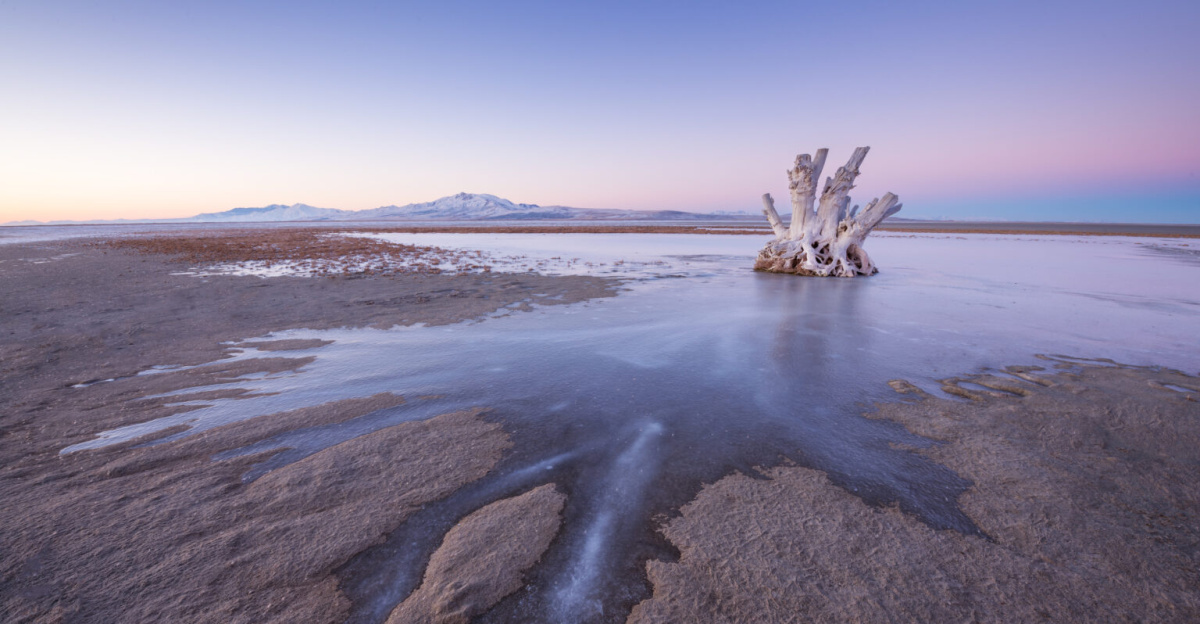
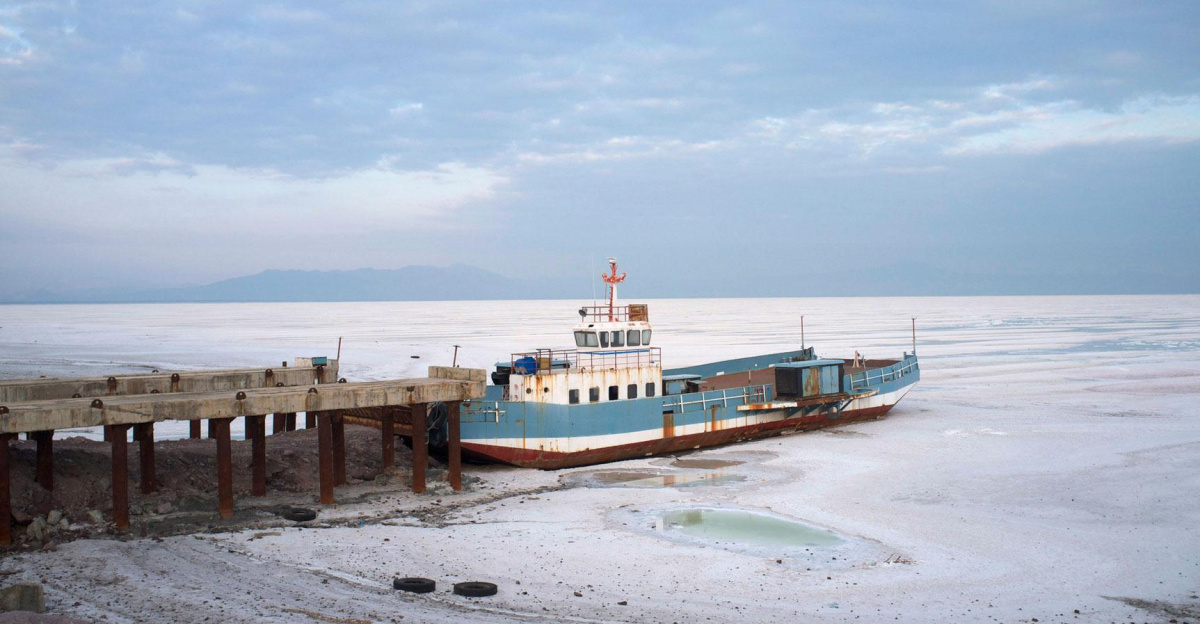
A team of scientists has added a third name to the short list of animals capable of surviving in Utah’s Great Salt Lake, one of North America’s most extreme aquatic environments. The discovery of Diplolaimelloides woaabi, a microscopic roundworm living on the lake bottom, marks the first nematode species confirmed in these hypersaline waters and raises urgent questions about what else remains hidden in a rapidly shrinking ecosystem. Published in the November 2025 Journal of Nematology, the finding comes as the lake teeters near the record low it reached in November 2022, when water levels plunged to 4,188.5 feet above sea level and salinity surged to nearly 19 percent.
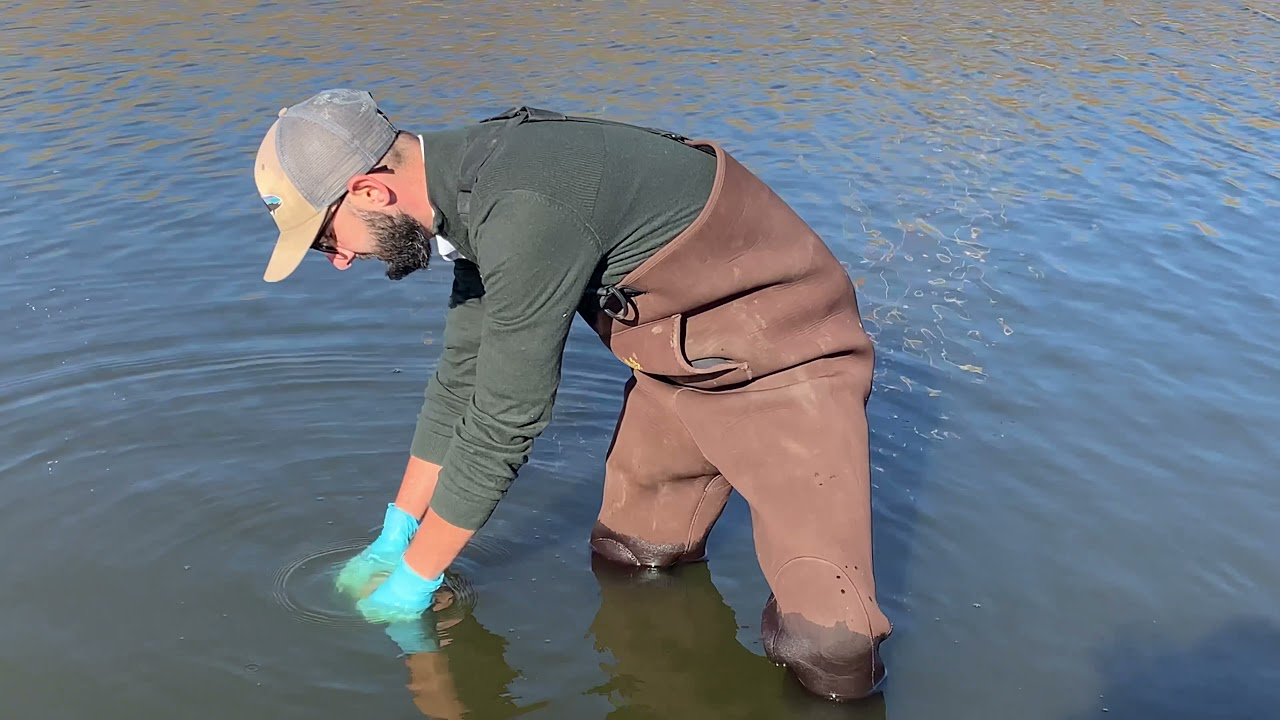
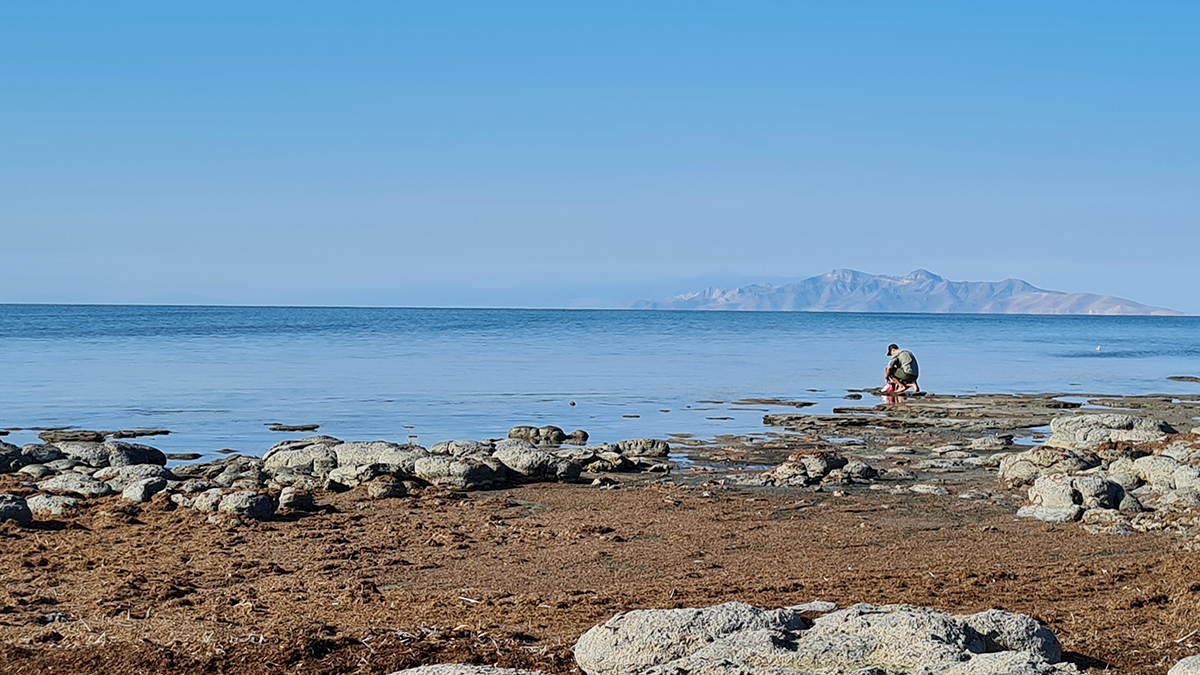
Until recently, only brine shrimp and brine flies were known to tolerate the lake’s punishing salt concentrations. Nematodes, though among Earth’s most abundant animals, had never been definitively documented here. That changed in 2022 when Julie Jung, then a postdoctoral researcher at the University of Utah, traveled across the lake by kayak and bicycle to collect sediment from microbialite mounds—hardened structures built by microbial communities on the lakebed. Working with biology professor Michael Werner, Jung confirmed that genetic and microscopic analyses revealed a species new to science. “We thought that this was probably a new species of nematode from the beginning, but it took three years of additional work to taxonomically confirm that suspicion,” said Jung, now an assistant professor at Weber State University.
Honoring Indigenous Heritage
The research team collaborated with elders of the Northwestern Band of the Shoshone Nation to name the species. The Shoshone suggested “Wo’aabi,” an Indigenous word meaning “worm,” which became the scientific epithet woaabi. The partnership connects modern taxonomy to the ancestral homelands of the Shoshone people, who have lived around the lake for generations. Diplolaimelloides woaabi represents the first member of its genus documented in the United States and the first found in a non-marine lake environment. All other known Diplolaimelloides species inhabit coastal marine or brackish waters, making the Great Salt Lake discovery biologically exceptional.
Ancient Relic or Airborne Arrival
How a marine-lineage nematode ended up in a landlocked Utah lake remains unresolved. Nematode expert Byron Adams of Brigham Young University proposes that the species may be a relic from the Cretaceous period, when a shallow seaway covered parts of North America roughly 100 million years ago. As the Colorado Plateau uplifted and basins formed, ancestral worm populations could have been stranded in what eventually became the Great Salt Lake. This hypothesis faces a challenge: between 20,000 and 30,000 years ago, the region held Lake Bonneville, a massive freshwater lake. If the nematodes have been endemic since the Cretaceous, they would have survived dramatic salinity shifts multiple times.
Werner offers an alternative he calls “even crazier”: migratory birds may have transported the worms from saline lakes in South America, carrying them thousands of miles on feathers or feet. Millions of birds move between the Americas each year, stopping at both coastal and inland saline habitats. Genetic comparisons with global Diplolaimelloides populations could help resolve the debate, though researchers acknowledge both scenarios strain credibility.
A Sentinel for Ecosystem Health
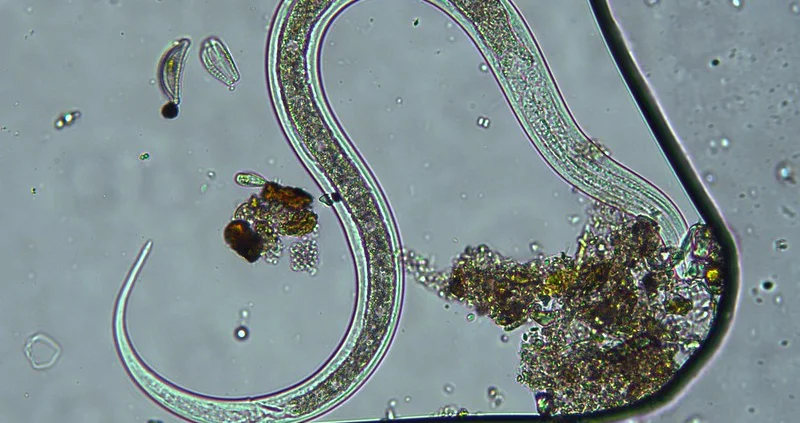
Diplolaimelloides woaabi inhabits the top few centimeters of algal mats coating microbialites in Bridger Bay, off Antelope Island, where salinity hovers around 115 parts per thousand. The worms feed on bacteria, potentially playing a key role in nutrient cycling within the lake’s sparse food web. Because so few multicellular animals survive in these conditions, researchers believe shifts in nematode abundance or distribution could serve as an early-warning indicator of environmental stress. “When you only have a handful of species that can persist in environments like that, and they’re really sensitive to change, those serve as really good sentinel taxa,” Adams explained. The species could reveal subtle changes in salinity, pollution, or nutrient flows before brine shrimp populations visibly collapse.
Uncertain Outlook
Genetic evidence suggests a second, currently unnamed nematode species may also inhabit the lake, further expanding its known biodiversity. Yet the discovery arrives at a precarious moment. In July 2025, the lake dropped to 4,192 feet, the threshold at which Utah warns of serious adverse effects on ecosystems, public health, and the economy. Experts warned that absent emergency measures or record snowpack, the lake could break its all-time low by fall 2026.
As water recedes, exposed lakebed releases toxic dust containing arsenic, threatening communities along the Wasatch Front. Conservation advocates stress that sustained policy action is essential to protect not only migratory birds and brine shrimp, but now a microscopic endemic species whose ecological role scientists have only begun to understand. Whether Diplolaimelloides woaabi endures will depend on decisions Utah makes about the fragile lake that is, for now, its only known home.
Sources:
Werner, Michael J., Julie H. Jung, Byron J. Adams, et al. “Diplolaimelloides woaabi sp. n. (Nematoda: Monhysteridae): A Novel Species of Free-Living Nematode from the Great Salt Lake, Utah.” Journal of Nematology, Nov 2025.
“A never-before-seen creature has been found in the Great Salt Lake.” ScienceDaily, 10 Jan 2026.
“Great Salt Lake’s latest species discovery gets a name fit for the lake’s native history.” KSL.com, 13 Dec 2025.
“Great Salt Lake Slips Toward 2022 Record Low.” Grow the Flow Utah, 30 Jul 2025.