Explosions cut through the darkness over Caracas just after 2 a.m. on January 3, 2026, as the capital’s lights blinked out and U.S. helicopters skimmed low toward the city. In less than half an hour, the operation that followed removed President Nicolás Maduro and his wife, Cilia Flores, from Venezuela and set off a storm of online claims about the scale of the assault.
Within hours, one headline in particular dominated discussions, alleging that more than 150 U.S. aircraft had leveled large sections of Caracas and destroyed entire neighborhoods. The assertion quickly became a shorthand description of the raid. But the available satellite imagery, official statements, and independent reporting point to a far narrower—though still deadly—military mission focused on specific targets, not a citywide bombardment.
Viral claims versus visible damage
The most widely shared headline centered on “before-and-after” satellite views, claiming they showed vast swaths of Caracas reduced to rubble by U.S. airpower. It implied that the presence of more than 150 American aircraft meant large-scale destruction across the urban area.
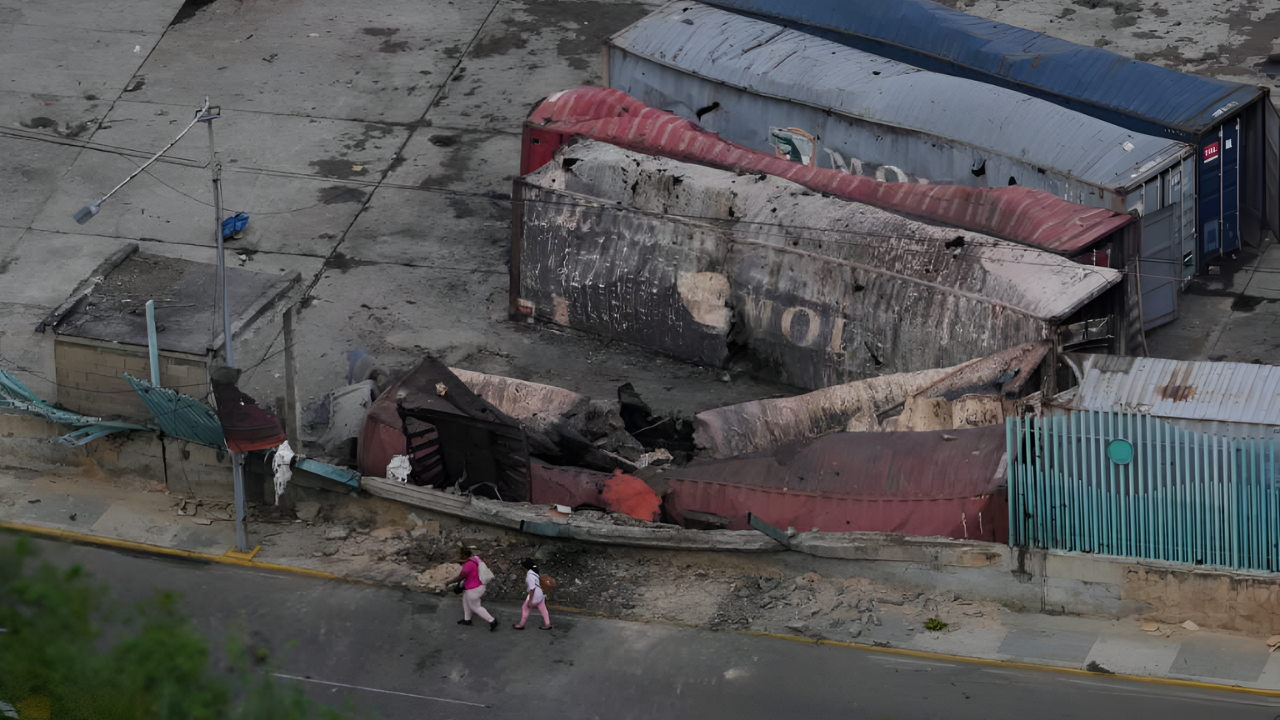
However, no major international outlet or recognized monitoring organization has released satellite evidence of broad residential devastation in the city. Instead, analysts and fact-checkers have identified a smaller, clearly defined set of damaged sites, almost all of them linked to Venezuelan military infrastructure.
Commercial satellite provider Vantor (formerly Maxar) captured images that show 5–6 destroyed buildings, burned vehicles, and damaged infrastructure within the Fuerte Tiuna military complex in Caracas. Comparing images from December 22, 2025, and January 3, 2026, reveals precise damage to selected structures but no indication that entire neighborhoods were flattened or that residential districts across the capital were demolished.
Inside Operation Absolute Resolve
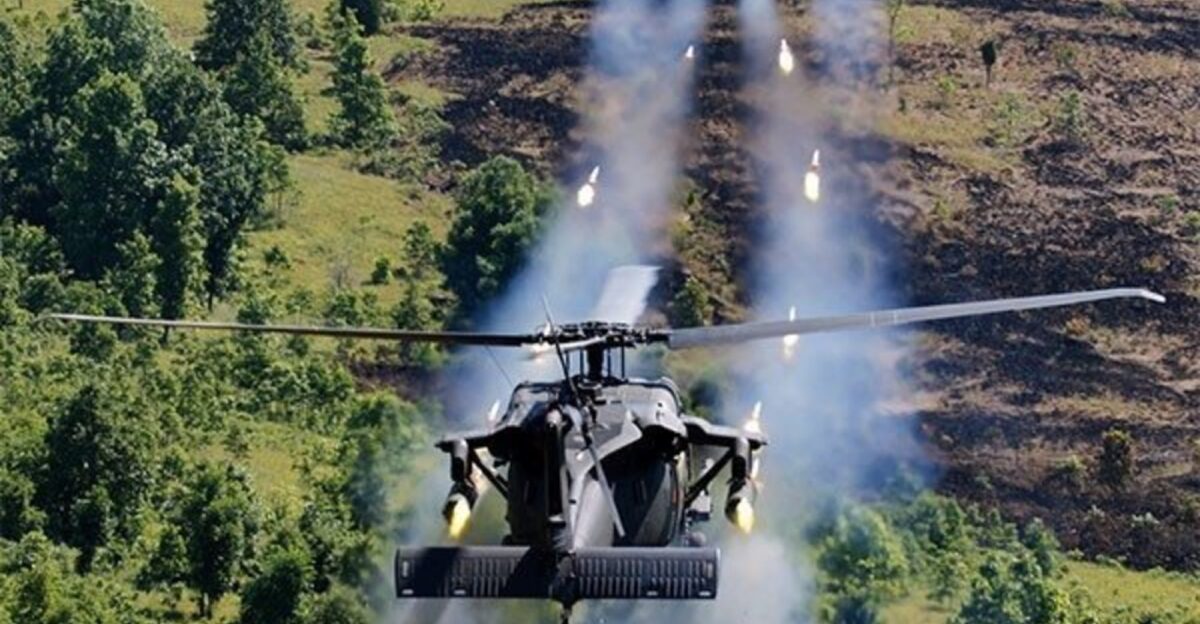
U.S. officials have confirmed that the raid—code-named Operation Absolute Resolve—was a real, high-tempo mission. The operation ran between 2:01 a.m. and 2:29 a.m. local time on January 3, 2026, authorized by the U.S. president at 11:46 p.m. Eastern time on the previous night.
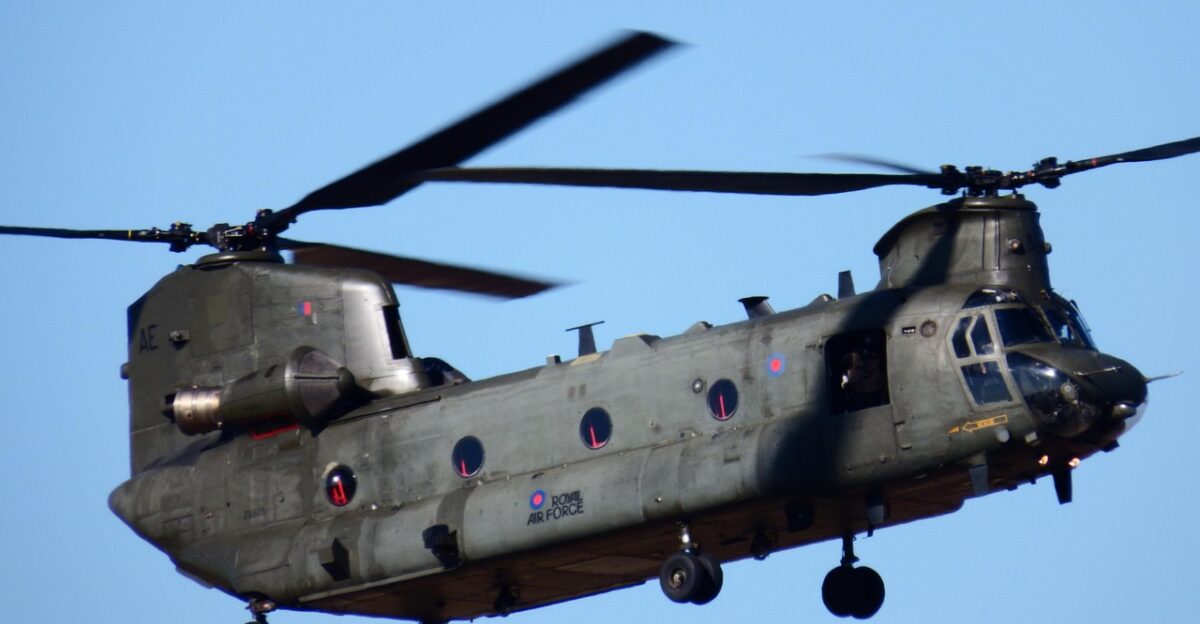
The stated objective was tightly defined: to capture Nicolás Maduro and Cilia Flores. To do that, U.S. forces combined airstrikes, cyber operations, electronic warfare, and a special-operations ground assault. Pentagon officials later said more than 150 U.S. aircraft were involved, flying from roughly 20 land and sea locations. That number, however, covers the full support package—refueling tankers, intelligence and surveillance aircraft, electronic-warfare platforms, transport helicopters, drones, and fighters. Only a portion of those aircraft launched munitions.
Confirmed targets were concentrated on military and air-defense sites, including Fuerte Tiuna, La Carlota air base in Caracas, Higuerote Airport, Port La Guaira, and selected communications towers. Satellite imagery from these locations shows destroyed warehouses, disabled radar installations, and burned vehicles inside secure facilities. The pattern is consistent with an effort to blind and neutralize defenses rather than to inflict generalized damage on the broader city.
Power outages, casualties, and the 28‑minute assault
As the operation began, parts of Caracas plunged into darkness and communications were disrupted. U.S. officials attributed the outages to cyber and electronic-warfare measures aimed at Venezuelan command-and-control networks. In public remarks, President Trump said the city’s lights had been “largely turned off due to certain expertise we have,” framing the blackout as a deliberate suppression tactic rather than the result of widespread physical destruction of infrastructure.
The human toll, while lower than suggested by some online claims, was significant. Reporting places fatalities between 40 and 80, including 32 Cuban military personnel, as well as Venezuelan guards and civilians near targeted sites. Some homes located close to military facilities suffered damage, and residents were evacuated. To date, though, there is no credible evidence of mass civilian casualties or obliterated residential districts on the scale implied by the most dramatic interpretations.
On the ground, the assault was short and sharply focused. Delta Force helicopters landed under fire inside Fuerte Tiuna at 2:01 a.m. Local defenses engaged the aircraft, and one helicopter was damaged but remained flyable. U.S. troops moved quickly through the compound, capturing Maduro inside the facility. By 2:29 a.m., helicopters had lifted off again, carrying Maduro and Flores away. U.S. forces reported no fatalities.
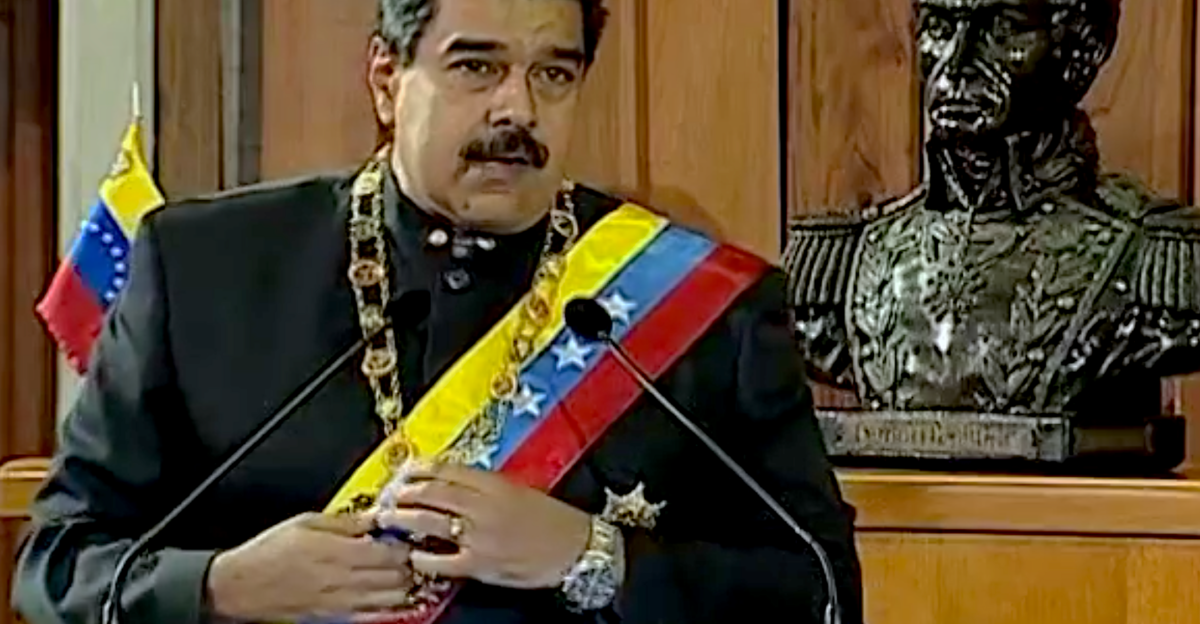
Within hours, the pair were transferred to the amphibious assault ship USS Iwo Jima and then flown to New York. On January 5, 2026, Maduro appeared in Manhattan federal court, where he was arraigned on narco-terrorism and drug-trafficking charges linked to a 2020 U.S. indictment. In Venezuela, Delcy Rodríguez was sworn in as interim president, a state of emergency was declared, and security forces spread through Caracas to assert control.
Misinformation, Legal Questions, And What Remains Unclear
Behind the scenes, the mission reflected months of preparation. Intelligence teams reportedly tracked Maduro’s movements through human sources, surveillance platforms, stealth drones, and cyber tools. U.S. forces trained on a full-scale replica of the Fuerte Tiuna compound, rehearsing timing and routes to minimize collateral damage and shorten the exposure window.
Even as those details emerged, fabricated visuals muddied public understanding. Fact-checkers identified AI-generated videos and manipulated imagery that were shared as supposed proof of a devastated Caracas. One widely circulated clip appeared to show Maduro being seized amid scenes of massive destruction; it was later shown to be fake, contributing to the inflated impression of what the operation had physically destroyed.
The raid has also raised legal and diplomatic questions. Article 2(4) of the UN Charter prohibits the use of force against another state’s territorial integrity, and the unilateral U.S. action in Caracas has been cited in debates over sovereignty and international law. Yet UN records show no emergency resolution addressing any alleged leveling of the city, underscoring the distance between viral claims and formal institutional responses.
Political and Strategic Implications of the Maduro Capture Mission
In Washington, members of Congress have pressed for more information about the legal justification for the mission and the lack of advance notification, focusing on presidential authority and oversight of cross-border operations. In Caracas, the abrupt removal of Maduro, the declaration of a state of emergency, and the visible security presence have left the country in a period of political uncertainty.
Taken together, the verified facts show a large, complex U.S. operation involving more than 150 aircraft, precision strikes on military and air-defense sites, deliberate disruptions of power and communications, and the capture and transfer of Venezuela’s ousted president. What they do not support is the claim that entire neighborhoods in Caracas were razed. The gap between what satellites and court documents confirm and what some headlines suggest illustrates how quickly language and imagery can outrun available evidence—and how future assessments of the raid will hinge on access to additional imagery, official disclosures, and independent investigations into both the conduct of the mission and its long-term consequences for Venezuela and international norms.
Sources:
New York Times, “Inside ‘Operation Absolute Resolve,’ the U.S. Effort to Capture Maduro”, January 3, 2026
Business Insider, “Damage at Venezuelan Military Sites After US Strikes”, January 2, 2026
CBS News, “Ousted Venezuelan President Maduro arraigned in U.S. court”, January 5, 2026
AP News, “Cuba says 32 Cuban officers were killed in US operation in Venezuela”, January 4, 2026
New York Times, “A.I. Images of Maduro Spread Rapidly, Despite Safeguards”, January 5, 2026
BBC, “How the US captured Maduro”, January 3, 2026