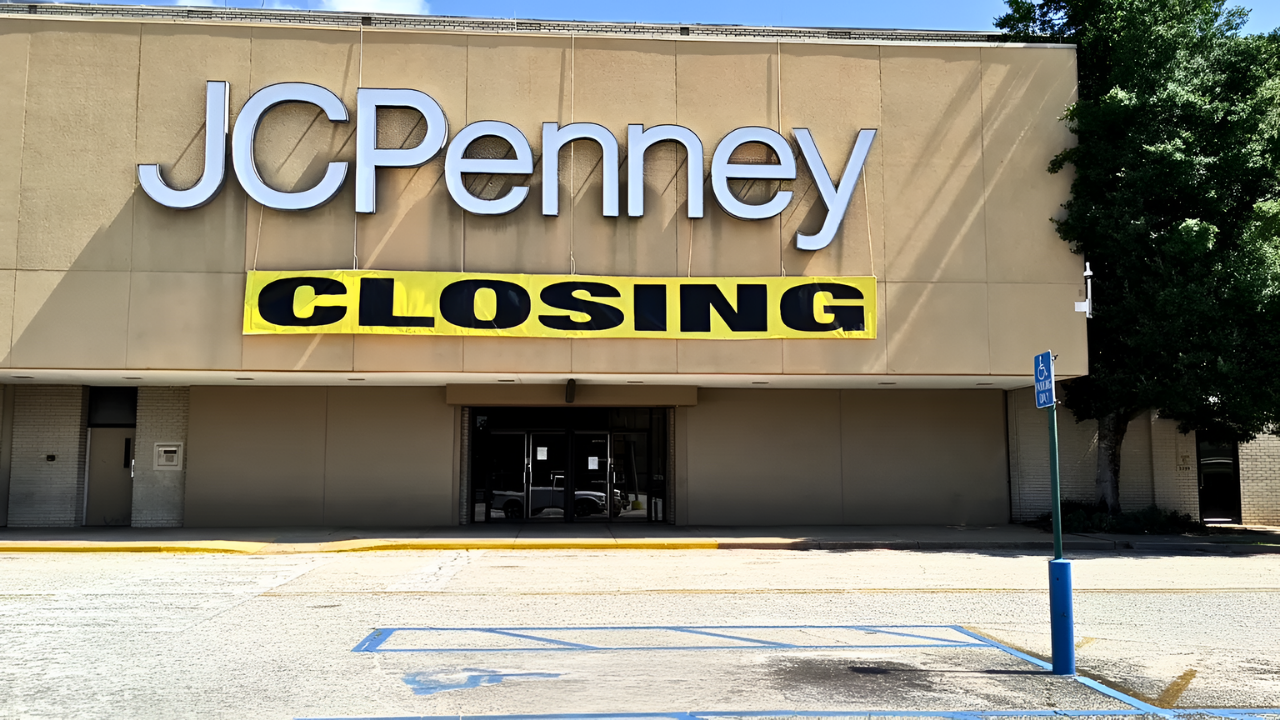
Nearly $950 million in all-cash funding evaporated when Onyx Partners walked away from Copper Property’s 119-store deal, missing the closing deadline by mere weeks on December 22-26, 2025. The transaction, announced in July 2025, would have secured JCPenney’s 120 “landmark” locations across 35 states.
Instead, the collapse leaves roughly 120 properties in legal limbo with just 16 days until the January 30, 2026, liquidation deadline.
Why Did a Signed Deal Explode at the Finish Line?

Nick Egelanian of SiteWorks identifies three potential points of explosion: lender panic, collapsing real estate valuations, or terror over JCPenney’s hemorrhaging finances. The numbers explain everything. JCPenney posted a $177 million net loss despite $6.3 billion in sales.
Adjusted EBITDA crashed 45% to $172 million, per financial filings reviewed by Retail Dive. When institutional money sees those metrics weeks before closing, cold feet become frostbite.
Copper Property’s Impossible Choice

The Copper Property CTL Pass-Through Trust was established in 2020 to liquidate 160 properties and six distribution centers by January 30, 2026. With the Onyx deal collapsed and the deadline approaching, the trust faces an agonizing triage: find a replacement buyer at fire-sale prices, carve the portfolio into smaller chunks, or beg institutional investors for a deadline extension.
According to trust documentation, none of these paths guarantees investor recovery.
Frozen Escrow and Legal Warfare Delay Everything
Onyx Partners filed a lawsuit claiming that Copper Property breached its obligations by failing to deliver tenant documentation and closing conditions. Copper fired back, blaming Onyx for failing to perform.
At stake: $5 million in disputed deposits—Copper holds $2 million while demanding $3 million from escrow.
$8 Million Per Store Signals a Market in Free Fall

Onyx Partners agreed to pay approximately $8 million per store—a $2 million reduction from earlier Copper sales, according to Retail Dive and trust executives. For a 15.86 million-square-foot portfolio across 35 states, that steep underpricing screams institutional terror about the underlying real estate values.
The per-store price represents a significant decline in valuation from earlier transactions, signaling investor skepticism about the asset’s fundamentals.
Up to 15,000 Jobs Could Be at Risk If Stores Close

If the 119 affected stores are eventually closed or transferred to competitors—not guaranteed under the current deal collapse—employment could be jeopardized. Industry staffing averages suggest 75-125 workers per store, potentially affecting 9,000 to 15,000 positions.
While Catalyst Brands maintains operations will continue, the real estate uncertainty creates employment volatility.
Corporate Says Everything Is Fine
Catalyst Brands, JCPenney’s parent company, formed in January 2025 through the SPARC Group merger, released a statement insisting the failed deal “does not impact JCPenney store locations or operations,” with 119 stores continuing to serve “loyal customers and communities.”
Workers understand the reality: when landlords and private equity are battling in a court-ordered liquidation race, corporate reassurance is performance art masking uncertainty.
122 Years of Retail History Collapse
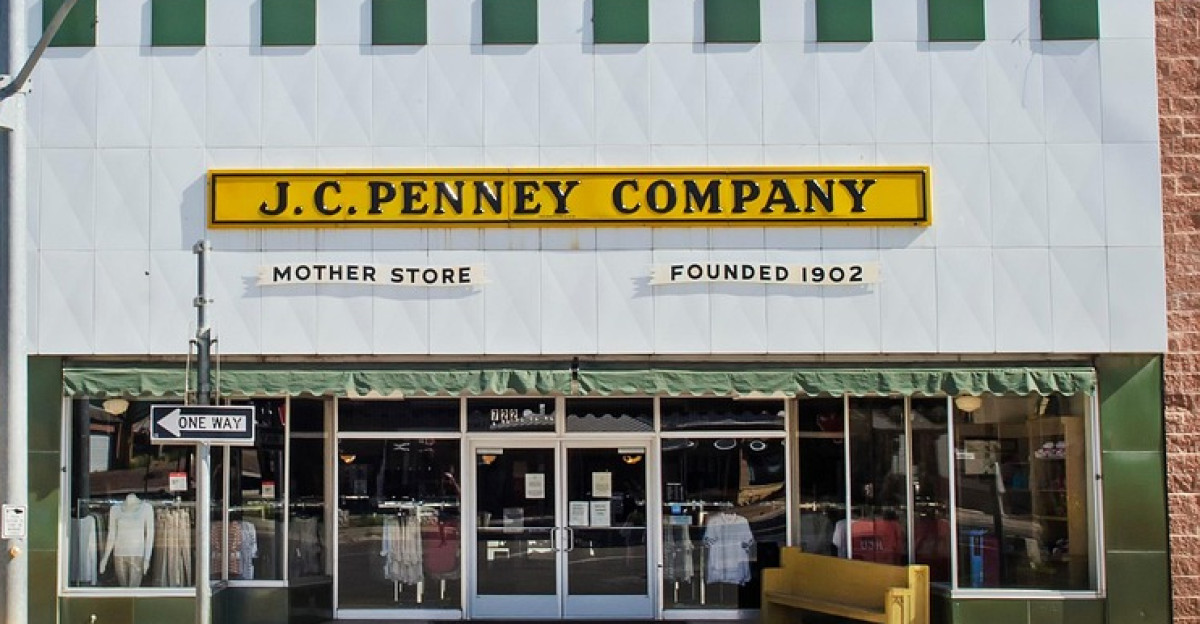
JCPenney opened in 1902. Five years ago, 800 stores. Today, roughly 650 remain after bankruptcy closures and subsequent pruning. This latest collapse represents the deepest footprint contraction in the 122-year history of operation.
If Onyx had closed the deal, it would’ve ranked as one of the largest legacy department-store real estate transactions since the pandemic retail apocalypse.
The 2020 Rescue
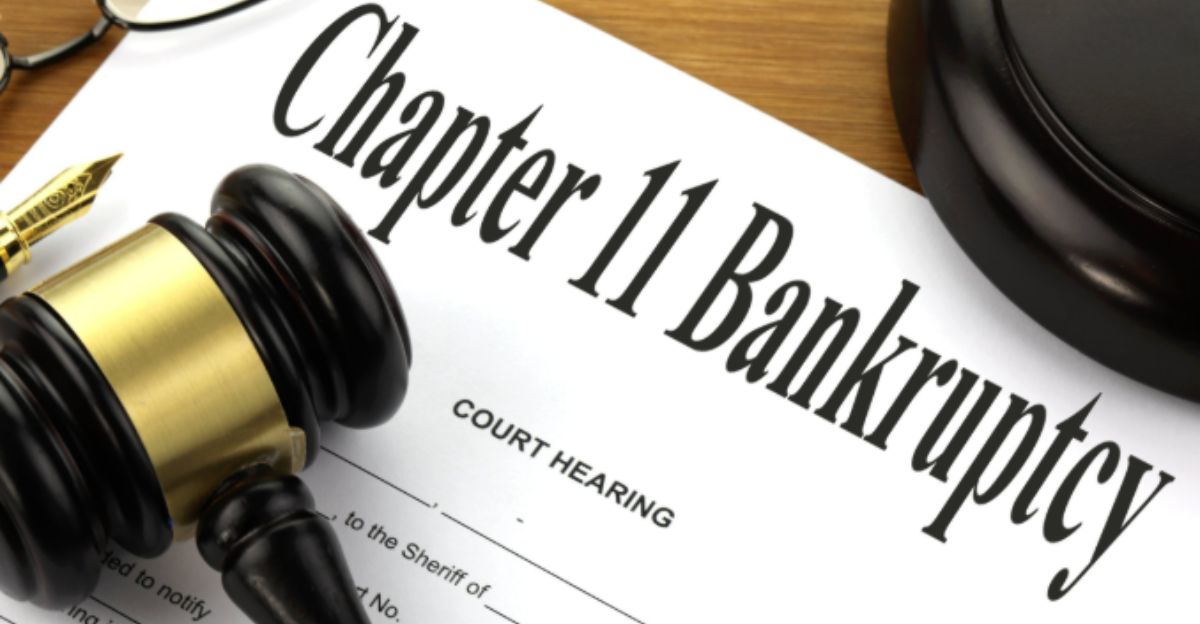
May 2020: JCPenney files Chapter 11 bankruptcy after pandemic lockdowns force 850 stores temporarily dark. November 2020: Simon Property Group, Brookfield Corporation, and hedge fund H/2 Capital Partners rescue the chain with a $1.75 billion restructuring approved by bankruptcy court.
The company emerges with 650 stores but is chained to decades of real estate obligations. . The rescue merely postponed reckoning, not prevented it.
$100 Million Annual Revenue Stream

According to Newmark’s marketing materials for the Onyx sale, the 120-store portfolio is expected to generate approximately $100 million in first-year net revenue from JCPenney master leases. The trap: stores are locked into triple-net agreements that require JCPenney to cover property taxes, insurance, and maintenance, regardless of profitability.
For a retailer already bleeding cash, these fixed obligations become an anvil preventing operational freedom. New owners inherit identical chains, explaining why even $8 million-per-store buyers got cold feet.
Investors Spotted the Danger

When Copper Property announced the Onyx deal in July 2025, investor skepticism erupted immediately over pricing and portfolio quality. The $8 million-per-store average, noticeably lower than earlier sales, triggered red-flag discussions about deteriorating B-grade mall conditions.
Some investors questioned whether converting the portfolio into a REIT might’ve yielded better valuations, per Retail Dive reports. The December walkaway proved those skeptics right. Market fundamentals were weaker than management publicly admitted.
15,000 Retail Closures Expected in 2025
Over 15,000 store closures are expected across U.S. retail in 2025—more than double the 7,325 closures in 2024, according to Coresight Research cited by Axios. JCPenney’s failed $950 million transaction is the smoking gun proving that even negotiated, financed deals evaporate when fundamentals deteriorate.
Department stores, malls, and retail infrastructure anchoring small-town America are struggling under the pressure of e-commerce, declining foot traffic, and shifting consumer preferences.
Copper Has Days to Find a Buyer

January 30 approaches relentlessly. Copper Property must pivot to survival strategies: pursue a replacement buyer at steeper discounts, split the portfolio into regional fire-sale chunks, sell individual stores at rock-bottom rates, or negotiate a deadline extension from skeptical investors.
According to CoStar, Copper received 700+ inquiries when initially marketing assets through Newmark and Hilco Real Estate. Plenty of interest exists, but at what crushing price?
Catalyst Brands’ Growth Story
Catalyst Brands launched in January 2025 with $9 billion in revenue, 1,800 stores, and 60,000 employees, controlling JCPenney, Aéropostale, Brooks Brothers, Eddie Bauer, Lucky Brand, and Nautica. CEO Marc Rosen was promoted from JCPenney to lead Catalyst.
Yet, the failed $950 million real estate deal exposes the core problem: operational stabilization remains elusive, despite the portfolio scale and merger ambitions.
Four Paths Forward—Each One Leads to Disaster

Scenario one: Copper finds a replacement buyer at 20-30% lower pricing, forcing JCPenney to exit weak leases through expensive termination penalties. Scenario two: Properties splinter into regional sub-portfolios sold at fire-sale discounts, destabilizing the remaining valuations system-wide.
Scenario three: The trust negotiates a deadline extension while testing alternative ownership models, prolonging agony indefinitely. Scenario four: Unsold properties liquidate through bankruptcy court, triggering immediate closures and mass layoffs.
The Lease Trap That Ensures JCPenney’s Slow Strangulation

All 119 properties remain bound to long-term triple-net master leases with an initial 20-year term plus five optional five-year extensions, potentially reaching 45 years if fully extended, per SEC filings and trust documentation.
JCPenney cannot exit even obviously unprofitable stores without devastating termination penalties. New landlords inheriting these contracts face identical contractual chains.
Liquidation, Not Extensions

As of mid-January 2026, Copper has fewer than two weeks remaining. Extension approval requires a majority support from trust certificate holders—institutional investors already reeling from losses stemming from JCPenney’s bankruptcy and underperformance.
These parties have zero patience for delays and every incentive to maximize immediate cash recovery. Expect them to push liquidation strategies prioritizing payouts over preservation or employment stability.
When Anchor Stores Close, Malls Die
Department-store closures trigger cascading domino effects. When anchors exit, foot traffic to neighboring retailers evaporates. Small businesses inside and around malls lose their lifeblood. Municipal tax revenues crater. Commercial property values tumble. Real estate portfolios held by pension funds and REITs face devastating revaluations.
If Copper’s remaining 41 properties command prices 30-40% lower than early projections, institutional investors holding retail real estate face massive losses across their entire portfolios. Contagion spreads exponentially.
Employment Uncertainty

Store employees now face the reality that their employer’s real estate crisis creates prolonged ownership uncertainty, which in turn affects job security. In rural communities where JCPenney is the largest private employer, prolonged property limbo means suspended hiring and delayed investment decisions.
Families defer major purchases, small landlords withhold maintenance spending, and downtown districts built around department-store anchors face stagnation. The human cost transcends stock prices and investor returns.
Retail Reckoning the Market Has Awaited
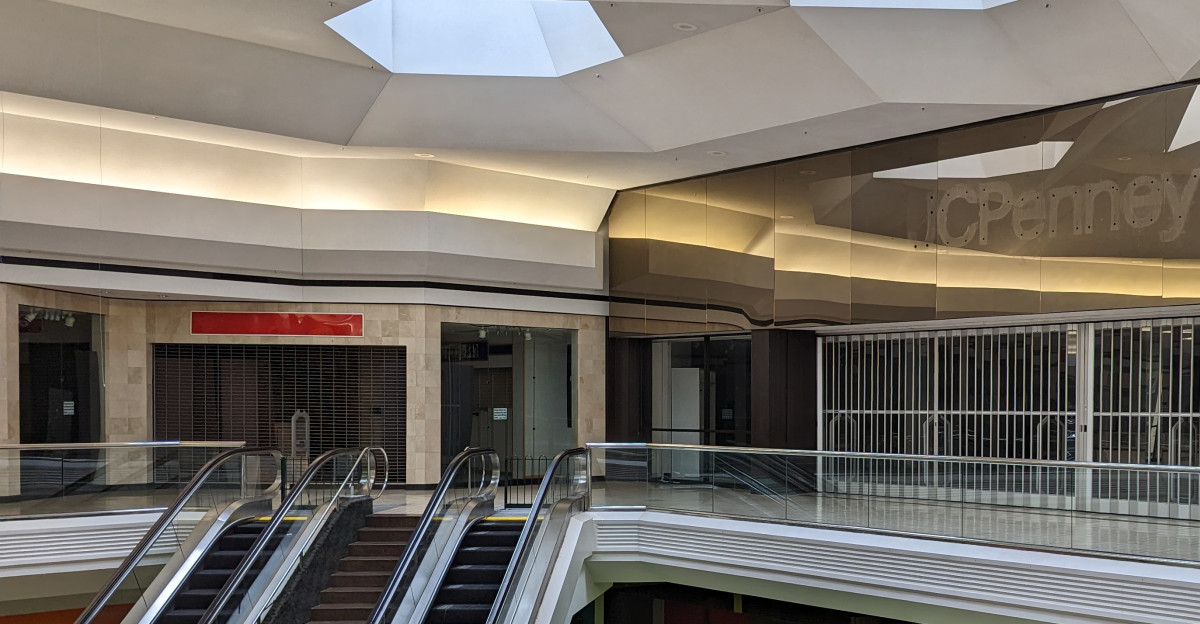
Investment banks, private equity firms, and institutional real estate owners watch the Onyx collapse like vultures. A failed $950 million transaction signals systemic weakness in department-store anchored real estate and mall viability nationwide.
If Copper Property cannot find a buyer within weeks, expect cascading store closures, job losses, and fire-sale transactions that will permanently reshape America’s commercial landscape. The 122-year-old retail model isn’t fading—it’s already dead. What emerges from the wreckage will be fundamentally different and far more brutal for investors and workers left behind.
SOURCES
Securities and Exchange Commission Filing – Copper Property CTL Pass Through Trust, December 26, 2025
Retail Dive – “Deal to sell 120 J.C. Penney stores for $950M falls through” December 22, 2025
CoStar – “Sale of JCPenney store portfolio for $947 million collapses triggering legal fight” December 28, 2025
Reuters – JCPenney bankruptcy and 2020 rescue restructuring coverage
New York Post – Catalyst Brands statement on store operations January 2026
Coresight Research via Axios – U.S. retail store closure data 2024-2025