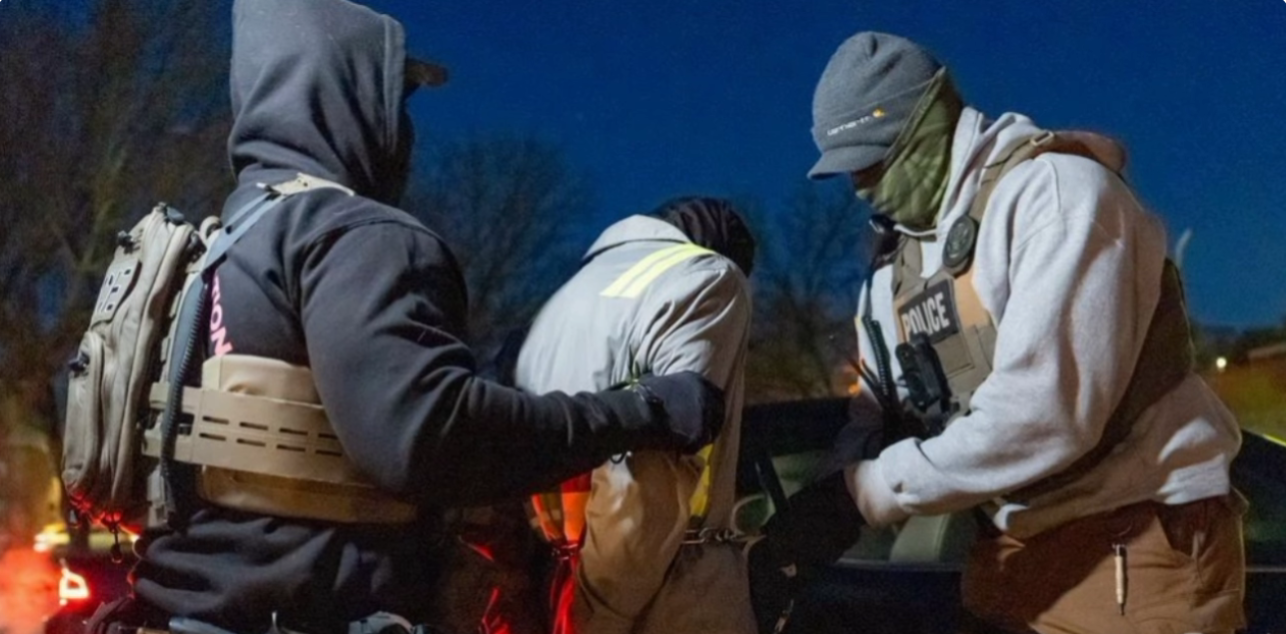
Between March and November 2025, federal authorities in Florida’s panhandle uncovered a quiet pattern: men and women who had been ordered out of the United States, sometimes years earlier, were back and living undetected in local communities. By early January 2026, that nine‑month enforcement push had produced 34 federal convictions for illegal reentry and related offenses, highlighting how often deportation orders fail to prevent repeat border crossings.
Coordinated Operation in North Florida
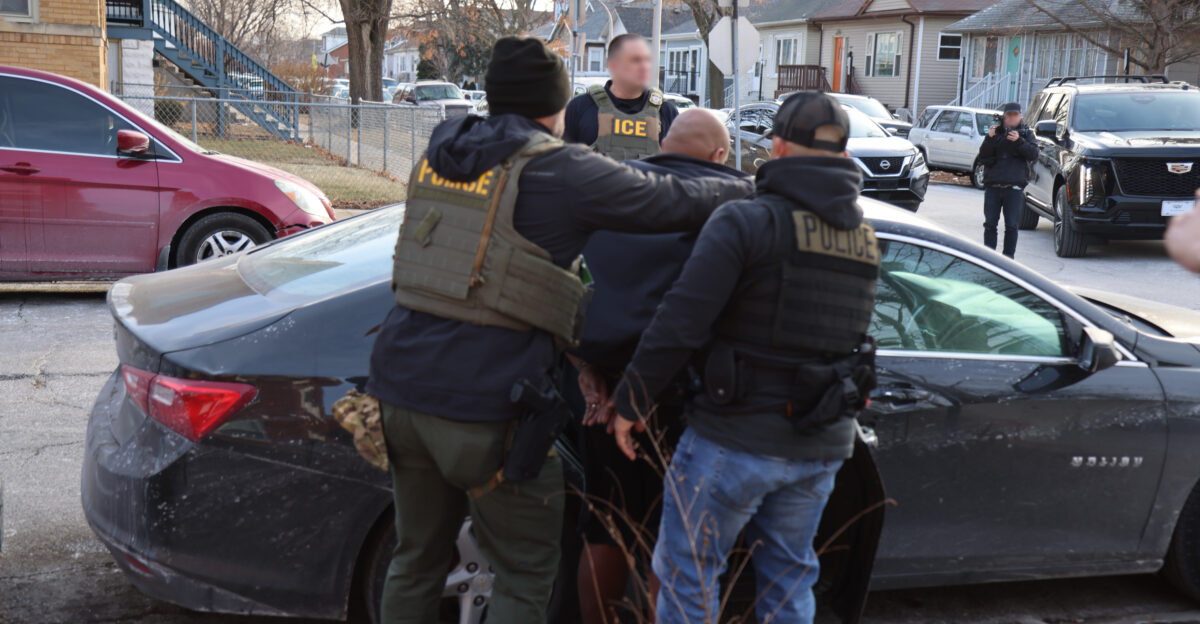
The cases stemmed from “Operation Take Back America,” a nationwide Department of Justice effort that in Florida focused on six counties in the state’s northern region: Leon, Okaloosa, Santa Rosa, Escambia, Alachua, and Bay. The operation combined the investigative work of ICE Homeland Security Investigations with the arrest and detention functions of ICE Enforcement & Removal Operations.
U.S. Attorney John P. Heekin, leading the Northern District of Florida, oversaw the prosecutions and described his office’s approach as a full use of federal authority to enforce immigration law. His office became the central hub for cases routed from ICE agents in the field, turning immigration arrests into felony prosecutions in federal court.
The convictions, secured between September 2025 and early January 2026, stemmed from months of investigative work. Agents reviewed immigration files, confirmed prior removal orders, and developed evidence that the individuals had reentered the country without authorization.
Who Was Prosecuted and for What
Of the 34 defendants, 31 were convicted of illegal reentry after deportation, a felony under federal law that generally carries prison time followed by another removal order. Four of those individuals also faced additional counts involving false documents, such as fraudulent identification or work papers used to conceal their immigration status or secure employment.
The defendants were predominantly Mexican nationals, with smaller groups from Honduras, Guatemala, and Panama. What united them was not a first crossing, but a history of removal. Each individual had at least one prior deportation on record, and some had several, making their return a distinct crime separate from any original immigration violation.
The earliest deportation tied to this group dated back to 2006. The latest encounters took place in November 2025. Together, their immigration histories covered nearly two decades, underlining the long-term nature of the enforcement challenge.
Patterns in Place and Time

The Florida panhandle counties featured in the operation share several characteristics: they are some distance from major metropolitan centers yet within reach of industries that commonly employ large numbers of workers, including agriculture, construction, and hospitality. These smaller jurisdictions also tend to have fewer local resources dedicated to immigration enforcement, giving individuals room to live and work with less scrutiny.
Within that broader landscape, the arrests sometimes clustered tightly. On October 8 and 9, 2025, federal agents made four arrests in Leon County alone, suggesting targeted action based on specific intelligence rather than isolated, incidental encounters. In another case, agents in Okaloosa County located Jose Victor Aguilar Zelaya in March 2025, fifteen years after his 2010 deportation.
The timing of the operation was also deliberate. The March–November 2025 window reflected an intensified federal focus on individuals suspected of returning after removal. By bundling convictions from different arrest dates into a single January 2, 2026 announcement, the Justice Department underscored the scale of the effort and the priority given to repeat reentry cases.
Repeat Crossings and Enforcement Limits

Among the 34 defendants, one case stands out. Denis Arnaldo Mendoz‑Martinez had been formally removed from the United States in April 2012, February 2016, December 2018, and October 2019. Despite four deportations over seven years, he was found again in the Northern District of Florida.
His history illustrates a broader reality: a deportation order bars lawful return for a set period, but it does not physically prevent unlawful reentry. People can cross the border outside official checkpoints, take on informal work, and assume new identities to avoid detection. For enforcement agencies, this raises a continuing question: how to prevent the same individuals, once removed at significant expense, from returning again.
The financial cost is substantial. Federal estimates put each deportation at roughly $10,000 to $15,000, covering enforcement, detention, processing, and transportation. For the 34 individuals in this operation, the recorded reentries and prior removals represent hundreds of thousands of dollars. When more than 70 past deportations among them are factored in, the cumulative cost surpasses $700,000 and could approach $1 million, not including prosecution expenses or investigative time.
From Investigation to Courtroom
Operation Take Back America in Florida followed a consistent pathway. ICE Homeland Security Investigations identified suspected repeat entrants, confirmed their immigration histories, and assembled evidence. ICE Enforcement & Removal Operations then managed arrests and detention while cases were referred to the U.S. Attorney’s Office.
Once charged, many cases moved quickly. Defendants arrested during the October 8–9 Leon County sweep had their convictions announced less than three months later, on January 2, 2026. That pace indicates streamlined coordination between investigators, prosecutors, and the courts, as well as a focused effort to move illegal reentry cases efficiently through the system.
For those facing both reentry and document fraud charges, the stakes were higher. Convictions on multiple counts can lengthen prison terms, and judges routinely follow incarceration with new removal orders. All 34 defendants are expected to receive sentences that include additional deportations once their prison time is complete.
Looking Ahead
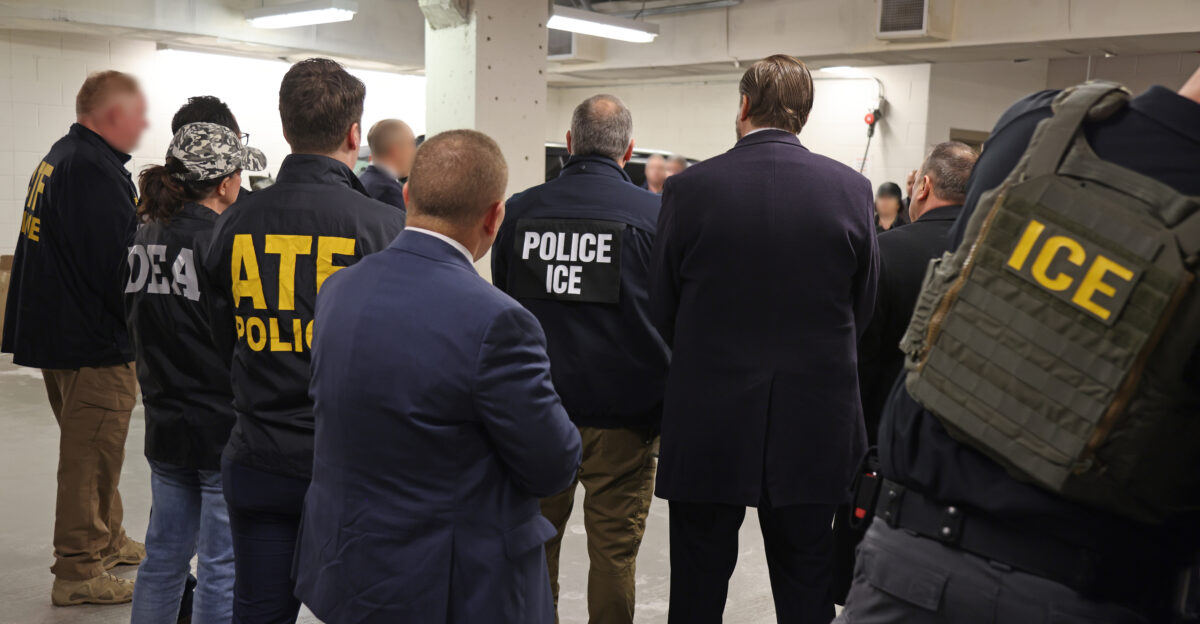
Federal officials describe Operation Take Back America as a nationwide initiative, and the Northern District of Florida’s 34 convictions in nine months are only a portion of that broader campaign. If similar efforts are underway in other high‑enforcement areas such as Texas, Arizona, and California, the total number of annual convictions for illegal reentry could be in the hundreds.
For now, the cluster of cases in Florida’s panhandle provides a detailed snapshot of how repeat illegal reentry, document fraud, and local labor demand intersect. It also highlights the limits of current enforcement tools, which rely on a combination of border control, internal investigations, and repeated removals. Whether intensified operations of this kind can reduce repeat crossings over time, or primarily increase the number of prosecutions for behavior that continues despite penalties, will depend on patterns that emerge in the coming years.
Sources
U.S. Department of Justice, Northern District of Florida, “Operation Take Back America” announcement, January 2, 2026
U.S. Attorney John P. Heekin, official statement, January 2, 2026
ICE Acting Field Office Director Kelei Walker, statement on voluntary return incentives, January 2, 2026
ICE Homeland Security Investigations case files, March–November 2025
Federal Bureau of Investigation criminal investigation records, 2025–2026
U.S. Federal Courts Northern District of Florida conviction records, September 2025–January 2026