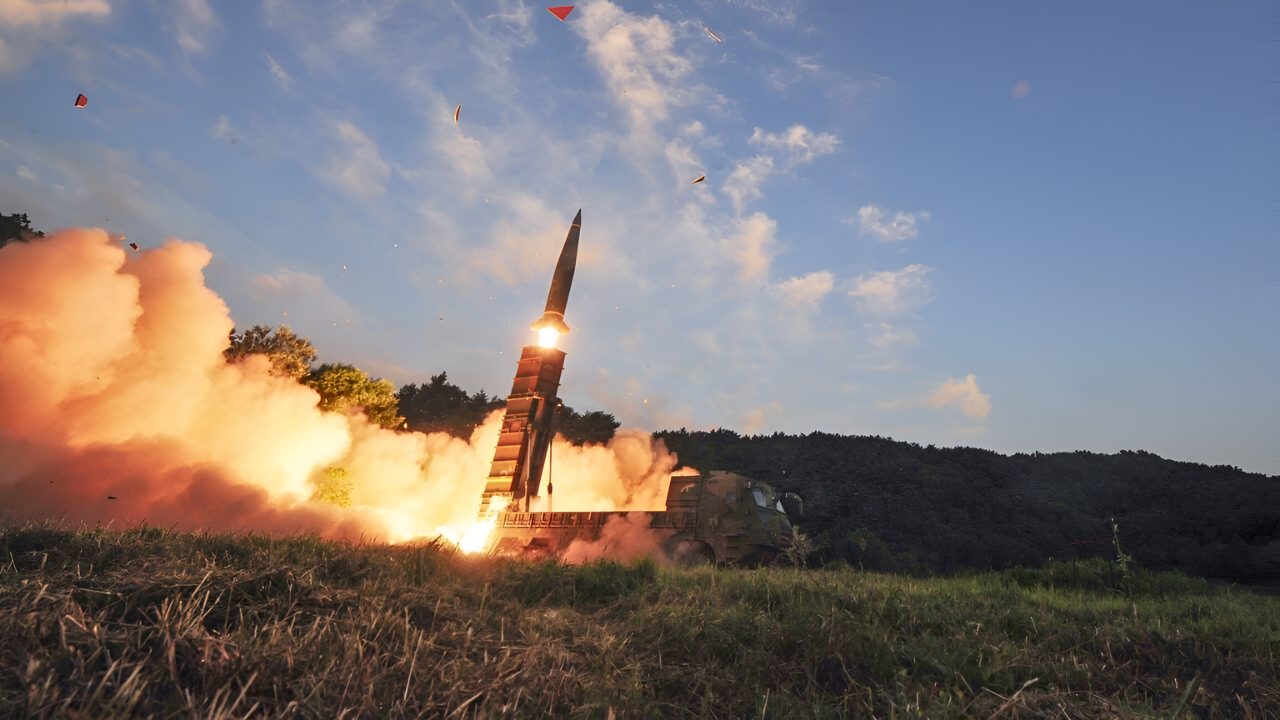
China opened 2026 by signaling that its most advanced military capabilities are no longer reserved for occasional demonstrations. Beginning January 4, the People’s Liberation Army launched wide-ranging drills linking hypersonic missiles, stealth aircraft, naval strike groups, and autonomous systems across land, sea, and air.
The exercises followed closely after a late-December operation near Taiwan that deployed an estimated $13 billion in modern destroyers and disrupted civilian aviation. Together, the events point to a shift toward routine, high-tempo readiness rather than isolated shows of force. Here’s what’s happening as this new training cycle unfolds…
A Blockade Drill That Set The Tone
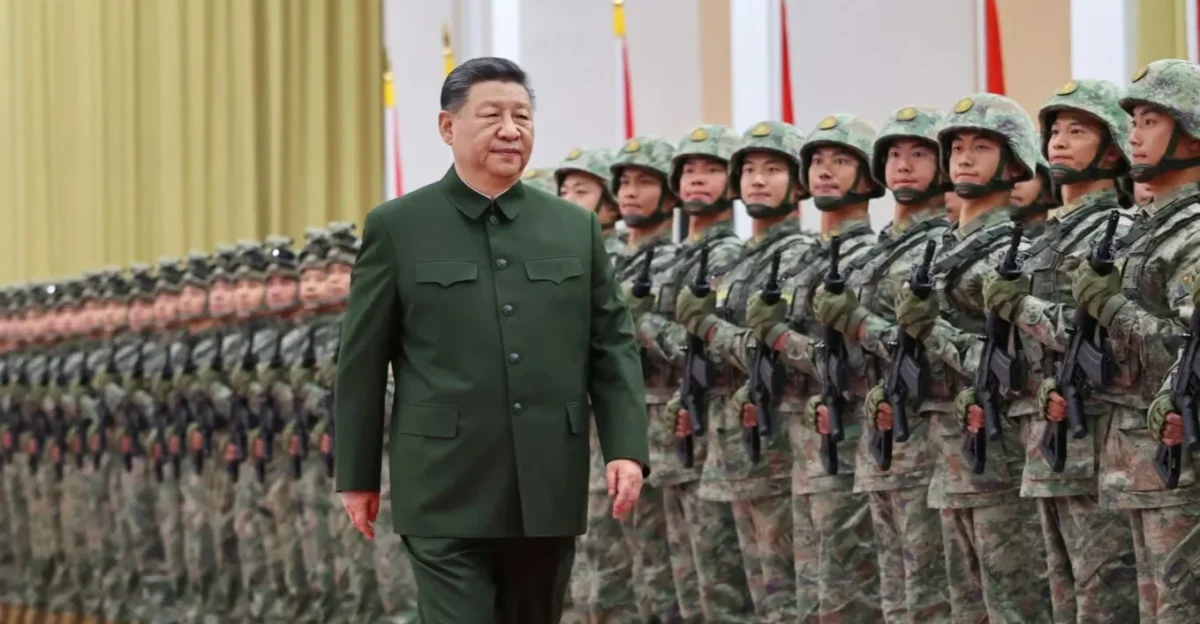
The opening context for 2026 was shaped by “Justice Mission 2025,” a two-day exercise held December 29–30 under the PLA Eastern Theater Command, according to the Institute for the Study of War’s December 31 analysis. The drill simulated a blockade of Taiwan and represented one of the largest Taiwan-focused operations since “Joint Sword” began in April 2023. It integrated six components: the PLA Army, Navy, Air Force, Rocket Force, Coast Guard units, and amphibious warfare specialists under unified command.
Taiwan’s Ministry of National Defense reported about 60 PLA aircraft sorties in the 24 hours ending 6:00 a.m. December 30, including fighters, bombers, drones, and support aircraft, with 44 crossing the median line. The following day saw 71 sorties, 35 crossing the line, as confirmed by Defense News on January 8, 2026.
Naval activity matched the air pressure. On December 29, roughly 14 PLA Navy ships operated near Taiwan, with 11 entering the 24-nautical-mile contiguous zone. The next day, 13 navy vessels and 15 China Coast Guard ships were observed, again with multiple entries into the zone, underscoring sustained presence rather than a brief surge.
Billions At Sea And Pressure From The Air
The late-December operation stood out for the value and sophistication of assets committed. Among the ships operating near Taiwan were multiple Type 055 Renhai-class destroyers, each valued at approximately $866–920 million, alongside Type 052D Luyang III-class destroyers worth roughly $505 million per vessel. With 13–14 major combatants deployed, analysts estimate the total value of surface assets exceeded $13 billion, representing China’s most modern naval capability concentrated in a single area.
Rocket artillery added a coercive dimension. On December 30, PLA units fired 17 rockets into an exercise area north of Taiwan near Keelung, followed by 10 more into zones west and southwest near Kaohsiung, with impacts reported between 0900 and 1300 local time, according to Focus Taiwan. Authorities said the declared zones overlapped major civilian air routes.
The disruption was immediate. Taiwan’s government counted 941 commercial passenger flights canceled or affected that day, illustrating how a simulated blockade can impose real-world costs without any landing forces involved. The combination of air sorties, naval presence, and missile activity demonstrated how pressure can be applied across multiple domains simultaneously.
From Political Signal To Standing Readiness
Beijing framed “Justice Mission 2025” as a response to political developments. Officials referenced Taiwan President Lai Ching-te’s administration and a mid-December 2025 U.S. announcement of an $11.1 billion arms package. At a December 29 Foreign Ministry briefing, spokesperson Lin Jian described the drills as defending sovereignty and opposing what China calls separatist actions, blending military rehearsal with diplomatic messaging.
When January arrived, the tone shifted. Launching the 2026 training cycle on the first business day of the year suggested continuity rather than escalation. State-linked reports described complex scenarios across coastal regions, distant maritime zones, and high plateau terrain. Units such as the 79th Group Army conducted live-force exercises to seize fortified positions at altitude, emphasizing realism over choreography.
Across services, the PLA highlighted joint operations integrating land, sea, air, and space-based elements. Aviation units trained for beyond-visual-range combat using radar and infrared sensors and practiced nighttime aerial refueling. Longer-duration sorties tested endurance and logistics, skills seen as critical for sustained operations across the Indo-Pacific rather than short, symbolic drills.
Warfighting Skills In Confined Seas
Naval training during the early 2026 cycle focused on conditions similar to those around Taiwan. Crews practiced gunnery against surface and coastal targets, navigation through narrow waterways, and emergency responses such as power failures and flooding. Operating in strait-like environments, comparable to the Taiwan Strait’s approximate width of 130 kilometers at its widest and 70 kilometers at its narrowest, reinforced skills needed in heavily monitored and constrained waters.
Damage control and survivability drills hinted at preparation for contested environments where ships could face sustained attack. Rather than emphasizing patrol routines, the exercises stressed resilience under pressure. Anti-frogman modules addressed threats from divers or special forces targeting ports, anchored vessels, or coastal infrastructure.
Amphibious elements were also visible. Type 075 amphibious assault ships operated east and southeast of Taiwan during the late-December window, according to Global Times reporting on December 28. Boarding practice and helicopter-borne movements involving marine or specialized amphibious units showed how blockade scenarios can quickly transition into landing rehearsals under the same air and sea cover.
Stealth, Drones, And Autonomous Systems

Advanced platforms featured prominently as routine tools. The Chengdu J-20 stealth fighter, operational since around 2017, appeared in training beginning January 3, according to China Military Online. Its low-observable design, AESA radar, electro-optical sensors, and long-range PL-15 missiles support engagements at extended distances. A twin-seat J-20S variant announced in November 2024 has fueled expectations of more complex missions, including coordination with unmanned systems.
Autonomous technologies gained visibility. Quadruped robots reappeared in training narratives, building on footage from May 2024 China-Cambodia Golden Dragon exercises where they were described as handling reconnaissance and strike roles, according to Kyodo News. Their use suggests experimentation with reducing human risk in dense urban or contested settings.
Drones were organized into a coordinated system. Reporting by South China Morning Post on January 7, 2026 described three categories working together: strike-capable drones providing targeting data, smoke-emitting drones to obscure movement, and first-person-view suicide drones delivering explosives directly to targets. This layered approach compresses adversary reaction time while extending operational reach.
Hypersonic Weapons As A Normal Tool
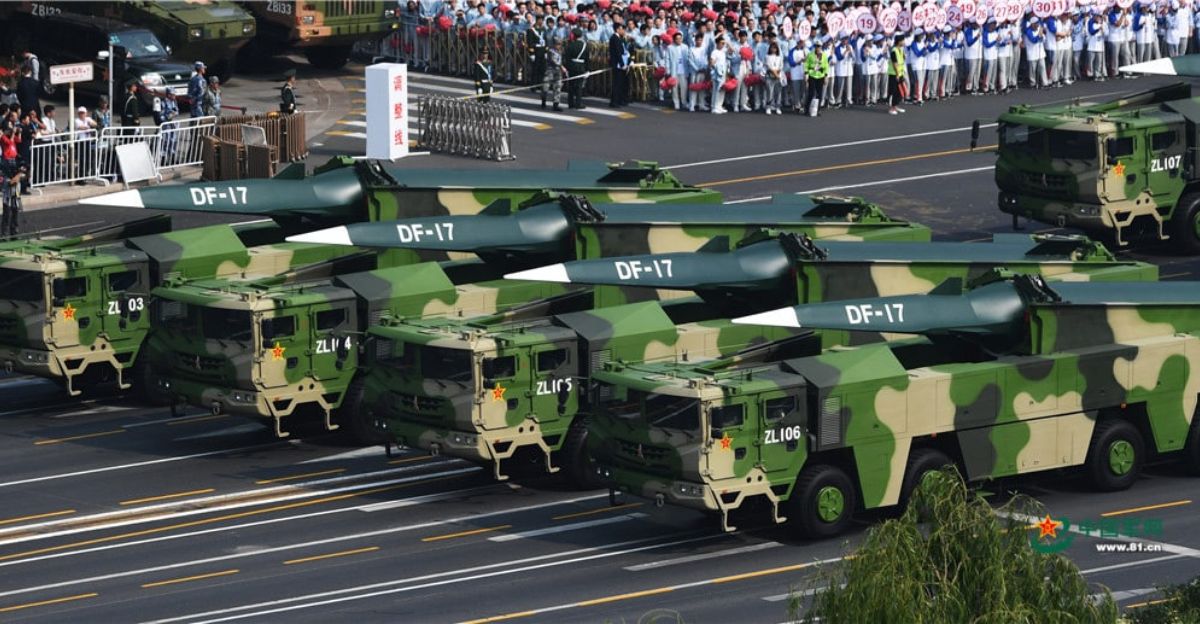
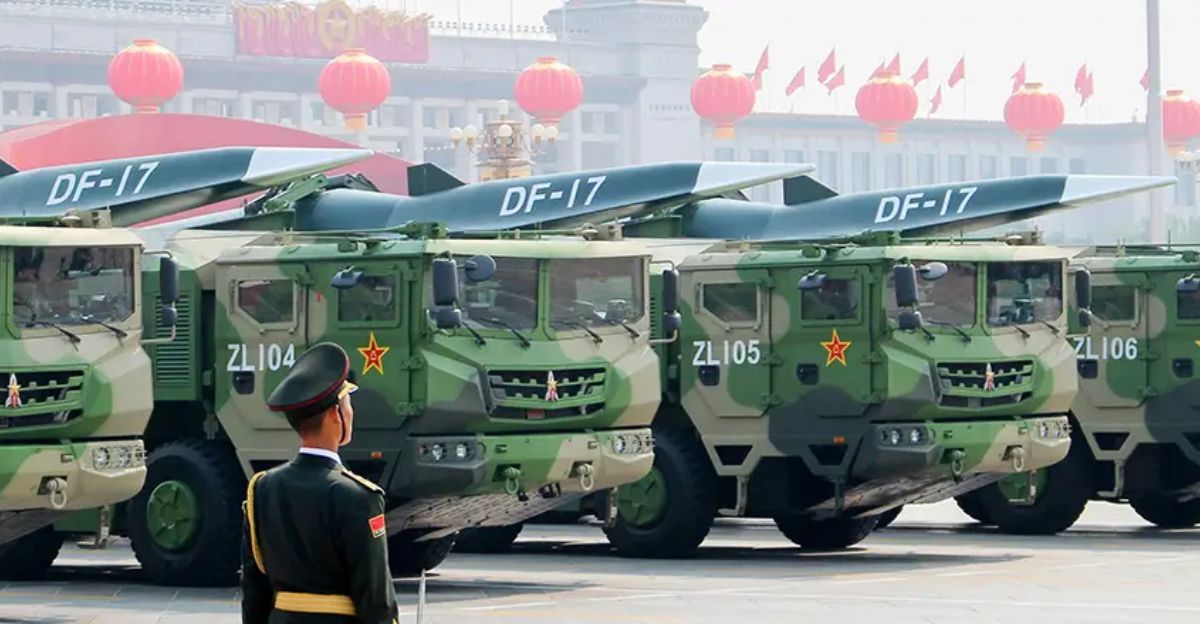
The DF-17 hypersonic missile marked another shift from symbol to standard capability. After appearing in the September 3, 2025 Victory Day parade, confirmed by a September 4 analysis from the Federation of American Scientists, DF-17 units are now reported to train alongside fighters, warships, drones, and robotic systems. In planned scenarios, DF-17 strikes could suppress air defenses or threaten high-value maritime targets, opening corridors for follow-on operations.
This capability reflects years of development. China’s DF-ZF hypersonic glide vehicle, initially known as Wu-14, was publicly confirmed in January 2014. Between 2014 and November 2017, at least nine tests occurred from the Taiyuan launch site, according to The Diplomat’s November 2015 reporting. Early failures were followed by flights demonstrating extreme maneuverability, with one November 23, 2015 test reported to exceed Mach 5.
Integrating hypersonic weapons into routine training suggests the PLA now plans around them as part of everyday warfighting, not exceptional escalation.
A New Normal Takes Shape
The transition from December’s Taiwan-centered blockade simulation to January’s expansive 2026 training cycle highlights a deeper shift in China’s military posture. Advanced destroyers valued at more than $13 billion, stealth fighters, hypersonic missiles, drones, and autonomous systems are no longer showcased in isolation but woven into continuous, joint operations. Six distinct military branches now train together as a matter of routine, across varied terrain and conditions.
For Taiwan, regional governments, and external powers, the implications extend beyond any single drill. Persistent air and naval activity, combined with technologies that shorten reaction times, reduce warning windows and complicate crisis management. As these capabilities become normalized within the PLA’s daily training rhythm, the challenge for others lies in adapting to a security environment where high-intensity preparedness is no longer an exception, but the baseline.
Sources
Pentagon Assessment of Chinese Military Developments. U.S. Department of Defense Report to Congress, 18 December 2024
PLA Justice Mission 2025 Exercise Details. Institute for the Study of War, 31 December 2025
Strategic Support Force Reorganization. People’s Liberation Army Official Website, 19 April 2024
Military Drill Analysis. Defense News, 08 January 2026
Chinese Military Training Operations. Global Times, 04 January 2026