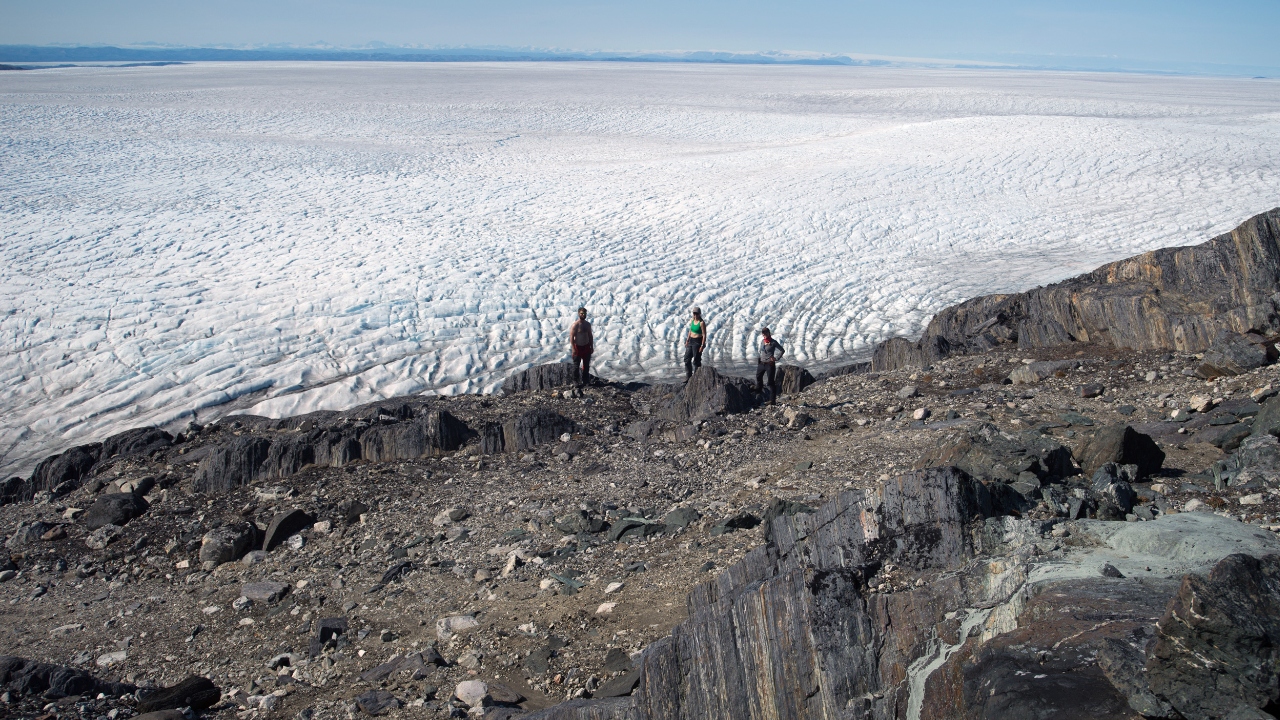
Scientists say they have found geochemical traces of Earth’s ancient self hidden far below our feet, suggesting that parts of the planet that existed before the Moon-forming collision 4.5 billion years ago still survive deep in the mantle. The work, based on ultra-precise measurements of potassium isotopes, challenges the long-held idea that the giant impact with the Mars-sized body Theia completely melted and mixed Earth’s interior, erasing any chemical memory of its earliest state.
Potassium Clues from Earth’s Violent Beginning
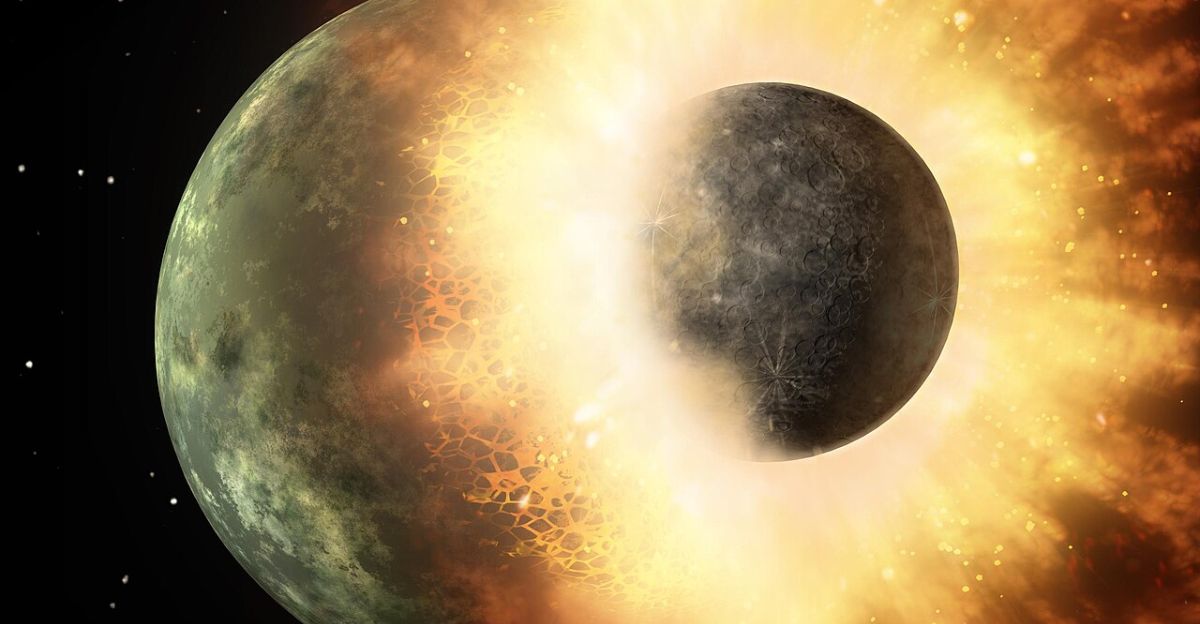
The prevailing “reset” view of Earth’s origin holds that the colossal impact that created the Moon generated such extreme heat that the young planet was effectively re-melted from top to bottom. Vast magma oceans, thousands of degrees hotter than the melting point of rock, were thought to have stirred the mantle so thoroughly that any pre-impact materials would have been blended into a uniform whole. Over the billions of years that followed, continued mantle convection was expected to finish the job, erasing any remaining chemical irregularities.
The new study instead points to a surviving chemical fingerprint from proto-Earth, the planet that existed before the collision. By measuring tiny variations in potassium isotopes, researchers detected a signal that cannot be explained if Earth’s mantle was completely homogenized. That signal implies that some portion of the deep interior retains material that predates the impact with Theia and has remained isolated ever since.
Ultra-Precise Isotope Measurements
The research team used thermal ionization mass spectrometry, a technique capable of resolving isotopic differences at the level of a few parts per million. They chemically separated potassium from rock samples, then measured the relative abundance of its three naturally occurring isotopes with extremely fine precision. The focus was on potassium-40, a radioactive isotope that exists only in trace amounts but is crucial for tracking long-term chemical evolution inside the planet.
Across a wide range of samples, the scientists found a systematic deficit of potassium-40 compared with the rest of Earth’s mantle. The shortfall was too large and too consistent to be explained by known processes such as radioactive decay, partial melting, or mineral crystallization. Computer models of mantle dynamics also failed to generate the observed pattern through internal processes alone. The most plausible explanation, the team concluded, is that some ancient reservoir of proto-Earth material, formed before the giant impact, has persisted at depth without being fully mixed back into the rest of the mantle.
Radiometric Timing and a Persistent Signature
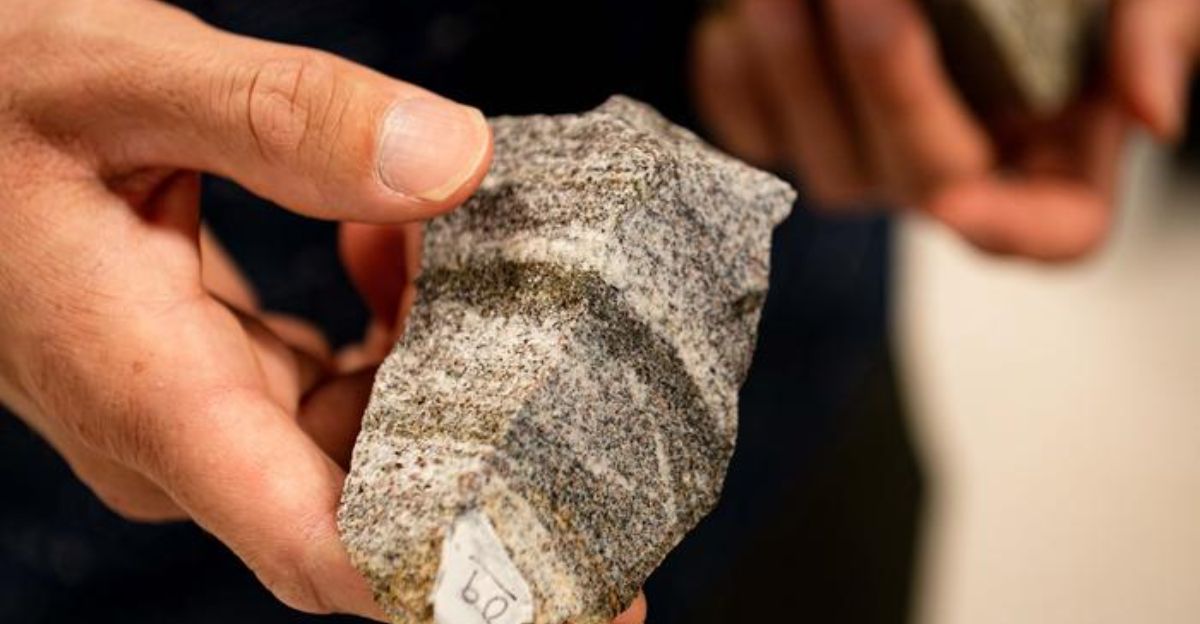
Potassium-40 decays at a well-established rate, which makes it a powerful natural clock. If radioactive decay were responsible for the observed deficit, the effect would vary with rock age and thermal history. Hotter, older regions would show a different isotopic pattern from younger, cooler ones. Instead, the researchers found essentially the same potassium-40 signature in both very ancient and relatively young rocks, indicating that the signal is not the product of later geological activity.
The team examined some of Earth’s oldest known rocks, including crustal fragments from Greenland, eastern Canada, and South Africa that formed almost four billion years ago. These ancient rocks carried the same potassium-40 deficit that appears in modern volcanic samples. This match implies that both the early crust and present-day magmas draw from a common deep source that has remained chemically distinct since the planet’s formative era. The uniformity across age and setting points to a primordial origin: the signal was inherited from proto-Earth itself, rather than produced by processes acting after the Moon-forming impact.
Hidden Reservoirs and Deep Mantle Structures
Modern hotspot volcanoes, such as those that built La Réunion Island and Hawaii, are thought to tap unusually deep parts of the mantle via rising plumes. These plumes act like elevators, bringing material from thousands of kilometers below the surface toward the crust. Lavas from these hotspots display the same potassium isotope anomaly seen in the ancient crust, reinforcing the idea that a long-lived reservoir at great depth has preserved the proto-Earth signature.
To test whether such a reservoir could realistically survive the giant impact and billions of years of convective stirring, scientists ran high-resolution numerical simulations that couple impact physics with mantle flow over geological time. The models suggest that, while much of the upper mantle would have been melted and mixed by the collision, denser material could sink into the lower mantle and become sequestered there. These deep “thermochemical piles” would be insulated by their density contrast and could endure as largely separate domains, occasionally feeding mantle plumes that rise toward the surface.
Seismic imaging of Earth’s interior supports the existence of such structures. Large regions near the core-mantle boundary, known as Large Low-Shear Velocity Provinces, slow passing seismic waves more than surrounding rock does. These vast features under Africa and the Pacific occupy a significant portion of the lower mantle and have long puzzled researchers. The new geochemical evidence suggests they may contain a mixture of Theia debris and surviving proto-Earth material, preserved at depth for over four billion years.
Rewriting Planetary Histories
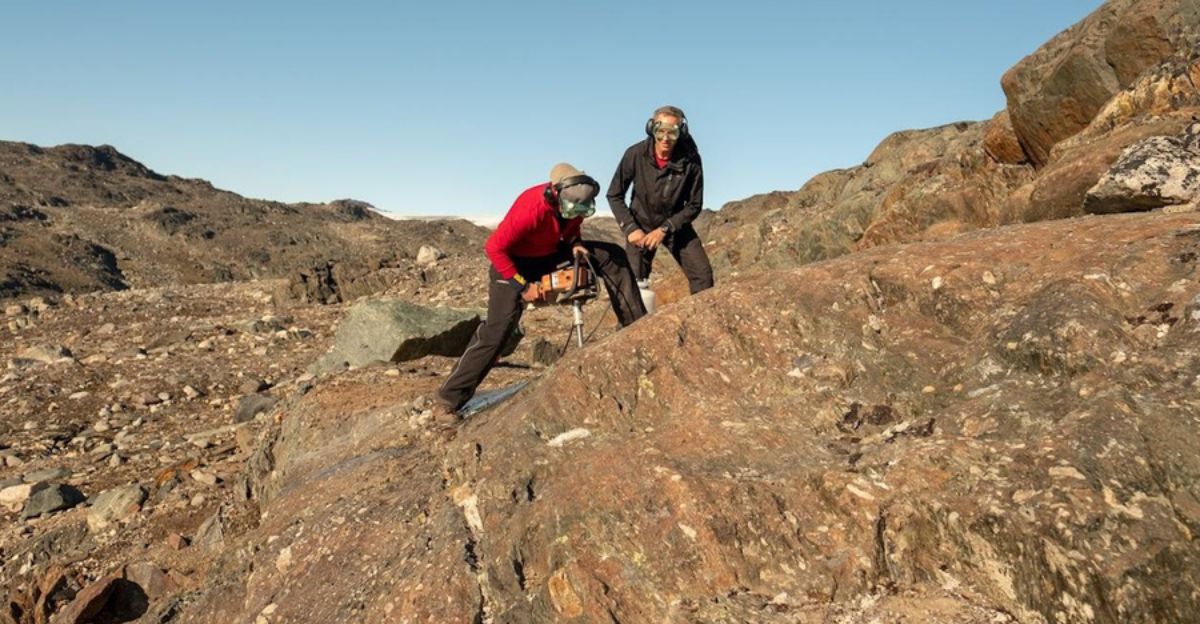
The potassium isotope findings reshape how scientists think about Earth’s earliest crust, oceans, and atmosphere. If the mantle was not fully homogenized, early crustal rocks may have formed from chemically diverse sources rather than a single uniform reservoir. That would mean Earth’s first continents emerged from a more complex interior structure than previously assumed, with different regions carrying distinct geochemical fingerprints inherited from proto-Earth and impact debris.
These internal differences could also have influenced the chemistry of early surface environments. Potassium and other volatile or moderately volatile elements, such as sulfur and nitrogen, play important roles in seawater composition, atmospheric makeup, and heat flow in young planetary systems. If isolated deep reservoirs supplied these elements unevenly over time, they could have created local chemical conditions that affected how the planet cooled, how oceans developed, and how surface geochemical cycles evolved. Some researchers have suggested that such variations might even have shaped the settings where early life first gained a foothold, although this connection remains speculative.
Beyond Earth, the work has broader implications for rocky planets in general. If proto-Earth material could survive a collision as extreme as the Theia impact, then other worlds that experienced giant impacts—such as Mars, Venus, and many rocky exoplanets—may also harbor ancient, chemically distinct domains deep within their interiors. Potassium isotopes are only one tool for probing these hidden reservoirs. Scientists are now extending similar high-precision approaches to elements such as tungsten, silicon, molybdenum, iron, and oxygen, each of which offers a different perspective on planetary differentiation, core formation, and impact processing.
Because the lower mantle remains inaccessible to direct sampling, plume-fed volcanoes and increasingly sensitive isotope measurements will remain essential for decoding Earth’s deep past. Together, seismic imaging, advanced modeling, and geochemical fingerprinting are recasting Earth not as a fully remade world, but as a layered archive that still stores fragments of its original form. As those buried records are deciphered, they are likely to refine not only the story of our own planet’s violent youth, but also the broader picture of how rocky worlds across the cosmos preserve traces of their earliest history.
Sources:
MIT News, report on first evidence of 4.5‑billion‑year‑old proto‑Earth in the mantle
Space.com, coverage of 4.5‑billion‑year‑old proto‑Earth evidence deep within Earth
Futura Sciences, article on a relic of pre‑impact Earth before the Moon formed
ScienceAlert, article on remnants of “proto‑Earth” deep underground