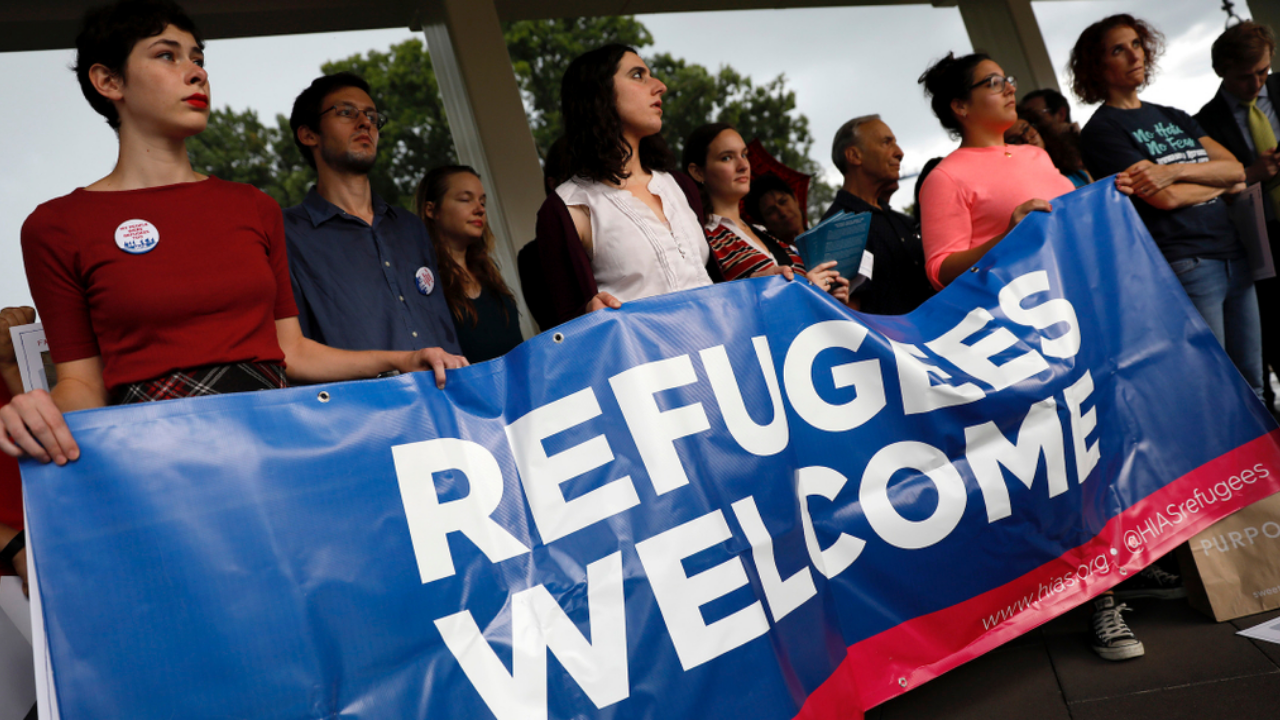
A federal study, once promoted as proof that refugees strengthen the U.S. economy, has become a flashpoint in a broader clash over immigration, welfare, and political messaging. Released in early 2024 by the Department of Health and Human Services (HHS), the analysis concluded that refugees and asylees generated far more in tax revenue than they cost over 15 years. Within two years, that finding was under attack from conservative researchers, overshadowed by border pressures, and entangled with high-profile welfare fraud cases and electoral fallout.
HHS report becomes a political showcase

HHS Secretary Xavier Becerra, appointed by President Joe Biden, publicly framed the 2024 refugee study as evidence that refugees are an economic asset. The administration used its conclusions to help justify raising the annual refugee admissions ceiling to 125,000, the highest level since the modern resettlement system was created.
Democratic lawmakers pointed to the report in budget hearings and policy debates just as public concern over immigration intensified. Border encounters surged to record levels in 2023, culminating in 302,000 apprehensions at the southern border in December, the highest monthly total on record. Immigration rose to the second-ranked voter concern, behind inflation and the broader economy. Even before the HHS findings filtered into public awareness, the political climate around immigration had become sharply more volatile, prompting the White House to issue executive orders in June 2024 narrowing asylum access.
The HHS analysis itself looked back at the years 2005–2019 and found that refugees and asylees accounted for $457.2 billion in federal, state, and local expenditures while generating $581 billion in tax payments over the same period. That implied a net fiscal gain of $123.8 billion, including a $31.5 billion surplus at the federal level and $92.3 billion in net benefits to state and local governments.
Methodology under fire and welfare numbers in focus

Criticism of the study’s methods erupted in late 2025. The Center for Immigration Studies (CIS), a restriction-minded research group, released a detailed rebuttal claiming the HHS approach distorted who counts as a net taxpayer and who counts as a net recipient. CIS researchers argued that by treating Social Security payments to retirees as government expenditures, the study compared working-age refugees favorably to older Americans collecting earned benefits after decades of contributions. At the same time, it counted refugees of working age who received means-tested benefits like food stamps as net contributors because they tended to pay some taxes while using relatively fewer age-based programs.
That framing, CIS argued, tilted the comparison in favor of refugees and against longer-term residents. The dispute over definitions—whether Social Security belongs in the same category as means-tested support—became central to the fight over the study’s credibility.
At the same time, refugee welfare participation data drew increased attention. Federal figures showed refugee households using major benefit programs at higher rates than the general population. About 21.4 percent of refugee households received SNAP, compared with 15.5 percent in the broader population. Medicaid or CHIP participation among refugees was 23.6 percent, versus 17.2 percent nationally. Use of Supplemental Security Income among refugees reached 7.3 percent, nearly triple the 2.6 percent rate among native-born Americans.
CIS also highlighted Census Bureau survey data on Somali-headed households in Minnesota, reporting that 73 percent included at least one member on Medicaid and that 89 percent of Somali families with children relied on at least one welfare program. Those numbers greatly exceeded national averages and were widely circulated in conservative commentary as evidence of concentrated dependency among certain refugee groups.
Countervailing research and emerging scandals

Other organizations challenged the CIS critique and defended the broader conclusion that migrants, including refugees, are not an outsized fiscal burden in the long run. The libertarian Cato Institute published an analysis in 2025 contending that once age and education are taken into account, immigrants generally use fewer benefits than similarly situated native-born Americans. The American Immigration Council issued a 2024 report backing the HHS study’s central claim that refugees are net contributors when analyzed over many years. The disagreement exposed a deep methodological and ideological divide: conservative groups focused on welfare utilization at particular times and in specific communities, while pro-immigration researchers emphasized long-term tax contributions and broader economic effects.
Any attempt to isolate one national pattern was further complicated by a major welfare fraud case in Minnesota. In December 2025, federal prosecutors there announced a sweeping investigation into Medicaid-related fraud, reporting more than $1 billion in confirmed theft and possible exposure as high as $9 billion across multiple programs since 2018. Court documents indicated that roughly 90 percent of defendants in the largest cases were of Somali background, with alleged schemes centered on disability and long-term care benefits.
Although prosecutors did not present the scandal as a referendum on refugee policy, the timing reinforced a potent image for critics: high welfare usage in refugee communities, followed by large-scale fraud involving some of the same programs. For opponents of the HHS study, the Minnesota cases were portrayed as further reason to question claims of state-level fiscal gains.
Election-year messaging and political fallout
The fiscal study’s significance grew as immigration moved closer to the center of the 2024 campaign. Biden’s decision to expand refugee admissions, supported in part by the HHS numbers, became a target for Republican candidates. In key battlegrounds, campaign spots juxtaposed the higher refugee ceiling with record border apprehensions, blurring distinctions between overseas refugee processing and asylum seekers arriving at the southern border.
Democrats often struggled to maintain that distinction in public debate. While the HHS analysis focused on a specific group vetted abroad and admitted under a formal program, critics folded the numbers into a broader narrative of lax enforcement and unsustainable social spending. Immigration and border security emerged among the top issues driving voters’ choices.
The final election returns underscored the shift. Republicans won the presidency and Senate, and immigration was widely cited as a deciding factor in their victories. Post-election interviews with Democratic senators reflected an unusually blunt internal reckoning; some described the party’s handling of immigration as political malpractice. The refugee study, held up earlier in the year as a validation of Biden’s policy direction, was recast as part of a political strategy that misread voter priorities.
Looking ahead, analysts and party strategists are weighing how technical fiscal assessments can be reconciled with public concern about border control, fraud prevention, and local service capacity. The HHS report and the controversy surrounding it have become a cautionary example: economic models and long-term averages may show net benefits, but they do not automatically answer questions about pace of arrivals, neighborhood impact, or program integrity. As new enforcement policies take shape and future elections approach, both major parties face pressure to align statistical arguments with visible management of the immigration system and the social programs that support newcomers and long-term residents alike.
Sources:
HHS Office of the Assistant Secretary for Planning and Evaluation (ASPE) Report, “The Fiscal Impact of Refugees and Asylees,” February 2024; American Immigration Council analysis, February 2024
U.S. Customs and Border Protection encounter statistics, December 2023; ABC News and Fox News reporting on 302,000 monthly border apprehensions
New York Times investigation “How Fraud Swamped Minnesota’s Social Services System,” November 2025; Federal prosecutors Minnesota Medicaid fraud announcement, December 2025
Pew Research Center “Issues and the 2024 Election,” September 2024; Harvard/Harris Poll immigration voter concern data; CBS News and Politico 2024 Senate election results, November 2024