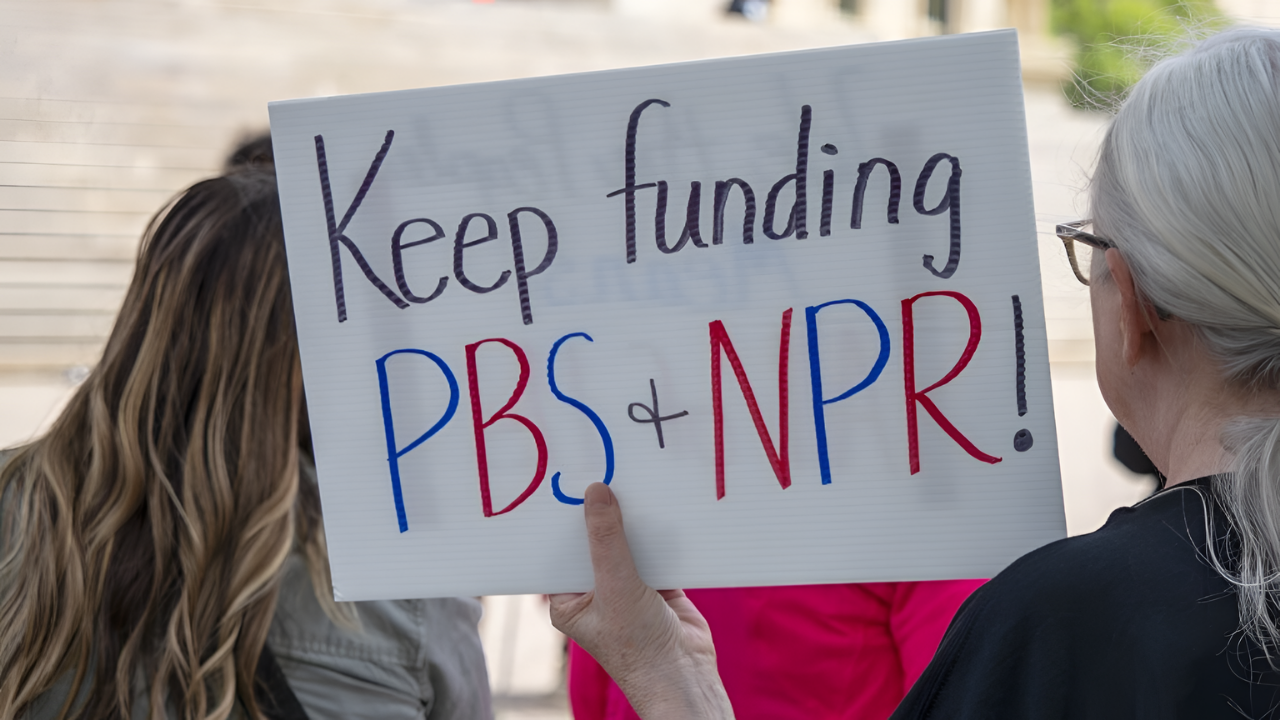
The shutdown of the Corporation for Public Broadcasting (CPB) marks the end of a nearly six-decade experiment in using federal dollars to support noncommercial radio and television that reach almost every American. The organization will dissolve on January 5, 2026, after Congress stripped away its entire $1.1 billion federal appropriation in 2025, abruptly cutting the main funding stream for 1,500 local stations that supplied emergency alerts, children’s education, and local reporting to communities across the country.
An Era Of Public Service Ends
Created by Congress in 1967, CPB functioned as a private nonprofit that managed federal investment in public media for 58 years. Its board voted to dissolve after lawmakers rescinded all of its appropriations for fiscal years 2026 and 2027, forcing a system-wide wind-down.
Board chair Ruby Calvert described the federal cut as “devastating,” while maintaining that public media could endure if a future Congress restores support. Her comments underscored a core tension: the institution responsible for distributing federal dollars is disappearing, even as stations look for ways to keep programming on the air with drastically reduced resources.
For decades, CPB sent more than 70% of its federal funding directly to local stations, while spending less than 5% on administration. At its height, this structure supported 386 radio grantees and 158 television grantees, with a combined network of more than 1,500 licensees reaching 99% of Americans. Every federal dollar typically leveraged about seven more from state, local, and private sources, a return CPB leaders repeatedly cited as central to the system’s value.
How A National Network Unraveled
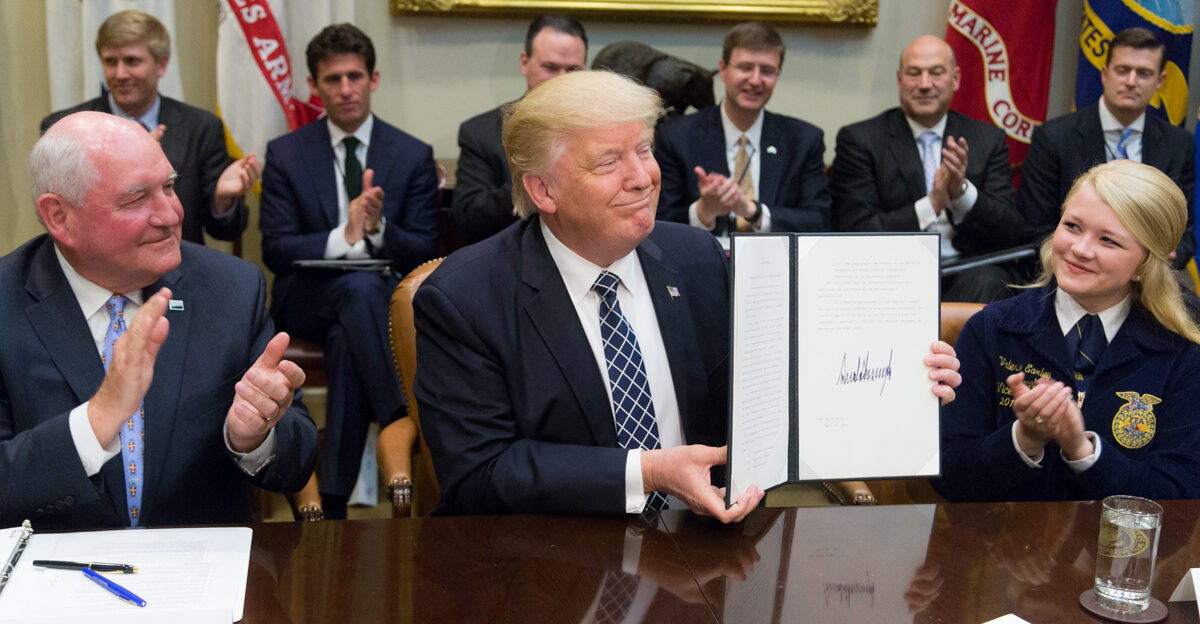
Political momentum against federal backing for public media accelerated in 2025. On May 1, President Donald Trump signed Executive Order 14290, “Ending Taxpayer Subsidization Of Biased Media,” directing CPB to halt direct and indirect funding to NPR and PBS. The order argued that government support had become “outdated and unnecessary” and harmful to journalistic independence, and instructed CPB to change grant rules so stations could no longer send money to NPR or PBS after June 30, 2025.
The administration followed with a formal rescission request on June 3, proposing to eliminate $9.4 billion in previously appropriated funds across multiple agencies, including about $1.1 billion targeted at CPB. House Majority Leader Steve Scalise introduced H.R. 4, the Rescissions Act of 2025, three days later.
The House vote on June 12 turned into a narrow test of support for the system. The measure passed 214–212, with four Republicans—Mark Amodei of Nevada, Brian Fitzpatrick of Pennsylvania, Nicole Malliotakis of New York, and Mike Turner of Ohio—joining all Democrats in opposition. Amodei questioned whether the cuts were “very well thought out,” pointing to the disproportionate impact on rural communities.
In the Senate, Republicans Lisa Murkowski and Susan Collins repeatedly highlighted the role of federal funding in supporting emergency alerts and local programming. Murkowski read a message from KUCB in Unalaska describing how it kept residents informed during tsunami sirens, and Collins warned that deep cuts would harm both popular shows and the infrastructure that carries warnings in a crisis.
Despite these concerns, a July 15 procedural vote to advance the rescission passed only after Vice President JD Vance broke a 50–50 tie, making the tally 51–50. Two days later, the Senate approved final rescission by a margin of 51–48, with Collins and Murkowski the only Republicans voting no.
Local Stations Absorb The Shock

The loss of CPB funding has fallen hardest on rural and tribal outlets that lack strong local advertising or philanthropy bases. CPB had supported 245 rural grantees—about 45% of all public media licensees—where federal support often made up 30% to 50% of operating budgets. Nebraska Public Media reported an annual loss of $4 million, or 14.4% of its budget, while Colorado Public Radio lost $1.5 million a year.
In tribal communities, Native Public Media found that 36 of 59 tribal radio stations lost direct CPB funding, a reduction of over $8 million. KWSO Warm Springs Radio in Oregon lost $240,000 annually, roughly 40% of its operating budget. Such stations often broadcast in Indigenous languages, preserve cultural traditions, and serve as crucial links in emergencies for remote regions. Manager Sue Matters said the funding cut forced elimination of two staff positions as well as automation and streaming capabilities, shrinking both service and reach.
Rebecca Landsberry-Baker, executive director of the Indigenous Journalists Association and a Muscogee Nation citizen, called public media “sacred” and described locally produced programming as vital to tribal self-determination, identity, and information access. Media scholar Victoria LaPoe of the Cherokee Nation emphasized the importance of hearing one’s own language across everything from news to music, arguing that such presence affirms community visibility.
Even large organizations have struggled to absorb the shift. New Jersey PBS announced in September 2025 that it would cease operations by June 30, 2026, becoming the first major public television service to schedule a shutdown after the federal rescission. The decision followed state budget reductions that cut New Jersey’s contribution from $1 million to $250,000 and a failed effort by operator WNET and the New Jersey Public Broadcasting Authority to agree on a new arrangement. NJ PBS served about 1.5 million residents.
Across the country, layoffs have rippled through newsrooms. GBH in Boston cut 45 employees in June (about 6% of its workforce) and 13 more in July, pausing production of “American Experience.” WETA in Arlington eliminated 21 positions and canceled three local television programs. Wisconsin Public Radio, Twin Cities PBS, and American Public Media Group all announced staff reductions and program cancellations. Hundreds of journalists, producers, and engineers have lost jobs system-wide.
Emergency Fund Drives And Temporary Fixes
Listeners and viewers responded to the funding crisis with what some station leaders dubbed “rage-giving”—large, fast donations made in anger over the cuts. Louisville Public Media raised $400,000 in 24 hours after the Senate vote, surpassing its annual CPB grant loss. WMNF in Tampa collected $280,000 in a single emergency drive, KUOW in Seattle raised more than $870,000 in less than seven hours, and Vermont Public topped $1 million.
Development staffers cautioned that such surges were temporary. Ellen Oost described the windfall as buying time to search for long-term solutions, but said it only “stops the bleed for this year.” Michaela Gianotti Boyle added that a single successful drive could not replace CPB, and that stability would depend on sustained monthly giving and other recurring support.
As the organization prepared to close, CPB moved to protect essential infrastructure and history. It negotiated extensions of music licensing agreements with ASCAP, BMI, SESAC, Harry Fox Agency, and Global Music Rights through December 31, 2027, with PBS and NPR taking over administration in October 2025. The deal ensured stations could continue to license music without immediate disruption.
CPB also committed to preserving its institutional archives, partnering with the University of Maryland to make records dating back to 1967 accessible to the public. It continued support for the American Archive of Public Broadcasting, which is digitizing historic programs such as “Mister Rogers’ Neighborhood” and “Sesame Street” for researchers and future audiences.
What Is At Stake For Audiences

Public media’s role extends beyond individual shows. PBS Kids educational services reached 15.5 million monthly users, and children’s programs including “Sesame Street” and “Daniel Tiger’s Neighborhood” have been credited with supporting literacy and social-emotional development for more than 60 million children annually. Public radio and television stations deliver emergency alerts that reach 99% of Americans during hurricanes, floods, and other disasters, and often provide the only in-depth local reporting in some communities.
Polling suggests many voters support maintaining federal backing. A Peak Insights survey conducted in late June and early July 2025 found that 53% of likely U.S. voters opposed eliminating public media funding, compared to 44% in favor. Respondents placed particular value on emergency alerts, children’s education, and local programming. A Harris Poll reported that two-thirds of respondents supported federal funding for public radio, including majorities of both Democrats and Republicans.
Despite this, the rescission passed and CPB is now winding down. In announcing the dissolution, board chair Ruby Calvert expressed confidence that public media would survive and predicted that a future Congress would reassess its role, particularly for children’s learning, cultural preservation, and democratic life. Analysts are divided over whether the current collapse is a temporary setback or a lasting transformation that will reshape who controls and benefits from noncommercial broadcasting.
For now, the uncertainty falls on communities and stations forced to decide what to cut, what to reinvent, and how to sustain services once underwritten by federal dollars. Whether a new structure emerges—and how quickly—will shape how Americans receive educational programming, local journalism, and life-saving information in the years ahead.
Sources
Corporation for Public Broadcasting Board Votes to Dissolve Organization in Act of Responsible Stewardship to Protect the Future of Public Media. Corporation for Public Broadcasting, January 5, 2026
The Impact of the Federal Rescission on Public Media. Corporation for Public Broadcasting, October 9, 2025
H.R. 4 – Rescissions Act of 2025, 119th Congress. U.S. House of Representatives, July 24, 2025
Ending Taxpayer Subsidization Of Biased Media. The White House, May 1, 2025
Senate Roll Call Vote 119th Congress – Vote Number 411. U.S. Senate, July 17, 2025
New National Poll: Majority of Voters Trust Public Media More than Media Overall and Highly Value Its Services. Corporation for Public Broadcasting, July 14, 2025