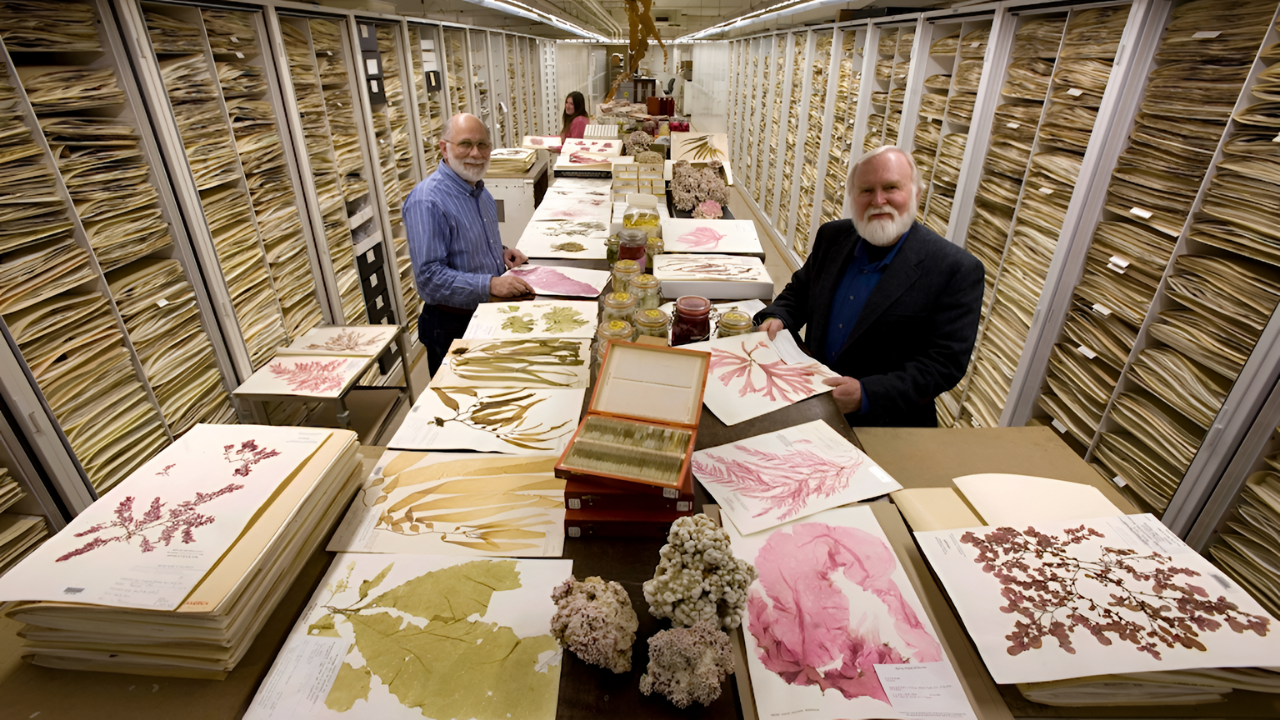
A laser scans a fossil plant thinner than a fingernail, stored for decades in a London museum drawer. On a screen, its internal cells glow in three dimensions—structures no one alive has ever seen before. “This kind of vascular system has never been seen in any living plant,” says paleobotanist Paul Kenrick.
The fossil is 407 million years old. And it may explain how centimeter-tall plants became towering giants.
The Pressure to Grow
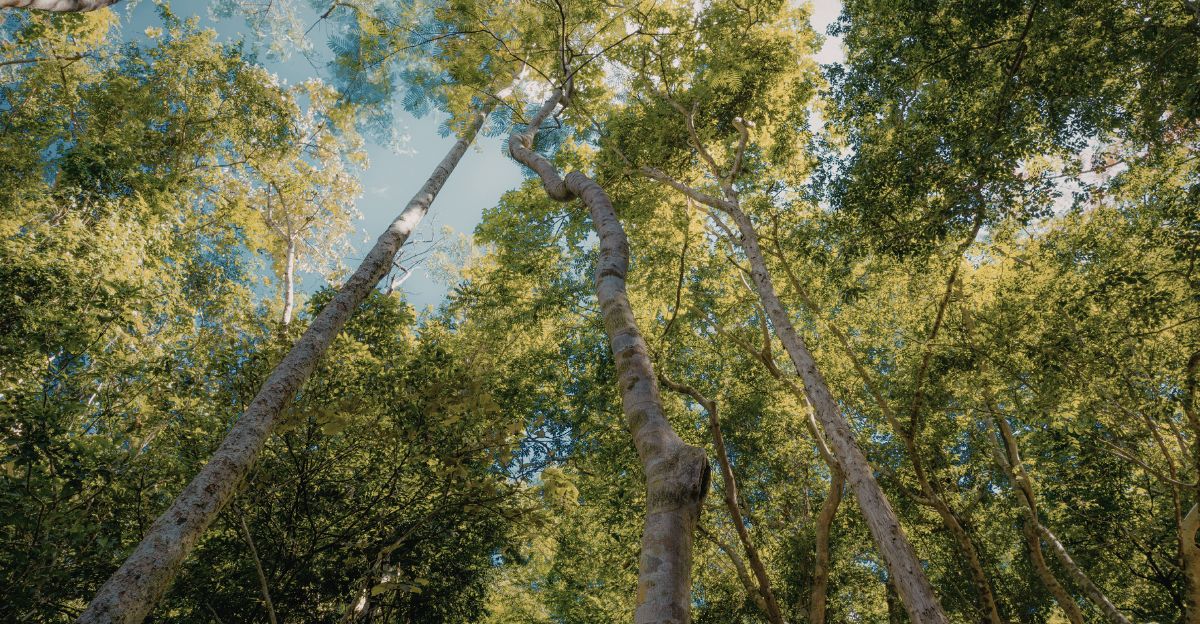
Towering trees dominate modern landscapes, but Earth’s earliest land plants barely rose above the ground. Bryophytes—mosses and liverworts—lack vascular tissue and remain small. True vascular plants solved this with xylem and phloem, enabling height and forests.
Yet how plants made that leap remained unresolved. Genetic studies hinted complexity, not a straight line. For decades, paleobotanists suspected a missing evolutionary stage—but had no fossil proof.
Scotland’s Silent Archive

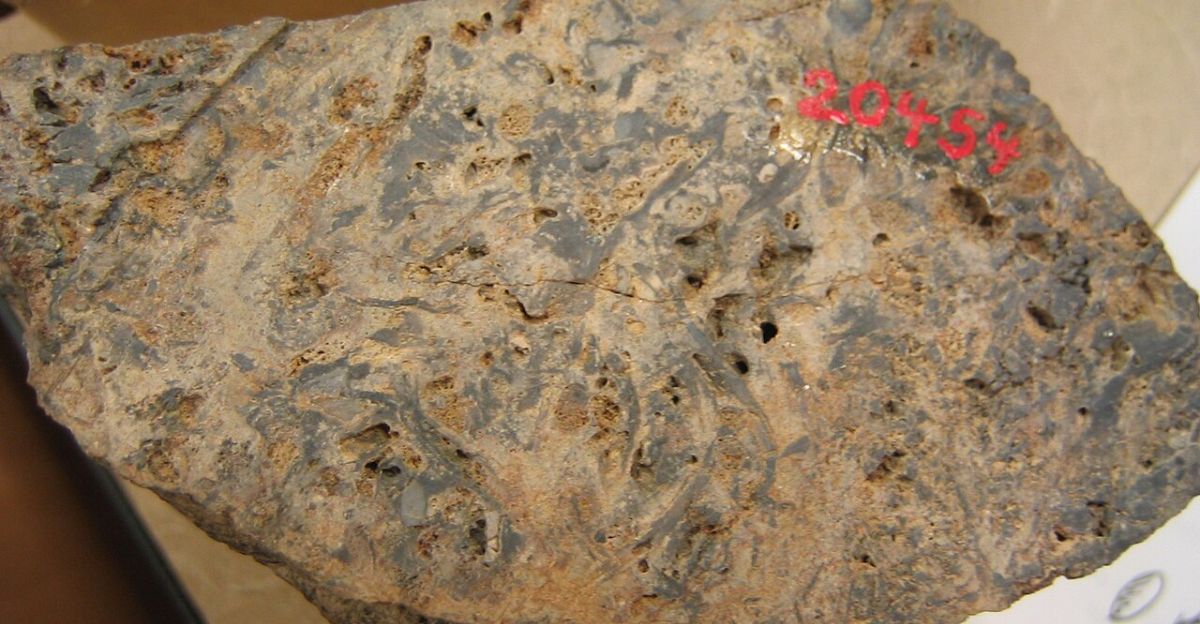
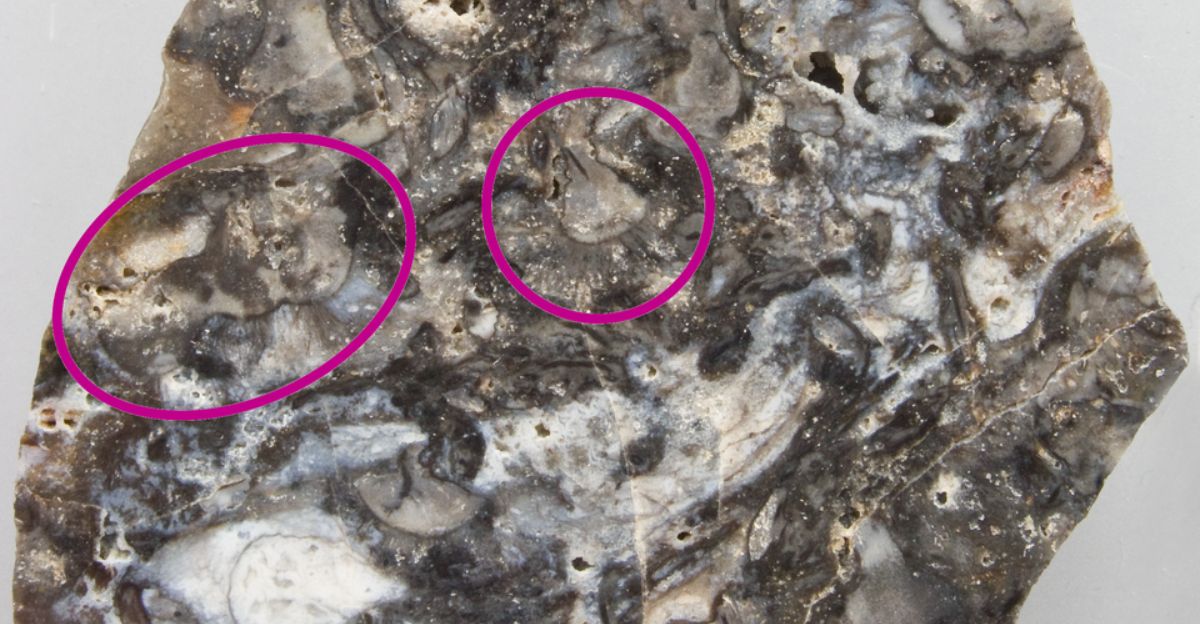
In northeastern Scotland lies the Rhynie Chert, one of the most important fossil sites on Earth. Discovered in 1912, it preserves a 407-million-year-old land ecosystem in extraordinary cellular detail. Ancient hot springs flooded plants with silica, fossilizing them intact.
Cell walls, tissues, even growth patterns survived. For over a century, scientists studied these fossils, unaware that one held a vascular system unlike anything known.
The Daunting Evolutionary Gap
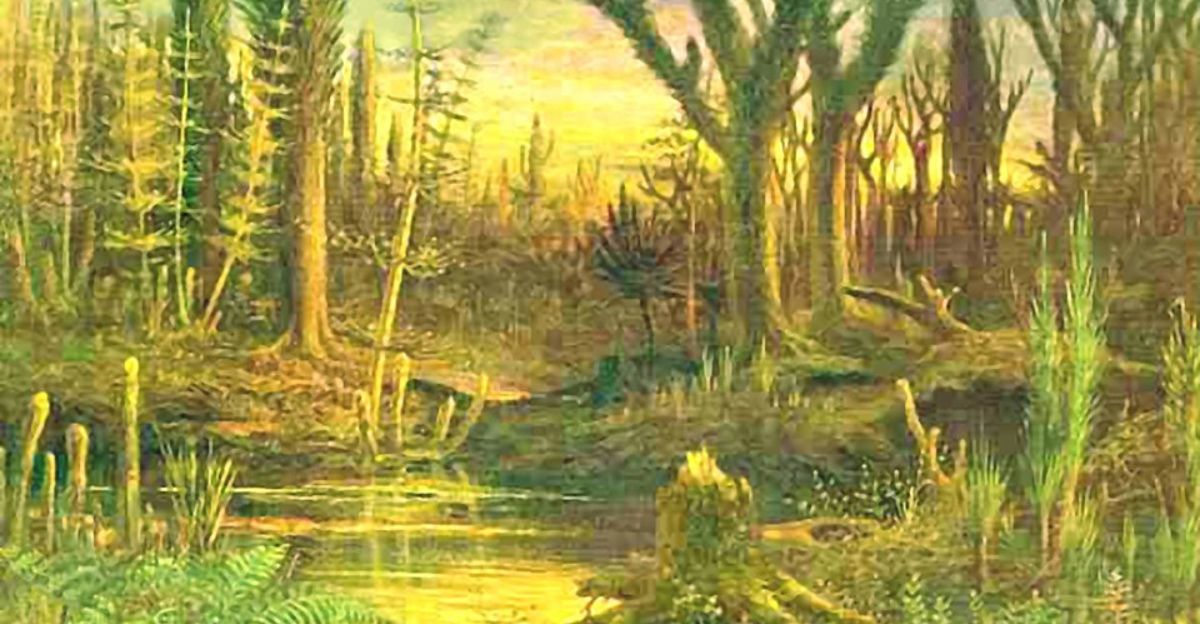
By the Devonian period, forests had appeared with startling speed. Geological records show plants jumping from ground-hugging forms to meter-scale vascular species in a narrow window of time. Fossils like Horneophyton lignieri were thought to bridge that gap.
But interpretations relied on early microscopy, which blurred cell-level detail. The plant’s internal plumbing was assumed—not demonstrated—until modern imaging finally revisited the evidence.
A Fossil Reopened
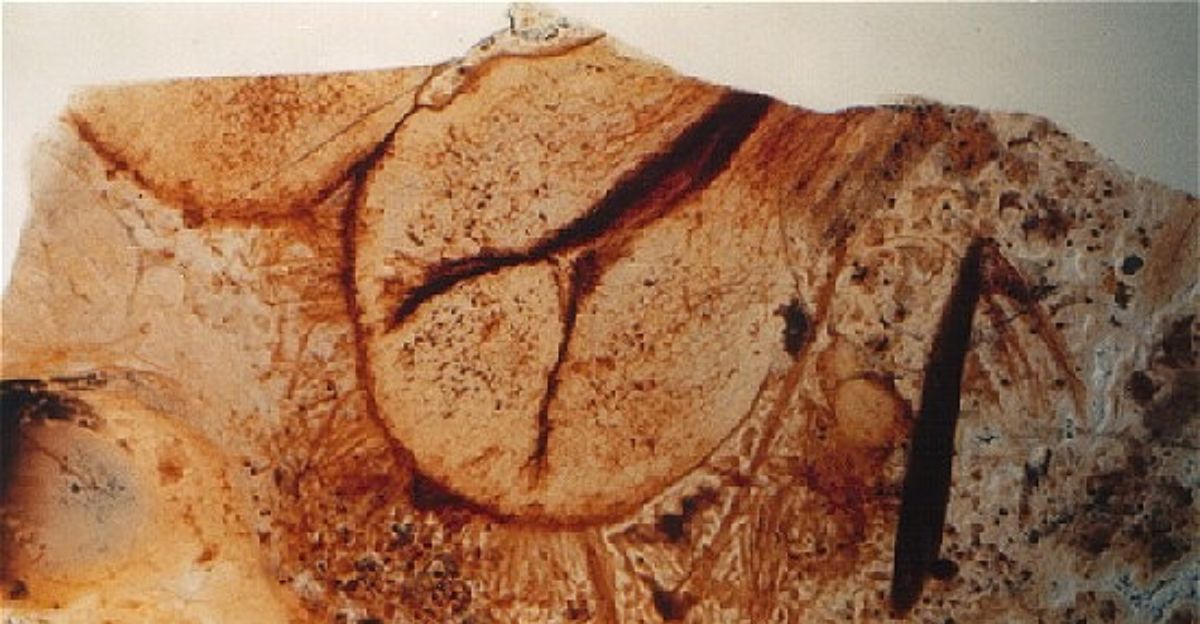
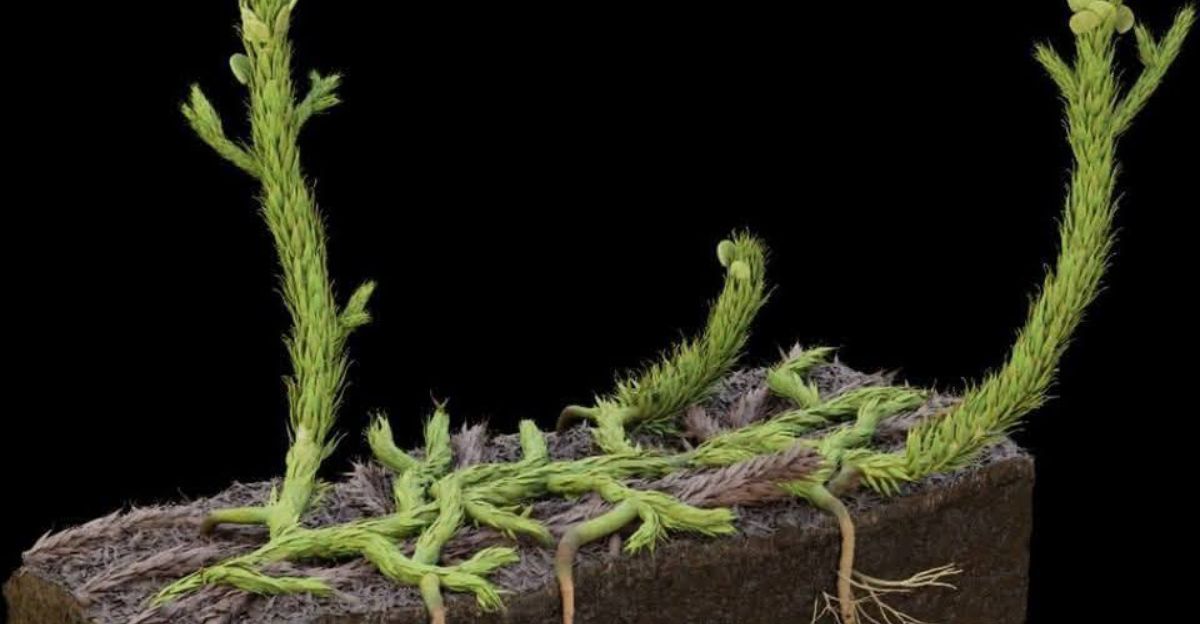
Horneophyton lignieri was collected more than a century ago and classified as a simple early vascular plant. It grew only about 20 centimeters tall and lived near geothermal wetlands. For decades, it sat quietly in museum collections.
In 2025, researchers reanalyzed these specimens using confocal laser scanning microscopy, a non-destructive method that reveals three-dimensional cellular structure. What they found overturned 100 years of assumptions.
The Hidden System Revealed
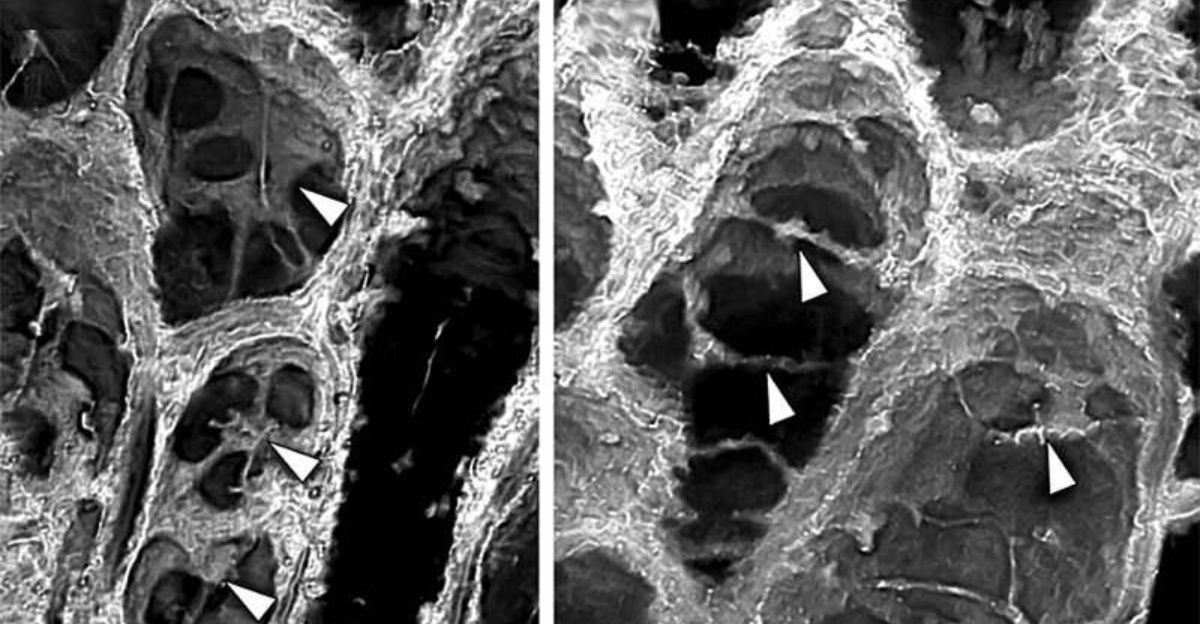
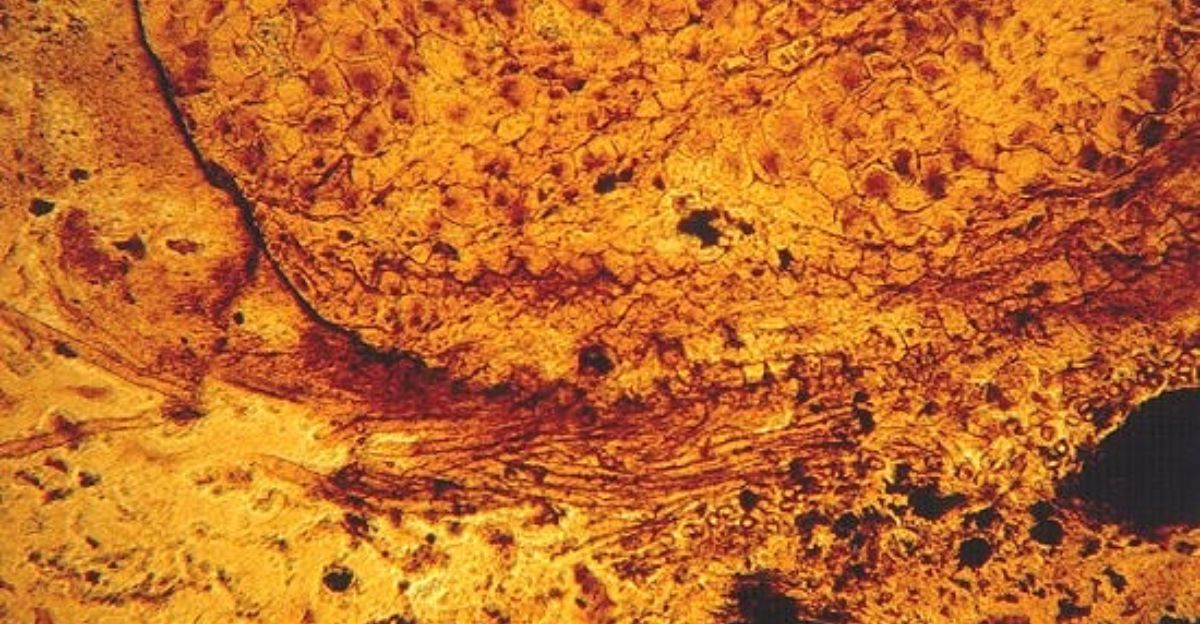
The new analysis showed Horneophyton lacked separate xylem and phloem. Instead, it used a single type of conducting cell—transfer cells—that moved both water and sugars together. No living plant does this.
This wasn’t a primitive version of modern vascular tissue. It was a completely novel system, representing an evolutionary experiment that ultimately failed to scale but helped pave the way for later success.
Why This Changes Everything
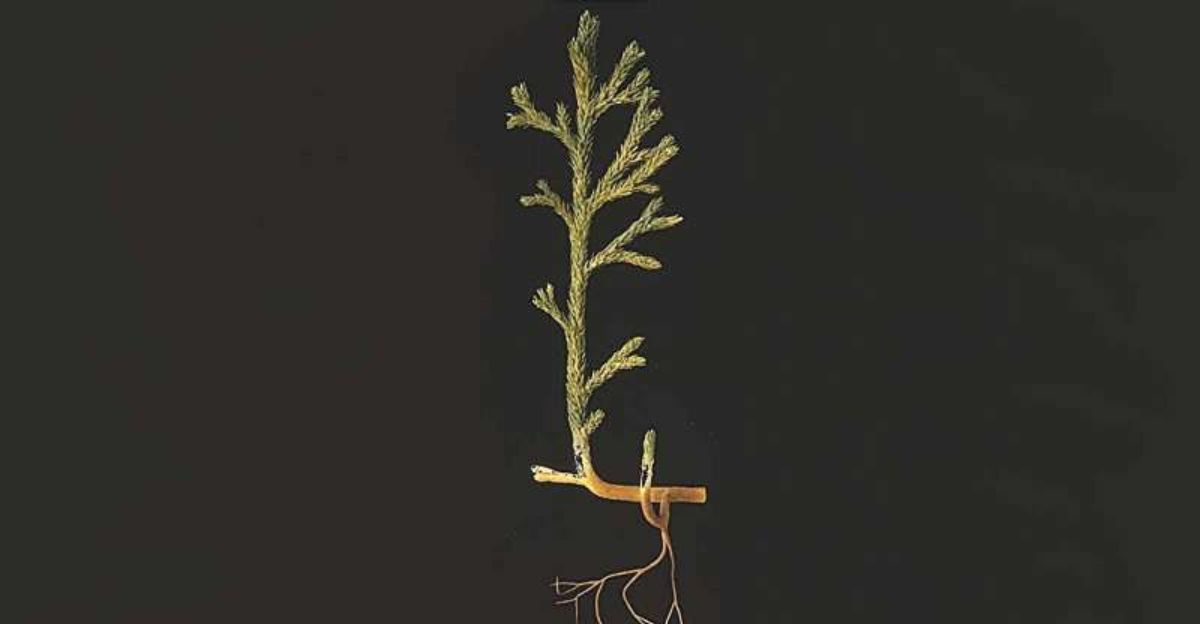
For small plants, Horneophyton’s unified transport system worked well enough. But physics imposes limits. Water transport becomes inefficient as height increases, and combining sugar and water flow restricts pressure control.
The discovery explains why Horneophyton never grew tall. It also reveals that vascular evolution didn’t proceed step-by-step toward modern plants—it branched, tested, and discarded designs along the way.
The Scientist Behind the Shift
Dr. Paul Kenrick of the Natural History Museum has studied Rhynie Chert plants for decades. His work focuses on early land plant anatomy and evolution. “These plants have been shoehorned into categories that don’t fit them,” he said in 2025.
By applying modern technology without preconceived labels, Kenrick’s team exposed structures hidden in plain sight—structures that rewrite evolutionary textbooks.
Fossils Meet Genetics
The fossil evidence aligns with recent genetic research challenging the classic story that mosses directly preceded vascular plants. Molecular studies suggest bryophytes are not simply “primitive ancestors” but specialized survivors.
Horneophyton supports this view, showing early land plants were already anatomically complex. Fossils and DNA now converge on the same conclusion: the common ancestor of land plants was more sophisticated than once believed.
The Devonian Explosion
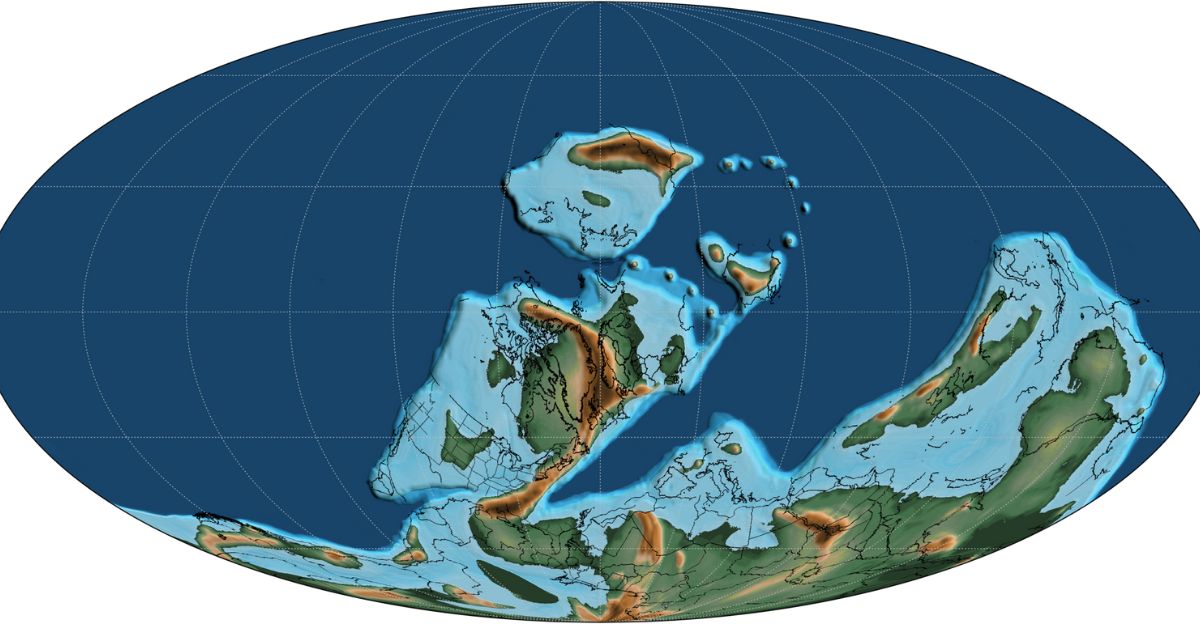
Around 380 million years ago, Earth transformed. Plants spread across continents, stabilizing soils and reshaping climate. Forests altered atmospheric carbon and oxygen levels. Vascular systems made this possible.
Horneophyton lived near the start of this revolution. Understanding its limitations helps explain why more efficient systems—true xylem and phloem—were rapidly favored, enabling plants to colonize land at unprecedented scale.
A Natural Experiment
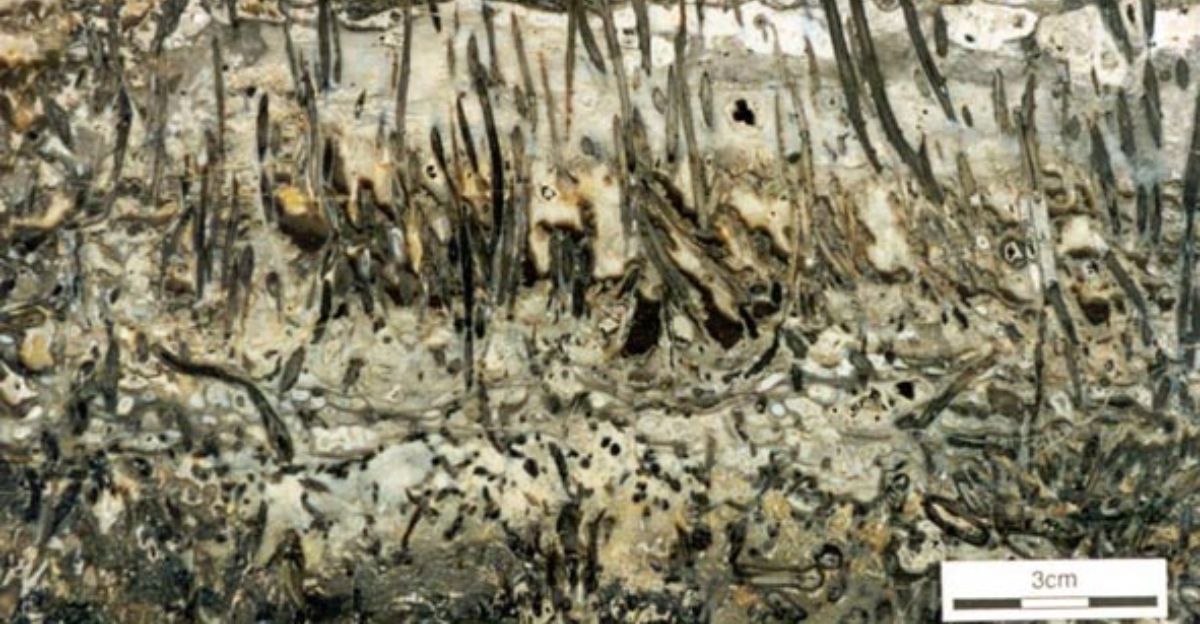
The Rhynie Chert captures evolution mid-trial. Horneophyton represents one solution; Asteroxylon, found nearby, represents another. Unlike Horneophyton, Asteroxylon evolved separate xylem and phloem and grew to about 40 centimeters—twice as tall.
The comparison shows how quickly innovation occurred. Plants didn’t wait millions of years to improve. They iterated, abandoned failures, and scaled winners.
A Century of Misreading
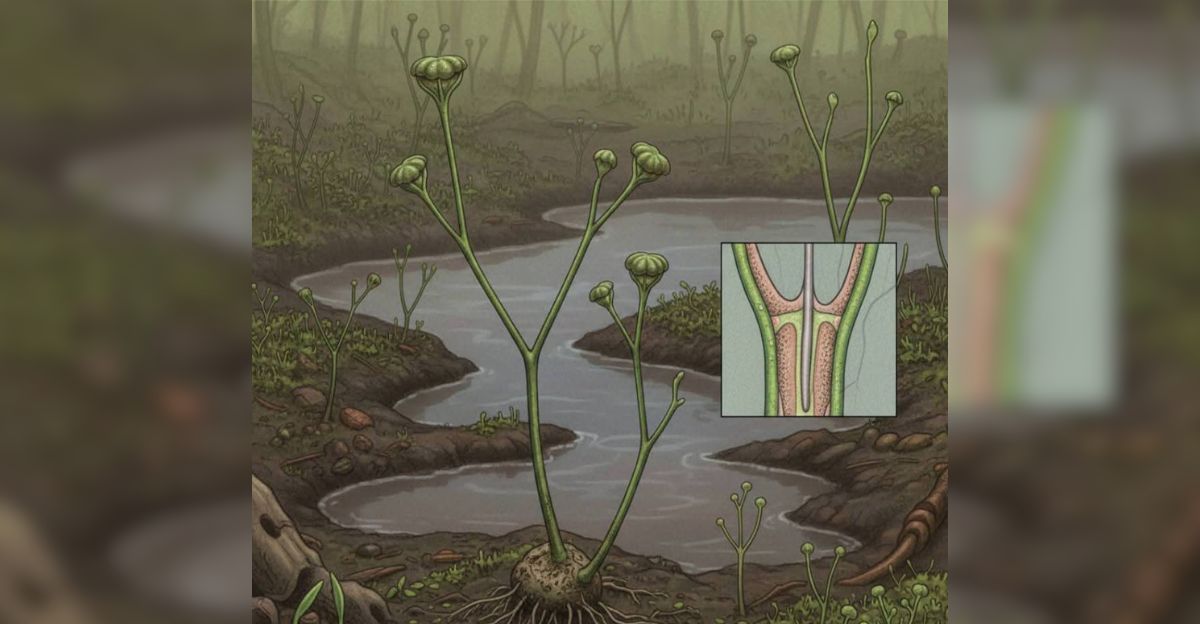
For over 100 years, Horneophyton was labeled “proto-vascular” or “non-vascular,” depending on the researcher. The misclassification wasn’t negligence—it reflected technological limits. Light microscopy couldn’t resolve internal transport cells clearly.
The fossil didn’t change. Our ability to see it did. This case highlights how scientific conclusions are provisional, shaped by tools as much as by theory.
How the Technology Works
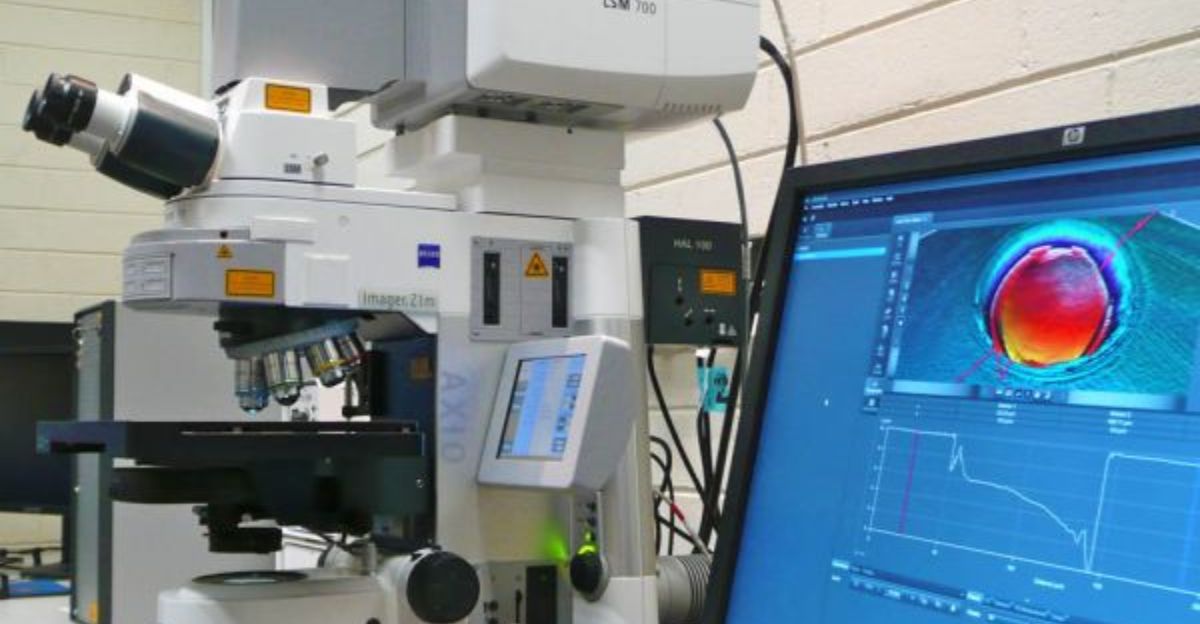
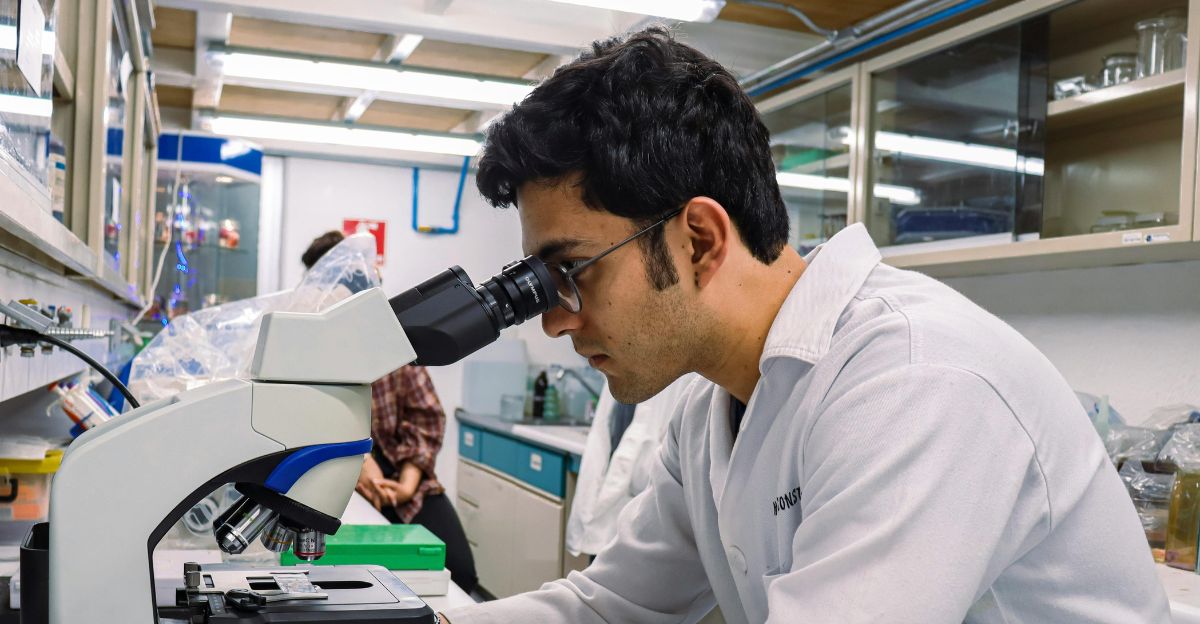
Confocal laser scanning microscopy uses lasers to excite natural fluorescence in fossilized organic material. By scanning layer by layer, it builds precise 3D reconstructions without damaging specimens.
Unlike slicing fossils into thin sections, CLSM preserves rare samples intact. Applied to Horneophyton, it revealed transfer cells in unprecedented detail, showing how water and sugars once flowed through a plant long extinct.
A Museum Reawakens
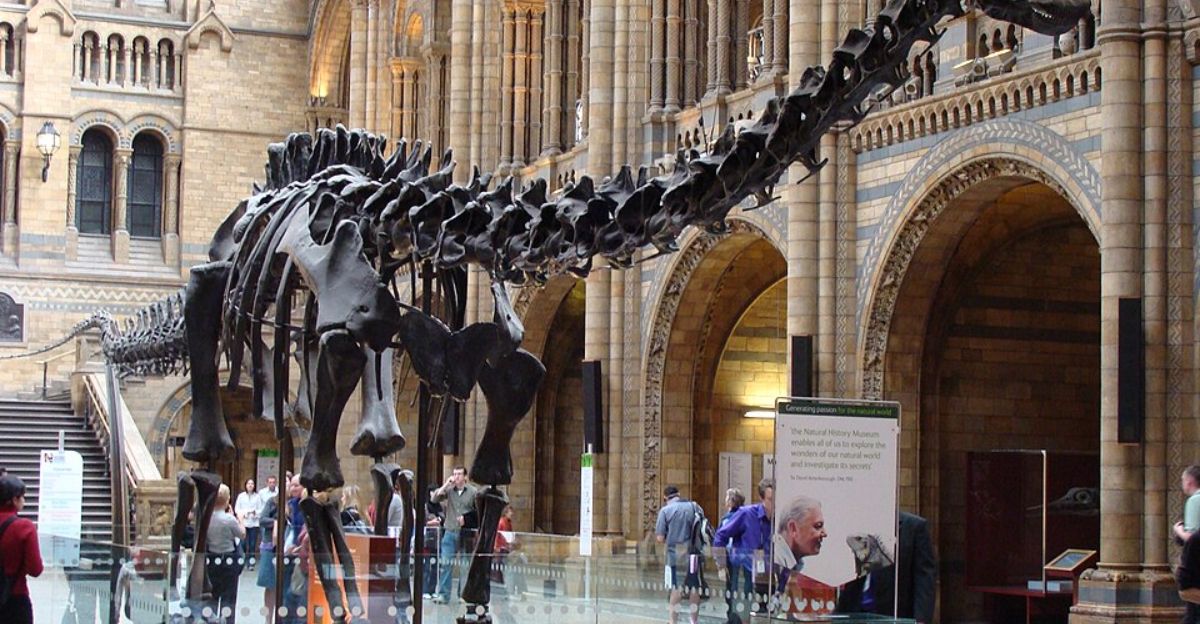
The Natural History Museum findings suggest value in systematic re-examination of other Rhynie Chert fossils using CLSM and related imaging methods. Specimens collected decades ago may hold undiscovered features.
Researchers suspect additional misinterpretations await correction. The approach reflects a broader shift in paleontology: unlocking new science not by finding new fossils, but by re-reading the ones we already have.
Scientific Debate Continues
Questions remain about how radically the finding reshapes plant family trees. Some may note Horneophyton retains bryophyte-like reproductive structures, complicating its placement.
Others could argue transfer cells don’t fully exclude vascular status. But any future assessment must agree the discovery demands revision. The burden of proof has shifted.
Evolution’s Missing Pages
If Horneophyton represents one abandoned strategy, how many others existed? Fossils hint at multiple extinct pathways—some efficient, some flawed. Plants likely experimented with transport systems long before settling on xylem and phloem.
Future imaging may reveal additional intermediate designs. Each discovery adds a missing page to evolution’s rough draft, showing progress through trial, not inevitability.
Why Institutions Matter
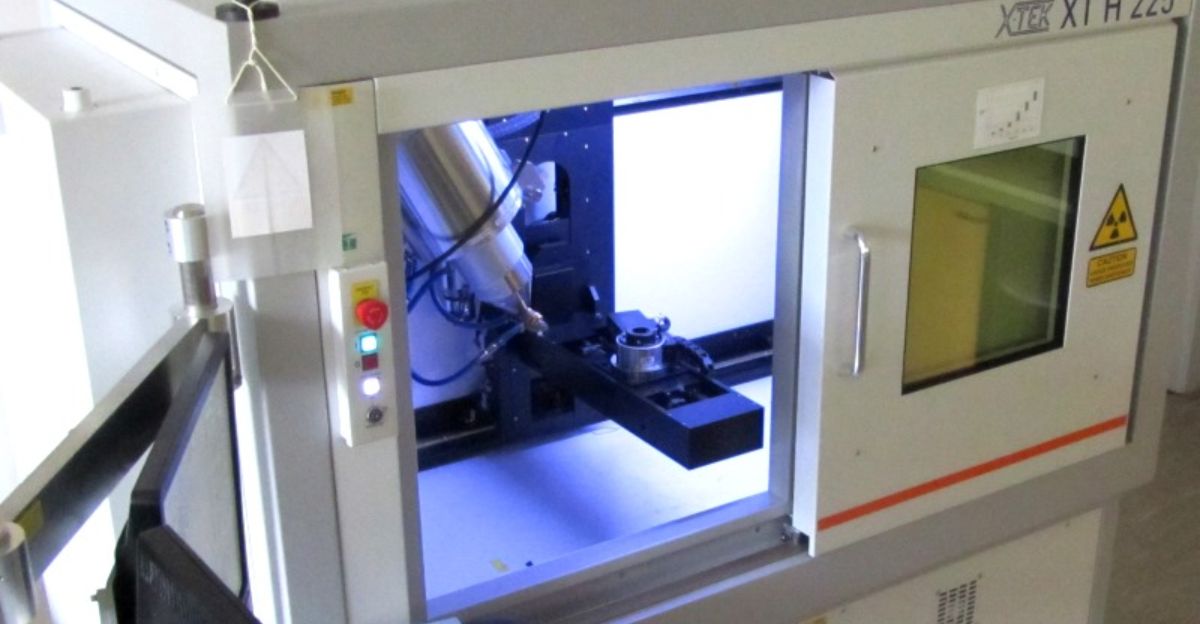
Museums aren’t just storage spaces—they’re scientific time capsules. As funding agencies increasingly prioritize non-destructive analysis, techniques like CLSM, microCT, and synchrotron imaging gain importance.
The Horneophyton study demonstrates the return on this investment. Old collections, re-examined with modern tools, can yield discoveries as transformative as new field finds.
A Global Perspective
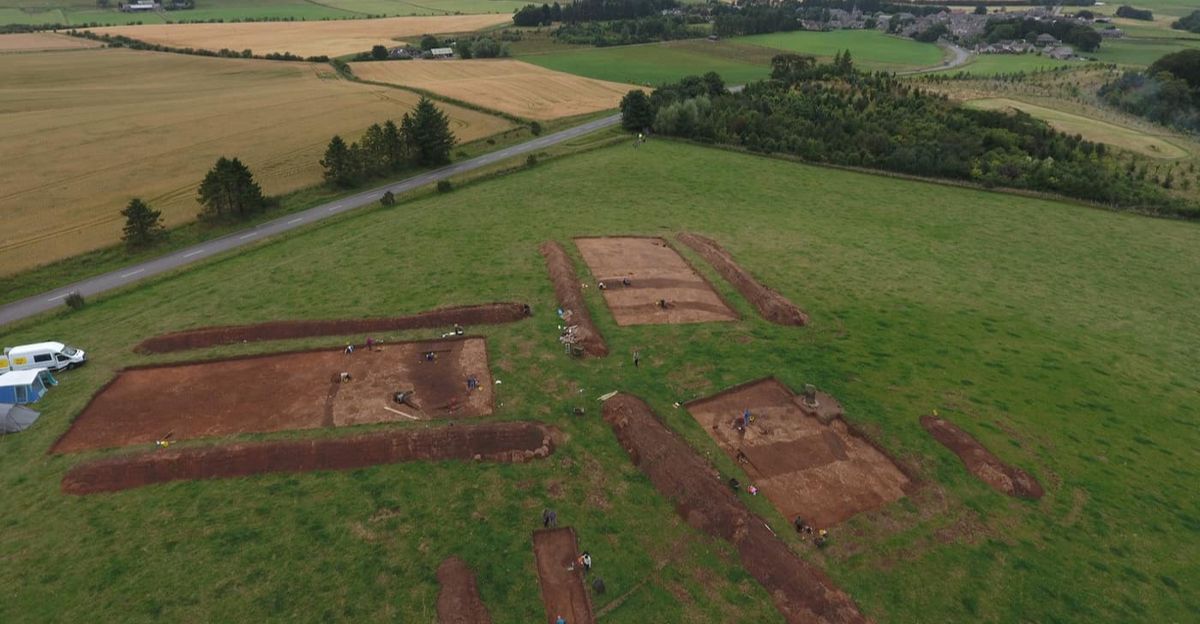
Rhynie Chert isn’t alone. Early Devonian sites across Europe, North America, and Asia preserve similar ecosystems. Researchers are now comparing fossils internationally to see whether Horneophyton’s vascular system appears elsewhere.
If so, it would suggest a widespread evolutionary phase. If not, it may represent a localized experiment—successful briefly, then replaced by better designs.
Rethinking the Textbooks
For generations, plant evolution was taught as a simple progression: mosses to ferns to trees. That story is now unraveling. Fossil and genetic evidence reveal a tangled history of complexity, loss, and reinvention.
Horneophyton offers a rare teaching moment—showing how science updates itself, and why certainty is always provisional when new evidence comes to light.
The Deeper Lesson
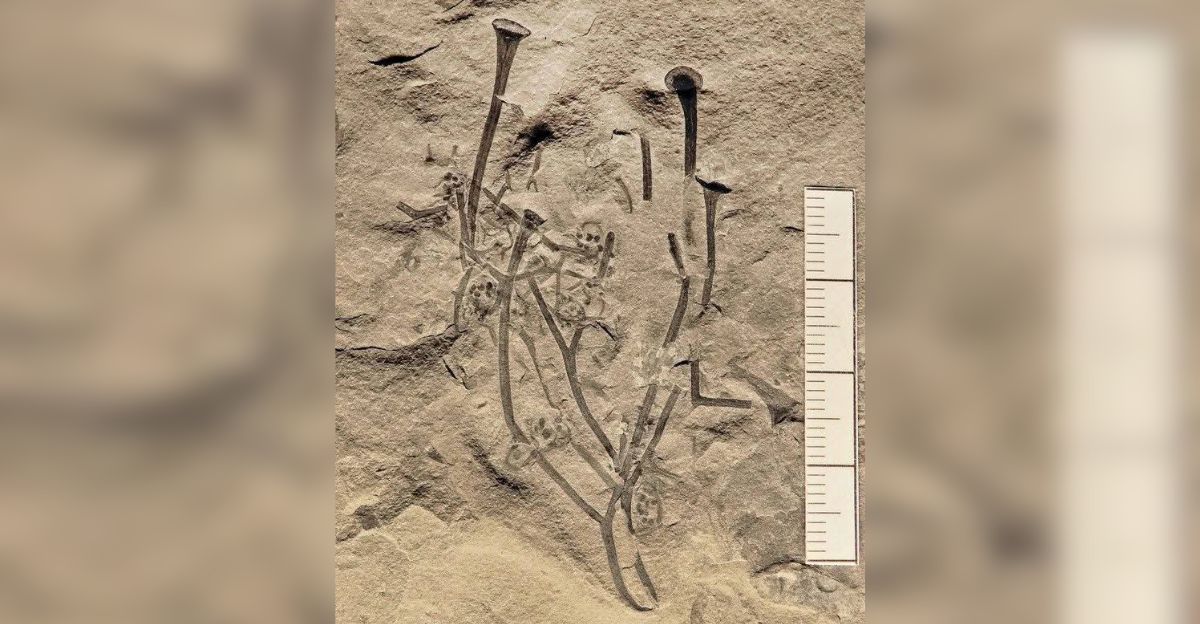
Horneophyton lignieri never became a giant. It didn’t need to. Its value lies in what it reveals about evolution itself. Progress wasn’t linear. It was experimental.
A 20-centimeter plant, preserved for 407 million years, holds the blueprint that eventually enabled towering forests. In uncovering its story, we’re reminded that today’s world was built on countless forgotten solutions.
Sources:
New Phytologist – “Transfer cells in Horneophyton lignieri illuminate the origin of vascular tissue in land plants” – December 17, 2025
Philosophical Transactions of the Royal Society B – “History and contemporary significance of the Rhynie cherts—our earliest terrestrial ecosystem” – December 17, 2017
Plant Molecular Biology – “Deep origin and gradual evolution of transporting tissues: Perspectives from across the land plants” – July 28, 2022
eLife – “An evidence-based 3D reconstruction of Asteroxylon mackiei” – August 23, 2021
Nature Communications – “A fungal plant pathogen discovered in the Devonian age Rhynie chert” – November 30, 2023
Proceedings of the National Academy of Sciences – “The timescale of early land plant evolution” – March 5, 2018