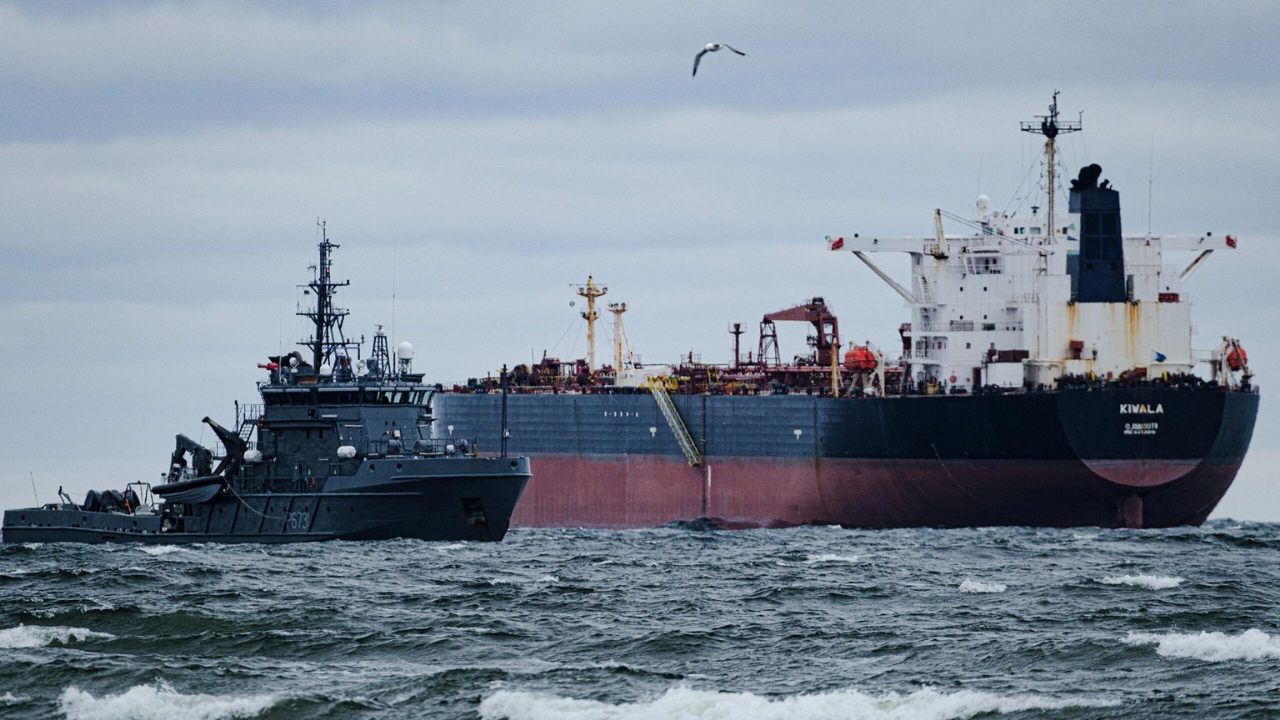
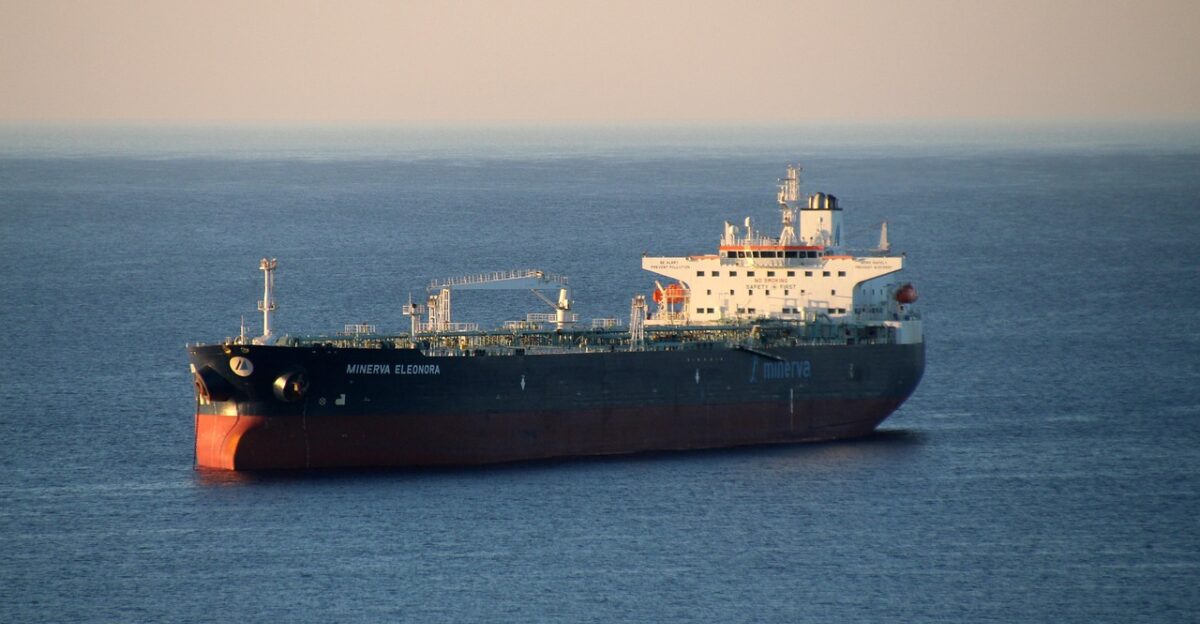
At dawn in the North Atlantic, U.S. special operations helicopters swept low over heavy seas as Navy SEALs fast-roped onto a Russian-flagged oil tanker moving between Iceland and Scotland. About 190 miles south of Iceland, with Coast Guard cutters circling nearby and Russian warships notably absent, the boarding ended a two‑week, 3,000‑mile pursuit and became the first known U.S. seizure of a Russian‑flagged tanker on the high seas during an active sanctions campaign. The ship, the Marinera, was empty of cargo. A second vessel seized the same day, the Panama‑flagged M/T Sophia, was carrying an estimated $108 million in Venezuelan crude.
Russian Warships, Submarine – But No Show at the Final Moment
In the days leading up to the interception, Russia deployed significant naval power to shadow the Marinera across the Atlantic. According to U.S. defense officials and ship‑tracking data cited by major outlets, a submarine and several surface combatants from Russia’s Northern Fleet moved into the area and, at times, sailed in proximity to the tanker during its northward run from the Caribbean.
Yet when SEALs boarded the Marinera around 7:00 a.m. Eastern Time on January 7, Russian ships were not in the immediate vicinity, according to two U.S. defense officials quoted by The New York Times. Moscow did not explain the gap between its earlier escort and its absence at the critical moment. It remains unclear whether Russian commanders were ordered to stay clear, arrived too late, or chose not to risk a confrontation over a sanctions‑evading vessel.
The Kremlin offered no detailed operational account, and President Vladimir Putin had not publicly addressed the episode by January 8. Russia’s official reaction came instead from the Foreign Ministry, which denounced the seizure as “outright piracy” and demanded humane treatment of the crew. Analysts note that, given the presence of Russian naval assets in the wider region, their noninterference during the boarding has become a focal point for those studying great‑power behavior at sea.
The Shadow Fleet and Trump’s Maritime Crackdown
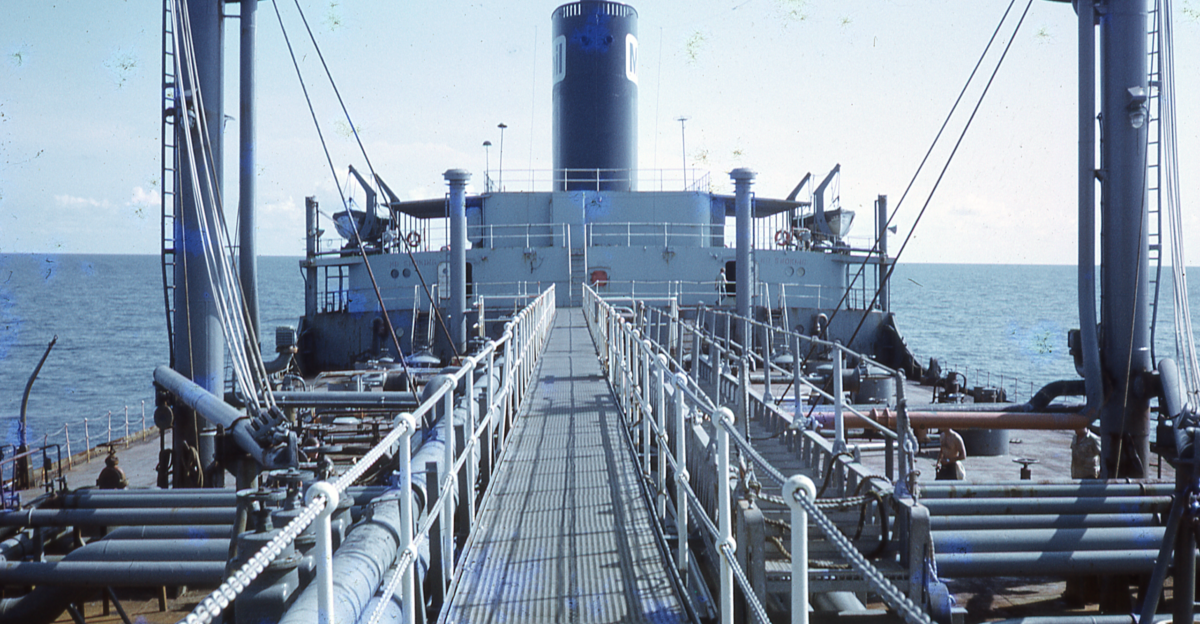
The Marinera is part of a sprawling “shadow fleet” of older tankers used to move sanctioned oil outside regulated markets. These vessels frequently reflag, alter or disable tracking systems, and falsify cargo paperwork to obscure the origin and destination of crude. Maritime intelligence firm Windward has estimated that more than 1,100 such ships operate worldwide, moving Iranian, Russian, and Venezuelan oil worth billions annually.
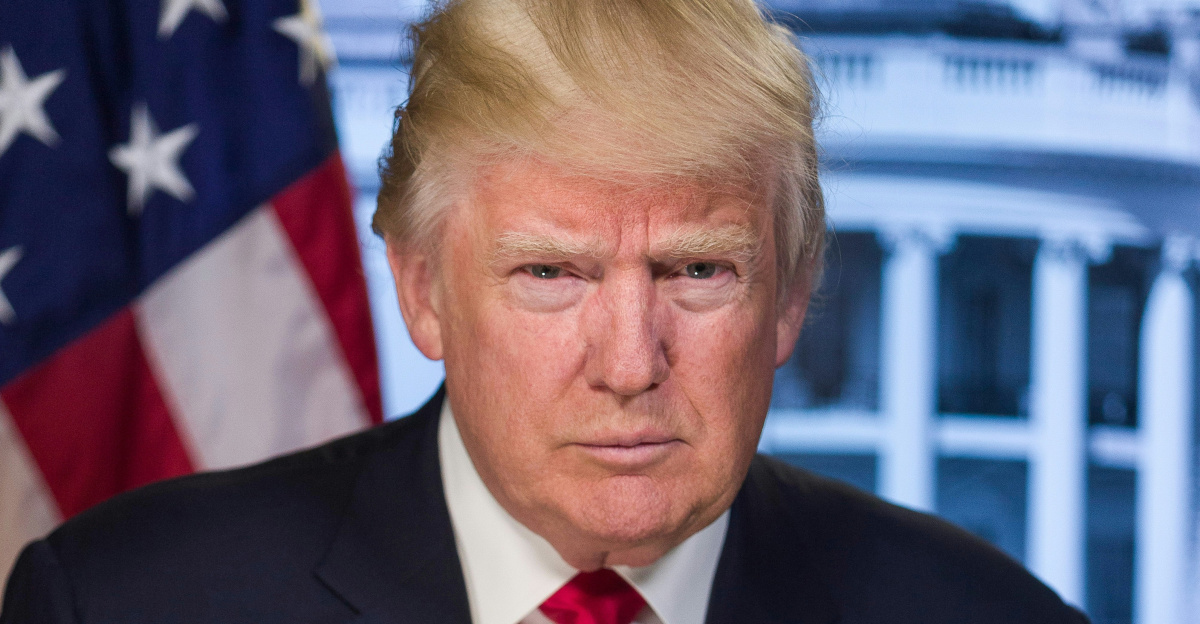
Confronting this network has become a central element of Washington’s effort to enforce energy sanctions. On December 16, 2025, President Donald Trump announced a “complete blockade” of Venezuela‑linked petroleum exports under Operation Southern Spear, an interdiction push described by officials as the most aggressive U.S. maritime enforcement action in decades. Since then, Navy destroyers, Coast Guard cutters, and Air Force surveillance aircraft have tracked dozens of suspect tankers across the Caribbean, Gulf of Mexico, and Atlantic, shifting U.S. strategy from reliance on financial penalties toward direct physical enforcement at sea.
How the Marinera Became a Legal Test Case

The January 7 boarding took place in international waters within Iceland’s exclusive economic zone, making it both a legal and diplomatic test. U.S. authorities acted under a federal court warrant. The operation unfolded without injuries and with no direct Russian military involvement, despite earlier Russian movements in the broader area.
The Marinera carried a complex history. Previously named Bella 1 under a Guyanese flag, it had been sanctioned in July 2024 for alleged links to Iran’s Revolutionary Guard and Hezbollah. Records indicate the tanker was carrying Iranian crude toward Venezuela when it abruptly changed course in mid‑December. After a failed U.S. interception attempt near Trinidad, the ship fled north into the Atlantic. During that flight it repainted its hull with a Russian flag, adopted the name Marinera, and received Russian flag authorization on December 24.
Washington argues that by previously flying a false Guyanese flag, the vessel rendered itself effectively stateless at sea, removing key protections under international maritime law. Russia counters that its temporary registration conferred Russian flag immunity before the U.S. boarding. Maritime law specialists have described the clash over statelessness, flag rights, and sanctions enforcement as largely without precedent.
U.S. officials say the Marinera’s crew lost contact with Russian authorities after the boarding and will be questioned as material witnesses in sanctions cases. No casualties were reported. Moscow’s public response has so far been limited to diplomatic protests.
Economic, Environmental, and Strategic Ripples
The Marinera’s tanks were empty when seized, according to Windward, suggesting the ship had previously discharged its sanctioned cargo or completed a ship‑to‑ship transfer. Analysts say that makes the capture of the vessel itself the primary objective, signaling a U.S. intent to establish legal grounds for boarding ships tied to Russia that are suspected of sanctions evasion. In parallel, the seizure of the M/T Sophia, bearing 1.8 million barrels of Venezuelan crude, delivered a more immediate economic blow. Together, the two operations amounted to the largest single day of interdictions under Operation Southern Spear.
Oil prices ticked up modestly as traders weighed the risk of broader supply disruptions. With Venezuela producing roughly 800,000 barrels a day, any sustained interference with exports could complicate global supply calculations. Venezuela’s state energy company rerouted some tankers, while marine insurers increased premiums for voyages near U.S. enforcement zones.
Environmental groups and maritime safety experts highlight another dimension: many shadow fleet tankers are aging, under‑maintained, and poorly insured. Built in 2002, the Marinera is now 23 years old, fitting a profile that studies associate with heightened spill risk and gaps in liability coverage. Coastal states, they warn, may ultimately shoulder cleanup costs that can exceed $1 billion when such ships run into trouble.
The episode is also reshaping political and diplomatic debate. At home, the operation is one of the most direct confrontations with Russian interests of Trump’s second term. Supporters argue that robust enforcement is necessary to make sanctions effective. Critics warn the move pushes the United States toward potential clashes with other major powers at sea without explicit congressional authorization, and have called for detailed briefings on rules of engagement.
Abroad, the United Kingdom provided support, including RAF surveillance aircraft and the Royal Fleet Auxiliary ship RFA Tideforce, but European capitals were divided over the scope and aggressiveness of maritime enforcement. For many allies, the case underscores a broader tension: how far to go in enforcing sanctions without eroding long‑standing principles of freedom of navigation and flag‑state authority.
As the Marinera affair unfolds in courts and diplomatic channels, it is emerging as a marker of a new era at sea, where economic restrictions are backed by special operations raids and contested legal theories. The outcome will help define how far nations can go in targeting the shadow fleet—and how other powers choose to respond—at a time when the boundary between economic pressure and military confrontation is increasingly difficult to draw.
Sources:
The New York Times – “U.S. Seizes Oil Tanker and Boards Another Amid Tensions With Russia” – January 7, 2026
CNN – “Trump orders ‘total and complete blockade’ of sanctioned oil tankers” – December 16, 2025
The Wall Street Journal – “Russia Sends Submarine to Escort Tanker the U.S. Tried to Seize Off Venezuela” – January 6, 2026
CBS News – “U.S. military seizes 2 Venezuela-linked oil tankers in North Atlantic” – January 6, 2026
NBC News – “U.S. seizes Russian-flagged oil tanker linked to Venezuela” – January 7, 2026
Argus Media – “US seizes second crude tanker of the day” – January 6, 2026