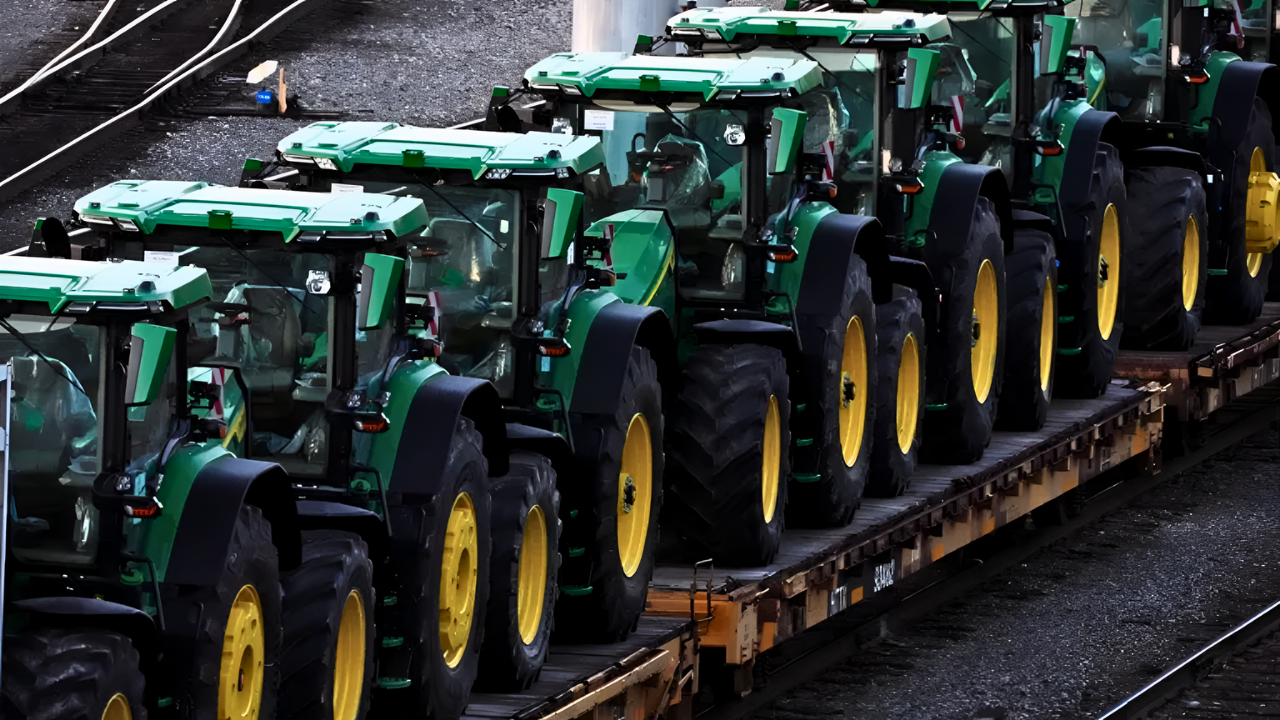
In small and mid-sized cities across Iowa, one of the state’s most important employers is shrinking fast. Since 2015, agricultural equipment maker John Deere has eliminated more than 4,500 jobs in the state, including nearly 200 positions cut on January 3, 2025. The reductions represent the largest wave of Iowa layoffs in the company’s history, even as Deere projects net earnings of more than $5 billion for fiscal 2025—down 29% from the prior year’s $7.1 billion, but still substantial. The tension between continued profitability, sweeping job losses and a changing global footprint is now at the center of economic and political debate from Ottumwa to Waterloo.
Farm Slump Drives Layoffs and Production Shifts

Behind the cuts is a steep downturn in farmers’ buying power. Prices for major crops have fallen sharply, with corn down about 37%, soybeans 24%, and wheat roughly 35% from 2022 peak levels. Lower commodity prices have translated into weaker farm incomes and fewer big-ticket purchases, including new tractors and harvesters.
Deere has responded by trimming production at multiple Iowa plants. State WARN filings show job cuts at factories in Ottumwa, Waterloo, Ankeny and other locations, with 75 positions lost in Ottumwa and 141 in the Waterloo/Ankeny corridor alone. At the same time, the company is moving $55 million in operations from Iowa to Mexico, including skid steer loader production that is expected to be fully relocated from Dubuque by 2026. That shift is part of a broader restructuring strategy that seeks lower operating costs and more flexible production outside the United States.
The downcycle in farm spending is likely to persist in the short term. Federal projections for 2023 and 2024 point to lower receipts from major row crops, leading many farmers to postpone machinery upgrades and rely on existing or used equipment. Dealers and repair operations in Iowa report discounting inventories and parts while bracing for continued soft demand.
Communities Confront Job Loss and Local Slowdowns

The impact of Deere’s decisions is being felt first in the communities that long depended on its payrolls. On January 3, 2025, workers at Ottumwa, Waterloo, Ankeny, Davenport and Dubuque learned of new layoffs, adding to years of earlier reductions. Local officials warn that shrinking factory workforces are eroding city tax bases, straining budgets for schools and public services.
Service and retail businesses are reporting fallout. In towns like Ankeny and Ottumwa, restaurant and motel operators report decreased customer traffic after job cuts. Agricultural retailers, already coping with weak farmer demand, are cutting staff and marking down fertilizer, seed and chemical inventories. In Waterloo and other manufacturing hubs, layoffs among Deere’s parts dealers and suppliers are expected to continue into 2025.
The effects extend through the broader supply chain. Component makers that provide engines, drive trains, steel parts, rubber and other materials to Deere’s Iowa plants report order slowdowns and production delays. As factory output ratchets down, these businesses are working fewer shifts and, in some cases, reducing their own workforces.
Corporate Strategy, Tariff Threats and Global Competition

Deere’s restructuring has unfolded alongside a public dispute over trade policy. In 2024, former President Donald Trump proposed 200% tariffs on equipment Deere manufactures in Mexico and sells into the U.S. market. Analysts estimate those tariffs could cost the company about $600 million in 2025, with potential losses rising to $1.2 billion by 2026 if the levies are fully implemented and production continues shifting south.
Despite the political pressure, Deere has confirmed it will proceed with its $55 million expansion in Mexico. The company argues that the move is central to long-term competitiveness, especially as it faces rivals in Brazil, Europe and other markets where farm machinery makers are vying for price-sensitive customers. The relocation has intensified questions in Iowa about whether future product lines will stay in the state or follow skid steers and other equipment abroad.
At the corporate level, Deere maintains that its actions are driven by “challenging market conditions” and the need to align production with demand. In 2023, CEO John May received compensation totaling $26.7 million, a figure that has fueled criticism from some workers and community leaders who see a disconnect between executive pay, substantial earnings and large-scale layoffs.
Human and Health Costs in a Changing Farm Economy
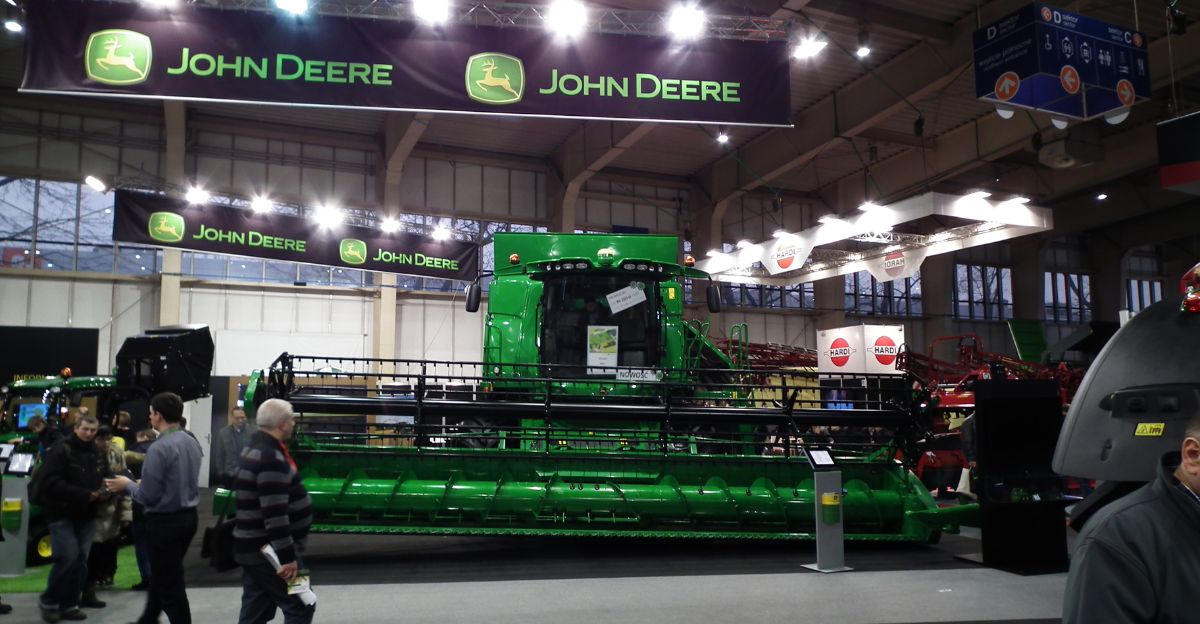
Beyond the balance sheet, the cuts are reshaping daily life for affected families. Many laid-off employees in Davenport, Waterloo and other cities receive six months of health benefits, but some are delaying medical or dental care once coverage runs out. Local officials and advocates report rising stress, anxiety and depression among those who have lost long-held factory jobs.
The strain on household budgets is altering spending patterns across rural Iowa. Households are cutting back on dining out, travel and discretionary purchases, aggravating the downturn for hospitality businesses. At the same time, fewer farmers investing in newer, more efficient machinery has slowed the spread of precision agriculture technologies that can reduce fuel use and inputs. While reduced U.S. factory activity may marginally lower local industrial emissions, longer supply chains from Mexico to Midwest fields raise questions about transport-related environmental impacts.
For farmers, the immediate priority is financial resilience. Advisers are encouraging producers to delay non-essential machinery purchases, look for bargains in used equipment from idled or downsizing lines, and consider crop diversification to better withstand swings in commodity prices. Some workers leaving Deere are exploring retraining, but many communities have limited alternative industrial employers able to absorb large numbers of displaced employees.
Uncertain Path Ahead for Deere and Iowa
As 2026 approaches, Deere is on track to complete the transfer of skid steer production from Dubuque to Mexico, while continuing to manage through a weak farm economy and possible U.S. tariff action. The company’s stock has shown episodes of volatility but has also drawn investors who are betting on an eventual recovery in global agriculture and continued profitability.
For Iowa, the loss of more than 4,500 Deere jobs since 2015, combined with ongoing production shifts, underscores the vulnerability of manufacturing-dependent towns to global price cycles and corporate restructuring. Local governments in places like Ottumwa and Dubuque face hard choices about how to maintain services with a diminished tax base, even as they try to attract new employers. The outcome of trade debates, commodity price trends and Deere’s own strategy will shape whether these communities stabilize, diversify or face deeper contraction in the years ahead.
Sources:
“John Deere has cut more than 4500 jobs since 2015.” Investigate Midwest, 14 Jan 2025.
“Deere Reports Net Income of $1.065 Billion for Fourth Quarter, $5.027 Billion for Fiscal Year 2025.” Deere & Company Official News Release, 25 Nov 2025.
“John Deere confirms US $55M investment in Mexico plant despite Trump’s tariff threats.” Mexico News Daily, 25 Nov 2024.
“Trump threatens John Deere with 200% tariffs if production moves to Mexico.” Reuters, 23 Sep 2024.