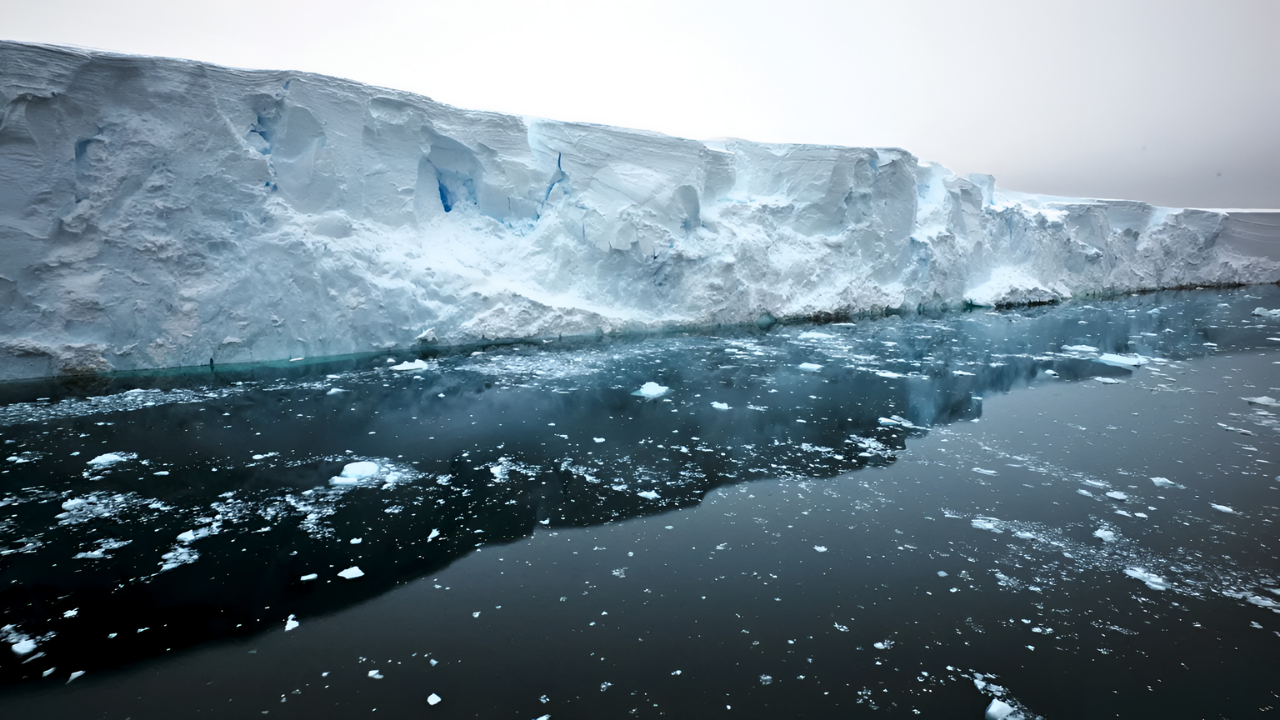
Deep under almost three kilometers of Antarctic ice, scientists expected to find a frozen archive of Earth’s distant past. Instead, they uncovered a problem that could erase valuable climate records. Radar scans of the South Pole Basin, once thought to contain the planet’s oldest ice, show that the lower layers are melting due to heat rising from the ground below. The discovery suggests that some of the crucial climate information stored in Antarctic ice may already be disappearing, just as scientists are preparing new drilling missions to uncover it.
For decades, researchers have used ice cores from Antarctica and Greenland to look back through time, studying how temperature, greenhouse gases, and even volcanic activity changed. The deepest cores currently provide a continuous record stretching back about 800,000 years. That is impressive, but scientists working with the U.S. National Science Foundation’s Center for Oldest Ice Exploration, known as COLDEX, hoped to go back even further over a million years, to learn how the Earth behaved during ancient climate transitions.
Understanding those earlier conditions matters. Knowing how ice sheets and carbon dioxide levels responded to natural warming in the past could help predict how today’s climate will evolve and how quickly sea levels might rise in the future.
Searching for the Oldest Ice
To find ice older than a million years, COLDEX researchers looked for areas where thick ice had built up slowly and steadily, without much melting or disturbance. The South Pole Basin, located deep inside East Antarctica, seemed like the perfect candidate. Its massive, slow-moving ice sheet appeared stable, the kind of place where ancient ice could survive undisturbed for millions of years.
In 2021, scientists from the University of Texas Institute for Geophysics joined the effort and began mapping the region using radar. Airborne radar can reveal the structure of ice layers and the shape of the bedrock beneath, allowing researchers to detect whether the deep ice remains intact. Early results looked promising: the ice was thick and might indeed be very old. But the radar images also hinted at something strange happening near the base, irregular patterns suggesting melting or disturbance. That mystery prompted further investigation.
Heat Rising From Below
Between 2021 and 2023, additional radar studies confirmed the team’s suspicions. In several areas of the South Pole Basin, the deepest ice is melting from below. Instead of sitting directly on solid rock, much of the ice base floats on thin layers of water and sediment, warmed by geothermal heat.
This finding surprised scientists because existing models predicted far lower heat flow in this region. Something in the local geology, possibly radioactive rocks or unusually thin crust, is releasing more heat than expected. That extra warmth not only melts ice but also changes how the ice above it moves. It can speed up or redirect ice flow, influencing how the larger Antarctic Ice Sheet behaves. Over time, those changes could affect how much ice ends up in the ocean, and, ultimately, global sea levels.
Beyond melting, the heat is also stirring up ancient materials buried below the ice. Sediment that once eroded from long-lost mountain ranges is being mobilized and redeposited, forming a kind of hidden conveyor belt under the ice sheet. This process has been occurring for tens of millions of years, creating a new subglacial landscape previously unknown to science. For researchers hoping to find untouched ice layers, however, this movement poses a serious problem. Sediment mixing into the bottom ice disrupts the precise layering that scientists depend on to read the planet’s past.
Rethinking the Hunt for Ancient Ice
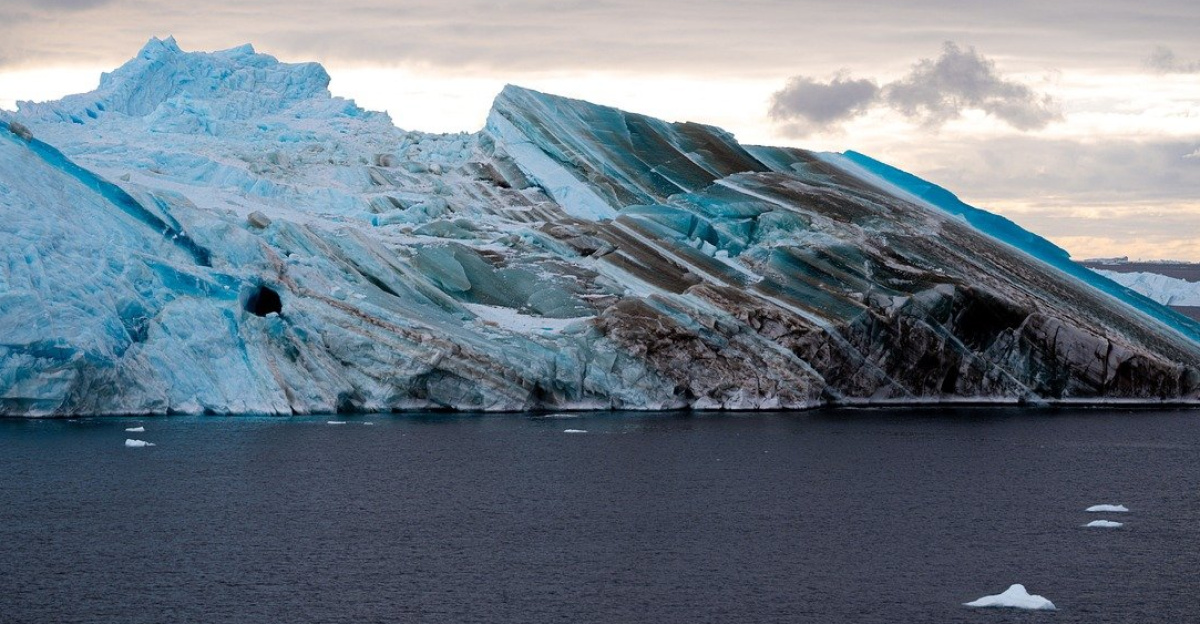
For the COLDEX project, the discovery of geothermal melting is a setback, but it doesn’t end the search. Drilling in parts of the South Pole Basin may no longer make sense because the lowest layers, the most ancient and valuable, are likely incomplete or jumbled. However, the radar maps also point to nearby zones that remain relatively undisturbed. These locations, where the ice flows more gently and farther from the heat sources, might still contain intact million-year-old layers.
The research group is now re-evaluating its drilling plans and looking to other promising sites. One major focus is the Allan Hills region of East Antarctica, where strong winds and natural ice flow bring extremely old ice up toward the surface. Samples collected there have already been dated to around six million years old. Unlike the South Pole Basin, Allan Hills allows scientists to collect ancient ice near the surface rather than drilling miles down. This approach could offer critical clues about Earth’s climate cycles even as geothermal melting limits other opportunities.
The findings from the South Pole Basin also expose weaknesses in current computer models of how Antarctica’s ice interacts with heat from the planet’s interior. The data show that geothermal energy varies far more across the continent than previously assumed. Incorporating these differences into models will help scientists make more accurate predictions about future ice loss and sea-level change.
Still, the discovery carries a sobering message. Some of Earth’s oldest climate records may already be disappearing beneath Antarctica’s slowly melting interior. The race is now on to locate and study what remains before time and heat erase those frozen stories from our planet’s past, and with them, vital clues to its future.
Sources:
“Coupled Ice Sheet Structure and Bedrock Geology in the Deep Interior of East Antarctica: Results From Dome A and the South Pole Basin.” Geophysical Research Letters, 3 Oct 2025.
“While Searching for the World’s Oldest Ice, Scientists Find Sediment Sneaking Under the Antarctic Ice Sheet.” University of Texas Institute for Geophysics, 17 Oct 2025.
“Reaching Big Milestones at the Allan Hills.” NSF Center for Oldest Ice Exploration (COLDEX), 30 Dec 2024.
“Discovery of High Geothermal Heat at South Pole.” British Antarctic Survey, Nov 2018.