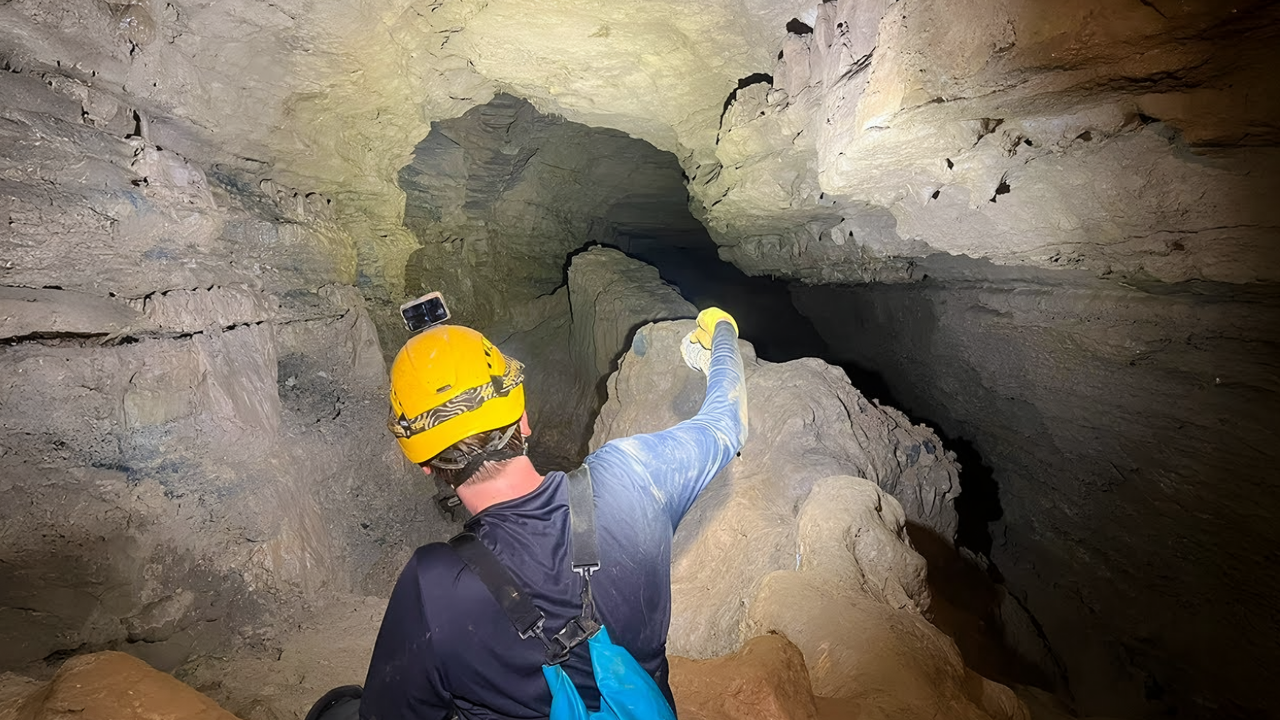
Deep beneath the French countryside, in La Roche-Cotard cave, finger-drawn lines and dots lay hidden under 30 feet of sediment for 57,000 years, revealing Neanderthals as capable artists with intentional symbolic expression long before modern humans reached Europe.
This June 2023 discovery, confirmed by 50 sediment samples, predates human arrival in the region by at least 20,000 years. The abstract engravings challenge long-held views of Neanderthals as cognitively limited, reshaping narratives of early human evolution.
Discovery in the Loire Valley
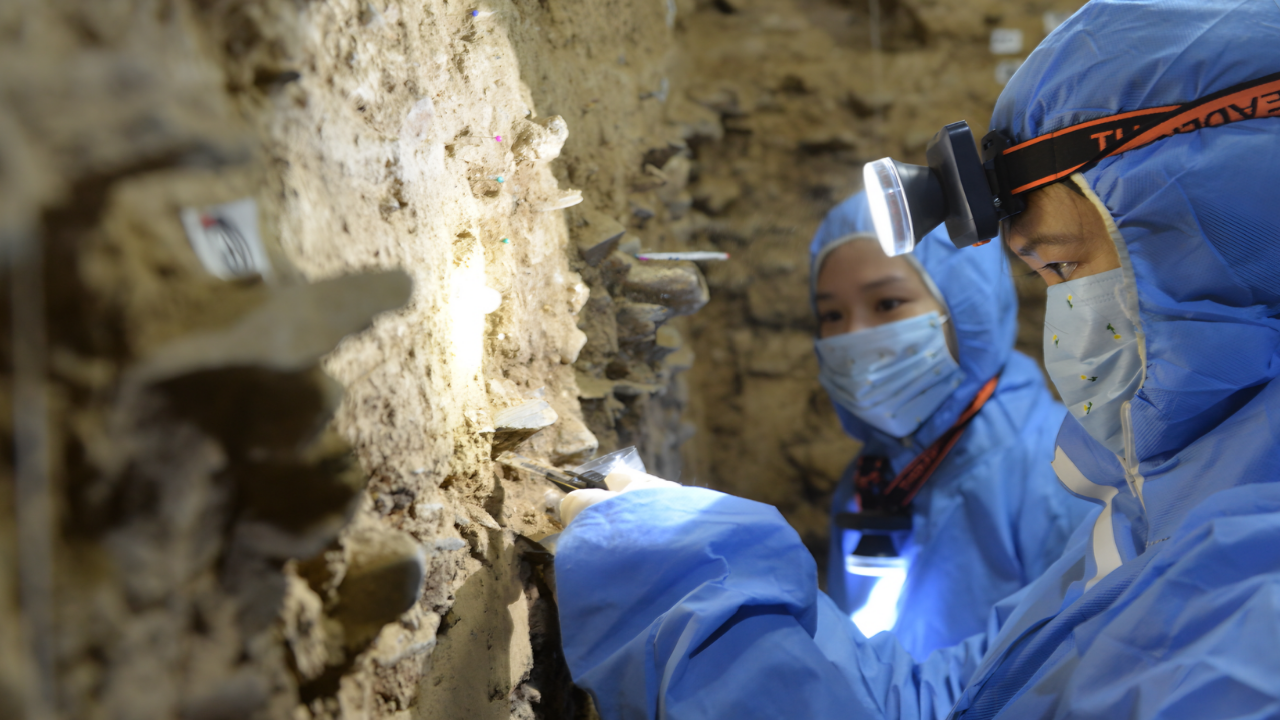
Archaeologists uncovered the engravings on tuffeau limestone walls inside La Roche-Cotard, a cave above the Loire River formed by limestone dissolution. Exposed during 1846 railroad work and partially excavated from 1912, the site yielded Mousterian tools and animal bones linked to Neanderthals. Finger tracings, first noted in the 1970s, underwent rigorous reexamination starting in 2016 across eight panels featuring wavy lines, parallel grooves, curved motifs, and dots.
These organized patterns, created by drawing fingers through soft chalky stone, stood out from random marks. The cave’s chambers likely sheltered Ice Age groups, with sediments eventually sealing the entrance, preserving the artwork intact.
Distinguishing Intentional Art
Researchers used high-resolution photogrammetry to create 3D models of the grooves, analyzing depth, spacing, and cross-sections. They ruled out natural formations, bear claws, and damage from early 20th-century digs. Volunteers replicated marks on similar tuffeau using fingers, nails, bone, wood, flint, and metal. Statistical comparisons showed the ancient grooves matched finger-made ones most closely, confirming deliberate human creation with minimal force—accessible even to younger or weaker individuals.
The tuffeau’s fine quartz grains and mollusk shells allowed easy engraving while resisting long-term weathering once sealed.
Dating the Sealed Past
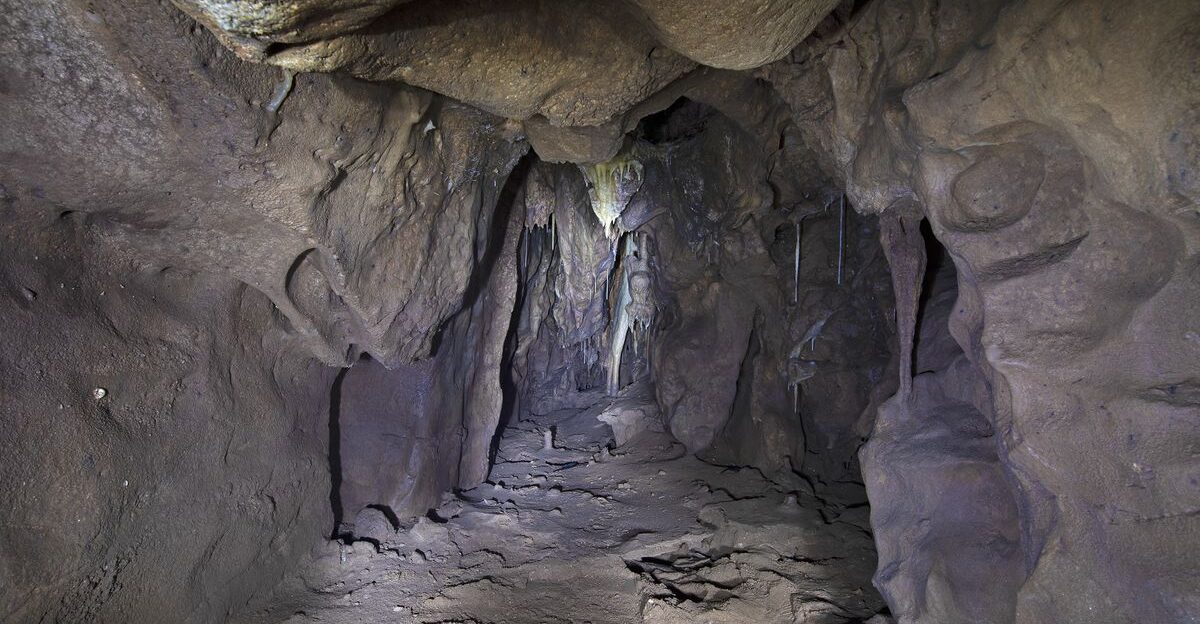
Direct dating proved impossible: finger grooves lack organic material for radiocarbon, and overlying calcite was too thin for uranium-thorium. Instead, optically stimulated luminescence (OSL) dated 50 sediment samples from the cave interior, entrance, and slope. OSL measures electrons trapped in quartz and feldspar grains since burial in darkness, reset by prior sunlight exposure.
Results averaged 57,000 years, plus or minus 3,000 years, with some evidence pointing to 75,000 years. Excavated layers held only Neanderthal Mousterian artifacts—hand axes, scrapers, points, denticulates, and Levallois flakes requiring foresight—no Upper Paleolithic tools from modern humans, who arrived around 40,000-45,000 years ago.
Neanderthal Symbolic Reach

This find aligns with hand stencils in three Spanish caves (La Pasiega, Maltravieso, Ardales), dated 64,000-65,000 years old via uranium-thorium on pigment crusts. Spanning over 700 kilometers, these suggest widespread Neanderthal symbolic behavior. La Roche-Cotard’s engravings predate Chauvet Cave’s modern human paintings (32,000-36,500 years) by 20,000-27,000 years.
Other evidence includes 115,000-year-old perforated shells, modified eagle talons for jewelry, pigment use, and possible burials, indicating Neanderthals engaged in ornamentation, ritual, and now wall art.
Implications for Human Origins
The abstract patterns—lacking depictions of animals or figures—hint at territorial markers, rituals, or undeciphered communication, demanding spatial planning and aesthetic sense. Sealed by over 30 feet of frost-fractured rock, flood deposits, and erosion by 57,000 years ago, the cave excludes later visitors.
This evidence positions Neanderthals as cognitively comparable to early modern humans, with differences likely due to population size, networks, and environment rather than ability. As more sealed sites await exploration, these traces urge a reevaluation of extinction causes—not inferiority, but adaptive pressures—while highlighting shared creative depths in our lineage.
Sources:
The Earliest Unambiguous Neanderthal Engravings on Cave Walls. PLOS One, June 21, 2023
Neanderthals Were Artists Too. CNRS News, 2023
Oldest Known Neanderthal Engravings Were Sealed in a Cave for 57,000 Years. Smithsonian Magazine, June 2023
Neanderthals May Have Created Cave Art in France. Archaeology Magazine, June 25, 2023
Archaeologists Have Discovered the World’s Oldest Cave Paintings And They’re by Neanderthals. artnet News, 2018