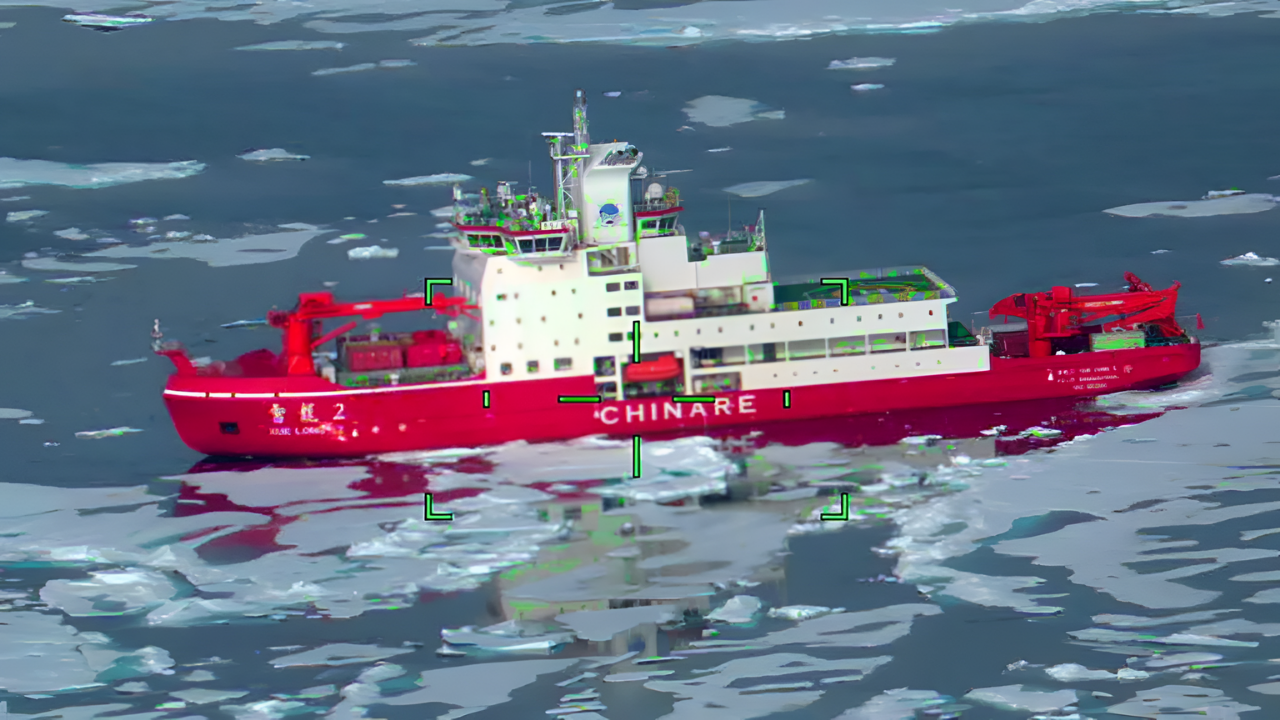
Between July and September 2025, five Chinese research and military ships entered U.S. Arctic waters near Alaska at the same time. The Department of Homeland Security described this surge as “unprecedented in numbers,” marking a significant shift in Beijing’s Arctic strategy. One vessel, Zhong Shan Da Xue Ji Di, came within 143 miles of Utqiagvik, America’s northernmost town, and completed its survey work before U.S. forces could fully respond.
Coast Guard cutters scrambled to track the Chinese fleet, but officials admitted they struggled to monitor multiple vessels operating simultaneously. The problem runs deeper than just tracking ships. The United States operates only two working icebreakers—USCGC Polar Star and USCGC Healy—while Russia commands over 40 heavy icebreakers and China now fields five. This creates a stark 20-to-1 disadvantage against Russia alone.
China achieved another milestone on August 6, 2025, when its manned submersible Jiaolong completed the first Chinese crewed dive beneath Arctic pack ice in the Chukchi Sea, 186 miles northwest of Alaska. Operating from the mothership Shen Hai Yi Hao, Jiaolong gathered seafloor and geological data at depths the U.S. cannot reach with its own equipment.
China’s companion submersible, Fendouzhe, conducted 43 dives, reaching a depth of 17,322 feet that summer, mapping the Gakkel Ridge and collecting samples that provide crucial intelligence on ocean currents, biology, and terrain. These nearly 50 missions outpaced those of any non-Russian nation and provided Beijing with superior datasets on Arctic seafloor maps and ocean profiles.
Why the Arctic Suddenly Matters to Global Powers
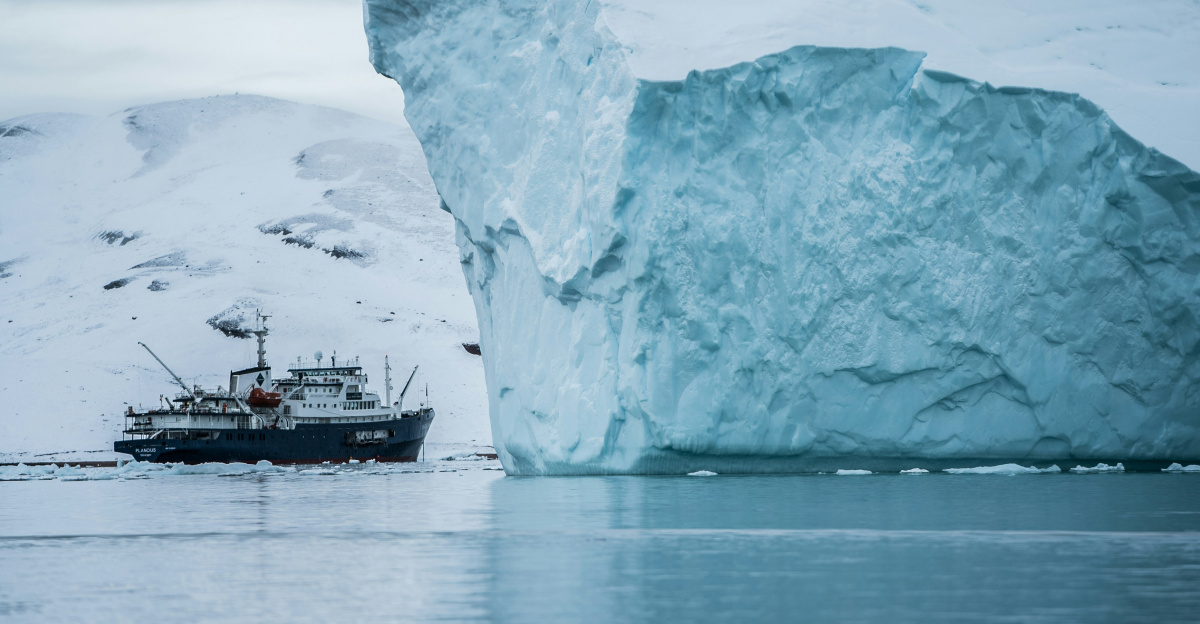
Climate change has transformed the Arctic from a frozen wasteland into a strategic prize. Melting ice now opens Asia-Europe shipping routes that cut travel time by 40 percent compared to traditional southern passages. These shorter routes save on fuel costs and bypass potential chokepoints, such as the Suez Canal.
The thawing Arctic also exposes vast mineral deposits and oil reserves that nations can now access. China declared itself a “near-Arctic” power in 2018 and quickly moved from talk to action, building icebreakers and launching regular expeditions by 2024. Russia has dominated the region for decades and continues investing heavily in polar military bases and shipping infrastructure. In July 2024, China and Russia conducted their first-ever joint military aircraft patrol within 200 miles of Alaska’s coast, demonstrating their shared goal of controlling Arctic commerce and reducing American influence.
The two countries formalized their cooperation in 2024 through a working group focused on developing the Northern Sea Route and jointly extracting resources. Remote Alaskan communities, such as Utqiagvik, Prudhoe Bay, and Barrow, lack a strong Coast Guard presence or emergency support, raising concerns as foreign vessels monitor critical infrastructure. China plans to integrate Arctic routes into its Belt and Road Initiative, aiming for year-round navigation by 2030.
America Races to Close the Gap
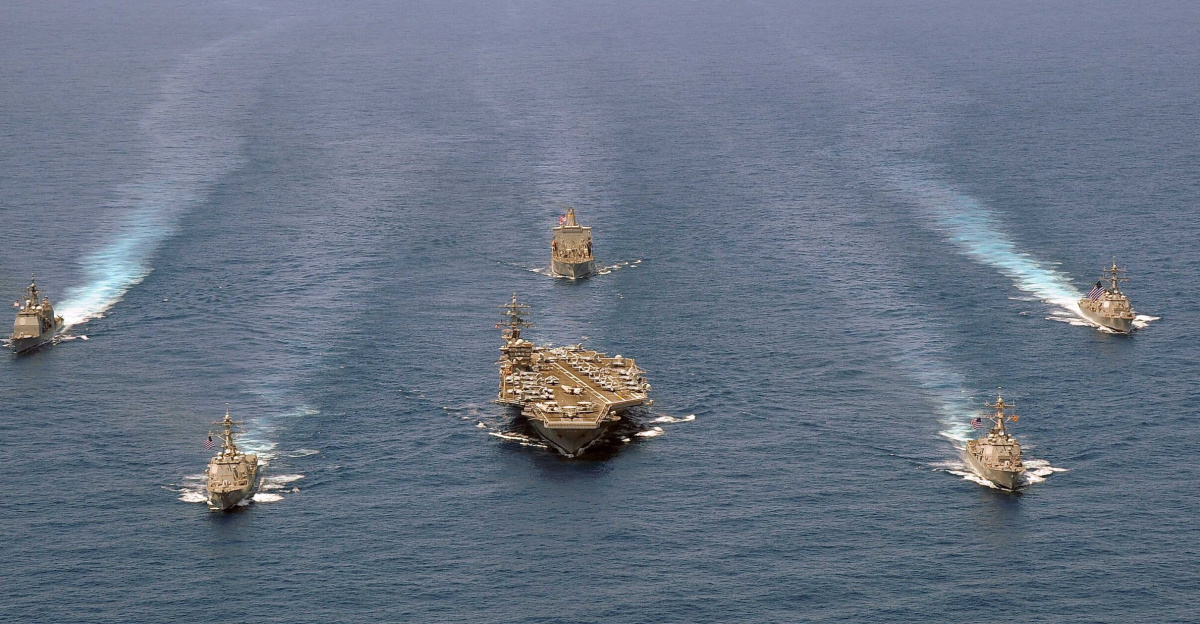
A November 2024 DHS alert warned that Beijing’s “extensive time” in U.S. extended continental shelf waters and four dozen submersible dives posed homeland security risks. This warning prompted the United States to form the Icebreaker Collaboration Effort (ICE) Pact with Canada and Finland, committing $500 million for the construction of new vessels.
Finland will lead the building process, with the first U.S. icebreaker scheduled to launch in 2028, followed by additional ships every two years. The Coast Guard commissioned a new cutter, USCGC Storis, and deployed it alongside Healy and Waesche in September 2025 to respond to Chinese operations. A senior Navy strategist told Alaska Dispatch News that officials had issued warnings for a decade while China added five icebreakers and America built none.
Congress has questioned why the U.S. fleet shrank so dramatically. NATO expanded its Dynamic Mongoose submarine-tracking exercises in 2025 and restructured its commands to improve Nordic-Atlantic coverage, although experts worry that this could trigger a coordinated Russian-Chinese retaliation. The Arctic’s fate now depends on whether the United States can match its rivals’ commitment.
Ice continues receding faster than scientists predicted, meaning control over trade routes, security, and natural resources will reshape global power.
Sources
- CBS News, China has “unprecedented number” of ships in U.S. Arctic waters, November 26, 2025
- The War Zone, Unprecedented Chinese Icebreaker Deployment Off Alaska Being Monitored by U.S., August 7, 2025
- Popular Mechanics, Russia Is Absolutely Crushing the U.S. Navy in the Arctic, February 27, 2025
- Marine Insight, China Completes Largest Arctic Expedition With Historic First Manned Dive Beneath Ice, September 28, 2025
- gCaptain, China Deploys Five Icebreakers Near Alaska in Unprecedented Arctic Move, August 6, 2025
- U.S. Naval Institute Proceedings, Build a Coalition for Northern Sea Route Security, 2023