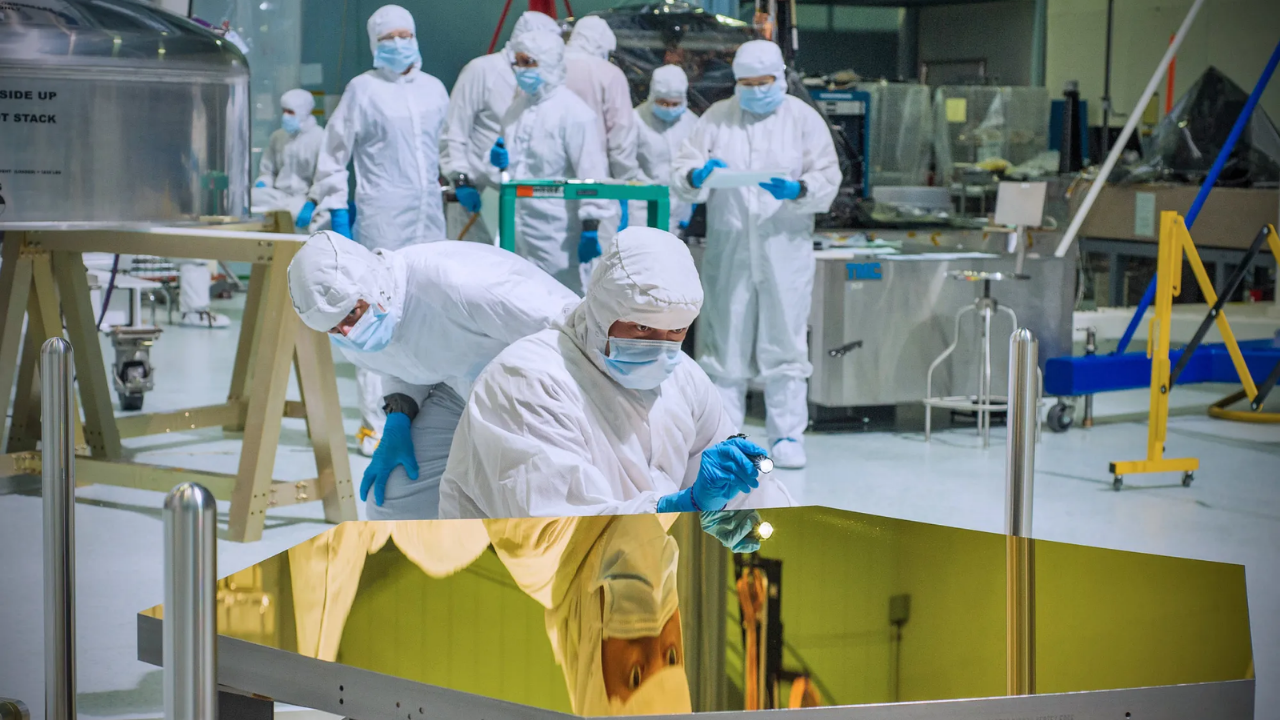
NASA spacecraft assembly cleanrooms are designed to be among the most controlled environments on Earth, using HEPA filtration, chemical sterilants, ultraviolet light, and strict protocols to suppress microbial life.
Yet genetic re-analysis of archived samples revealed 12 previously undescribed bacterial species persisting in these facilities. The finding does not mean the rooms failed—but it shows that extreme cleanliness can still harbor highly resilient microbes, prompting scientists to reassess how “biological cleanliness” is defined.
What was actually found
The study examined 48 preserved bacterial strains, collected in 2007 from cleanrooms at NASA’s Kennedy Space Center during assembly of the Phoenix Mars Lander.
Using modern genomic tools unavailable at the time of sampling, researchers determined that 12 of these strains belonged to novel bacterial species not previously described in scientific literature. These were not new arrivals—rather, they had gone unrecognized due to older identification limits.
Why the samples mattered
Samples were collected before spacecraft arrival, during assembly, and after rollout, allowing researchers to observe which microbes persisted across cleaning cycles and operational changes.
The fact that some strains remained detectable across phases suggests they were well-adapted to cleanroom stressors. Importantly, these organisms were found despite the facilities meeting all planetary protection standards in force at the time.
Clean does not mean sterile
NASA cleanrooms are not sterile environments. Absolute sterility is impractical in human-operated facilities, so standards instead limit particle counts and cultivable microbial load. This creates a strong selective pressure: most microbes die, but a small number with unusual stress tolerance survive.
Over time, cleanrooms become ecosystems favoring organisms able to endure desiccation, chemicals, and nutrient scarcity.
Genetic traits of survival
Genomic analysis showed that many of the novel species carried genes linked to DNA repair, oxidative stress resistance, detoxification, and biofilm formation. These traits help microbes survive radiation, cleaning agents, and long periods without nutrients.
While not proof they could grow on Mars, these capabilities explain how they persist in cleanrooms—and why they draw interest from planetary protection researchers.
Why Phoenix matters
The Phoenix lander targeted Martian polar regions with subsurface ice, areas considered sensitive for astrobiology. Even dormant microbes transported to such environments could complicate future life-detection efforts.
The study does not claim contamination occurred, but it underscores why understanding microbial resilience before launch is critical for missions aimed at potentially habitable environments.
Planetary protection in practice
Planetary protection seeks to prevent forward contamination of other worlds and backward contamination of Earth.
Current standards focus on reducing microbial numbers, not eliminating all life. This discovery suggests that microbial diversity and resilience may matter as much as raw counts, especially when organisms possess traits that allow long-term survival under space-like stress.
Not a failure, but a knowledge gap
The cleanrooms involved were fully compliant with NASA and international guidelines. The issue is not negligence, but biology outrunning assumptions.
Many microbes cannot be cultured with standard methods, meaning traditional monitoring may miss rare but robust species. Modern sequencing reveals what older tools could not, exposing blind spots rather than protocol violations.
Cleanrooms as selection environments
By repeatedly killing most organisms, cleanrooms act as selection filters, favoring extremotolerant microbes. In effect, they mimic aspects of space stress: low nutrients, dryness, chemical exposure, and radiation.
This makes them unintended laboratories for studying how life adapts to harsh conditions—information relevant to astrobiology and space engineering alike.
Historical context
Concerns about microbial persistence are not new. During the Viking era, NASA relied heavily on heat sterilization, yet spores were still detected in assembly areas.
The current findings fit this historical pattern: sterilization reduces risk but never guarantees zero biology. What has changed is our ability to detect and classify what survives.
Why researchers urge re-evaluation
Scientists involved in the study emphasize re-evaluation, not alarm. The presence of unknown species indicates that planetary protection models should incorporate genomic diversity, stress tolerance, and long-term survival—not just immediate viability.
This is a call to refine standards as technology and knowledge improve, not to halt exploration.
Implications for future missions
Future missions to Mars, Europa, or Enceladus may face stricter requirements, especially for so-called “special regions.”
Engineers may need to consider additional sterilization steps, different materials, or late-stage treatments. These changes could increase cost and complexity, but they reduce scientific risk.
Instrument contamination concerns
Even dead microbes can matter. Molecular fragments from Earth organisms could interfere with sensitive instruments searching for organic compounds or biosignatures.
Knowing which microbial genes and metabolites are most likely to persist helps mission teams design experiments that can distinguish Earth contamination from genuine extraterrestrial signals.
Limits of culturability
Many cleanroom microbes are difficult or impossible to grow under standard lab conditions. This means culture-based testing underestimates diversity.
Sequencing-based surveillance offers a more complete picture, suggesting future planetary protection frameworks may rely increasingly on genomic monitoring rather than petri dishes.
A three-layer view of cleanliness
Researchers increasingly distinguish between physical cleanliness (particles), procedural cleanliness (protocols), and biological cleanliness (microbial diversity and resilience).
NASA cleanrooms excel at the first two. The study highlights the need to better quantify the third.
Broader scientific value
Beyond planetary protection, these organisms offer insight into stress-tolerant biology. Their enzymes and repair systems may have applications in biotechnology, medicine, or industrial processes where resilience is valuable.
What poses a contamination concern in space may be a resource on Earth.
No evidence of Mars contamination
Crucially, the study provides no evidence that these bacteria survived launch, cruise, entry, descent, landing, or Martian surface conditions.
The findings stop at cleanroom persistence. Any suggestion that Mars has already been contaminated remains speculative and unproven.
Why archived samples matter
The discovery was possible only because NASA preserved samples for years. Re-examining archives with modern tools can yield new insights without new missions.
This highlights the long-term value of biological curation alongside hardware preservation.
From unknown to manageable
“Unknown” does not mean uncontrollable.
By identifying and characterizing these species, scientists can model their limits, improve detection, and design safeguards. Knowledge reduces uncertainty, turning an abstract risk into a quantifiable variable.
A measured conclusion
The identification of 12 novel bacterial species in NASA cleanrooms does not signal failure—but it does show that microbial life is more adaptable than once assumed.
As space missions target ever more sensitive environments, planetary protection must evolve alongside microbiology. The responsible response is not panic, but informed reassessment grounded in data.
Sources:
- 26 new tough microbes found in NASA cleanrooms
Publication: Tech Explorist (May 13, 2025)
- Scientists discover 26 new bacterial species in NASA’s … (“stop and re-check everything”)
Publication: Live Science (Dec 28, 2025)
- Tough microbes found in NASA cleanrooms hold clues to …
Publication: EurekAlert (American Association for the Advancement of Science) (May 11, 2025)
- Nasa scientists discover 26 unknown bacterial species in … (“‘Stop and re-check everything!’”)
Publication: GB News (Dec 29, 2025)
- NASA finds super-tough bacteria that could survive Mars trip
Publication: Interesting Engineering (Jan 2, 2026)
- NASA Identifies 26 Resilient Bacterial Species Capable of Evading Cleanroom Sterilization
Publication: SatNews (Jan 2, 2026)