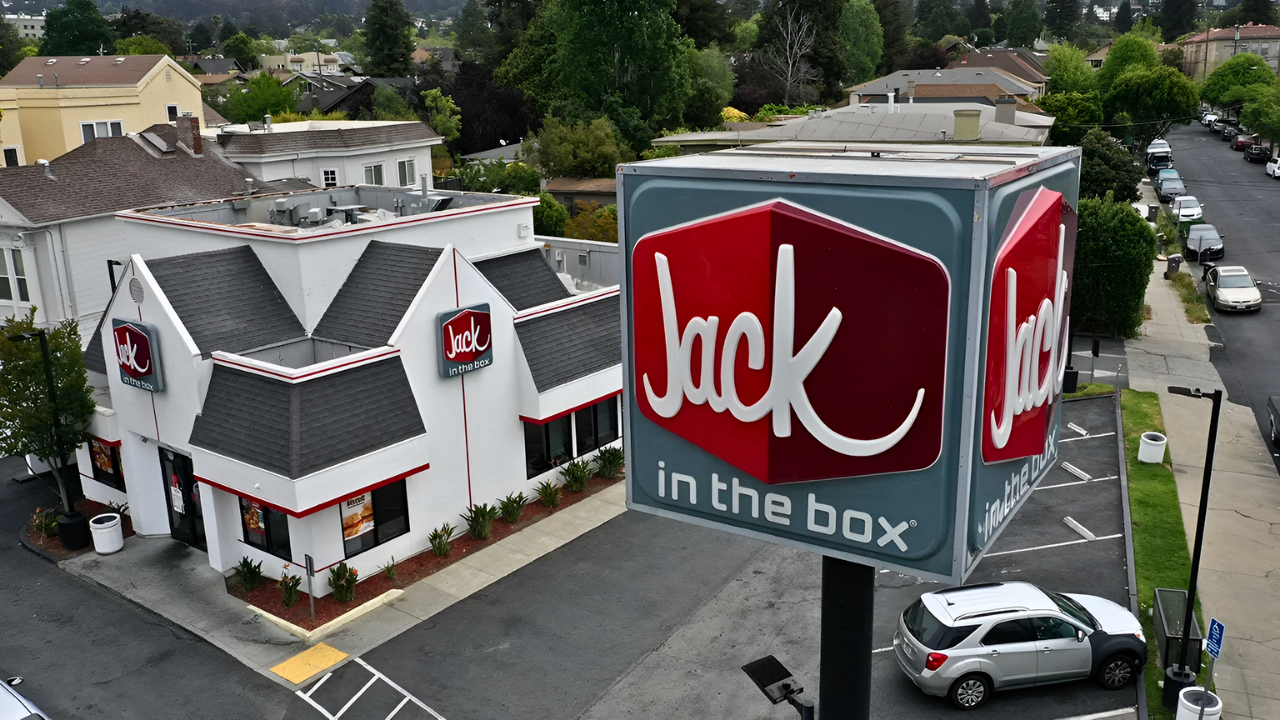
Jack in the Box confronts an existential financial crisis after reporting an $80.7 million net loss for fiscal year 2025, one of the California-based burger chain’s most severe annual performances in recent memory. The company has announced plans to shutter between 150 and 200 underperforming locations by 2026 under its “Jack on Track” restructuring initiative, with 72 restaurants already closed through November 2024. The scale of operational contraction signals deeper structural problems across the 2,200-unit system as the brand struggles with declining customer traffic, margin compression, and crippling debt levels that threaten its long-term viability.
Sales Collapse Accelerates Through Consecutive Quarters
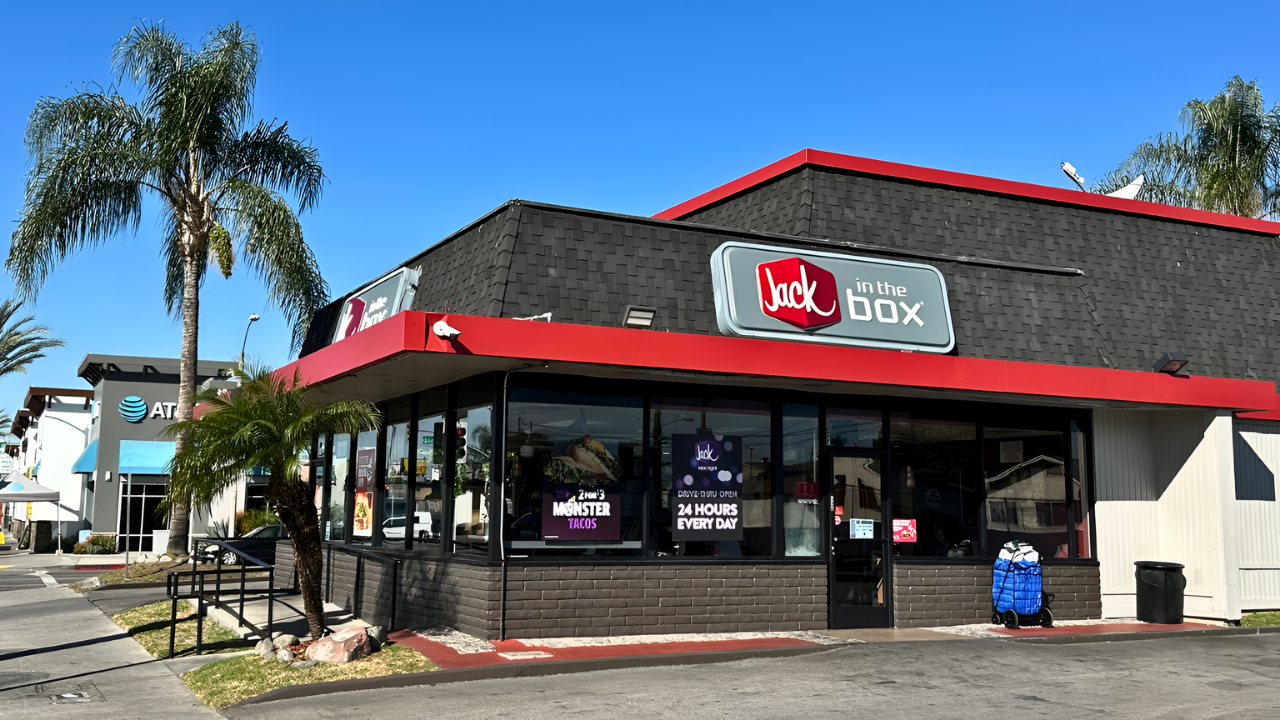
The deterioration in comparable restaurant sales intensified dramatically throughout fiscal 2025, revealing a customer base in retreat. After modest 0.4% growth in the first quarter, same-store sales plummeted to negative 4.4% in Q2, then negative 7.1% in Q3, before reaching negative 7.4% in the fourth quarter. The consecutive quarters exceeding 7% declines represented the chain’s worst two-quarter performance in 15 years outside pandemic disruptions. Average unit volumes of $2.01 million masked significant location-level variation, with dozens of restaurants generating insufficient cash flow to justify continued operations. The company’s value menu initiatives, including its $4 Munchies Under $4 platform, failed to reverse traffic trends despite industrywide promotional activity from competitors including McDonald’s $5 Meal Deal and similar offerings from Taco Bell and Wendy’s.
Regulatory Shock and Commodity Inflation Devastate Profitability
California’s Assembly Bill 1228, which mandated a $20-per-hour minimum wage for fast-food workers beginning April 2024, delivered a crushing blow to restaurant-level economics. With approximately 40 to 45% of system restaurants concentrated in California, the 25% wage increase compressed margins across the chain’s largest geographic market. Research indicates the legislation eliminated roughly 18,000 fast-food positions statewide while reducing sector employment by 3.2 to 3.6%.
Simultaneously, beef price inflation hammered the burger-focused concept throughout 2024 and 2025. USDA projections show full-year 2025 beef price inflation reaching 11.6%, with wholesale beef costs jumping 12% and farm-level cattle prices surging 22.5%. For a chain with food costs representing 28 to 32% of sales, this commodity shock eroded three to four percentage points of margin. Restaurant-level margins collapsed to 16.1% in the fourth quarter from 18.5% the prior year, while company-operated margins at the Del Taco brand plunged to 13.4% from 17.4% year-over-year in Q3, pushing numerous locations into negative cash flow territory.
Del Taco Divestiture Confirms Strategic Misjudgment
The December 2024 sale of Del Taco to Yadav Enterprises for $119 million crystallized an 80% loss on the $585 million acquisition completed just 2.5 years earlier. Jack in the Box had recorded a $162.6 million goodwill impairment in the third quarter of fiscal 2024, effectively acknowledging the deal’s failure well before the divestiture. Persistent same-store sales declines at Del Taco rendered the brand unsalvageable within the broader portfolio.
The disastrous acquisition compounds an already precarious balance sheet carrying $3.18 billion in total debt, representing approximately six times EBITDA. With negative shareholder equity of $938.3 million and a debt-to-equity ratio of negative 181.6%, management suspended dividend payments to prioritize debt reduction, targeting $200 to $300 million in repayment over 24 months through asset sales and cash flow generation.
Management Pursues Asset-Light Model Amid Governance Battle
Lance Tucker assumed the permanent CEO role in March 2025 after serving as interim leader, bringing financial discipline from nearly a decade at Papa John’s including CFO tenure from 2011 to 2018. His strategic framework emphasizes capital allocation, free cash flow acceleration, and transitioning toward an asset-light operating model rather than brand reinvestment. Despite closing underperforming units, the company unveiled the “Jack’s Way” remodel program in August 2025, committing an initial $50 million toward modernizing over 1,000 locations with updated exteriors, refreshed interiors, enhanced digital infrastructure, and improved service standards. Tucker has acknowledged operational shortcomings in customer experience that accumulated over years of underinvestment.
Simultaneously, activist investor Sardar Biglari accumulated a 9.9% stake through Biglari Capital by July 2025, triggering board-level governance disputes. The board adopted a poison pill defense activating at 12.5% ownership to block hostile takeover attempts from Biglari, who controls Steak ‘n Shake and maintains ongoing proxy battles with Cracker Barrel.
Industry-Wide Rationalization and Workforce Impact
Management’s fiscal 2026 guidance projects same-store sales between negative 1% and positive 1%, implying initial softness followed by gradual stabilization through 75th anniversary marketing, menu innovation, remodel benefits, and potential commodity cost relief. The company expects to maintain restaurant count between 2,050 and 2,100 locations, targeting restaurant-level margins of 17-18%.
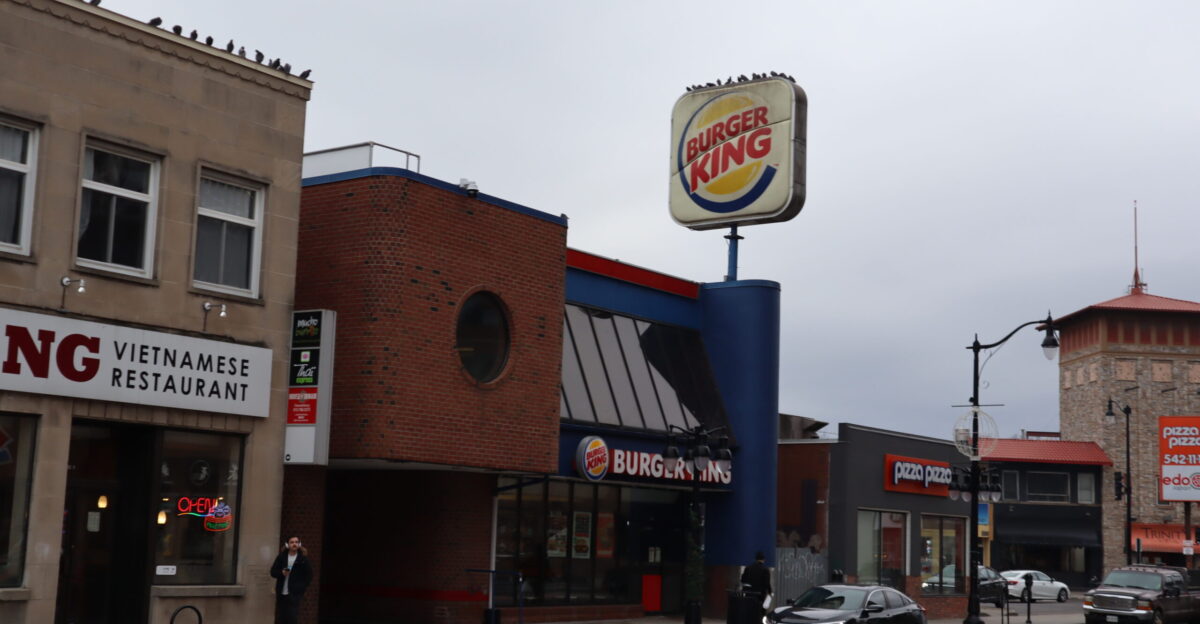
However, Jack in the Box’s crisis mirrors broader quick-service restaurant rationalization. Industry-wide closures include Wendy’s shuttering 140 locations in 2024 with 300-plus additional closures planned through 2026, Denny’s announcing 150 unit shutdowns, Burger King closing approximately 300-400 restaurants in 2023, and TGI Fridays shuttering 36-plus locations before its Chapter 11 bankruptcy filing in November 2024.
The store closures carry significant workforce implications. While the company has not announced company-wide layoff figures, individual location shutdowns documented through WARN notices reveal the scale of job losses at the unit level. A Seattle location closure resulted in 13 employee terminations, while other locations typically employ between 12-25 workers depending on format and operating hours. With 72 restaurants already closed and up to 200 planned for shutdown by 2026, the cumulative employment impact across affected communities will be substantial.
Lower-income and Hispanic consumers comprising Jack in the Box’s core customer demographics have reduced discretionary spending dramatically, creating what management describes as pressure across multiple income cohorts within an emerging two-tier economy. The chain faces a binary outcome over the coming 12 to 18 months: either operations stabilize, leverage declines toward sustainable levels, and traffic recovers—or the company enters terminal decline potentially culminating in distressed sale or financial restructuring.
Sources:
“Jack in the Box shut down more than 70 stores with more expected by year’s end over financial struggles.” Fox Business, December 2024.
“Jack in the Box Inc. Reports Fourth Quarter and Full-Year 2025 Earnings.” Jack in the Box Investor Relations, November 2024.
“Jack in the Box sells Del Taco to Yadav for $115M.” Restaurant Dive, October 2024.
“Did California’s Fast-Food Minimum Wage Reduce Employment?” Cato Institute Research Brief, November 2024.
“Food Price Outlook – Summary Findings.” USDA Economic Research Service, September 2024.