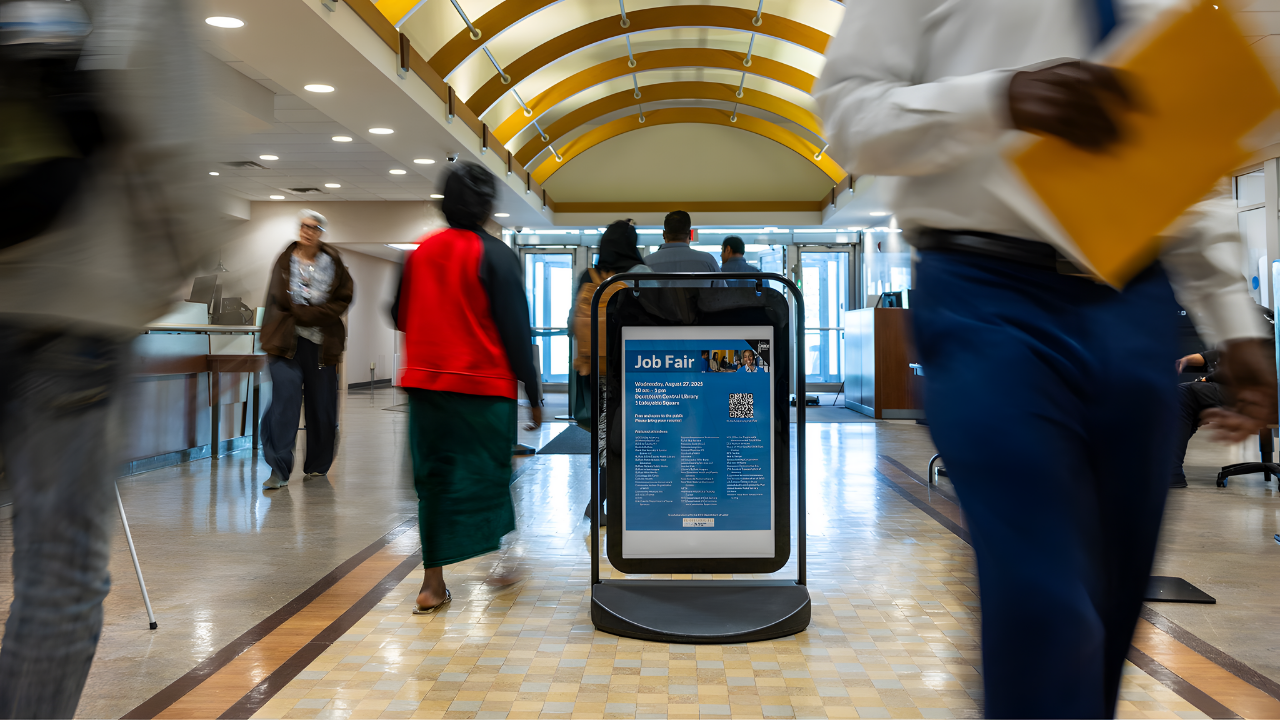
A major shift is unfolding in the U.S. job market, one that’s not loud or sudden but deeply significant. Over the next decade, between 250,000 and 500,000 jobs are expected to disappear across 15 major job categories, according to projections from the Bureau of Labor Statistics. By 2033, advances in technology, changing consumer habits, and economic pressures will gradually make many traditional roles unnecessary.
This transformation won’t happen overnight, but it gives workers a roughly nine-year window to adapt. The jobs most affected are often those built on routine tasks, clerical work, basic programming, or retail service, that machines and algorithms can increasingly perform faster and cheaper than humans. While some roles will vanish, new opportunities will also open up in fields driven by data, design, and human interaction.
Technology Drives the Transformation

Multiple technologies, rather than a single innovation, are driving this employment shift. For example, as readers move online, newspapers lose subscribers and advertising revenue, leaving fewer newsroom positions. Banking apps and ATMs have replaced many teller roles, while call centers now use chatbots to manage customer questions. In factories, automation speeds up production, and in retail stores, self-checkout machines cut the need for cashiers.
Even behind the scenes, automation is reshaping logistics and office work. Delivery companies use algorithms to plan routes, while mail volumes have dropped sharply thanks to email and online billing. The same dynamic plays out in coding: generative AI tools can now write or debug simple programs, reducing demand for traditional programmers. These countless small disruptions across industries add up, creating a sweeping but gradual decline in routine jobs nationwide.
Who’s Most at Risk

The biggest losses are expected among computer programmers, retail workers, office administrators, and financial clerks. Programming jobs are forecast to drop by about 10 percent by 2033, the steepest decline of any field. Job listings for programmers have already fallen nearly 30 percent in the past year alone, the lowest since the early 1980s. Meanwhile, software developers, who design more complex systems or manage AI tools, are projected to grow 17 percent, showing a widening divide between entry-level coding and higher-skill software roles.
In media, newsroom jobs have dropped 26 percent since 2008, losing tens of thousands of reporters, editors, and photographers. Newspapers have been hit hardest, shedding more than half their workforce. Even though digital outlets have grown, their expansion hasn’t been enough to offset the broader losses. Retail is also hurting: roughly 353,000 cashier positions could disappear by 2033, mainly due to self-service checkouts and online shopping. Overall, retail sales are expected to stagnate as e-commerce claims a larger share of purchases each year.
Administrative roles are shrinking, too. Over one million office jobs could vanish in the next decade, including secretaries, clerks, and bookkeepers. Software like QuickBooks can now automate work that once provided stable middle-class wages. In manufacturing, robots continue to transform assembly lines, nearly two million factory jobs may disappear by 2025. Still, studies show automation has replaced fewer workers than many fear; often, technology changes how people work instead of eliminating jobs entirely.
Finding Opportunity in Transition

Bank tellers, postal workers, and customer service representatives are among those facing slow but steady declines. Since 2010, the number of tellers has fallen 30 percent, and another 13 percent drop is expected by 2034. Customer service roles are also under pressure: almost 90 percent of consumers now prefer digital self-service, according to Zendesk. Postal jobs are shrinking, too, as mail volumes decline and sorting becomes automated.
Other professions are evolving rather than disappearing. Travel agents, dispatchers, interpreters, and even corrections officers are seeing slower growth or mild declines as technology reshapes their fields. Machine translation, for instance, has reduced demand for human interpreters, while falling prison populations have lowered the need for correctional staff. Some niche roles, such as movie projectionists, are almost extinct due to digitalization.
Despite the alarming figures, experts caution that automation is not as widespread as many believe. A study from Brigham Young University found only 14 percent of workers were directly replaced by machines, compared to public fears of almost 50 percent. The gap between what’s technologically possible and what is actually adopted remains significant, cultural habits, costs, and practical limits slow the full automation of many industries.
Still, the clock is ticking. Over the next nine years, more than 600,000 middle-class jobs could be lost permanently if trends continue. Yet, opportunities are emerging elsewhere, an estimated 6.7 million new jobs are expected in growing areas like health care, renewable energy, data analysis, and creative technology. The key for workers will be recognizing which careers are shrinking and which are expanding, making strategic choices before the labor market fully adjusts to this new reality.
Sources:
Bureau of Labor Statistics, Industry and occupational employment projections overview and highlights, 2023–33, 2024-08-15
Bureau of Labor Statistics, Occupations with the largest job declines, 2025-08-27
U.S. Bureau of Labor Statistics, Employment Projections—2023–2033