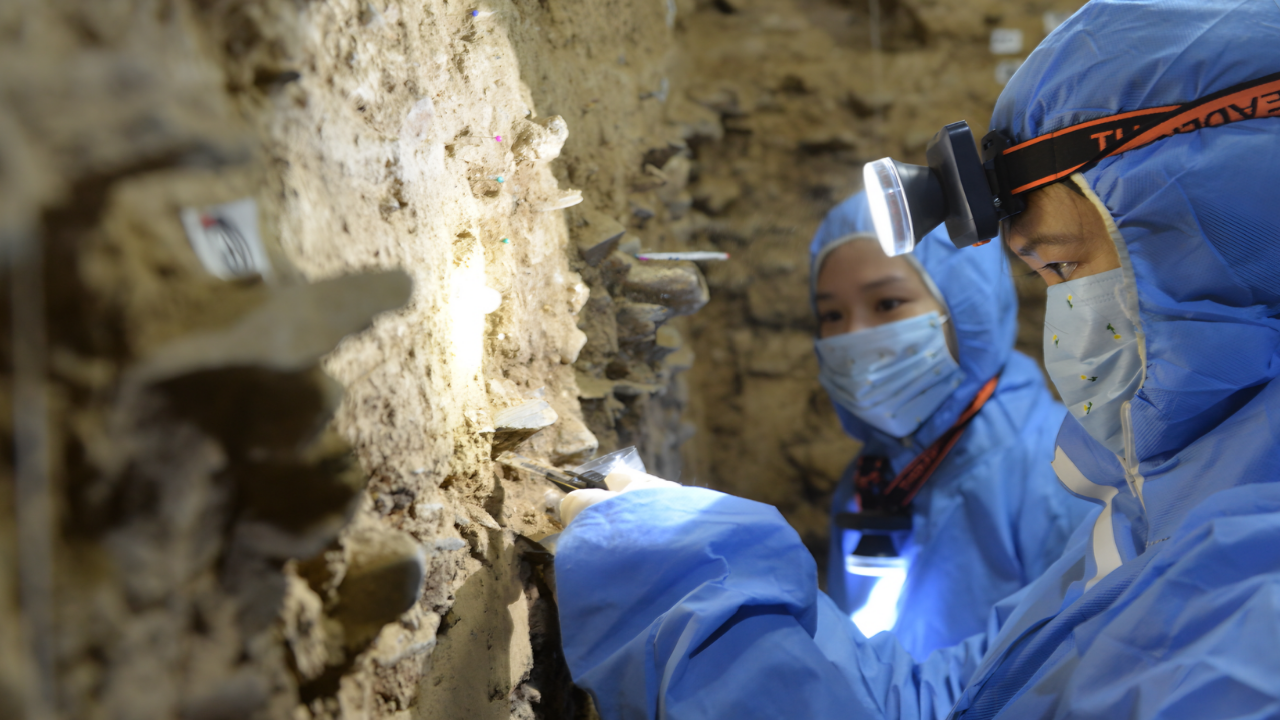
Deep beneath the French countryside, buried under 30 feet of sediment for 57,000 years, finger-traced lines and dots whisper an extraordinary secret: Neanderthals were artists. This June 2023 discovery at La Roche-Cotard cave rewrites everything we thought we knew about our extinct cousins, proving they possessed creative minds and intentional symbolic expression tens of thousands of years before modern humans arrived in Europe.
Fifty sediment samples scientifically confirmed these marks predate human settlement by 20,000 years, a finding that challenges stereotypes and reshapes our understanding of human cognitive evolution itself. The proof starts with what excavators saw on the walls.
A 57,000-Year-Old Secret Finally Exposed
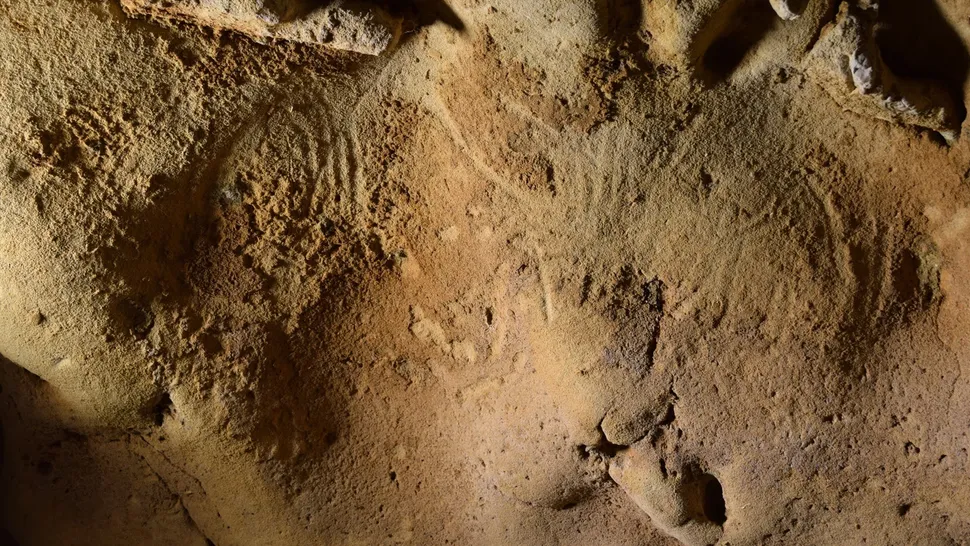
Archaeologists peeling back layers of French history found finger-traced engravings hidden on cave walls in the Loire Valley. Abstract lines and dots, made with hands, were preserved under sediment, sealing the cave for millennia. Scientists dated the sealing to at least 57,000 years ago, possibly 75,000 years, making them the oldest known Neanderthal engravings. The dating trail was the real surprise.
What Exactly Were They Finding?

The engravings are organized finger-flutings, grooves made by running fingers across soft cave walls, forming deliberate patterns rather than random scratches. Researchers identified 8 panels inside the cave, with wavy lines, parallel grooves, and curved motifs arranged intentionally. The marks sit on tuffeau limestone, made of fine quartz grains and mollusk shells. But who made them?
A Cave In Central France Holds Clues
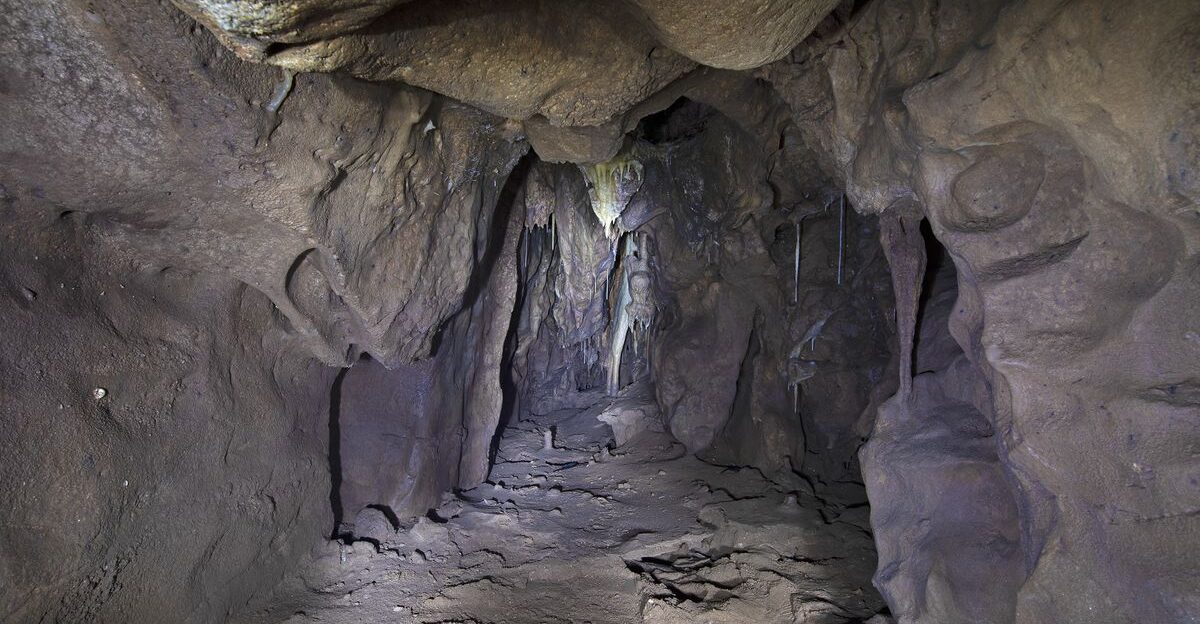
La Roche-Cotard cave sits above the Loire River in central France. It formed through limestone dissolution, creating chambers that could shelter Ice Age occupants. Exposed during railroad construction in 1846, it remained partly buried until excavation began in 1912, uncovering Mousterian tools and animal bones. Finger tracings were noted in the 1970s, then reexamined seriously in 2016.
Proving These Were Made By Hands
Researchers had to separate true engravings from natural cave marks, bear claws, and modern tool damage from the 1912 dig. Using high-resolution photogrammetry, they built 3D models capturing depth and spacing. Volunteers then made comparison marks on similar rocks using fingers, nails, bone, wood, flint, and metal. Finger-made grooves matched best, but dating still mattered.
How Scientists Dated Rock-Sealed History
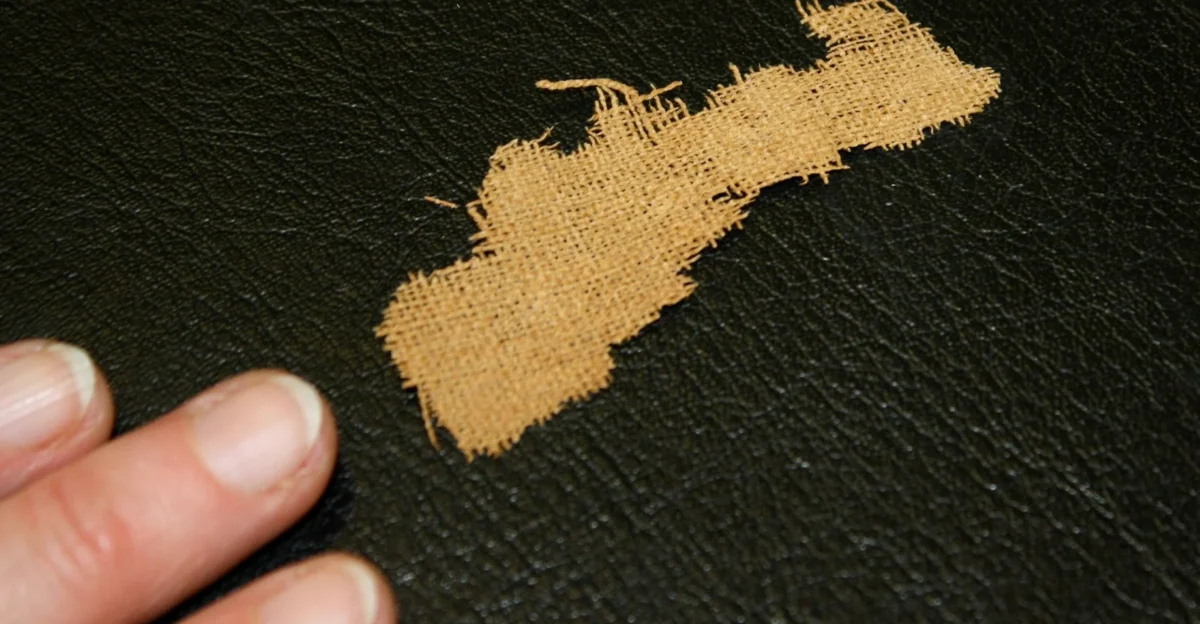
Finger grooves cannot be radiocarbon dated because they contain no organic material. Instead, scientists used optically stimulated luminescence on sediments around the cave entrance. OSL measures trapped electrons in quartz and feldspar that build up after burial in darkness. When stimulated in a lab, grains emit light tied to burial age. Researchers sampled heavily to avoid doubt.
50 Sediment Samples Told One Story
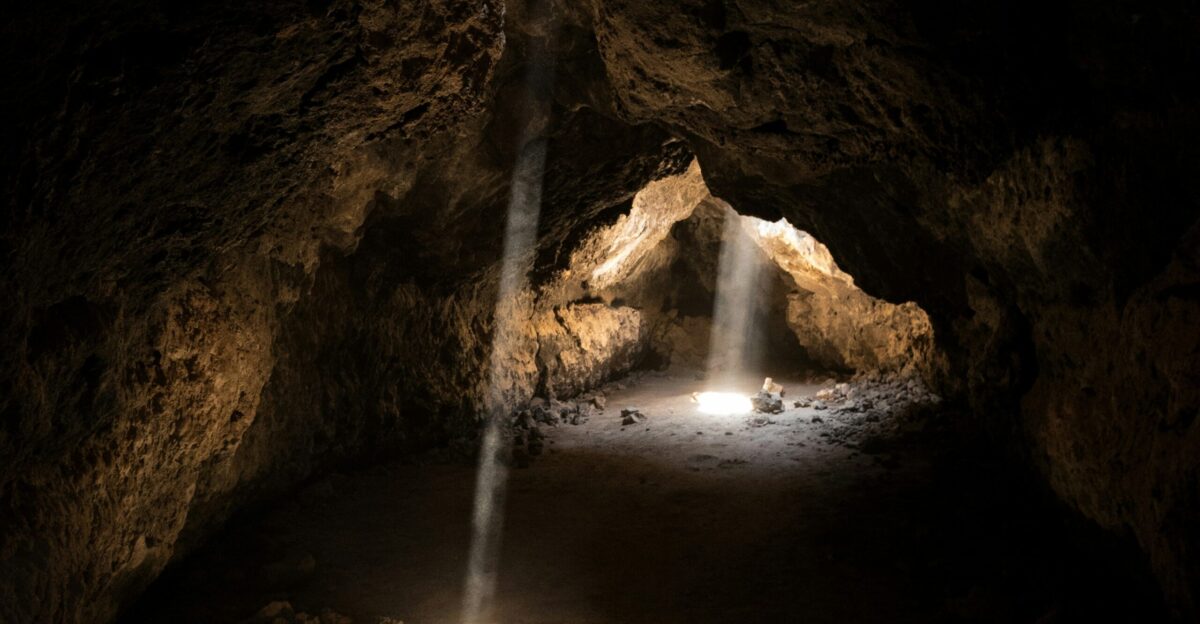
The team collected 50 sediment samples from inside the cave, at the entrance, and on the slope, each of which was tested separately using OSL. When results converge across multiple locations, confidence increases significantly. The average age was 57,000 years plus or minus 3,000 years, with evidence suggesting the sealing could be closer to 75,000 years. Could modern humans have entered anyway?
Only Neanderthals Occupied This Space

Excavated layers contained only Neanderthal cultural material, including Mousterian stone tools, butchered animal bones, and no Upper Paleolithic artifacts associated with early modern humans. With sealing dated to 57,000 years ago and modern humans arriving in this region around 40,000 to 45,000 years ago, the logic is strong that Neanderthals made the marks. Spain offered another clue.
Other Finds Show Wider Neanderthal Art
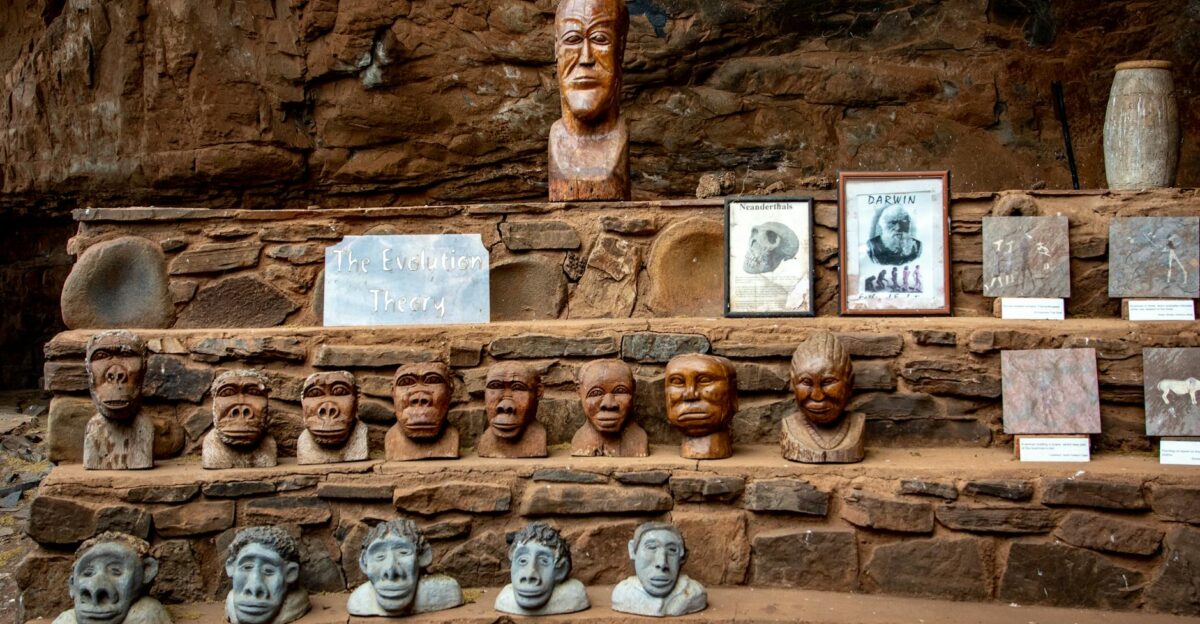
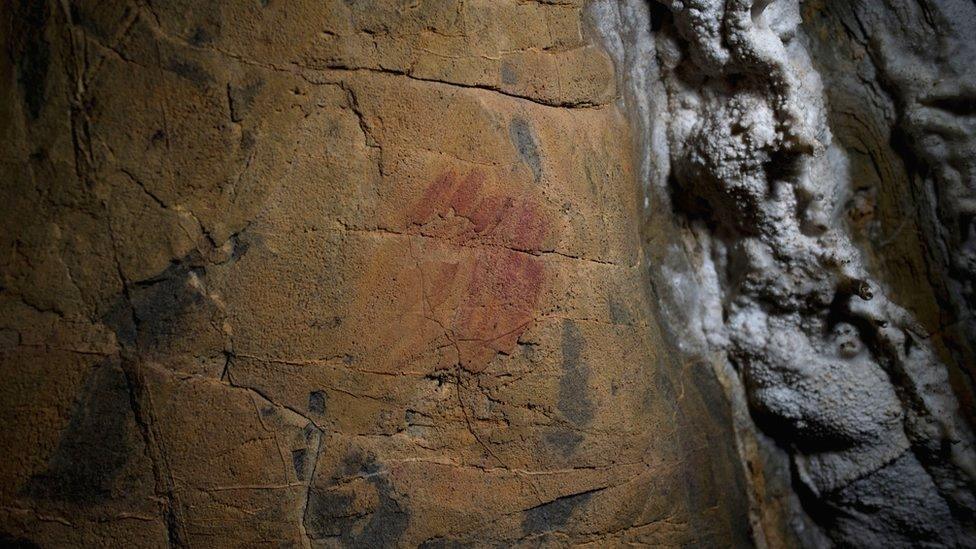
Hand stencils in 3 Spanish caves, La Pasiega, Maltravieso, and Ardales, were dated to about 64,000 to 65,000 years ago using uranium-thorium analysis of crusts over pigment. That differs from French finger-flutings, but the pattern suggests a symbolic expression across more than 700 kilometers. Alistair Pike called it “a smoking gun that really overturns the notion that Neanderthals were knuckle-dragging cavemen.” The age comparison is even sharper.
Older Than Early Modern Human Cave Art
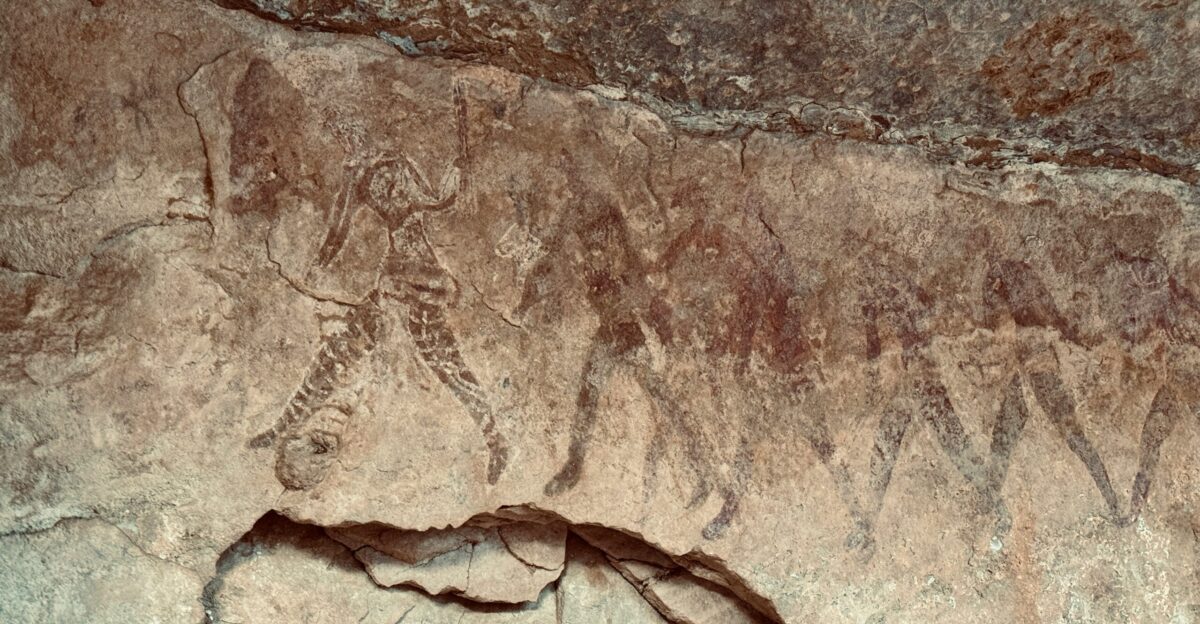
The La Roche-Cotard engravings, dated at 57,000 years, are roughly 20,000 to 27,000 years older than the Chauvet Cave paintings by early modern humans. Chauvet’s lions, horses, and rhinoceroses date to about 32,000 to 36,500 years ago. That reversal challenges the idea that art arrived with modern humans. Still, what made preservation possible remains critical.
The Soft Stone That Preserved Everything
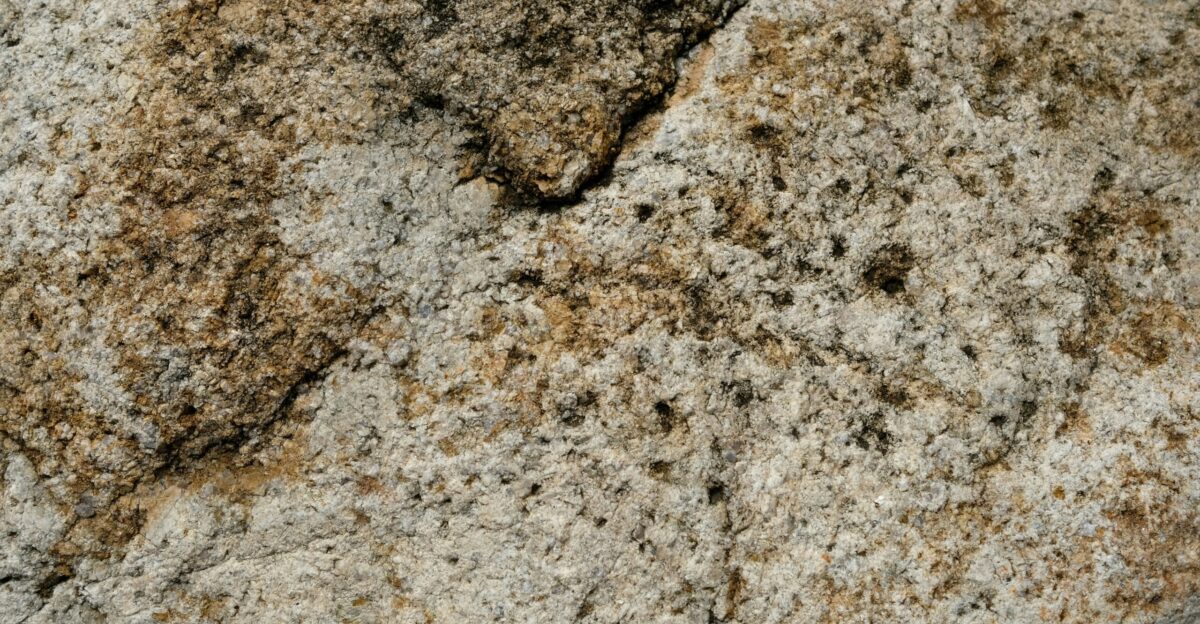
Tuffeau limestone shaped both the creation and the survival of the engravings. Its soft, chalky texture responds to finger pressure, while its structure stays durable over long spans. That means making marks required minimal force, possibly allowing younger or weaker group members to participate. Once sediments sealed the cave, the same rock resisted weathering and disturbance. Experiments later tested this directly.
Experiments Validated Finger Techniques
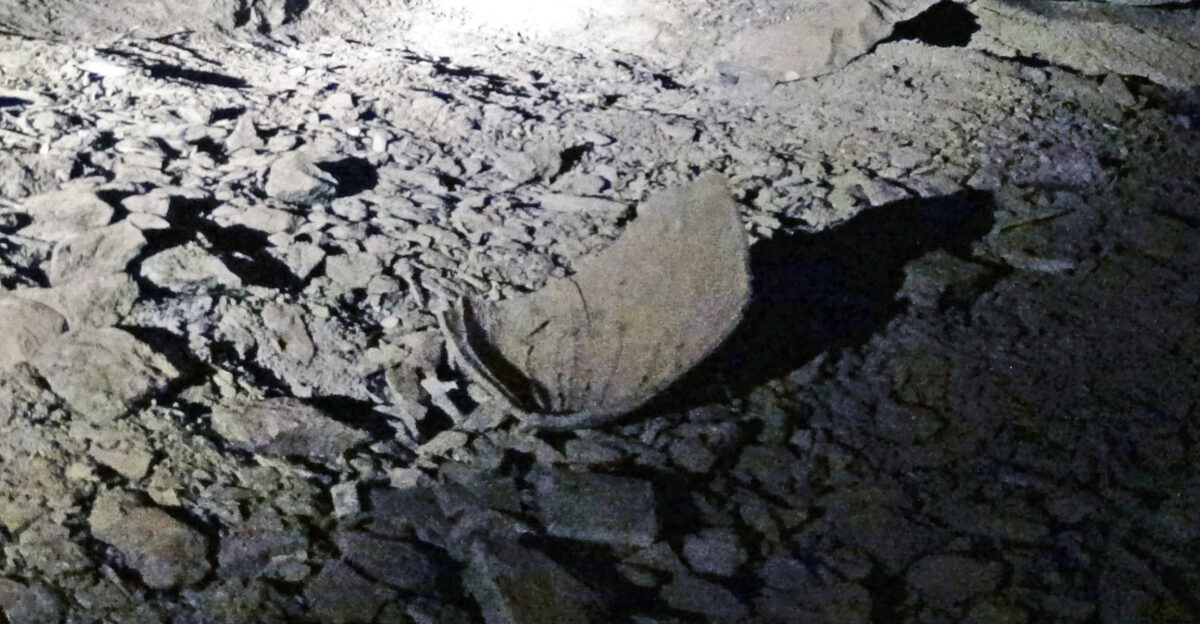
Volunteers recreated marks on fresh tuffeau using bare fingers, fingernails, flint, bone, wood, and metal. Researchers photographed results using the same equipment and ran identical 3D photogrammetry analysis. Statistical comparisons showed archaeological grooves matched finger-made marks far better than tool marks, down to cross-section shape and spacing. The cave’s artifact record added another layer of certainty.
Stone Tools Confirmed Neanderthal Presence
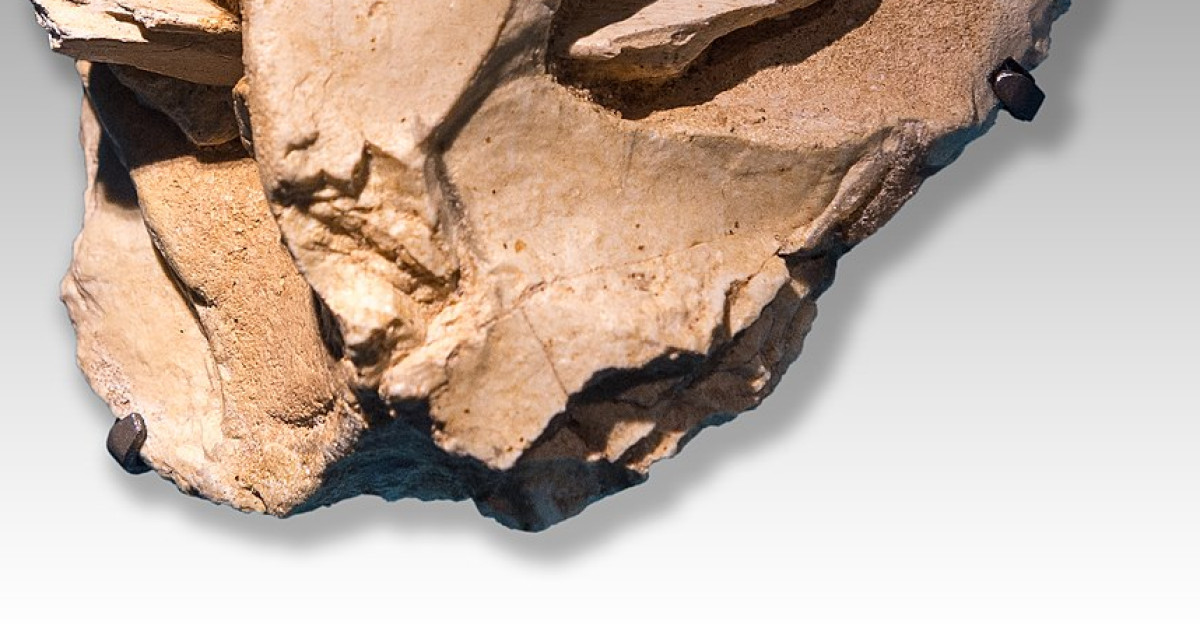
Mousterian tools from La Roche-Cotard included small hand axes from disk-shaped cores, sidescrapers, triangular points, denticulates, and round limestone balls possibly used as bolas. Many pieces used the Levallois technique, requiring planning and mental visualization before striking. Crucially, there were 0 Upper Paleolithic elements, supporting no later modern human occupation. Dating still required workarounds.
Why Conventional Carbon Dating Failed

Radiocarbon dating cannot date engravings on rock surfaces, and it becomes unreliable beyond about 50,000 years. Uranium-thorium dating works for calcite layers, but any films over the engravings were too thin for dependable measurement. Those limits forced researchers to date the sealing sediments instead of the grooves themselves, turning geology into the key witness. So how does OSL actually work?
Understanding OSL Dating In Plain Terms
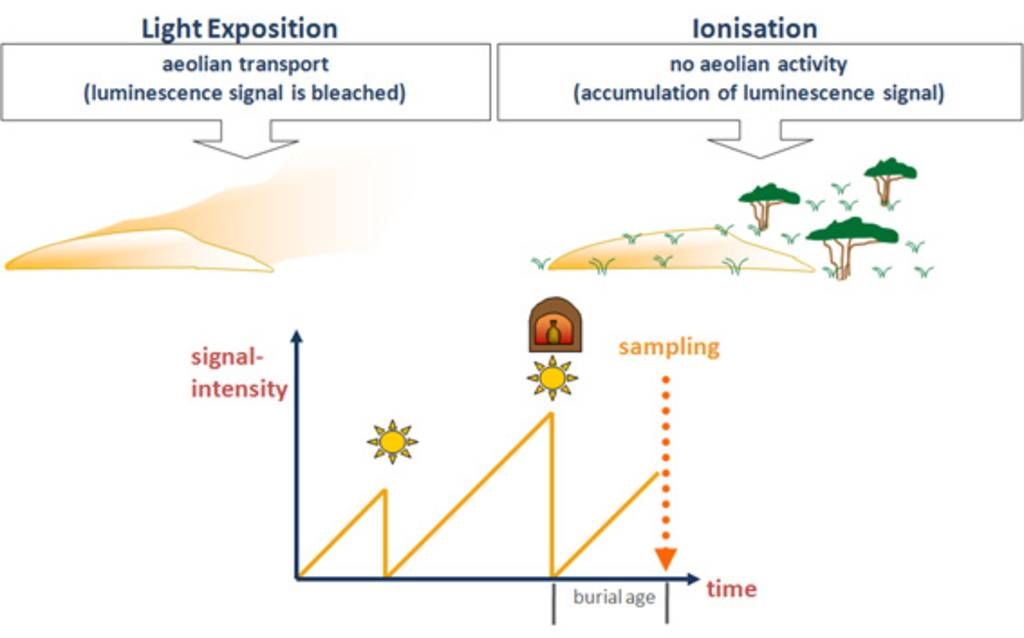
OSL measures electron charge trapped in quartz defects from natural radioactivity. Sunlight resets that charge when grains are exposed, like during erosion, then burial in darkness starts the clock again. In the lab, light stimulation releases electrons and produces luminescence correlated with the time since burial. For La Roche-Cotard, this showed when the entrance became sealed. The sealing depth also mattered.
A 30-Foot Barrier Locked The Cave

Sediment piled above and around the entrance to more than 30 feet through long-term deposition. Frost fractured slope rock during cold periods, while wash moved debris downslope; warmer, wetter phases also increased erosion. As the Loire River approached, floods deposited sediment, which was later redistributed by slope and wind processes. By 57,000 years ago, the entrance was sealed until 1846 exposure. That timing reshapes the human timeline.
Before Modern Humans Reached Europe

Modern humans began dispersing from Africa around 50,000 to 70,000 years ago. They reached Europe around 40,000 to 45,000 years ago, with some sites dating back to around 47,000 years. La Roche-Cotard’s 57,000-year minimum, possibly 75,000 years, predates that by at least 12,000 years and maybe 30,000+ years. The seal makes later entry unlikely. But what were the patterns for?
What Do Abstract Patterns Really Mean?

Researchers can show the marks were intentional and organized, yet meaning remains out of reach. The panels contain abstract lines, wavy patterns, parallel grooves, and dots, not recognizable animals or people like later art. Were they territorial signs, rituals, aesthetics, or symbolic communication we cannot decode? Without writing or close analogies, certainty is impossible, but behavior still speaks loudly. More evidence adds weight.
Neanderthals Had More Than We Credited

The find joins other signs of Neanderthal complexity: Spanish cave stencils, pigment use, modified eagle talons worn as jewelry, perforated pigmented shells dated to 115,000 years ago, and possible burials with grave goods. Together, ornament, decoration, ritual, and now wall art challenge older assumptions.
Jean-Claude Marquet said: “For a long time it was thought that Neanderthals were incapable of thinking other than to ensure their subsistence. I think this discovery should lead prehistorians who have doubts about Neanderthal skills to reconsider.” That reconsideration reaches the biggest question.
Rewriting Human Cognitive Evolution

Many paleoanthropologists now see Neanderthals and early modern humans as cognitively comparable, with differences shaped by demographics, social networks, and environment more than raw ability. La Roche-Cotard’s 57,000-year engravings show symbolic expression existed earlier than the “creative explosion” model suggested. This reframing casts Neanderthals as culturally complex humans, not primitive precursors. Extinction may reflect pressures, not inferiority. One final detail makes it feel personal.
A Whisper Across 57,000 Years

The finger-traced panels in La Roche-Cotard are a direct signal from Neanderthal minds, showing non-utilitarian, planned creative expression deep in prehistory. They were not accidents or idle scratches, but deliberate compositions requiring spatial awareness and aesthetic judgment. As one researcher concluded, “These panels were not produced in a hurry, without thought.” Backed by 50 sediment samples, 3D photogrammetry, experiments, and stratigraphy, the discovery pushes us to retire the stereotype for good. Yet what other sealed caves are still waiting?
Sources
The Earliest Unambiguous Neanderthal Engravings on Cave Walls. PLOS One, June 21, 2023
Neanderthals Were Artists Too. CNRS News, 2023
Oldest Known Neanderthal Engravings Were Sealed in a Cave for 57,000 Years. Smithsonian Magazine, June 2023
Neanderthals May Have Created Cave Art in France. Archaeology Magazine, June 25, 2023
Archaeologists Have Discovered the World’s Oldest Cave Paintings And They’re by Neanderthals. artnet News, 2018