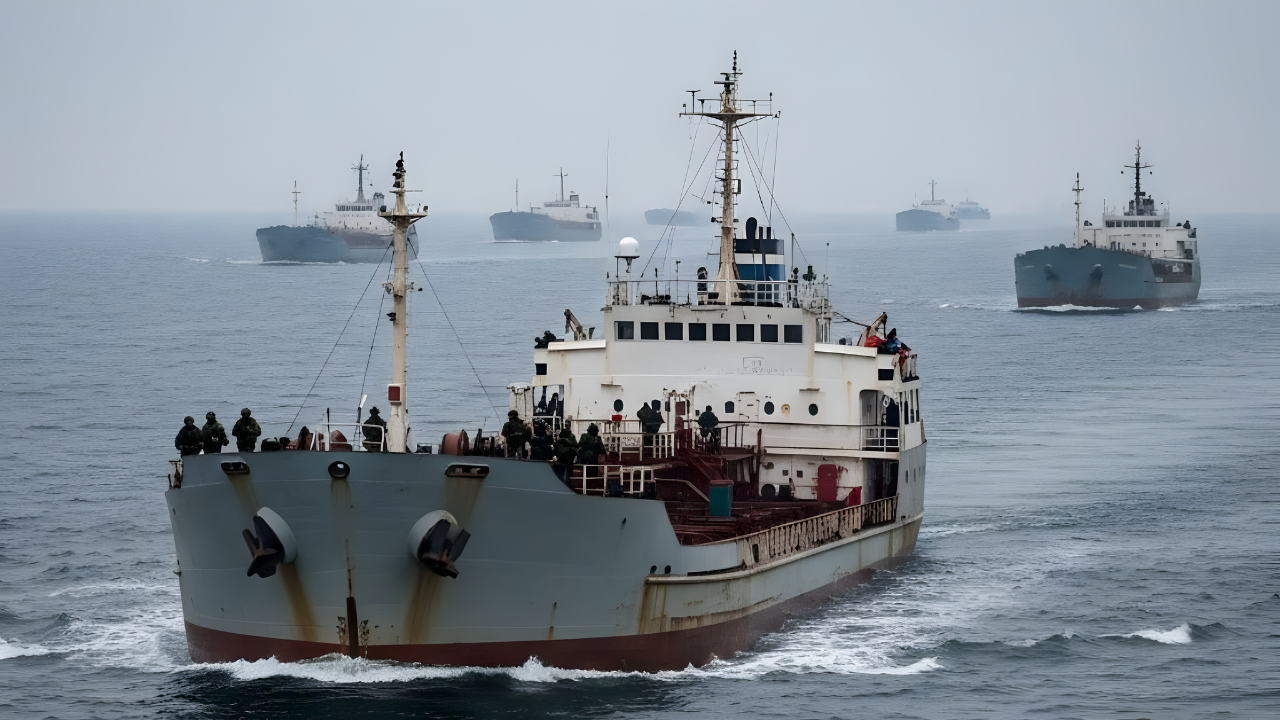
Sweden’s Navy has confirmed what Western intelligence agencies long feared: uniformed Russian military personnel are stationed aboard oil tankers moving through European waters. These are not covert operatives but armed soldiers in full military uniform, controlling vessels’ bridge operations.
Officials describe this as a striking escalation—from hidden sanctions evasion to openly militarized transport. Danish pilots report Russian crews taking command aggressively and obstructing maritime inspectors, fueling concerns of a new hybrid maritime conflict.
Russia’s Warship Escort Through the Channel
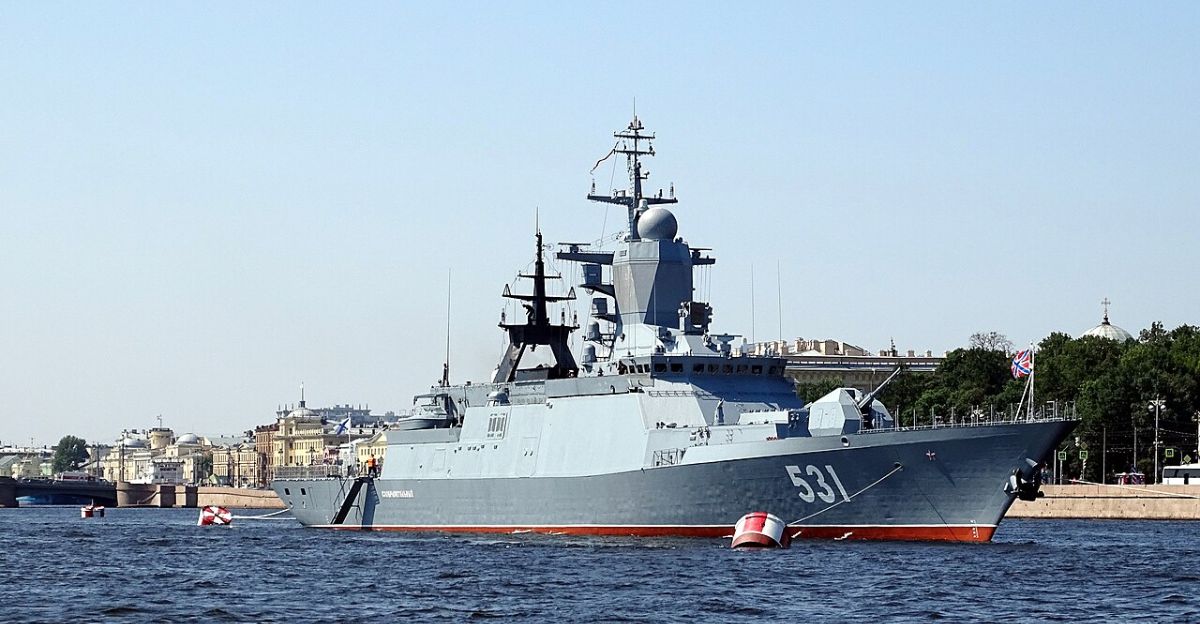
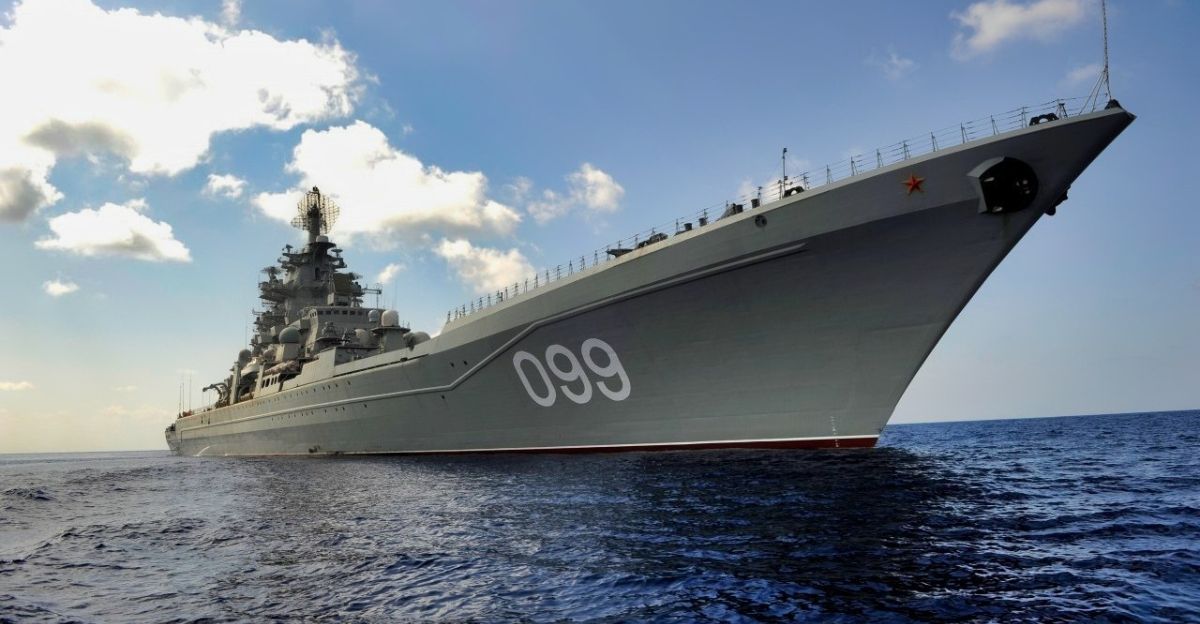
In June 2025, Russian Navy warships openly escorted sanctioned oil tankers through the English Channel—an act never before witnessed in modern maritime history. NATO commanders called it a calculated show of defiance, demonstrating Moscow’s belief that Western powers lack the will to intervene.
Finland’s defense minister labeled the move “unprecedented,” while military sources confirmed the escort as a deliberate public statement: Russia no longer hides its sanctions violations—it flaunts them.
The Armed Crews Behind the Fleet
Swedish officials believe these armed personnel are either active-duty Russian soldiers or contractors linked to state-aligned security firms. Danish pilot Bjarne Caesar Skinnerup recounted seeing Russians suddenly appear on civilian crew manifests, seizing control of navigation systems.
This pattern suggests a coordinated strategy of deploying military-trained teams aboard vessels. Legally, such deployments blur the boundaries between naval and commercial operations, raising the potential for violations of international maritime conventions.
Baltic Sea Becomes the Front Line
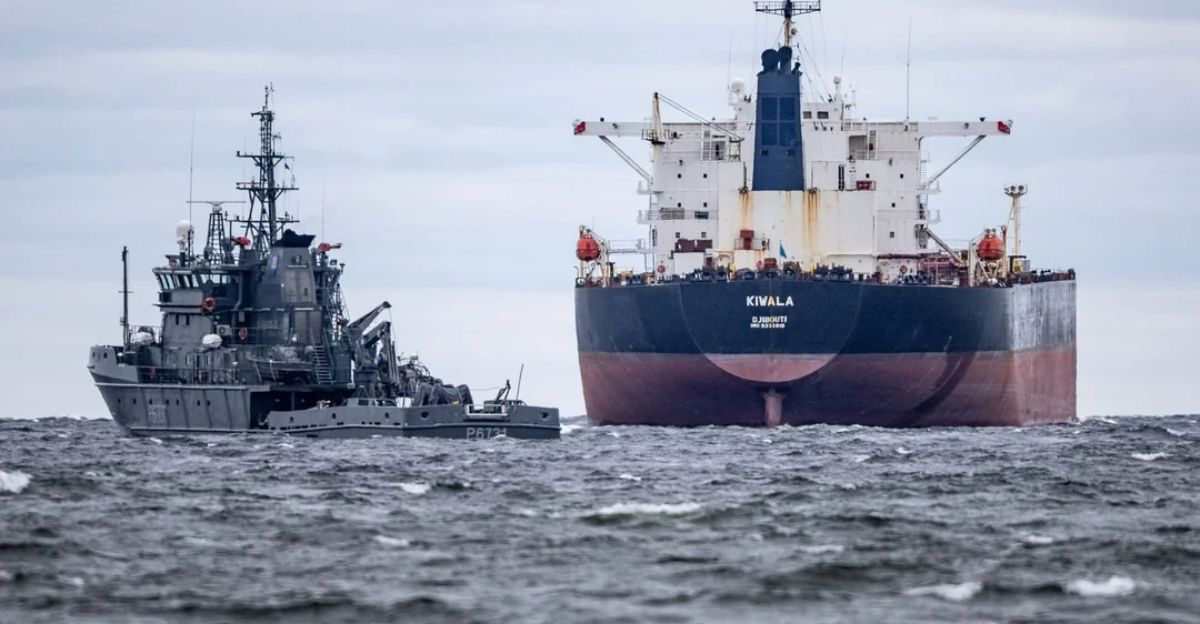
The Baltic has become a hub for these “shadow fleet” operations, accounting for nearly half of all Russian oil exports. Russian naval vessels maintain a near-permanent presence across major shipping lanes, turning what NATO hoped would be a secure “allied lake” into a contested hybrid zone.
Sweden’s Coast Guard estimates hundreds of these vessels operate globally, with the Baltic now serving as the primary corridor linking Russian oil to non-Western markets.
The Shadow Fleet’s Expanding Scale
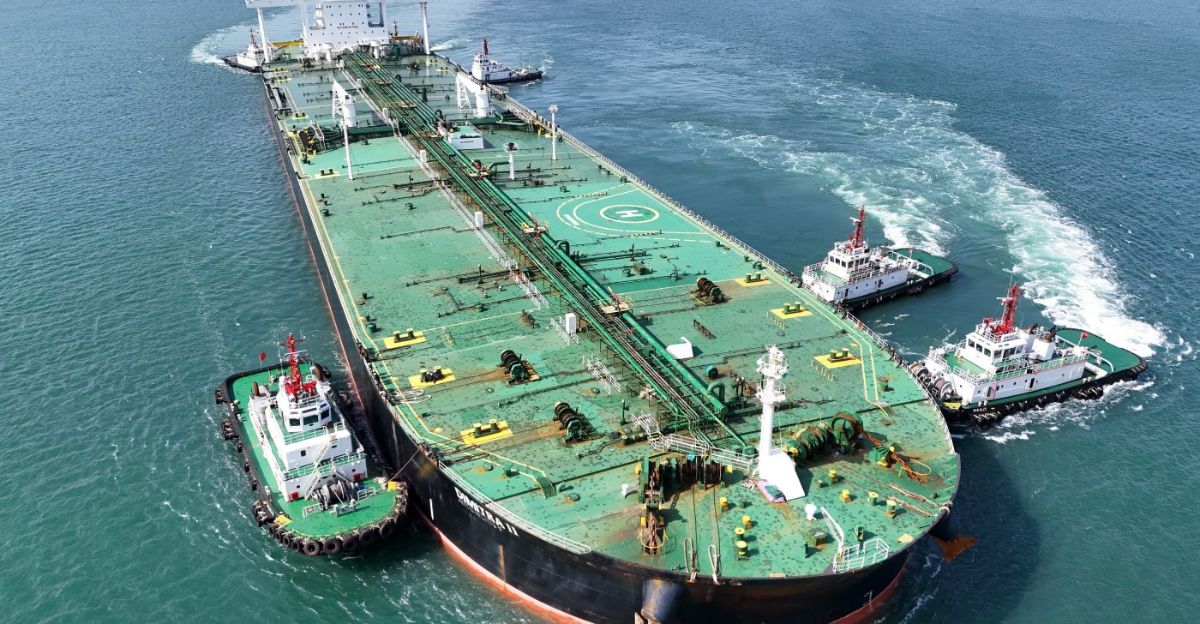
More than 300 tankers—about half concentrated in the Baltic—form Russia’s shadow fleet, sailing under foreign flags to obscure ownership. Ukrainian analysts estimate roughly 17% of the world’s commercial tankers now serve this network.
The massive scale taxes Western surveillance and coordination systems, demanding near-constant monitoring by EU and NATO agencies. This parallel shipping network has effectively redrawn control maps of northern Europe’s maritime zones.
Why Moscow Protects Its Tankers
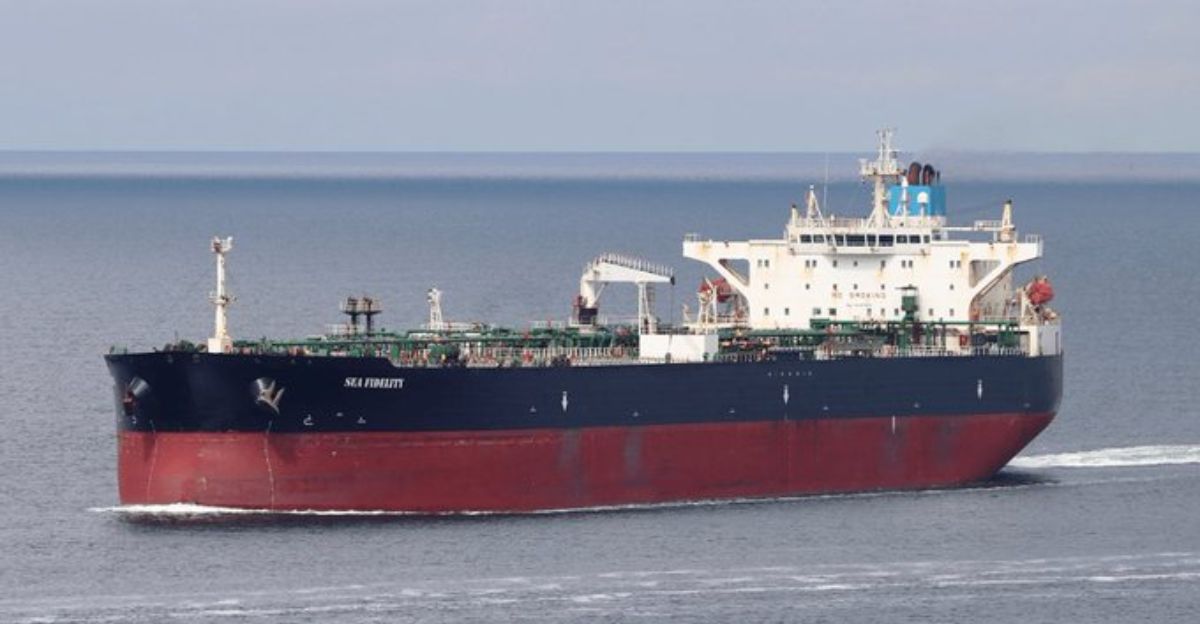
Since 2022, Russia has spent an estimated ten billion dollars expanding this fleet—an investment that generated nearly $9.4 billion in 2024 by bypassing Western oil price caps. The shadow fleet now carries roughly 70% of Russia’s seaborne oil exports, representing vital state revenue that sustains military operations in Ukraine.
Protecting these vessels with naval escorts and onboard soldiers reflects Moscow’s view of them as strategic assets rather than commercial transport.
Espionage Beneath the Surface
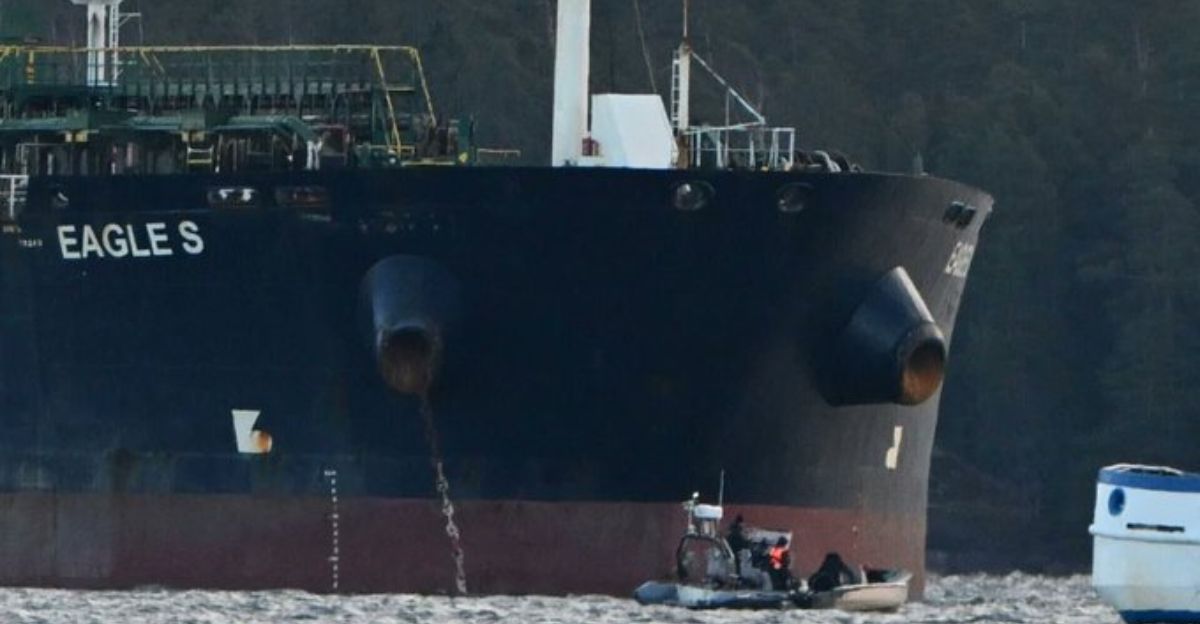
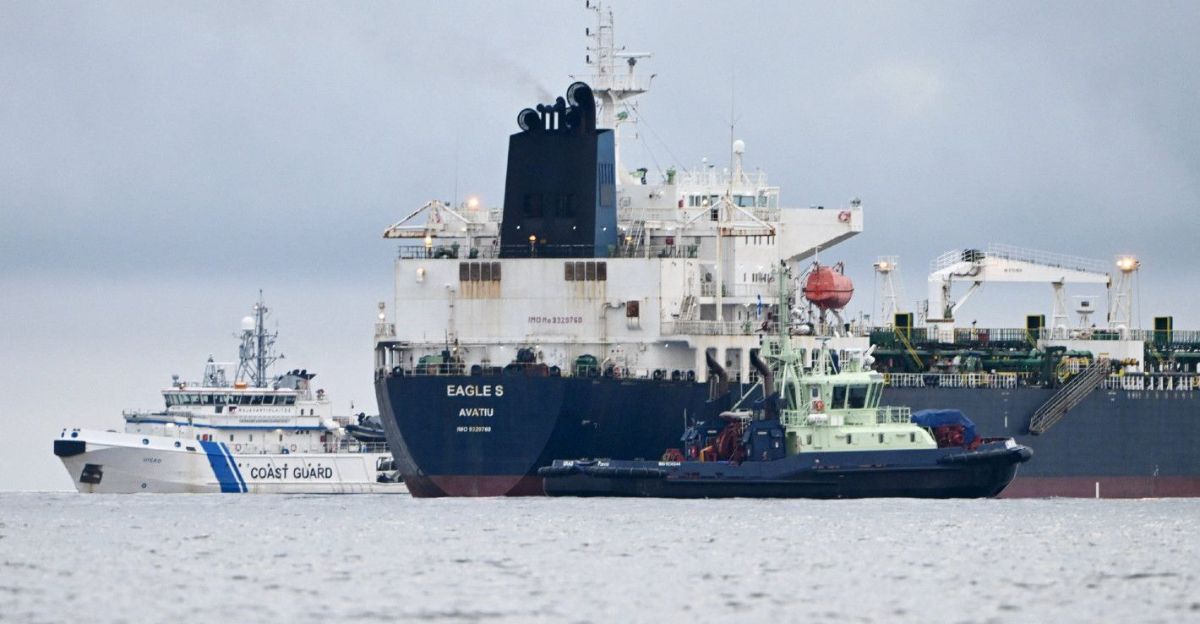
Western intelligence agencies warn that Russia’s shadow fleet doubles as a covert surveillance arm. Several tankers have allegedly gathered data on undersea cables and naval traffic. Finnish authorities even seized one vessel, the Eagle S, equipped with spy-grade monitoring devices. Danish sea pilots report that crews photograph bridge structures and transmit data.
NATO analysts believe the fleet serves dual missions—sanctions evasion and active intelligence work against European infrastructure.
Commanding the Bridge—At Gunpoint
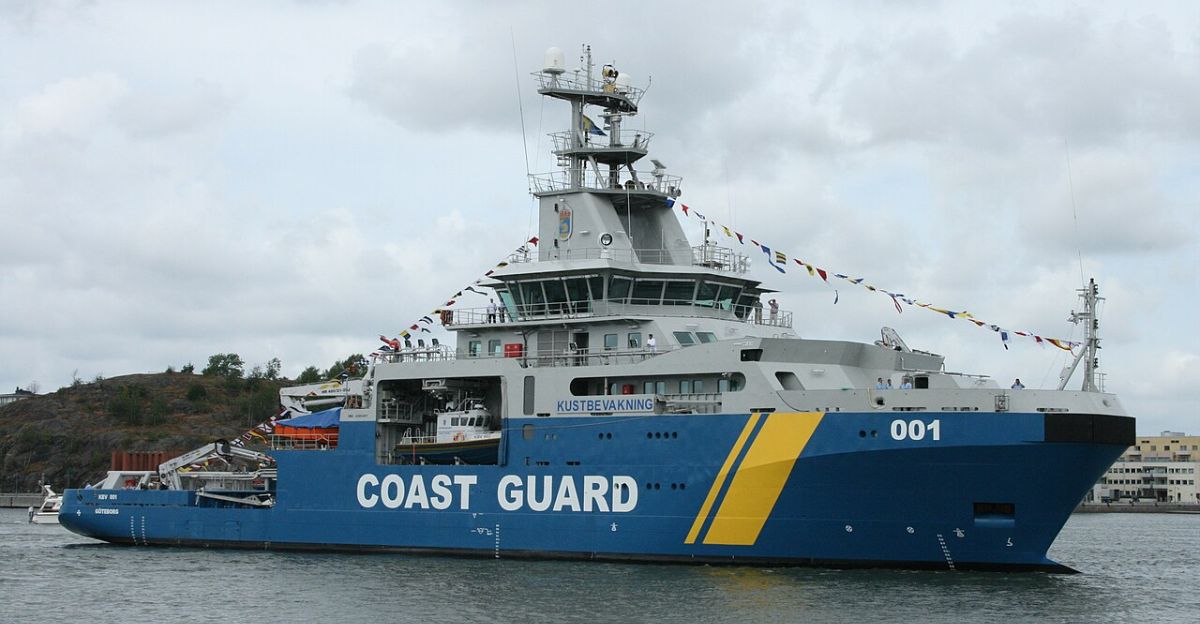
Reports from Scandinavian pilots detail how Russian officers often assume control of bridge systems aboard shadow tankers, sidelining or intimidating civilian seafarers. These personnel manage communications and navigation with military precision, sometimes refusing to cooperate with foreign port inspectors.
Sweden’s Coast Guard deems these actions proof of central command coordination, confirming these ships now operate under hybrid military and commercial command structures purpose-built for sanction-resistant operations.
How Ships Vanish—Flag Hopping
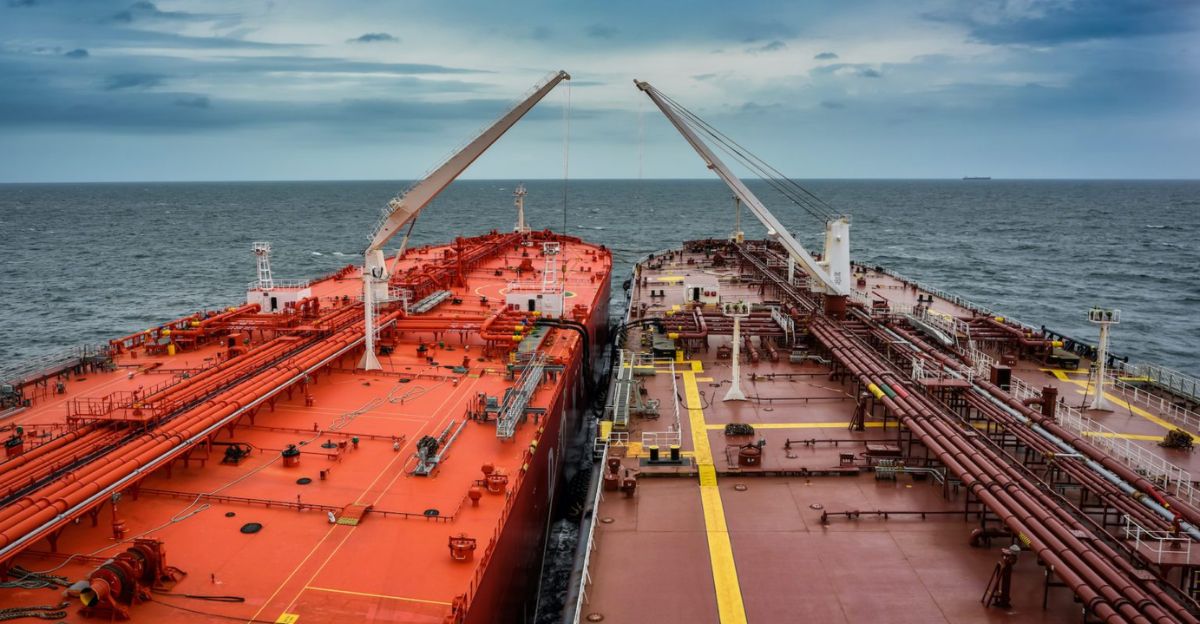
To conceal their origins, shadow tankers register under flags of convenience—such as Panama, Liberia, and the Marshall Islands—or transfer ownership through shell companies based in the UAE. Many vessels change their registration multiple times a year to evade sanctions monitoring.
Maritime data firms estimate nearly 40% of vessels linked to Iran’s network also carry Russian oil, indicating shared evasion infrastructure. This deliberate opacity has turned identification and enforcement into perpetual cat-and-mouse games.
The Money Loop That Fuels the War
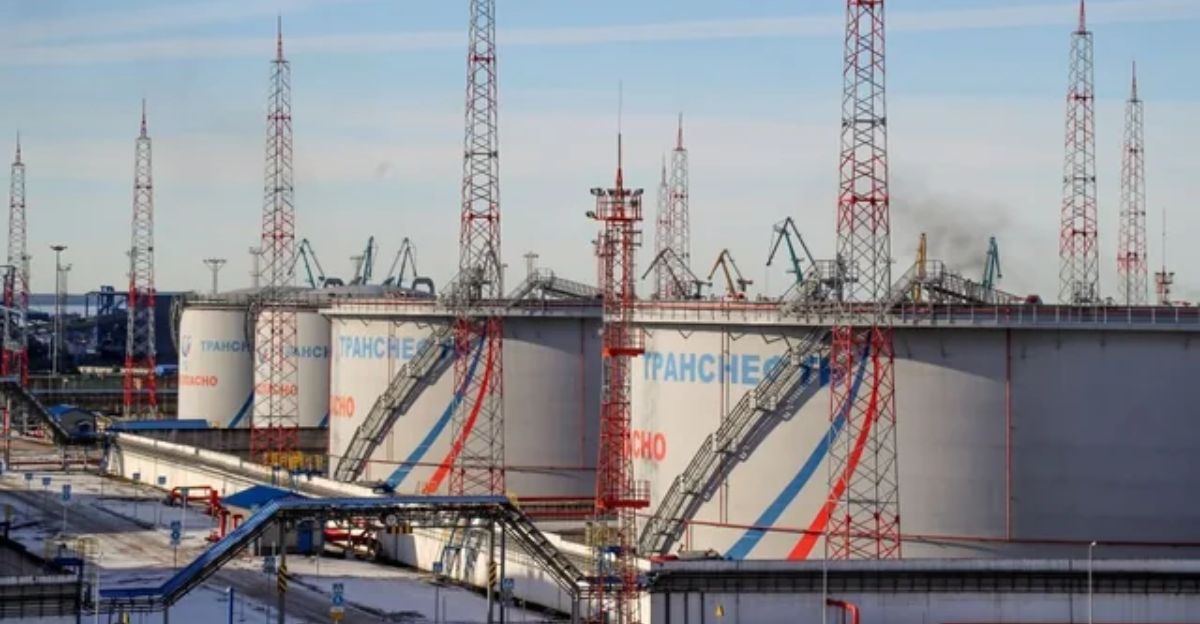
Western caps limit Russian crude to $60 a barrel, but shadow fleet cargoes sell far above that price. The Kyiv School of Economics estimates that these operations yield hundreds of millions of dollars in unregulated profits monthly. Funds flow directly into Russia’s central and defense budgets, effectively turning these tankers into financial weapons.
Without them, Moscow’s wartime economy would constrict sharply—an outcome Russia seems determined to avert through forceful protection.
Sweden’s Legal Dilemma at Sea
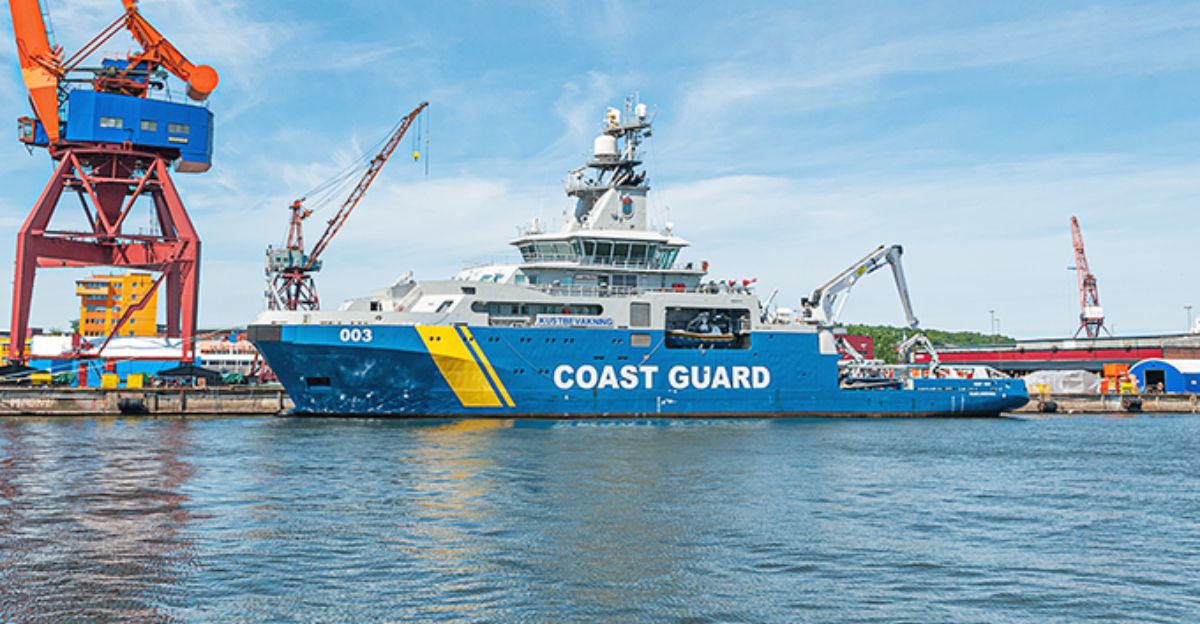
Swedish patrols routinely spot shadow fleet vessels but lack the legal authority to seize or detain them unless clear violations—such as spills or smuggling—occur. Maritime law prioritizes trade freedom over sanctions enforcement, leaving a regulatory vacuum. Even with visible armed personnel aboard, Sweden cannot intervene without an international legal mandate.
Officials warn that this loophole allows militarized ships to traverse EU waters unchecked, undermining the spirit of global maritime order.
Russian Warships Take Permanent Positions
The Baltic Fleet’s presence has grown “constant and significant,” according to Swedish coastguard officials. Russian vessels now conduct standing patrols near strategic chokepoints such as the Gulf of Finland. These operations create de facto control zones—effectively extending Russian naval jurisdiction over international routes.
Observers note a marked increase in static surveillance missions, suggesting that Moscow seeks to maintain enduring influence over the Baltic maritime corridors, which are crucial to Western trade.
Baltic Waters—A Daily Parade of Ghost Ships
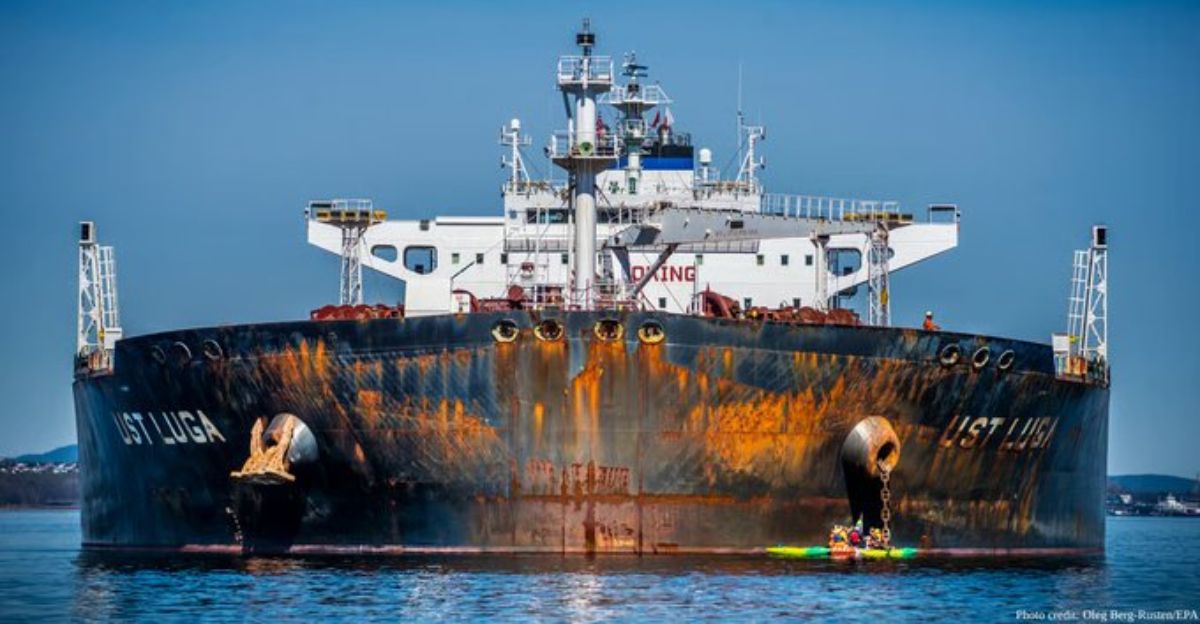
Each day, dozens of aging, underinsured Russian-owned tankers pass through the narrow Baltic straits, often within ten nautical miles of the Swedish coast. Their destinations span from China to India, operating in full view of NATO surveillance.
Swedish patrols maintain a presence but admit practical helplessness, constrained by international regulations. Captain Joakim Håkansson calls the rising traffic “an endless parade” that exposes Europe’s inability to halt sanctioned trade at sea.
NATO Watches, Russia Acts
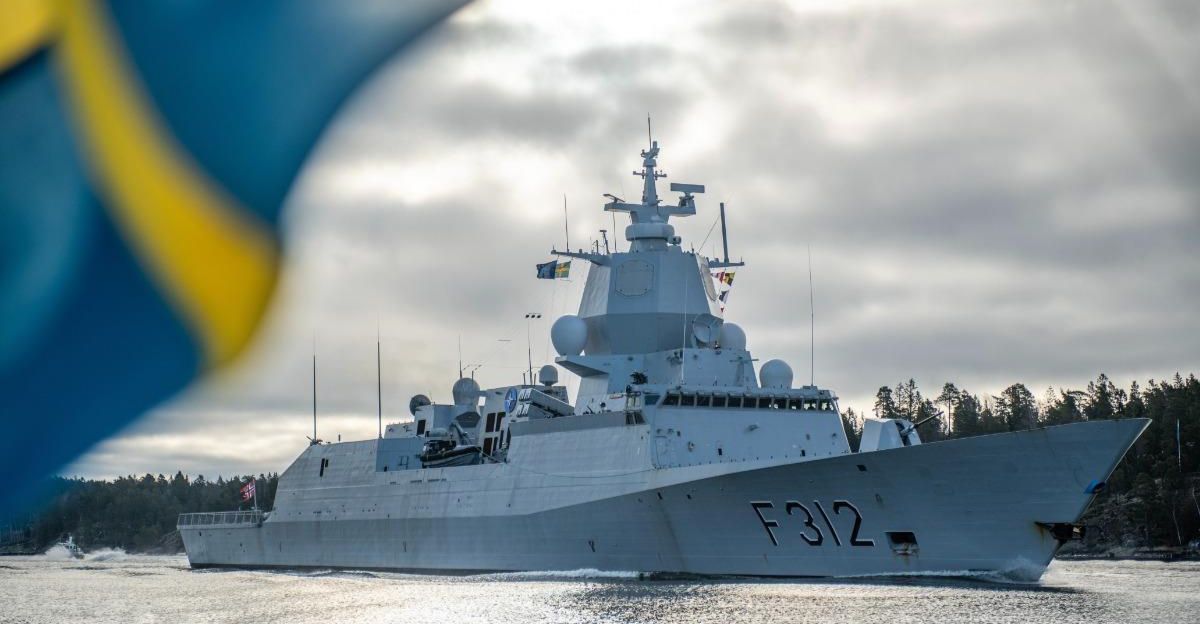
NATO’s “Operation Baltic Sentry,” launched in early 2025, expanded surveillance capabilities through the deployment of frigates, drones, and coordinated patrols to protect undersea infrastructure. However, despite the technological upgrade, Russian convoys continue to move unimpeded.
Analysts say the mission underscores NATO’s reactive posture: it observes, documents, and alerts—but avoids confrontation. In contrast, Russia’s willingness to militarize commercial shipping has shifted tactical momentum decisively eastward.
The Baltic Crossroads—A Test of Resolve
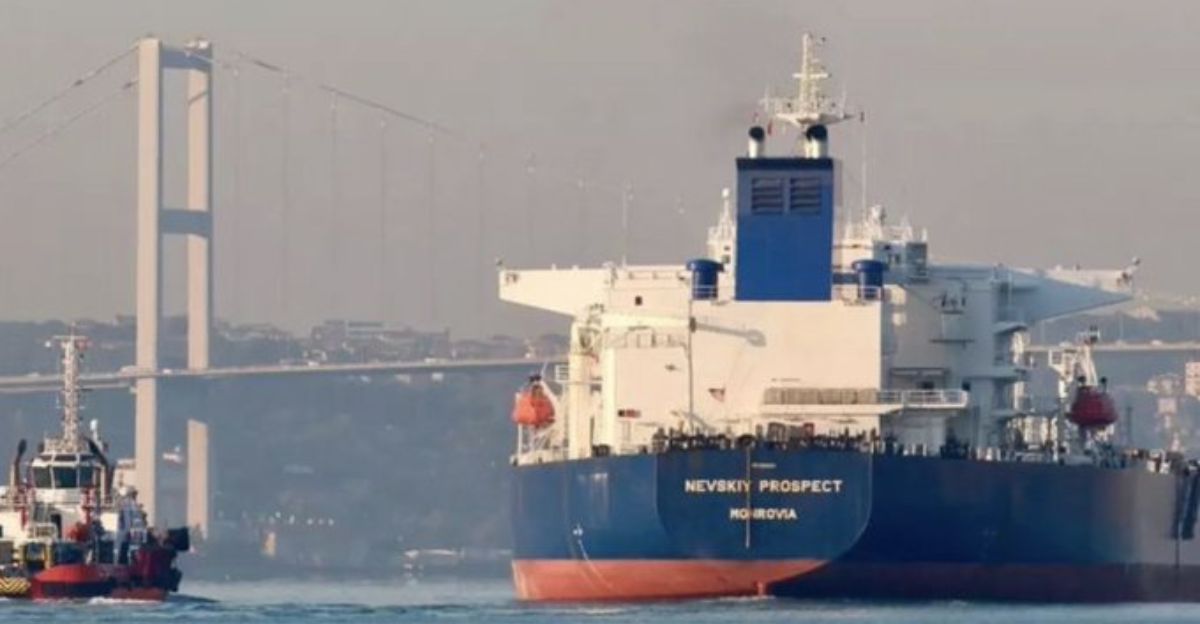
The overt militarization of Russian oil shipping marks a turning point in European security. NATO’s monitoring cannot offset the deeper asymmetry: Russia escalates boldly, and the West hesitates to respond. As shadow fleet tankers cruise daily under armed guard, legal and strategic norms governing the sea are eroding.
The Baltic Sea, once a frontier of trade and stability, has morphed into a contested zone where old maritime rules no longer apply.
Sources:
Sweden’s Navy Confirmation on Russian Military Personnel – Swedish Armed Forces Official Statement
June 2025 Russian Warship English Channel Escort – NATO Military Sources Documentation
Danish Pilot Reports on Shadow Fleet Operations – DanPilot Maritime Authority Records
Finnish Police seizure of Eagle S spy device – Finnish National Police Investigation Report
Kyiv School of Economics Shadow Fleet Revenue Analysis – Kyiv School of Economics 2024 Report
Windward Maritime Data on Flag Hopping Patterns – Windward Maritime Intelligence Database 2025