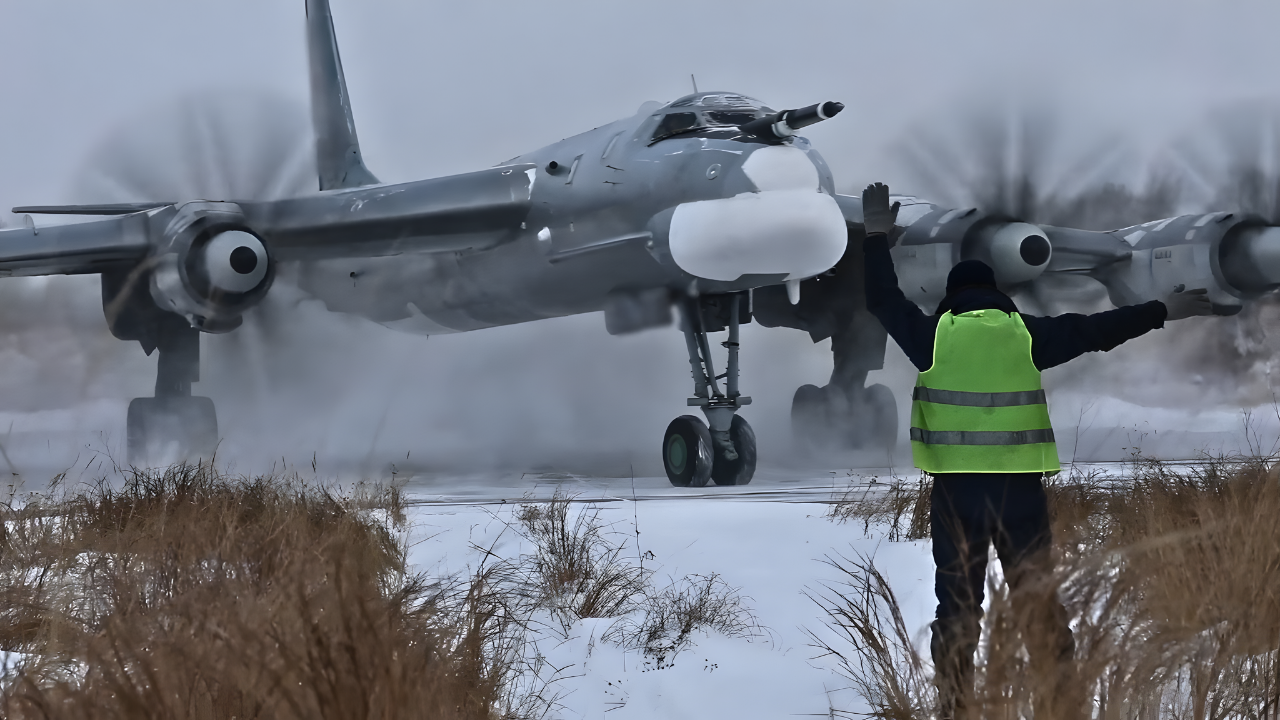
Before dawn on a December morning in 2025, Japanese air defenses tracked an unusual formation: Russian and Chinese long-range bombers flying a deliberate loop around the country’s main islands without crossing its borders. The patrol unfolded against a backdrop of rising tensions in East Asia, testing how Japan and its neighbors respond when heavily armed aircraft repeatedly probe the edges of their airspace.
Encircling Flights Around Japan
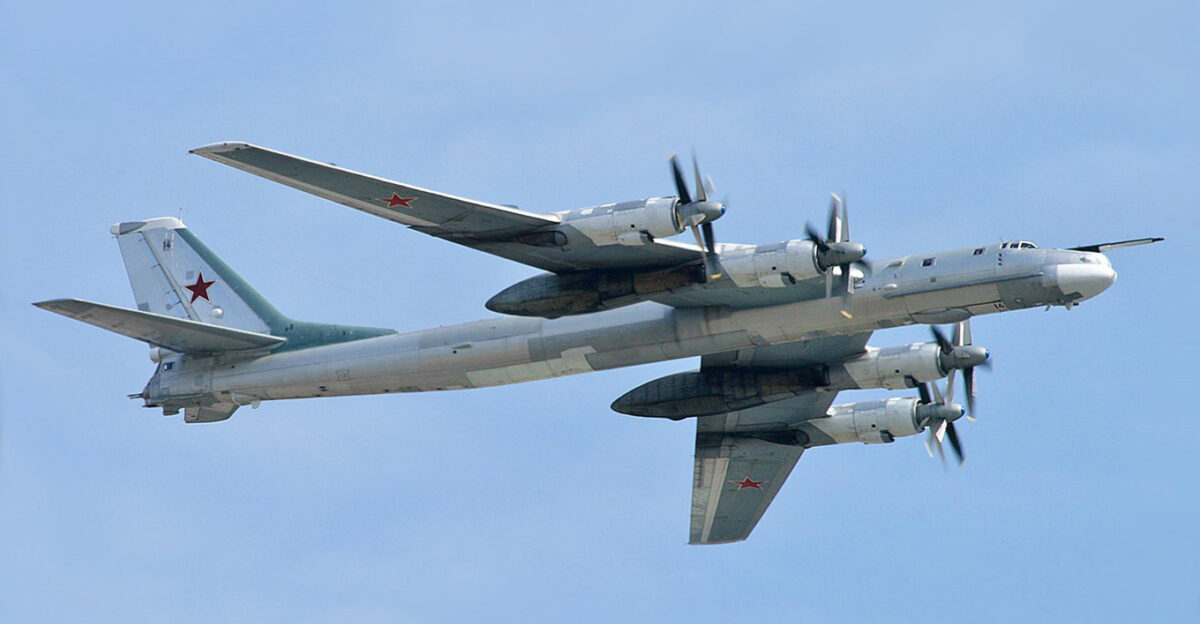
According to Japan’s Defense Ministry, two Russian Tu-95 bombers and two Chinese H-6 bombers conducted a joint patrol that began over the Sea of Japan, moved through the East China Sea, then exited into the western Pacific via the Miyako Strait between Okinawa and Miyako islands. From there, the formation continued off Shikoku before turning back, effectively tracing a loose ring around Japan while remaining in international airspace.
Tokyo characterized the route as unusual and strategically chosen, noting that the planes passed through key maritime and air corridors used by commercial shipping and military vessels. The Miyako Strait in particular has become a regular transit point for Chinese forces heading into the Pacific, and the latest mission reinforced a pattern of flights that pressure Japan’s defenses without formally breaching its territory.
The joint mission lasted about eight hours and required continuous tracking by Japanese radar and airborne units. Officials described it as part of “repeated joint bomber flights” in recent years that have increased in frequency and complexity.
Tight Coordination and Nuclear-Capable Aircraft
What distinguished this patrol from earlier ones was the level of coordination between Russian and Chinese forces. The bombers were escorted by Chinese J-16 fighters and supported by a Russian A-50 airborne early warning aircraft, creating a multi-layered formation that resembled an integrated task group rather than parallel national flights.
Both main bomber types involved are capable of carrying nuclear weapons. Russia’s Tu-95 “Bear,” a long-serving strategic bomber, can launch nuclear-armed cruise missiles, while China’s H-6 variants are designed to deliver both conventional and nuclear ordnance. There was no indication the aircraft were armed with nuclear weapons during the patrol, but their capabilities heightened concern in Tokyo and Seoul.
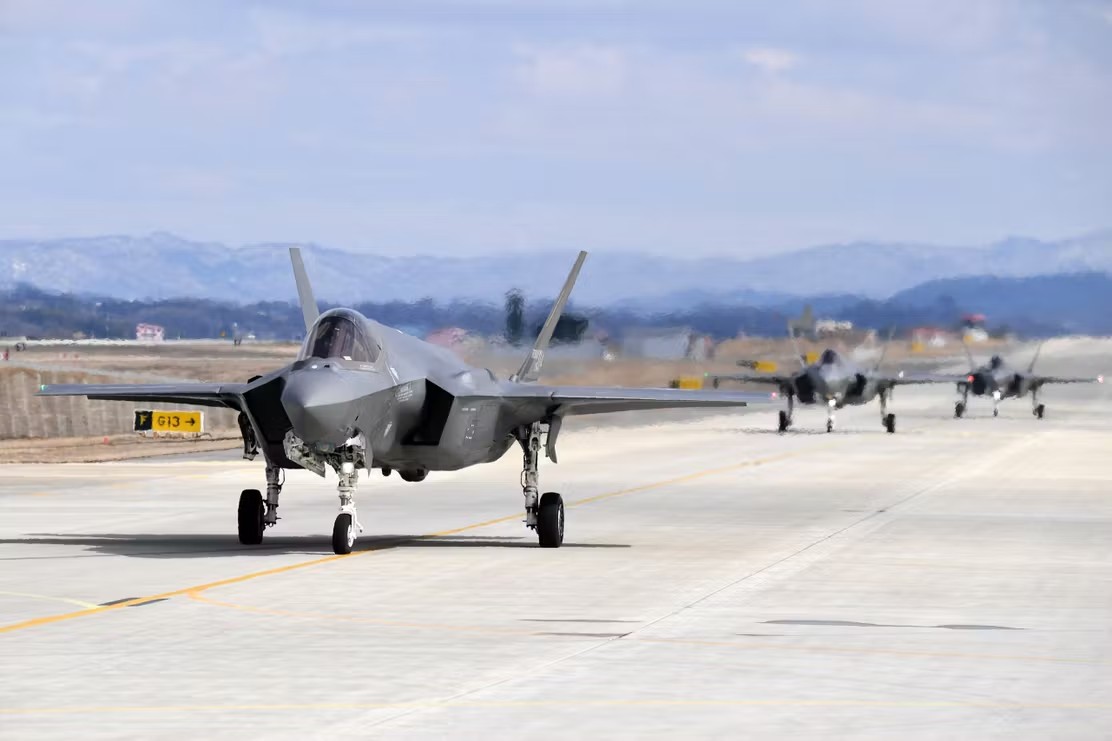
Japan responded by scrambling fighters, including F-15s and F-35s, to shadow the formation along sections of its route. The jets maintained safe distances to avoid escalation while confirming flight profiles and monitoring any changes in altitude or direction. Japanese officials said these repeated scrambles put strain on personnel and equipment, especially as similar flights have become more frequent.
Regional Domino Effect
The impact of the mission extended beyond Japan. South Korea reported that nine foreign aircraft—seven Russian, including Tu-95 bombers and A-50 early warning planes, and two Chinese, identified as H-6 bombers and J-16 fighters—entered its air defense identification zone on December 9, 2025, at around 10 a.m. local time. The aircraft did not enter South Korean sovereign airspace but remained in the zone for about an hour.
In response, South Korea scrambled F-15K and other fighter jets to carry out tactical monitoring and prepare for any contingency. Seoul’s reaction closely mirrored Japan’s, underscoring how coordinated Russia–China patrols can simultaneously test multiple U.S.-aligned defense networks in East Asia.
The patrol came days after another tense incident near Okinawa, where Japanese officials accused Chinese J-15 fighters operating from an aircraft carrier of twice locking fire-control radar on Japanese aircraft. Tokyo called the radar locks a dangerous act because such targeting is commonly understood as a precursor to missile engagement. China rejected the allegation, insisting its maneuvers were professional and in line with international norms.
Alliance Signals and Military Imbalance
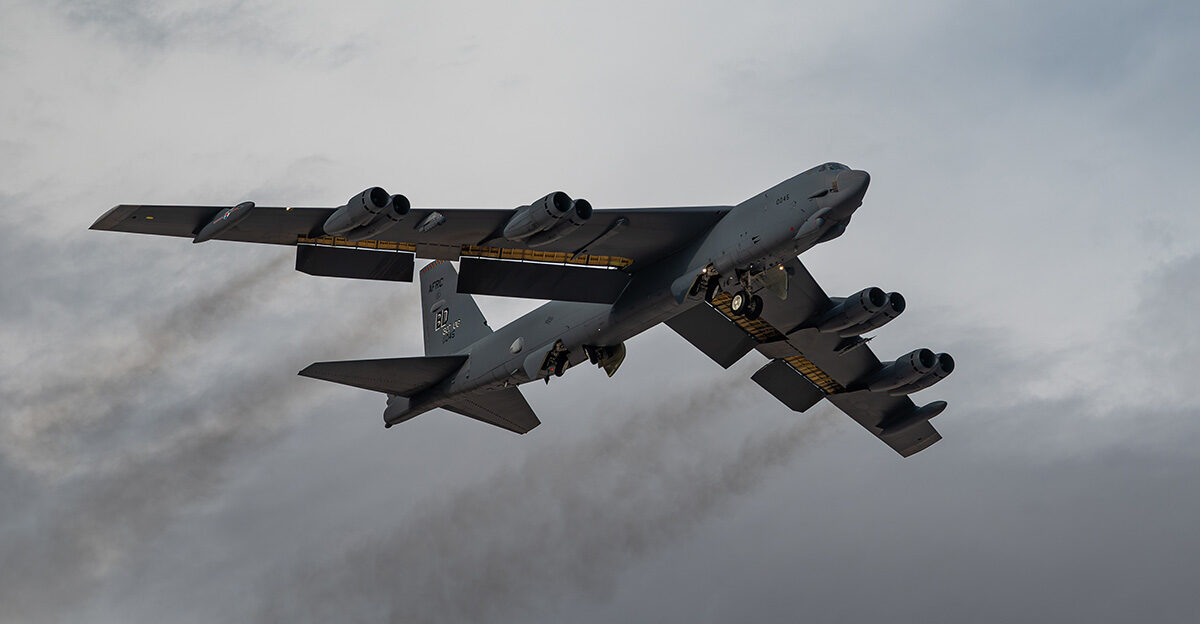
One day after the Russian-Chinese bomber mission, the United States and Japan mounted a visible demonstration of their own. Two U.S. B-52 Stratofortress bombers, which are also capable of carrying nuclear weapons, flew over the Sea of Japan alongside three Japanese F-35 stealth fighters and three F-15s. Officials presented the flight as a planned exercise, but its timing highlighted Washington’s commitment to deterrence and reassurance in the Indo-Pacific.
Japan and South Korea both face a widening gap in air and naval power compared with China, amplified by Russia’s strategic bomber fleet. Recent assessments rank China third globally in overall air strength, with more than 3,300 aircraft and over 1,200 modern fighters such as the J-20 and J-16. Japan fields roughly 1,400 aircraft, including just over 200 fighters like the F-15J and F-35, while Russia contributes about 50 Tu-95 bombers and a range of escort fighters.
At sea, China operates three aircraft carriers and more than 370 warships, compared with around 150 vessels in Japan’s Maritime Self-Defense Force. These disparities have pushed Tokyo to deepen cooperation with the United States and expand defense coordination with Seoul, despite historical frictions.
Political Reactions and Rising Risks
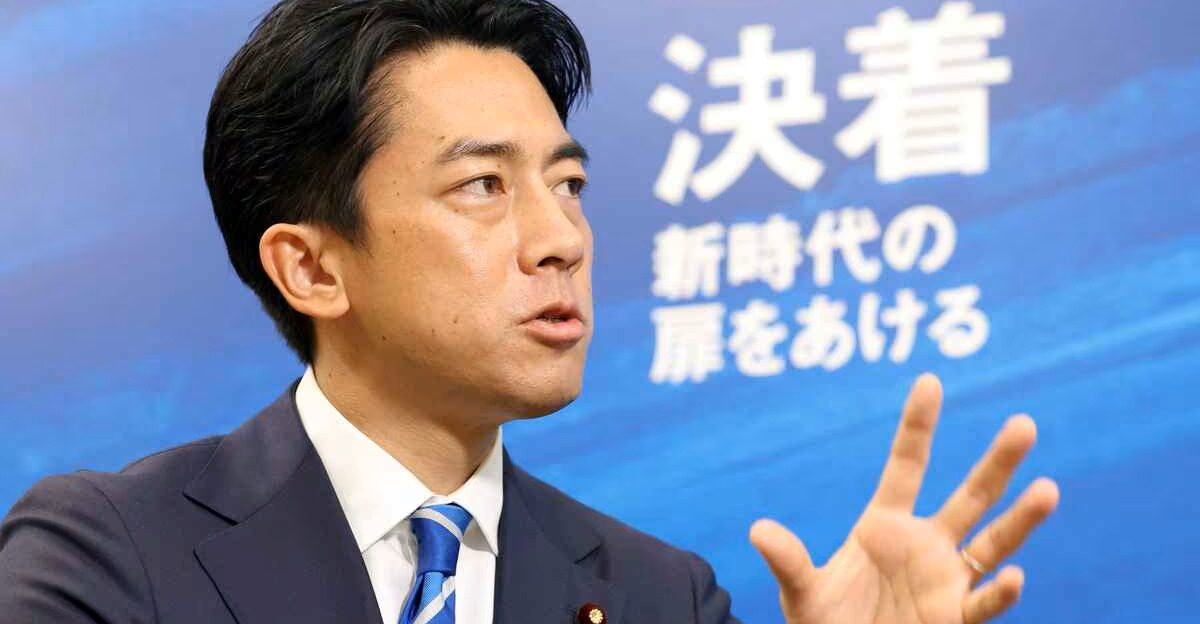
Japan’s Defense Minister Shinjiro Koizumi publicly condemned the joint patrol, describing it as “clearly intended as a show of force against our nation” and a “serious concern for Japan’s national security.” He emphasized that the pattern of “repeated joint bomber flights” by Russia and China represents an expansion and intensification of operations near Japan, compelling frequent fighter scrambles.
The flights also intersect with broader diplomatic tensions. Tokyo backs sanctions on Russia over its invasion of Ukraine and is locked in longstanding disputes with Beijing over maritime claims, including around the Senkaku/Diaoyu Islands and sea lanes near Taiwan and Okinawa. South Korea, meanwhile, must manage North Korean missile and nuclear threats in addition to the increased tempo of Russian-Chinese air activity around the Korean Peninsula.
Military analysts warn that the region’s skies have become increasingly crowded, with overlapping patrols, exercises, and surveillance sorties conducted by multiple rival forces. Close encounters—such as radar locks or near-collisions—raise the chance that miscalculation, technical failure, or miscommunication could trigger a rapid and unintended escalation.
For now, all sides have kept their responses calibrated: Russian and Chinese aircraft have largely stayed in international airspace, Japan and South Korea have relied on shadowing and diplomatic protests, and the United States has matched demonstrations with its own strategic flights. But as joint exercises between Moscow and Beijing intensify and alliance drills respond in kind, the margin for error narrows, leaving the region one incident away from a crisis that could draw in nuclear-armed states on multiple sides.
Sources
Japan Times, Chinese and Russian bombers hold joint drill near Japan, Reuters, Russian bombers join Chinese air patrol near JapanCNN, Russian bombers join Chinese air patrol near Japan as tensions rise,Yomiuri Shimbun, Chinese, Russian Bombers Flew Unusual Path by Heading Toward TokyoNippon.com, China, Russia Bombers Fly Together off Japan’s Shikoku CoastAl Jazeera, S Korea, Japan scramble warplanes in response to Russia-China air patrol